Incheon tide times
Incheon tide forecast — heights relative to MSL.
Today's tide times for Incheon
Tide times at Incheon on Friday, 31 July 2026: first high tide at 09:00, first low tide at 12:19, second high tide at 17:50. Sunrise 05:36, sunset 19:43.
Tide chart for Incheon
24-hour cosine-interpolated curve around the present moment. Heights relative to MSL. Predictions: Predictions: Open-Meteo Marine (MeteoFrance SMOC, 0.08° grid).
Sun, moon and conditions on Fri 31 Jul
Snapshot at build time — refreshes daily. Sea state from Open-Meteo Marine.
Highs and lows next 7 days
Every predicted high and low for the next week, with the daily tidal coefficient (0–120; higher = bigger swing, > 95 means stronger currents).
Other spots nearby
The three closest curated TideTurtle locations to Incheon, measured by great-circle distance.
Today's solunar windows
Solunar tradition: major periods are the ≈3h windows around moon transit and opposition; minor are ≈2h around moonrise and moonset. Pair with the local tide stage and wind for the best read.
Cycle dates near Incheon
Last spring tide on Fri 31 Jul (range 7.1m). Next neap on Thu 06 Aug.
Spring tides cluster around new and full moons (biggest swings). Neap tides land on quarter moons (smallest swings). See the spring tide and neap tide glossary entries for the why.
About tides at Incheon
A short guide to the coastline at Incheon — geography, sea state, and what the tide is actually doing under your feet.
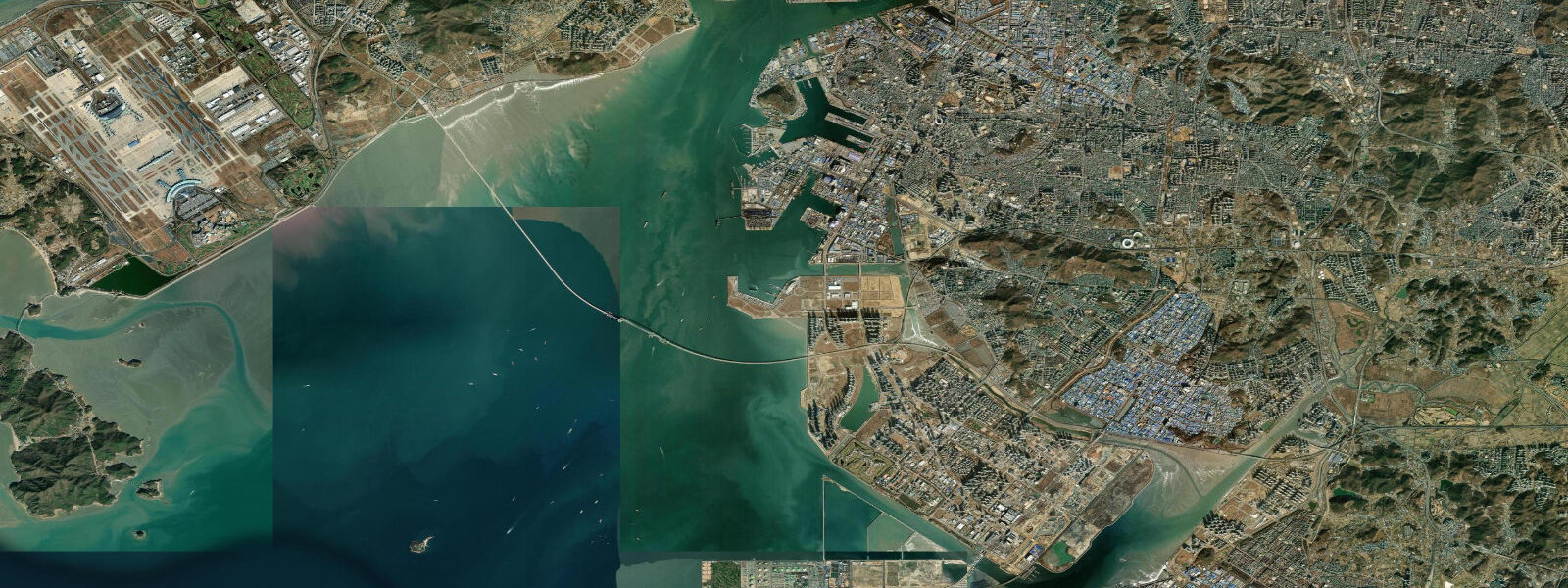
Incheon sits on the western coast of Korea where the Han River estuary meets the Yellow Sea — called the West Sea in Korean, Hwanghae in Chinese. This is a coast of extreme tides. Spring tidal range at Incheon reaches 8 to 9 m, placing it unambiguously among the world's largest semidiurnal tide ranges. For context: Mont Saint-Michel in Brittany, perhaps the most famous tidal landmark in Western Europe, has spring ranges of 6 to 8 m. The Bay of Fundy on the Canada-US border holds the global record at 14 to 16 m. Incheon sits between those two benchmarks — dramatically larger than anything on the European Atlantic coast, and approaching, though not matching, the Fundy extreme. It is not a moderate or even a large tide. It is one of the most extreme tidal environments on Earth.
The physical reason is the geometry and bathymetry of the Yellow Sea. It is a shallow, semi-enclosed basin — average depth around 44 m, connected to the open Pacific only through the narrow Korea Strait in the south and the Bohai Strait in the north. A large tidal volume enters and exits through those restricted openings, and the resonant period of the basin closely matches the semidiurnal tidal forcing period of roughly 12 hours and 25 minutes. That near-resonance is the amplification mechanism, the same physics that produces the Fundy tides at their extreme. The Korean coast at Incheon is at the eastern end of the Yellow Sea where the amplification peaks.
The practical consequences of an 8 to 9 m spring range are not subtle. At low water on a spring tide, the sea surface at Incheon drops to roughly 4 to 4.5 m below its high-water position. The tidal flats — called getbol in Korean — extend kilometres from the pre-reclamation shoreline and represent one of the world's most productive intertidal ecosystems: shellfish, wading birds including the critically endangered spoon-billed sandpiper, and the mudskipper fish that have adapted to a life that is half-marine, half-terrestrial. The Gyeonggi tidal flats, the broader system of which Incheon's coast is the most urbanised part, are inscribed on the UNESCO World Heritage List as part of the Korean Getbol inscription.
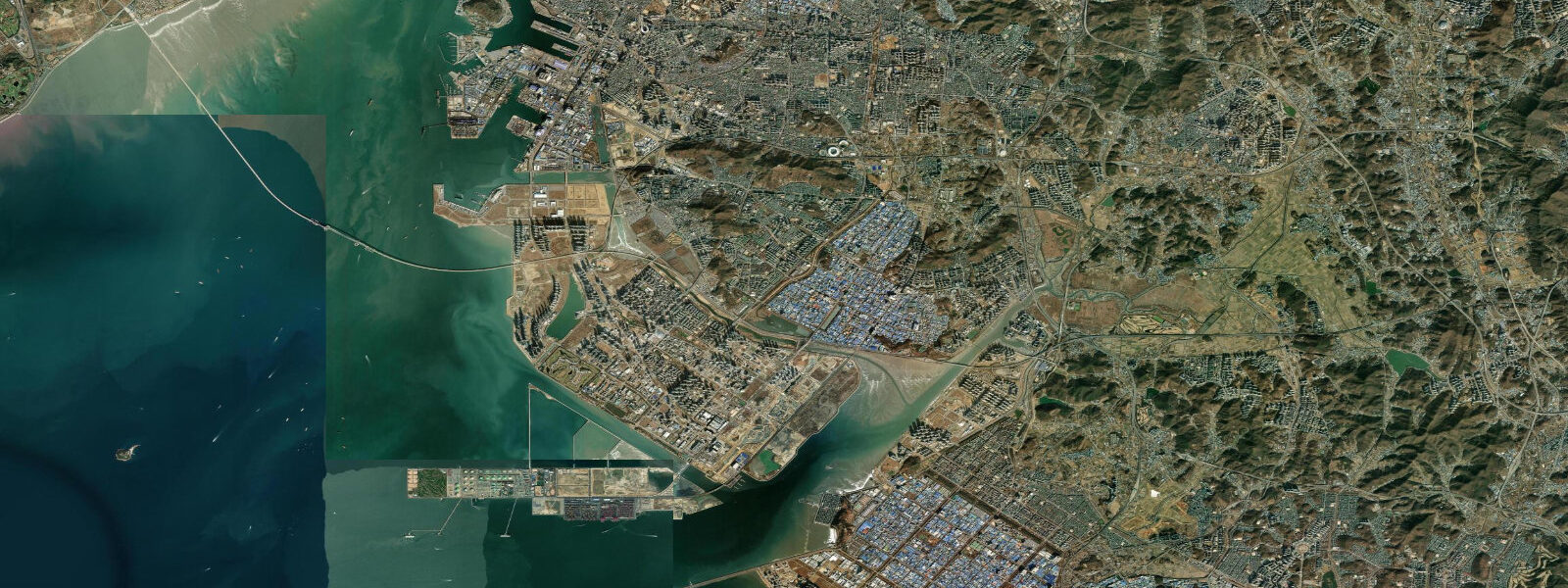
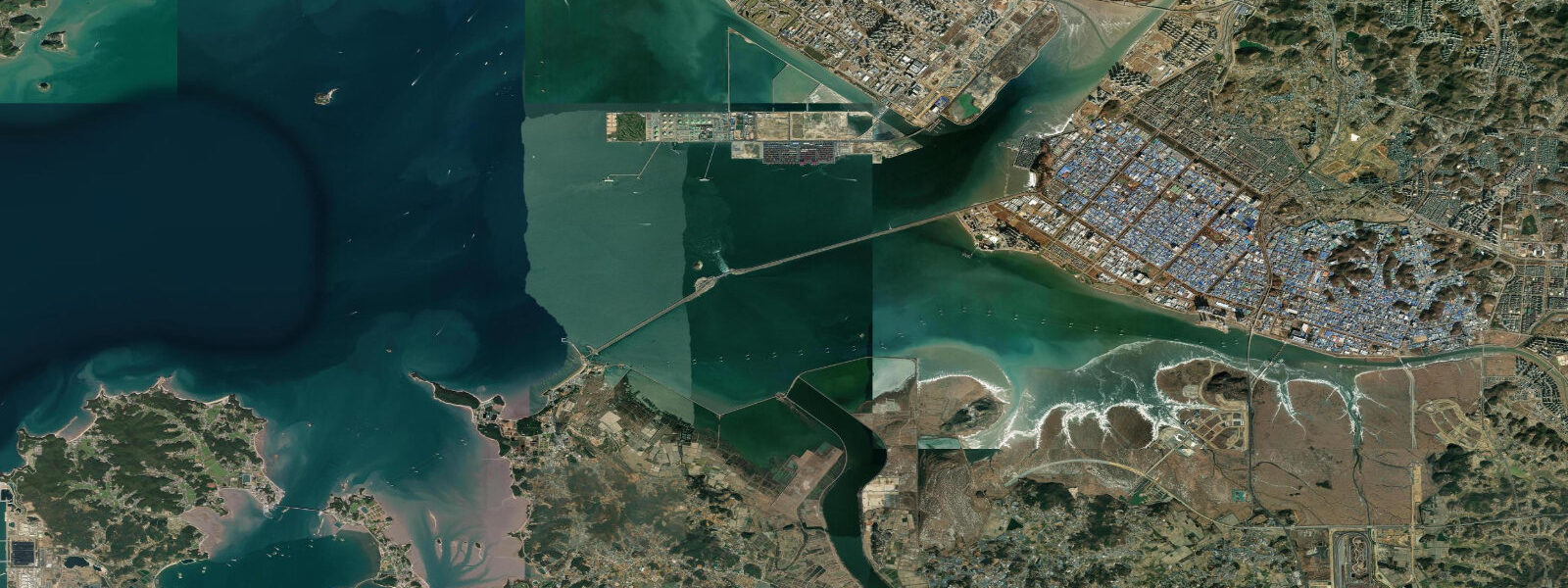
Reclamation has transformed this coastline over the past 40 years. Songdo International Business District — roughly 600 hectares of reclaimed land built into the Yellow Sea south of Incheon's inner harbour, linked to the mainland by causeway — is perhaps the world's largest purpose-built new city on former tidal flat. The land was below sea level before reclamation and is protected by sea walls engineered against storm surge on a coast where surge can add several metres above an already extreme astronomical high. The district is built around a central park canal and faces Central Park's waterway; none of the original tidal flat character remains in the reclaimed zone, though the unreclaimed mudflats visible from Songdo's western edges at low tide show what the pre-reclamation coast looked like for kilometres.
Wolmido Island, now a peninsula connected to the main city by a kilometre-long causeway built across the tidal flat in the 1970s, holds the Wolmido Theme Park and a dense row of seafood restaurants along the harbour-facing street. The harbour at Wolmido is a working fishing harbour where the extreme tide range has direct consequences: at low water, many of the berths are resting on the soft mudflat or in very shallow water, and the vessels sit on the bottom. Tidal gates and floating pontoon berths are used for the larger charter fleet; smaller traditional boats simply dry out at low tide, as they have done here for centuries.
Incheon International Airport occupies Yeongjong Island, connected to Incheon city and the mainland by the Incheon Grand Bridge and the Airport Expressway, both spanning tidal channels that expose the mudflat on a large spring ebb. The airport's construction and the bridge foundations required detailed analysis of the tidal and current regime in those channels. The extreme tidal range at Incheon means that storm surge risk is evaluated at a different scale than on moderate-range coasts — a 1 m surge on top of a 9 m spring high produces a water level that the seawall and reclamation embankments are engineered to contain.
The Korea Hydrographic and Oceanographic Agency (KHOA) maintains the principal Incheon tide gauge and publishes harmonic predictions for Korean ports. The Incheon gauge record is one of the longest continuous sea-level records in Northeast Asia, and its data underpin the Yellow Sea tide models used in regional research. Predictions on this page come from Open-Meteo Marine, a gridded global ocean model — typically within plus or minus 45 minutes on timing and 0.2 to 0.3 m on height. On a coast with an 8 to 9 m spring range, those errors are a small fraction of the total signal. For the precise minutes of high and low at Incheon, KHOA's published harmonic predictions apply.
Tide questions about Incheon
Quick answers to the most common questions about tide times, range, and water access at Incheon.
How big are the tides at Incheon?
Spring tidal range at Incheon reaches 8 to 9 m — among the largest semidiurnal tides in the world. Mean range (averaged over all spring and neap cycles) is around 6 m. For comparison, Mont Saint-Michel in Brittany has spring ranges of 6 to 8 m; the Bay of Fundy in Canada, the global record-holder, reaches 14 to 16 m. Incheon is in the same category of extreme macrotidal coasts, with a range roughly 10 to 15 times larger than a typical North Sea port and 20 to 30 times larger than the tidal range on Korea's own east coast, which sits in the Pacific with an entirely different tidal character. The extreme range results from the Yellow Sea's near-resonant shallow-basin geometry amplifying the semidiurnal tidal forcing.
What is Songdo International Business District, and what does it have to do with tides?
Songdo is approximately 600 hectares of land reclaimed from the Yellow Sea tidal flat south of Incheon's inner harbour, developed incrementally since the late 1990s and now home to roughly 170,000 residents and major international institutions. Before reclamation, the site was below sea level — exposed tidal mudflat at low water, submerged at high. The reclamation required sea walls engineered against storm surge and the extreme 8 to 9 m spring range. Central Park in Songdo is built around a tidal canal that brings seawater in and out on a controlled cycle; from Songdo's western edges at low tide, the surviving unreclaimed mudflats show the pre-development tidal landscape that stretched here for kilometres.
Can I visit the Wolmido tidal flat or the Gyeonggi mudflats?
Wolmido is now a connected peninsula rather than an island, accessible by road. The harbour area shows the extreme tidal range directly: at low water the fishing berths can be resting on the mudflat, and the water level at high tide is 8 to 9 m higher than it was six hours earlier. The broader Gyeonggi tidal flats, inscribed as part of the UNESCO Korean Getbol World Heritage Site, are accessible at select points. The Sihwa tidal flats south of Incheon include viewing platforms and an ecological park at Sihwa Lake where the world's largest tidal power station (Sihwa Tidal Power Plant, 254 MW) uses the extreme range as its energy source. Guided mudflat walking (getbol experience) programmes operate from several coastal parks.
Is storm surge a major risk at Incheon given the large tidal range?
Storm surge is taken very seriously on this coast, precisely because the base tidal level is so extreme. A 1 to 2 m surge added to a spring high tide of 9 m above chart datum produces a combined water level that the coastal embankments and the Songdo and Incheon city seawalls must contain. The Korea Meteorological Administration issues storm surge alerts for the Yellow Sea coast; typhoon approach from the south and southwest is the primary driver, though strong northerlies from the continent can also set up surge against the Korean coast. The historical reclamation and city-building at Incheon has been engineered with this combined tidal and surge risk as a design constraint — unlike many moderate-range coasts where surge is the dominant variable, here both are extreme.
Where do these tide predictions come from?
Open-Meteo Marine, a free gridded global ocean model. Accuracy is typically within plus or minus 45 minutes on timing and 0.2 to 0.3 m on height — model-derived, not a local gauge. At Incheon, where spring range reaches 8 to 9 m, a 0.2 to 0.3 m height error is a small fraction of the total signal, making Open-Meteo relatively more reliable here than on microtidal coasts where that same error is a large fraction of the range. The Korea Hydrographic and Oceanographic Agency (KHOA) maintains the authoritative Incheon tide gauge and publishes harmonic predictions for Korean ports — the appropriate source for navigation, commercial vessel scheduling, and any safety-critical decision on this coast.
8-day tide table — Incheon
Heights relative to MSL. Predictions: Open-Meteo Marine (MeteoFrance SMOC, 0.08° grid) — heights relative to MSL (not chart datum / LAT). Model-derived.
| Day | Type | Time | Height |
|---|---|---|---|
| Fri 31 Jul | High | 09:00 | 0.6m |
| Low | 12:19 | -2.5m | |
| High | 17:50 | 3.1m | |
| Sat 01 Aug | Low | 00:15 | -3.0m |
| High | 06:14 | 4.1m | |
| Low | 12:50 | -2.7m | |
| High | 18:21 | 3.3m | |
| Sun 02 Aug | Low | 00:48 | -3.0m |
| High | 06:42 | 4.0m | |
| Low | 13:18 | -2.8m | |
| High | 18:53 | 3.4m | |
| Mon 03 Aug | Low | 01:22 | -2.9m |
| High | 07:11 | 3.8m | |
| Low | 13:47 | -2.9m | |
| High | 19:26 | 3.5m | |
| Tue 04 Aug | Low | 01:52 | -2.8m |
| High | 07:43 | 3.7m | |
| Low | 14:18 | -2.8m | |
| High | 20:04 | 3.5m | |
| Wed 05 Aug | Low | 02:27 | -2.4m |
| High | 08:17 | 3.5m | |
| Low | 14:48 | -2.7m | |
| High | 20:48 | 3.4m | |
| Thu 06 Aug | Low | 03:05 | -2.0m |
| High | 08:58 | 3.2m | |
| Low | 15:31 | -2.5m | |
| High | 21:42 | 3.1m | |
| Fri 07 Aug | Low | 03:56 | -1.4m |
| High | 08:00 | 1.9m |