Jeffrey's Bay tide times
Jeffrey's Bay tide forecast — heights relative to MSL.
Today's tide times for Jeffrey's Bay
Tide times at Jeffrey's Bay on Tuesday, 4 August 2026: first low tide at 02:00, first high tide at 06:14, second low tide at 12:12, second high tide at 18:38. Sunrise 07:11, sunset 17:41.
Tide chart for Jeffrey's Bay
24-hour cosine-interpolated curve around the present moment. Heights relative to MSL. Predictions: Predictions: Open-Meteo Marine (MeteoFrance SMOC, 0.08° grid).
Sun, moon and conditions on Tue 04 Aug
Snapshot at build time — refreshes daily. Sea state from Open-Meteo Marine.
Highs and lows next 7 days
Every predicted high and low for the next week, with the daily tidal coefficient (0–120; higher = bigger swing, > 95 means stronger currents).
Other spots nearby
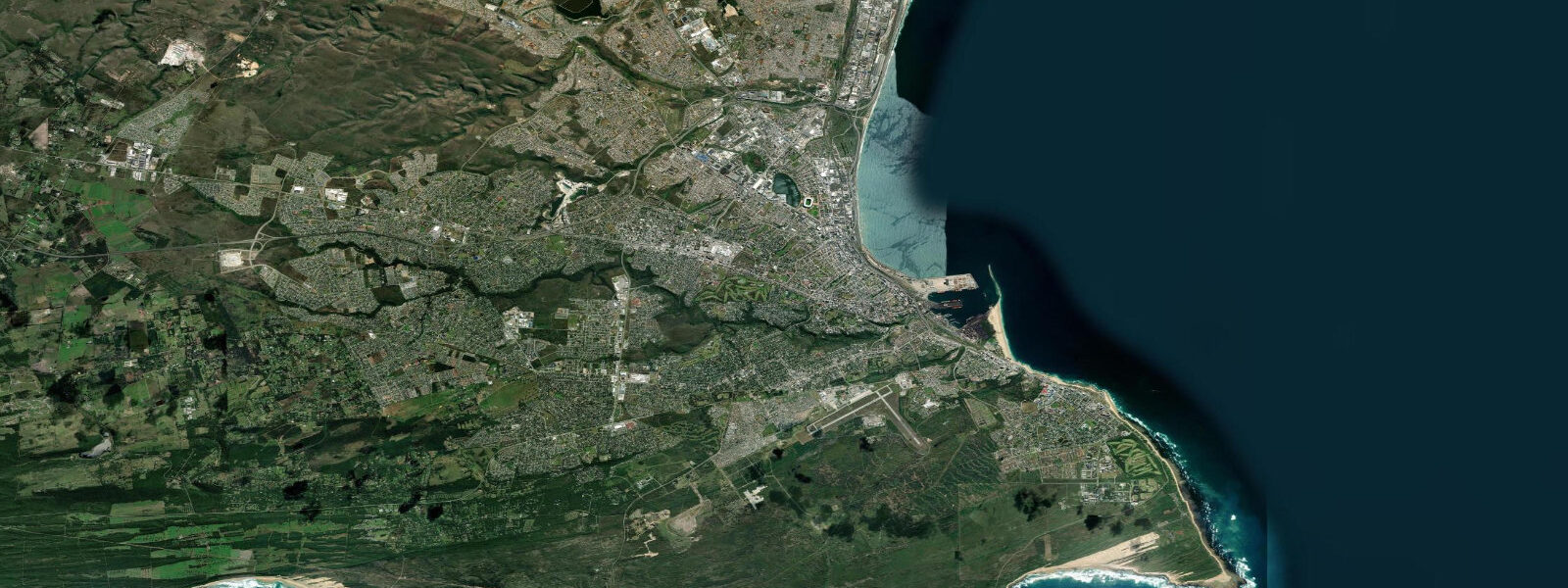
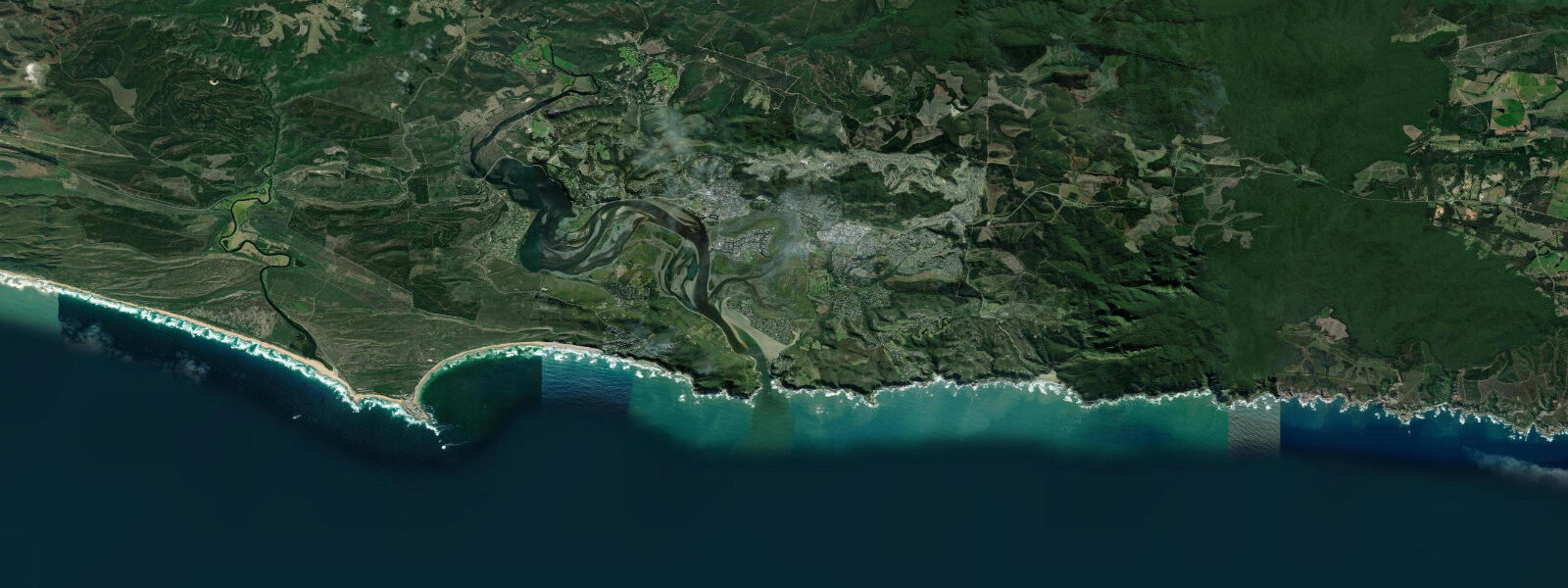
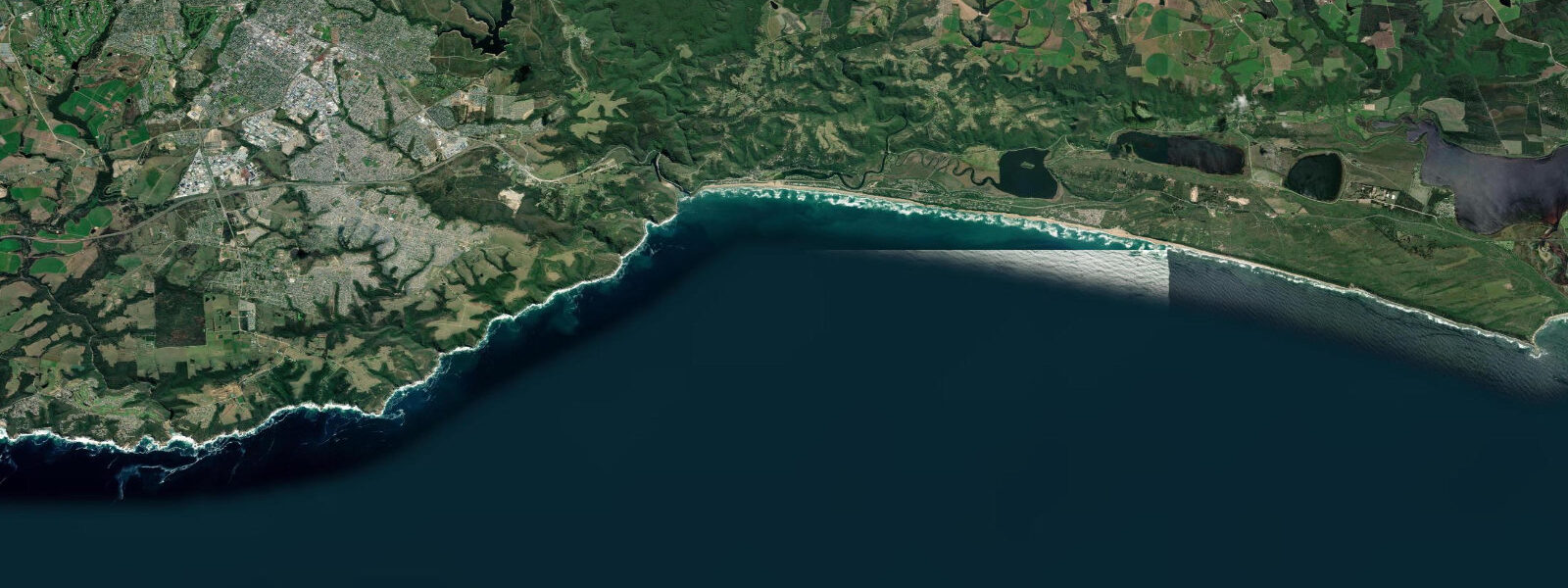
The three closest curated TideTurtle locations to Jeffrey's Bay, measured by great-circle distance.
Today's solunar windows
Solunar tradition: major periods are the ≈3h windows around moon transit and opposition; minor are ≈2h around moonrise and moonset. Pair with the local tide stage and wind for the best read.
Cycle dates near Jeffrey's Bay
Last spring tide on Tue 04 Aug (range 1.3m). Next spring tide on Mon 10 Aug (range 1.2m). Next neap on Fri 07 Aug.
Spring tides cluster around new and full moons (biggest swings). Neap tides land on quarter moons (smallest swings). See the spring tide and neap tide glossary entries for the why.
About tides at Jeffrey's Bay
A short guide to the coastline at Jeffrey's Bay — geography, sea state, and what the tide is actually doing under your feet.
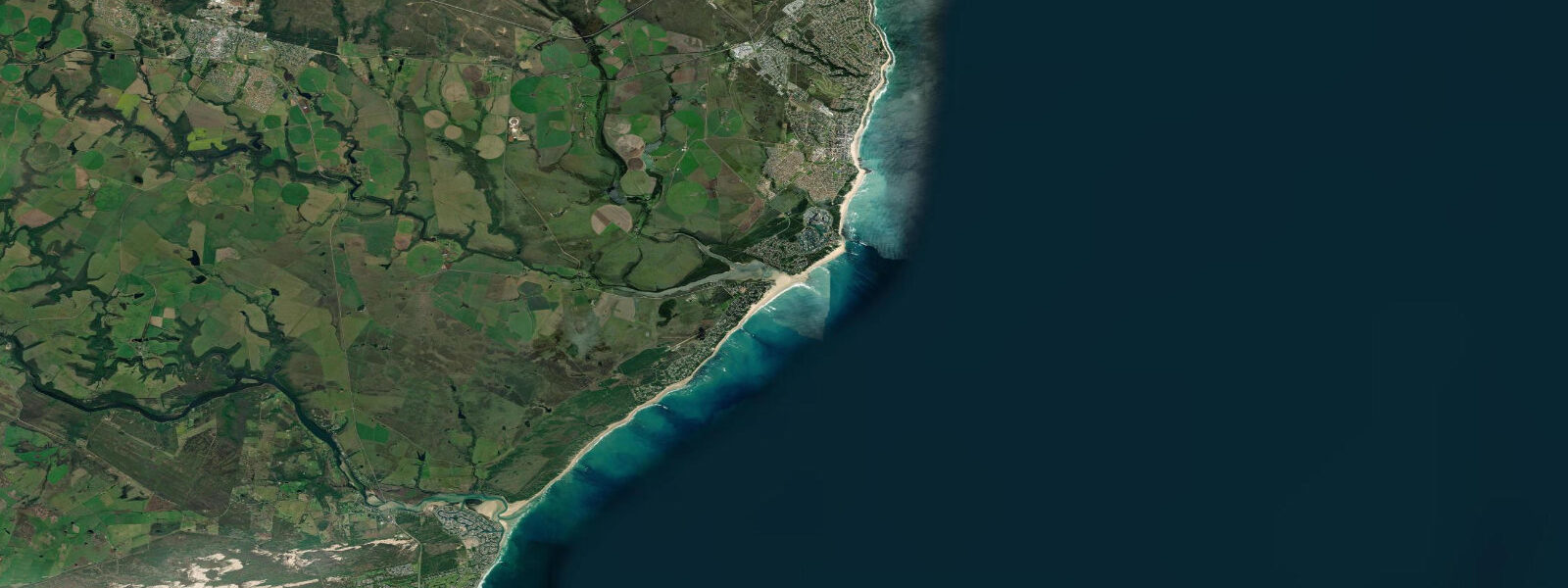
Jeffrey's Bay is 75 kilometres southwest of Gqeberha, a small town of 30,000 that exists in the global surf imagination at a scale entirely disproportionate to its size. The right-hand point break here — specifically the Supertubes section, where the groundswell wraps around the point and refracts along the sandy bottom to produce long, fast, almond-shaped walls — is consistently rated among the five best point breaks in the world. The WSL (World Surf League) Rip Curl Pro at Jeffrey's Bay has been the centrepiece of the Championship Tour since 1984 and is the contest most professional surfers most want to win.
Tidal range at J-Bay is approximately 1.6 metres mean above Chart Datum — semidiurnal, close to but slightly smaller than the Gqeberha figure, with the characteristic two-high two-low daily rhythm of the South African east coast. The tide state is one of the operative variables for the quality of the break. Supertubes performs best at mid-tide, when there is sufficient water over the sand shelf for the wave to pitch and peel cleanly. At full high water the break often loses definition — the wave becomes fat and crumbles rather than throwing — and can close out across the section. At low tide, particularly on larger south groundswell, the bottom is shallow enough to create hazardous sections. The mid-tide window is the session window at J-Bay: the difference between a 5-second and a 40-second ride can be a matter of half a metre of water.
The swell that drives J-Bay is long-period south and southwest groundswell generated by Southern Ocean storms in the Roaring Forties and Fifties. The fetch is unobstructed from the Antarctic convergence zone, and the groundswell that arrives at J-Bay has travelled thousands of kilometres in organised pulses, which is why the waves here are long and clean rather than windswept and chaotic. South swells — more directly perpendicular to the point's angle — typically produce longer rides than southwest swells, which can be more powerful but sometimes race through the sections too fast.
Beyond Supertubes, the J-Bay break has multiple sections: Kitchen Windows, Boneyards, Supertubes, Impossibles, Tubes. Each has its own character and responds differently to swell direction and size. Kitchen Windows is the most accessible for intermediate surfers on smaller days. The Main Beach and Point sections handle the learning and longboard crowd. On the rare big days when south groundswell tops 3 metres and all sections connect, the break produces one of the longest rideable waves on the planet — rides of over a minute have been documented in contest footage.
The town around the break is small and entirely oriented to surf tourism. Accommodation ranges from backpacker hostels to high-end point-facing guesthouses. The WSL contest window is July, when south groundswell frequency and size is at annual maximum and the water temperature drops to around 16°C — a full wetsuit is standard. Summer (December–February) produces smaller but more consistent swell with 19–21°C water. Spring (October–November) is often cited as the best balance of swell, crowd level, and water temperature.
Predictions on this page come from Open-Meteo Marine, a gridded global ocean model. Accuracy is typically within plus or minus 45 minutes on timing and 0.2 to 0.3 metres on height — model-derived, not from a local gauge. For authoritative South African tide data, consult SANHO (South African Navy Hydrographic Office), which publishes official tide tables for Eastern Cape stations.
Tide questions about Jeffrey's Bay
Quick answers to the most common questions about tide times, range, and water access at Jeffrey's Bay.
How does tidal state affect the surf at Jeffrey's Bay?
Tidal state is one of the primary variables for Supertubes. The break performs best at mid-tide — roughly 0.6 to 1.0 metres above Chart Datum on the incoming or outgoing tide — when water depth over the sand shelf allows the wave to pitch and peel in a clean, fast wall rather than crumbling or closing out. At full high water (around 1.6 metres above CD at mean springs) the wave typically goes fat and loses its ledge; at low tide on larger swells the sections can become dangerously shallow over the sand. Watching the tide table before a session and timing your entry around the mid-tide window is standard practice for visiting surfers.
What is the best time of year to surf Jeffrey's Bay?
The WSL contest window (typically late June to mid-July) coincides with peak south groundswell season — the highest frequency of quality surf, but also the coldest water (15–17°C, requiring a 4/3mm wetsuit minimum) and the largest crowds. Spring (October–November) offers a good balance: south groundswell is still reasonably frequent, water has warmed to 18–20°C, and the summer surf-tourist peak has not yet arrived. Summer (December–February) produces smaller but more consistent swell with warmer water (19–21°C). The break is rideable year-round — there are very few flat days at J-Bay.
What is the tidal range at Jeffrey's Bay?
Jeffrey's Bay has a semidiurnal tidal regime — two highs and two lows each day — with a mean range of approximately 1.6 metres above Chart Datum. Spring tides produce a range close to 1.8–2.0 metres; neap tides around 0.8–1.0 metres. The smaller neap range compresses the mid-tide window and can make it harder to hit the optimal tide state for the break. SANHO (South African Navy Hydrographic Office) is the authoritative source for official South African tide tables.
What is the Rip Curl Pro at Jeffrey's Bay?
The Rip Curl Pro (now the Corona Open J-Bay under current WSL sponsorship) is a Championship Tour surfing contest held annually at Jeffrey's Bay, typically in late June or July during the peak south groundswell window. It has been part of the WSL (previously ASP) Championship Tour since 1984 and is consistently regarded as the most valued event on the tour by professional surfers, primarily because the wave quality at Supertubes gives competitors the longest rides and the most radical manoeuvre opportunities of any contest venue. Perfect days at J-Bay produce the highest average scores in Championship Tour competition.
Are the tide predictions on this page suitable for surf forecasting or navigation?
No. Predictions here come from Open-Meteo Marine, a global ocean model providing indicative tide timing and height guidance — not certified nautical data. For precise tide timing to plan a surf session around the mid-tide Supertubes window, cross-reference this page against official SANHO tide tables for the Eastern Cape. For any navigational purpose — including small boat launching from J-Bay's exposed beach — use authoritative SANHO data and verify current conditions before launching.
8-day tide table — Jeffrey's Bay
Heights relative to MSL. Predictions: Open-Meteo Marine (MeteoFrance SMOC, 0.08° grid) — heights relative to MSL (not chart datum / LAT). Model-derived.
| Day | Type | Time | Height |
|---|---|---|---|
| Tue 04 Aug | Low | 02:00 | -0.6m |
| High | 06:14 | 0.3m | |
| Low | 12:12 | -0.8m | |
| High | 18:38 | 0.4m | |
| Wed 05 Aug | Low | 00:54 | -0.7m |
| High | 06:55 | 0.2m | |
| Low | 12:53 | -0.7m | |
| High | 19:24 | 0.4m | |
| Thu 06 Aug | Low | 01:45 | -0.6m |
| High | 07:52 | 0.1m | |
| Low | 13:45 | -0.5m | |
| High | 20:22 | 0.2m | |
| Fri 07 Aug | Low | 03:10 | -0.6m |
| High | 09:12 | -0.1m | |
| Low | 15:18 | -0.6m | |
| High | 22:04 | 0.0m | |
| Sat 08 Aug | Low | 04:50 | -0.6m |
| Sun 09 Aug | High | 00:00 | 0.3m |
| Low | 06:43 | -0.5m | |
| High | 12:42 | 0.2m | |
| Low | 19:08 | -0.7m | |
| Mon 10 Aug | High | 01:06 | 0.1m |
| Low | 07:42 | -1.0m | |
| High | 13:46 | 0.1m | |
| Low | 20:02 | -1.1m | |
| Tue 11 Aug | High | 01:00 | -0.0m |