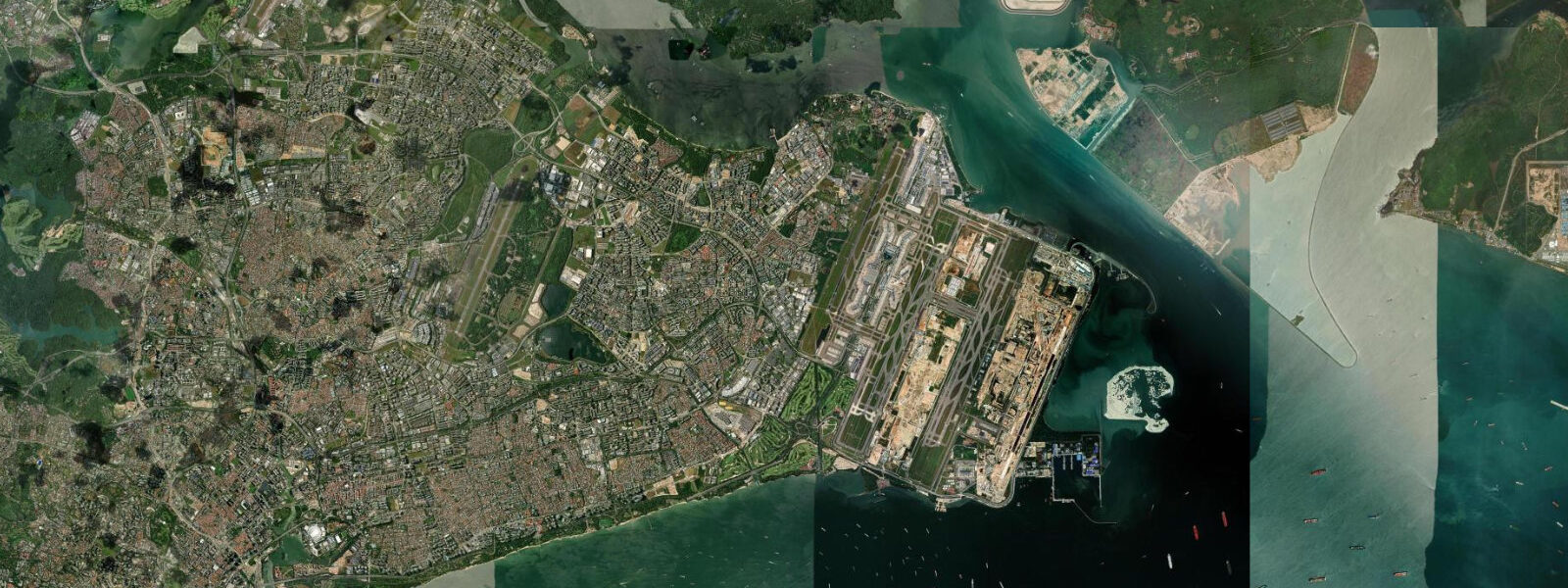
Changi, Singapore tide times
Changi, Singapore tide forecast — heights relative to MSL.
Today's tide times for Changi, Singapore
Tide times at Changi, Singapore on Monday, 3 August 2026: first low tide at 08:00, first high tide at 13:48, second low tide at 19:54. Sunrise 07:05, sunset 19:15.
Tide chart for Changi, Singapore
24-hour cosine-interpolated curve around the present moment. Heights relative to MSL. Predictions: Predictions: Open-Meteo Marine (MeteoFrance SMOC, 0.08° grid).
Sun, moon and conditions on Mon 03 Aug
Snapshot at build time — refreshes daily. Sea state from Open-Meteo Marine.
Highs and lows next 7 days
Every predicted high and low for the next week, with the daily tidal coefficient (0–120; higher = bigger swing, > 95 means stronger currents).
Other spots nearby
The three closest curated TideTurtle locations to Changi, Singapore, measured by great-circle distance.
Today's solunar windows
Solunar tradition: major periods are the ≈3h windows around moon transit and opposition; minor are ≈2h around moonrise and moonset. Pair with the local tide stage and wind for the best read.
Cycle dates near Changi, Singapore
Last spring tide on Mon 03 Aug (range 1.9m). Next neap on Sat 08 Aug.
Spring tides cluster around new and full moons (biggest swings). Neap tides land on quarter moons (smallest swings). See the spring tide and neap tide glossary entries for the why.
About tides at Changi, Singapore
A short guide to the coastline at Changi, Singapore — geography, sea state, and what the tide is actually doing under your feet.
Changi occupies the northeastern tip of Singapore Island, where the land narrows to a low headland facing the Johor Strait. Malaysia's southeastern peninsular coast is visible from the beach at any clear moment — Johor Bahru is 1.8 km across the water at the strait's narrowest point, and the causeway at Woodlands 15 km to the west is close enough that vehicle lights are visible after dark on the right conditions.
The tidal regime is mixed semidiurnal: two highs and two lows per day with variable heights resulting from the diurnal inequality of the Singapore Strait. Mean spring range is 2.0 to 2.5 m at the Changi gauge. The Johor Strait restricts tidal flow at both ends — the western end is constrained by the Woodlands causeway and the eastern end opens into the broader Singapore and Johor Strait system. The effect is a tidal curve that is slightly lagged relative to the southern Singapore stations and with a modest amplification on spring tides. Currents in the strait run east on the flood and west on the ebb, averaging 0.5 to 1.0 knots at mid-tide on springs — relevant for paddlers and anglers anchoring in the channel.
Changi Beach Park is a 3.3 km linear waterfront park running along the shore west of Changi Point. It is one of Singapore's oldest gazetted recreational beaches, established during the British colonial period and used by servicemen stationed at the adjacent RAF Changi and army barracks. The park retains the character of an older-style Singapore beach — casuarina trees lining the shore, basic pavilions, a relatively uncrowded atmosphere that contrasts with the managed resort beaches in the south. At low spring water the tidal flats extend 50 to 100 m from the shore. The flat is sandy-muddy, firm enough to walk on with bare feet across most of its width, and it hosts the densest visible shorebird activity of any accessible Singapore beach.
Sandpipers — common sandpiper year-round, greater and lesser sand plover in the migratory seasons — work the flat edge from 30 minutes before predicted low water through the first hour of the flood. Egrets are permanent: the little egret and the great egret both work the flat at low water, the little egret moving faster and closer to the receding water edge, the great egret standing further out and waiting. Whimbrel pass through in good numbers in September and April, using the flat as a staging area. The best birding window is the 90 minutes centred on low water, from the seawall or the flat itself.
Pulau Ubin is visible 1 km offshore from Changi Point. The island is 10.2 km² and largely undeveloped — forest, kampung houses, and one of Singapore's remaining mangrove coasts on the western shore facing the strait. Bumboat service from Changi Point Ferry Terminal operates on demand: the boats depart when they have a load (around 12 passengers), day-trip passengers typically wait 10 to 20 minutes in off-peak periods. The crossing takes 10 minutes. The service is not tide-restricted — the bumboats run at all tide states, using a floating pontoon at the Changi terminal that rises and falls with the water.
Ubin's western mangrove coast is the paddling objective that draws kayakers to Changi. The mangrove channel system runs along the western shore of the island for roughly 2 km. The flood tide is the working window: incoming water lifts the kayak over the shallower sill at the mangrove fringe entry point and allows penetration into the interior channels. At low water the channels expose muddy root systems and navigation closes off. A practical approach is to land on Ubin's northeastern beach via bumboat, collect kayaks from the rental operator at the Ubin jetty, and launch within 45 minutes of the predicted low water to ride the full flood tide into the mangrove system — roughly 3 hours of navigable depth before the ebb begins to drain the channels again.
Changi Point Ferry Terminal operates two regular services in addition to the Ubin bumboats: the Pengerang service to Johor, Malaysia, which is schedule-operated and runs regardless of tide, and a Pulau Ubin standby link. The terminal floating pontoon adjusts to the 2.0 to 2.5 m spring range without obstruction.
The Changi Prison complex sits 3 km south of the beach on Upper Changi Road. During the Japanese occupation from February 1942 to August 1945, the prison held Allied military prisoners of war and civilian internees under conditions of severe deprivation. A chapel was reconstructed by the prisoners using salvaged materials; a replica of the original Changi Chapel is maintained at the Changi Chapel and Museum, which is open to the public. The museum's context is relevant to the broader coastal geography — the surrender of Singapore was the fall of what had been Britain's main strategic naval base in Asia, and Changi's military infrastructure was central to that role.
For fishing, the seawall west of the ferry terminal and the rock causeway at Changi Point are the main platforms. Incoming tide from one hour before high water is the productive window. Mangrove jack, grouper, and threadfin are the target species; squid jigging works in the main strait channel from the point at night on the flood.
Tide data for Changi, Singapore comes from the Open-Meteo Marine API, a gridded model product. Timing accuracy is ±45 minutes, height accuracy ±0.3 m — usable for trip planning, not for navigation.
Tide questions about Changi, Singapore
Quick answers to the most common questions about tide times, range, and water access at Changi, Singapore.
When should I plan a kayak trip into Ubin's mangrove channels from Changi?
The mangrove channel system on Pulau Ubin's western shore requires the flood tide to be navigable. The practical entry window opens roughly 45 minutes after predicted low water, when rising water begins to cover the sill at the mangrove fringe. You have approximately 3 hours of usable depth before the ebb starts draining the inner channels. A workable approach: take the bumboat from Changi Point to Ubin within 30 minutes of predicted low water, collect kayaks at the Ubin jetty, and be at the western shore entrance as the flood builds. The return paddle to the jetty should be planned to start no later than 2.5 hours into the flood — the ebb can run 0.5 to 0.8 knots in the western channel, and paddling against it in the strait crossing adds 15 to 20 minutes to the bumboat approach.
What shorebirds can I see on Changi Beach's tidal flats and when?
The tidal flat at Changi Beach Park extends 50 to 100 m at low spring water and is active feeding ground for waders and egrets. Common sandpiper is present year-round along the flat edge. Greater and lesser sand plover are consistent during the northward migration from March through May and southward from August through October. Whimbrel use the flat as a staging area in April and September — counts of 20 to 40 birds in a single morning session are not unusual during peak passage. Egrets are year-round: little egret moves quickly along the water edge, great egret stands in the shallower offshore zone. The 90-minute window centred on predicted low water is the most productive. The flat drains progressively from the shore edge outward; position yourself at the seawall with a scope or 10× binoculars to work the outer edge without disturbing birds on the flat.
Is the bumboat to Pulau Ubin tide-restricted?
No. The Changi Point Ferry Terminal uses a floating pontoon that adjusts automatically to the 2.0 to 2.5 m spring tidal range. Bumboats operate on demand throughout the day regardless of tide state — they depart when approximately 12 passengers have assembled, so waiting time in off-peak periods is typically 10 to 20 minutes. The crossing to Ubin takes 10 minutes. The service runs from early morning until early evening; check the NEA-published operating hours for the current season. Tide state is relevant not to the boat crossing but to what you plan to do on Ubin once you arrive — mangrove kayaking requires the flood tide, and tidal flat birdwatching on Ubin's northern shore requires low water.
What is the fishing like at Changi Point and what is the best tide state?
Changi Point and the seawall west of the ferry terminal are productive shore fishing platforms. The incoming tide from one hour before high water through the first hour of the ebb is the standard productive window — current moving northwest through the Johor Strait on the flood pushes baitfish against the point structure, and predatory fish hold in the current break. Mangrove jack are the prestige catch and respond to live bait and soft plastics worked along the structure. Grouper hold in the deeper water at the point base; threadfin are taken in the surf zone in the early morning on live prawns. Squid jigging at night on the flood tide in the main strait channel produces well from October through February, when squid move into the strait in higher numbers. The seawall gives a 1.5 to 2.5 m casting height above the water at mid-tide — useful clearance for spinning rod casts across the current.
How does Changi's tidal pattern differ from Singapore's southern beaches?
Changi is on the Johor Strait rather than the Singapore Strait, which produces a measurably different tidal behaviour. The Johor Strait is partially enclosed — the western end is restricted by the Woodlands causeway and the Tuas Second Link, which damp the tidal flow. The result is that Changi's tidal curve is slightly lagged relative to southern stations like Sentosa or Pasir Panjang: high water at Changi arrives 15 to 25 minutes later than at the southern tide gauge stations on spring tides. Mean spring range at Changi is 2.0 to 2.5 m — within the same order as the southern Singapore stations but at the lower end. The mixed semidiurnal character remains: two highs and two lows per day with variable heights from the diurnal inequality. When planning the same day across both southern and northeastern Singapore locations, apply the Changi-specific time offset from published tide table corrections.
8-day tide table — Changi, Singapore
Heights relative to MSL. Predictions: Open-Meteo Marine (MeteoFrance SMOC, 0.08° grid) — heights relative to MSL (not chart datum / LAT). Model-derived.
| Day | Type | Time | Height |
|---|---|---|---|
| Mon 03 Aug | Low | 08:00 | -0.3m |
| High | 13:48 | 1.6m | |
| Low | 19:54 | -0.0m | |
| Tue 04 Aug | High | 01:49 | 1.6m |
| Low | 08:08 | -0.3m | |
| High | 14:21 | 1.5m | |
| Low | 20:35 | -0.1m | |
| Wed 05 Aug | High | 02:38 | 1.4m |
| Low | 08:49 | -0.1m | |
| High | 14:54 | 1.5m | |
| Low | 21:20 | -0.2m | |
| Thu 06 Aug | High | 15:32 | 1.4m |
| Low | 22:07 | -0.3m | |
| Fri 07 Aug | High | 04:33 | 1.1m |
| Low | 10:13 | 0.3m | |
| High | 16:20 | 1.3m | |
| Low | 23:14 | -0.3m | |
| Sat 08 Aug | High | 05:58 | 1.0m |
| Sun 09 Aug | Low | 00:26 | -0.3m |
| High | 07:45 | 1.0m | |
| Low | 12:40 | 0.7m | |
| High | 18:45 | 1.2m | |
| Mon 10 Aug | Low | 01:53 | -0.4m |
| High | 07:00 | 0.8m |