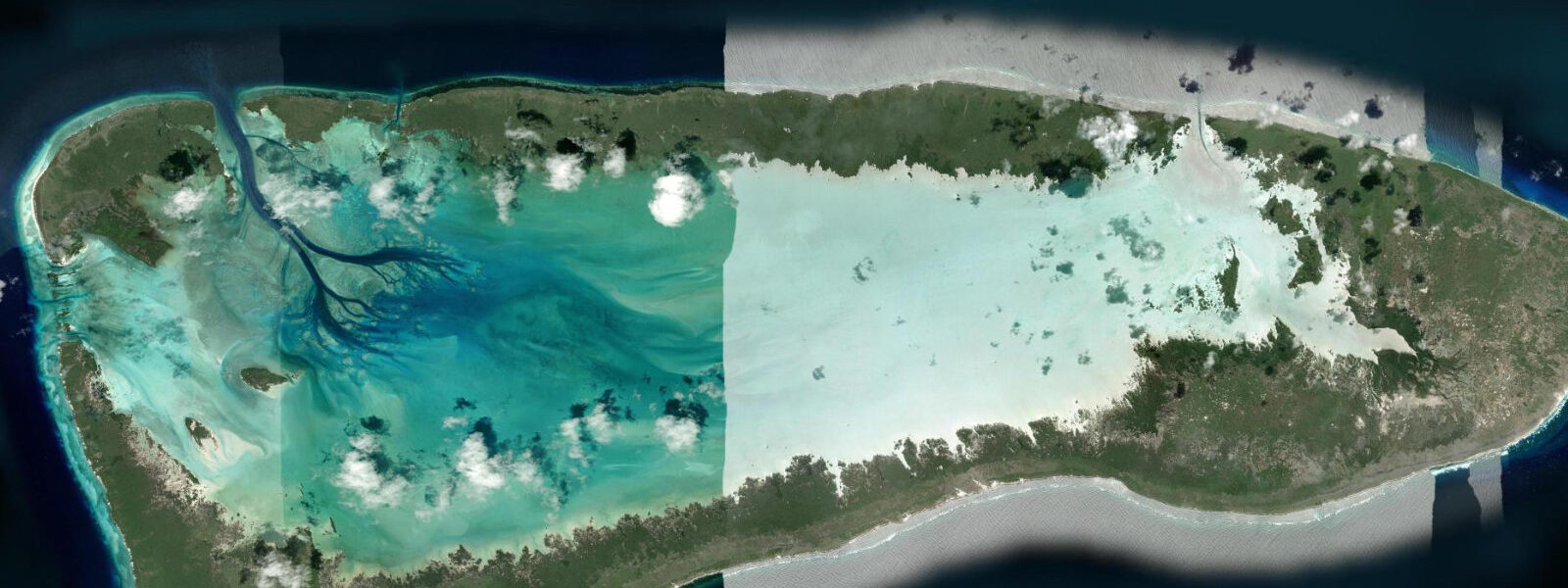
Aldabra Atoll tide times
Aldabra Atoll tide forecast — heights relative to MSL.
Today's tide times for Aldabra Atoll
Tide times at Aldabra Atoll on Tuesday, 4 August 2026: first low tide at 04:00am, first high tide at 07:46am, second low tide at 01:54pm, second high tide at 07:54pm. Sunrise 07:09am, sunset 06:52pm.
Tide chart for Aldabra Atoll
24-hour cosine-interpolated curve around the present moment. Heights relative to MSL. Predictions: Predictions: Open-Meteo Marine (MeteoFrance SMOC, 0.08° grid).
Sun, moon and conditions on Tue 04 Aug
Snapshot at build time — refreshes daily. Sea state from Open-Meteo Marine.
Highs and lows next 7 days
Every predicted high and low for the next week, with the daily tidal coefficient (0–120; higher = bigger swing, > 95 means stronger currents).
Other spots nearby
The three closest curated TideTurtle locations to Aldabra Atoll, measured by great-circle distance.
Today's solunar windows
Solunar tradition: major periods are the ≈3h windows around moon transit and opposition; minor are ≈2h around moonrise and moonset. Pair with the local tide stage and wind for the best read.
Cycle dates near Aldabra Atoll
Last spring tide on Tue 04 Aug (range 2.3m). Next spring tide on Mon 10 Aug (range 2.1m). Next neap on Sat 08 Aug.
Spring tides cluster around new and full moons (biggest swings). Neap tides land on quarter moons (smallest swings). See the spring tide and neap tide glossary entries for the why.
About tides at Aldabra Atoll
A short guide to the coastline at Aldabra Atoll — geography, sea state, and what the tide is actually doing under your feet.
Aldabra Atoll is the world's largest raised coral atoll, a UNESCO World Heritage Site, and one of the least-visited significant wildlife locations on the planet. It lies approximately 1,100 kilometres southwest of Mahé in the western Indian Ocean, closer to Madagascar and the East African coast than to the Seychelles granite islands. Access is restricted to scientific research permit holders and occasional transiting yachts; there is no commercial tourism.
The island is managed by the Seychelles Islands Foundation (SIF), which maintains a small research station. The tidal regime at Aldabra is among the most dramatic of any atoll in the Indian Ocean. 5 metres, and the atoll's geometry amplifies the effect: four passes (Passe Houareau, Passe Gionnet, Passe du Sud, and Passe Femme) connect the 155-square-kilometre lagoon to the open ocean.
At spring tides, water moving through these passes reaches 4 to 5 knots — among the strongest tidal currents in the tropical Indian Ocean. The passes are the ecological engine of the atoll: high nutrient, oxygen-rich oceanic water is pumped through the lagoon twice daily, sustaining a marine ecosystem that functions at a scale uncommon elsewhere in the Indian Ocean. The atoll is most widely known for its giant tortoises.
Aldabra holds approximately 100,000 Aldabra giant tortoises (Aldabrachelys gigantea), the largest population on earth — more than ten times the Galápagos population. The tortoises range across the main land rim, the beaches, and the scrub interior, and their grazing maintains the vegetation structure of the atoll in a way that no other large herbivore on the Indian Ocean islands does. They are diurnal and most active in early morning and late afternoon, retreating into shade during the midday heat.
The seabird colonies at Aldabra are among the most significant in the Indian Ocean. The atoll holds the world's largest frigatebird colony — both great frigatebird (Fregata minor) and lesser frigatebird (Fregata ariel) nest here in the tens of thousands. Red-footed booby (Sula sula) nests in the pisonia trees on the rim.
A flamingo colony occupies the shallow lagoon, and the endemic Aldabra rail (Dryolimnas cuvieri aldabranus) is the last flightless bird in the Indian Ocean basin. The marine environment of the lagoon and the outer reef is intact to a degree rare anywhere in the Indian Ocean. Hawksbill and green turtles nest on the beaches; dugong are present in the seagrass beds of the lagoon.
Manta rays use the passes on the tidal current, positioning themselves in the current stream to filter-feed. The outer reef wall descends steeply — 30 to 100 metres within a short horizontal distance — and supports the full complement of Indian Ocean large reef species including grouper, Napoleon wrasse, and shark species that have been fished out of almost every accessible reef in the region. Visiting Aldabra requires a research or educational purpose and an application to the Seychelles Islands Foundation at minimum six months in advance.
Transiting yacht crew can apply for a short stop permit. All other access, including private charter, is not available. This is a tide page, not a tourism advertisement — the tidal data here is provided for legitimate navigational and scientific planning purposes.
Predictions on this page come from Open-Meteo Marine, a gridded global ocean model. 3 metres on height — model-derived, not from a local gauge. The national authority is the Seychelles Fishing Authority (SFA) and the Seychelles Maritime Safety Administration (SMSA).
Tide questions about Aldabra Atoll
Quick answers to the most common questions about tide times, range, and water access at Aldabra Atoll.
How many giant tortoises live on Aldabra?
Approximately 100,000 Aldabra giant tortoises (Aldabrachelys gigantea) live on the atoll, making it the largest population of any giant tortoise species on earth. The Galápagos Islands, commonly cited as the world's giant tortoise stronghold, hold fewer than 15,000 across all species combined. Aldabra's population survived because the atoll was too remote and too difficult to access for the large-scale exploitation that eliminated tortoises from most Indian Ocean islands in the 18th and 19th centuries. The Seychelles Islands Foundation has managed the population under strict conservation protocols since the 1980s.
What tidal currents run through Aldabra's passes?
The four passes connecting Aldabra's 155-square-kilometre lagoon to the open ocean run at 4 to 5 knots on spring tides — among the strongest tidal currents in the tropical Indian Ocean. The passes are Passe Houareau (north), Passe Gionnet (west), Passe du Sud (south), and Passe Femme (east). The current direction reverses with the tide: on the flood it runs into the lagoon, on the ebb it drains out. Slack water in the passes lasts only 10 to 20 minutes at springs. For any vessel entering or leaving the atoll, timing passage through a pass is essential; attempting a pass against a 5-knot current in a small boat is not safe.
Can tourists visit Aldabra Atoll?
Standard commercial tourism is not available at Aldabra. The atoll is managed by the Seychelles Islands Foundation (SIF) exclusively for scientific research and conservation. Researchers and scientists can apply for research permits; the application process takes a minimum of six months and requires institutional affiliation and a defined research purpose. Transiting yacht crew may apply to SIF for a short-stop permit to anchor and go ashore briefly; approval is not guaranteed. All applications go through the Seychelles Islands Foundation in Victoria, Mahé. Charter yachts, dive liveaboards, and private visitors without research permits cannot access the island.
What seabirds nest at Aldabra?
Aldabra holds the world's largest colony of great frigatebirds (Fregata minor) and a large colony of lesser frigatebirds (Fregata ariel) — tens of thousands of nesting pairs combined. Red-footed boobies (Sula sula) nest in the pisonia trees on the northern rim. A flamingo colony (Phoenicopterus roseus, greater flamingo) occupies the shallow lagoon margins. The endemic Aldabra rail (Dryolimnas cuvieri aldabranus) is the last surviving flightless bird in the Indian Ocean island chain — all others were exterminated by introduced rats or hunting. White-throated rail on other islands is flighted; the Aldabra subspecies reverted to flightlessness after predator-free conditions on the atoll made flight unnecessary.
What marine life is present in Aldabra's lagoon and outer reef?
The lagoon supports dugong (Dugong dugon) in the seagrass beds — a small but consistent population. Hawksbill and green turtles nest on the outer beaches and feed in the lagoon. Manta rays use the passes during tidal flows, positioning in the current stream to filter-feed on the nutrient-rich water. The outer reef wall descends steeply and holds grouper, Napoleon wrasse, grey reef shark, and hammerhead shark in numbers now very unusual at accessible reefs elsewhere in the Indian Ocean. Coral coverage on the outer wall and inside the lagoon is among the highest recorded at any Indian Ocean site in recent survey data.
8-day tide table — Aldabra Atoll
Heights relative to MSL. Predictions: Open-Meteo Marine (MeteoFrance SMOC, 0.08° grid) — heights relative to MSL (not chart datum / LAT). Model-derived.
| Day | Type | Time | Height |
|---|---|---|---|
| Tue 04 Aug | Low | 04:00 | -0.1m |
| High | 07:46 | 1.4m | |
| Low | 13:54 | -0.8m | |
| High | 19:54 | 1.2m | |
| Wed 05 Aug | Low | 02:03 | -0.9m |
| High | 08:22 | 1.3m | |
| Low | 14:37 | -0.6m | |
| High | 20:32 | 1.0m | |
| Thu 06 Aug | Low | 02:38 | -0.7m |
| High | 09:10 | 1.2m | |
| Low | 15:33 | -0.4m | |
| High | 21:22 | 0.7m | |
| Fri 07 Aug | Low | 03:26 | -0.5m |
| High | 10:14 | 1.1m | |
| Low | 16:57 | -0.3m | |
| High | 22:40 | 0.5m | |
| Sat 08 Aug | Low | 04:40 | -0.3m |
| High | 11:53 | 1.0m | |
| Low | 19:00 | -0.3m | |
| Sun 09 Aug | High | 00:51 | 0.4m |
| Low | 06:40 | -0.3m | |
| High | 13:40 | 1.1m | |
| Low | 20:34 | -0.5m | |
| Mon 10 Aug | High | 02:34 | 0.6m |
| Low | 08:18 | -0.5m | |
| High | 14:53 | 1.4m | |
| Low | 21:35 | -0.7m | |
| Tue 11 Aug | High | 03:00 | 0.9m |