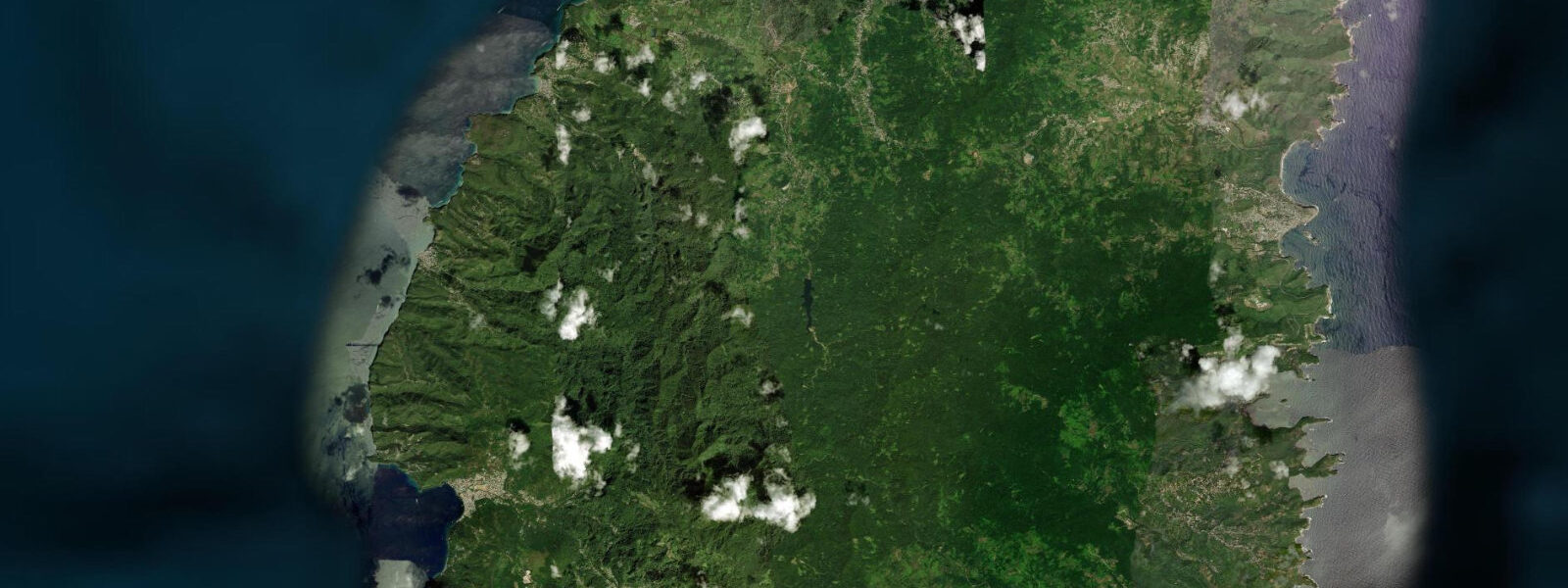
Soufrière, Saint Lucia tide times
Soufrière, Saint Lucia tide forecast — heights relative to MSL.
Tide chart for Soufrière, Saint Lucia
24-hour cosine-interpolated curve around the present moment. Heights relative to MSL. Predictions: Predictions: Open-Meteo Marine (MeteoFrance SMOC, 0.08° grid).
Sun, moon and conditions on Tue 04 Aug
Snapshot at build time — refreshes daily. Sea state from Open-Meteo Marine.
Highs and lows next 7 days
Every predicted high and low for the next week, with the daily tidal coefficient (0–120; higher = bigger swing, > 95 means stronger currents).
Other spots nearby
The three closest curated TideTurtle locations to Soufrière, Saint Lucia, measured by great-circle distance.
Today's solunar windows
Solunar tradition: major periods are the ≈3h windows around moon transit and opposition; minor are ≈2h around moonrise and moonset. Pair with the local tide stage and wind for the best read.
About tides at Soufrière, Saint Lucia
A short guide to the coastline at Soufrière, Saint Lucia — geography, sea state, and what the tide is actually doing under your feet.
Soufrière Bay sits between the two Piton peaks on Saint Lucia's southwest coast, one of the more visually arresting anchorages in the Caribbean. Gros Piton rises to 770 metres directly from the waterline on the southern side of the bay; Petit Piton, at 743 metres and a steeper-sided cone, defines the northern approach. Both were designated a UNESCO World Heritage Site in 2004.
The town of Soufrière, established in 1746, occupies the flat ground at the head of the bay; the waterfront has the standard small-town Caribbean mix of a small dock, fishing pirogues pulled above the waterline, and the persistent presence of boat taxis and dive boats working the bay. The Anse Chastanet reef, immediately north of Petit Piton, is the most accessible wall dive on the island — the reef slope starts at under 3 metres and the wall begins at roughly 9 metres, dropping beyond 30. The visibility is typically 20 to 30 metres on a calm morning before the trade wind builds.
La Soufrière, the drive-in volcano in the hills above town, is the dominant inland feature; the active sulphur springs produce a thermal mud-bath complex and hot springs that have been developed for bathing. The hydrogen sulphide smell reaches the bay when the wind is from the south. Diamond Falls Botanical Garden and the Diamond Mineral Baths sit in the same zone, accessible by road from the Soufrière town square.
The yacht anchorage in Soufrière Bay is one of the most popular on the island's circuit; mooring buoys are managed by a fee-based system, and the bay can hold 60 to 80 boats on a busy weekend during winter charter season. 5 metres. At this range the astronomical tide is a minor variable for most coastal activities — dive site timing, snorkelling visibility, and kayak access are far more dependent on the morning glass window and the trade wind schedule than on whether it is high or low water.
The change-of-tide slack at Anse Chastanet wall does affect current, and the incoming tide in the morning hours corresponds with the best visibility and least surge at the wall. The Piton Wall itself, at the base of Petit Piton, runs a stronger current on the ebb and is typically dived only with a live-boat pickup rather than a shore-exit return. Kayakers and paddleboarders working the bay between the two Pitons plan for the morning glass before 09:00; the trade wind typically fills from the northeast by mid-morning and produces a chop that makes paddling back to the Anse Chastanet beach or the town dock noticeably more demanding.
Shore-based photography of the Pitons from the town dock or from the headland north of the bay works at any tide state; the light quality in the early morning, with the peaks catching low-angle sun while the bay is still in shadow, is the best composition window. 3 metres on height. For Saint Lucia Meteorological Service swell and weather forecasts, check their published bulletins alongside the tide table.
Tide questions about Soufrière, Saint Lucia
Quick answers to the most common questions about tide times, range, and water access at Soufrière, Saint Lucia.
When is the best time to dive the Anse Chastanet wall?
The Anse Chastanet wall dives best in the morning, before the northeast trade wind builds and before the afternoon boat traffic disturbs the surface visibility. The reef slope starts at under 3 metres, making it accessible on a snorkel as well as scuba. The incoming tide in the early morning hours corresponds with the best visibility — incoming water from the open Caribbean pushes clearer water over the reef. Aim to be in the water by 07:30 to 09:00. Dive operators based at Anse Chastanet and Ladera run guided dives throughout the morning; afternoon dives are perfectly serviceable but typically in lower visibility and higher boat traffic.
What is the tide range at Soufrière?
The Caribbean microtidal regime at Soufrière produces a spring range of roughly 0.3 to 0.5 metres — genuinely small. Two unequal highs and two unequal lows each day on a mixed semidiurnal pattern. At this range the tide is rarely the controlling variable for coastal activities; current at the Piton Wall is the dive-relevant factor, and that current is driven by the regional trade-wind circulation and tidal gradient, not purely by local tidal height. The astronomical prediction is most useful for planning sunrise anchorage positions and dinghy landings at the town dock.
How do I get to Soufrière?
Soufrière is accessible by road from Castries (approximately 45 km, an hour to 90 minutes on the winding west coast road, or via the recently improved trans-island road through the Barre de l'Isle forest reserve), by the Express des Îles ferry (Castries to Soufrière water taxi service runs daily during charter season), and by helicopter from Hewanorra or George F. L. Charles Airport. Driving the mountain road is straightforward; the switchbacks above the Roseau Valley descend steeply to the bay. Boat taxis from Marigot Bay and Castries Harbour operate informally and can be arranged at the docks.
Where do the tide predictions for Soufrière come from?
Open-Meteo Marine, a free gridded global ocean model. Accuracy is typically within plus or minus 45 minutes on timing and 0.2 to 0.3 metres on height. For Saint Lucia, at a spring range of 0.3 to 0.5 metres, that uncertainty is a meaningful fraction of the total signal — treat the predicted highs and lows as approximate timing guides. The nearest authoritative gauge reference in the eastern Caribbean is published by the Caribbean Meteorological Organisation; the Saint Lucia Meteorological Service publishes swell and weather forecasts relevant to the Soufrière Bay conditions.
Is this safe to use for navigation?
No. Soufrière Bay is an active anchorage with mooring buoys, dive boat traffic, and vessel approaches from the south along the Piton coast. The Piton Wall at the base of Petit Piton is an unmarked underwater hazard in the immediate approach line from the south. For vessel navigation in the bay and along the southwest Saint Lucia coast, use current Eastern Caribbean charts and the OECS/CARICOM Notices to Mariners. Open-Meteo Marine gridded predictions are not authoritative navigational data.
6-day tide table — Soufrière, Saint Lucia
Heights relative to MSL. Predictions: Open-Meteo Marine (MeteoFrance SMOC, 0.08° grid) — heights relative to MSL (not chart datum / LAT). Model-derived.
| Day | Type | Time | Height |
|---|---|---|---|
| Tue 04 Aug | — | ||
| Wed 05 Aug | Low | 01:50 | 0.1m |
| High | 07:00 | 0.2m | |
| Low | 12:00 | 0.1m | |
| High | 19:10 | 0.4m | |
| Thu 06 Aug | Low | 03:10 | 0.1m |
| Fri 07 Aug | High | 21:00 | 0.4m |
| Sat 08 Aug | Low | 05:50 | 0.0m |
| High | 22:00 | 0.5m | |
| Sun 09 Aug | Low | 06:50 | -0.0m |
| High | 23:10 | 0.5m | |