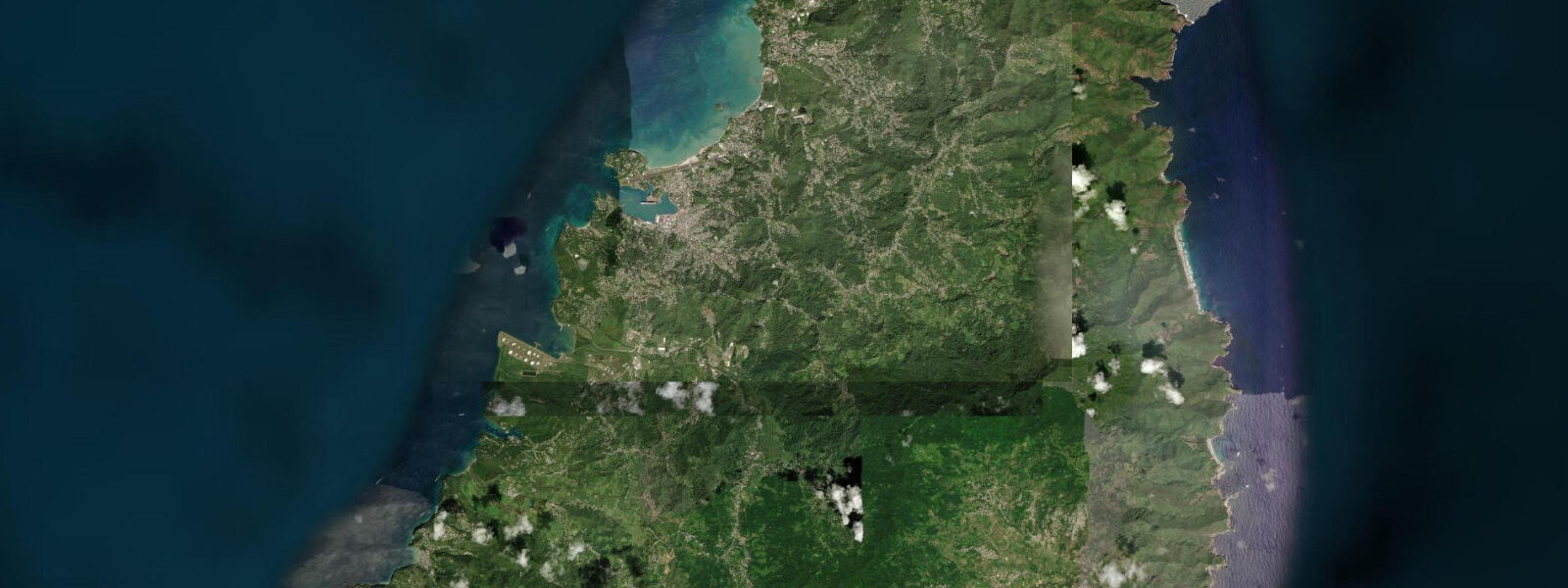
Choc Bay, Saint Lucia tide times
Choc Bay, Saint Lucia tide forecast — heights relative to MSL.
Today's tide times for Choc Bay, Saint Lucia
Tide times at Choc Bay, Saint Lucia on Monday, 3 August 2026: first high tide at 06:00pm. Sunrise 05:48am, sunset 06:31pm.
Tide chart for Choc Bay, Saint Lucia
24-hour cosine-interpolated curve around the present moment. Heights relative to MSL. Predictions: Predictions: Open-Meteo Marine (MeteoFrance SMOC, 0.08° grid).
Sun, moon and conditions on Mon 03 Aug
Snapshot at build time — refreshes daily. Sea state from Open-Meteo Marine.
Highs and lows next 7 days
Every predicted high and low for the next week, with the daily tidal coefficient (0–120; higher = bigger swing, > 95 means stronger currents).
Other spots nearby
The three closest curated TideTurtle locations to Choc Bay, Saint Lucia, measured by great-circle distance.
Today's solunar windows
Solunar tradition: major periods are the ≈3h windows around moon transit and opposition; minor are ≈2h around moonrise and moonset. Pair with the local tide stage and wind for the best read.
About tides at Choc Bay, Saint Lucia
A short guide to the coastline at Choc Bay, Saint Lucia — geography, sea state, and what the tide is actually doing under your feet.
Choc Bay opens along the Caribbean coast of Saint Lucia 6 km north of Castries, a 1.5 km arc of beach sheltered slightly more than Vigie Beach to its south by a narrow fringing reef 100 m offshore. The bay faces west-southwest, catching afternoon light and the prevailing northeast trades at an angle rather than head-on, which keeps surface chop lower than at more exposed beaches on the northwest tip of the island.
The tides are Caribbean microtidal across Saint Lucia's leeward coast. Mean spring range at Choc Bay is 0.3–0.5 m. Low water sits near 0.1 m above chart datum; high water near 0.4 m. These are small numbers, but the shallow reef profile makes the effects visible: at low spring water the inner reef flat becomes very shallow, the beach face widens, and the sandbar at the Choc River estuary mouth partially emerges — a pale tongue of packed sand extending 20–30 m from the riverbank into the bay.
The Choc River estuary anchors the southern end of the bay. The river is small — 3–4 m wide at its mouth — but the tidal influence runs 300 m inland. At incoming tide, seawater pushes back up the lower river channel, raising salinity and bringing in juvenile fish and baitfish that attract larger predators. Snook (calinda in Saint Lucian Creole) are the primary target at the estuary mouth. The productive window is the first two to three hours of the incoming tide, when the water is moving strongly into the estuary but before salinity equalises. Early morning, roughly 05:30–08:00, before boat traffic and wind build, is the most consistent slot. Local anglers use live bait or soft plastics worked along the estuary channel edges.
The sandbar at the river mouth is worth timing separately. At low spring water it is partially exposed and walkable from the beach side — the bar's outer edge sits 0.1–0.2 m above water, giving a vantage point over the estuary mouth and the shallow inner bay. At high tide the bar is submerged. This is also where birdlife concentrates: frigatebirds, brown pelicans, and little egrets work the river mouth at low water when baitfish are concentrated in shrinking pools.
North of the estuary, the main section of Choc Bay beach runs in a straight line backed by coastal vegetation and the access road. The Sandals Halcyon resort occupies a section of the beachfront mid-bay; resort guests use a designated beach area, but Choc Bay is a public beach and non-guests can access the water along the full bay perimeter via the public road.
The northern end of Choc Bay is the active watersports zone. From December through April, when the northeast trade winds blow steadily at 15–25 knots, windsurfers and kitesurfers set up here. The fetch across the Caribbean is long enough to generate a consistent 0.5–1.0 m windswell, and the bay is wide enough for a full kitesurfing run without closure hazards. Board rentals and lessons are available seasonally through operators based north of Castries, though Choc Bay itself does not have a permanent rental facility — check with Rodney Bay-based operators for current availability.
The hillside rising behind Choc Bay carries the main road south toward Castries and up to Morne Fortune — the ridge fortification site known as Fort Charlotte. The fort sits 280 m above sea level on Fortunate Hill and was occupied successively by French and British forces through the 18th century. It is visible from the beach as a tree-covered ridge with a few structure outlines. The Bay of Castries opens to the south from any elevated point along the Choc Bay hillside road; the view takes in the harbour entrance, Vigie Peninsula, and the Castries container port.
For beach families, Choc Bay is a low-key option: calmer water than Vigie Beach, less airport noise, and the estuary at the south end provides a tidal pool environment for children at low water. The fringing reef keeps the wave energy down. Shade trees line the back of the beach in sections.
Tide data for Choc Bay comes from the Open-Meteo Marine API, a gridded model product. Timing accuracy is ±45 minutes, height accuracy ±0.3 m — usable for trip planning, not for navigation.
Tide questions about Choc Bay, Saint Lucia
Quick answers to the most common questions about tide times, range, and water access at Choc Bay, Saint Lucia.
What is the tidal range at Choc Bay, Saint Lucia?
Choc Bay is Caribbean microtidal with a mean spring range of 0.3–0.5 m. Low water sits near 0.1 m above chart datum, high water near 0.4 m. The small range is consistent year-round. The practical effects are visible at the river estuary end of the bay: at low spring the Choc River sandbar partially emerges and the fringing reef becomes very shallow inside 100 m of shore. Beach width changes modestly between low and high — roughly 5–10 m difference — but the estuary sandbar is the most dramatic low-tide feature.
When should I fish for snook at the Choc River estuary?
The productive window for snook at the Choc River estuary mouth is the first two to three hours of the incoming tide. Seawater pushing back up the channel concentrates baitfish at the river mouth and activates predator feeding. Early morning — 05:30–08:00 — before wind builds and boat traffic starts, is the best combined slot: incoming tide in that window roughly every other day depending on the tidal cycle. Use live bait or soft plastic lures worked along the channel edges where the river current meets the incoming tidal flow.
Is Choc Bay suitable for kitesurfing and windsurfing?
The northern section of Choc Bay is the main watersports area. From December through April, northeast trade winds blow steadily at 15–25 knots, generating 0.5–1.0 m windswell across the bay. The bay is wide enough for full kitesurfing runs without reef or boat hazards on the active north section. Outside the December–April trade wind season, winds are lighter and less consistent. Gear rental is not permanently based at Choc Bay — contact operators in the Rodney Bay area, 7 km north, for current availability.
Can I walk to Choc Bay from Castries?
Choc Bay is 6 km north of Castries city centre, too far to walk comfortably in tropical heat. Minibus taxis from Castries central market run the north coastal corridor and will drop you at Choc Bay junction, a 5-minute ride. The beach is public access along its full length. The Sandals Halcyon resort occupies a section of the beachfront but does not gate the public beach — access to the water is available via the public road that parallels the bay. Vigie Beach, 1 km south and walking distance from the city, is the closer option if transport is limited.
What wildlife is visible at Choc Bay at low tide?
The Choc River estuary mouth at low spring water concentrates birdlife and juvenile fish. Frigatebirds, brown pelicans, and little egrets regularly work the sandbar and shallow estuary pools when baitfish are trapped in receding water. The partially exposed sandbar is the best viewing point — 20–30 m from the riverbank, walkable at low spring. The fringing reef 100 m offshore holds small parrotfish and damselfish visible by snorkelling at mid to high tide. The estuary itself has snook, mullet, and occasional tarpon, with the most activity at the incoming tide transition.
7-day tide table — Choc Bay, Saint Lucia
Heights relative to MSL. Predictions: Open-Meteo Marine (MeteoFrance SMOC, 0.08° grid) — heights relative to MSL (not chart datum / LAT). Model-derived.
| Day | Type | Time | Height |
|---|---|---|---|
| Mon 03 Aug | High | 18:00 | 0.4m |
| Tue 04 Aug | Low | 00:50 | 0.1m |
| High | 06:00 | 0.3m | |
| Wed 05 Aug | Low | 02:00 | 0.1m |
| Thu 06 Aug | High | 20:00 | 0.4m |
| Fri 07 Aug | Low | 05:00 | 0.0m |
| High | 21:00 | 0.4m | |
| Sat 08 Aug | Low | 06:00 | 0.0m |
| High | 22:10 | 0.5m | |
| Sun 09 Aug | Low | 07:00 | -0.0m |
| High | 19:00 | 0.3m |