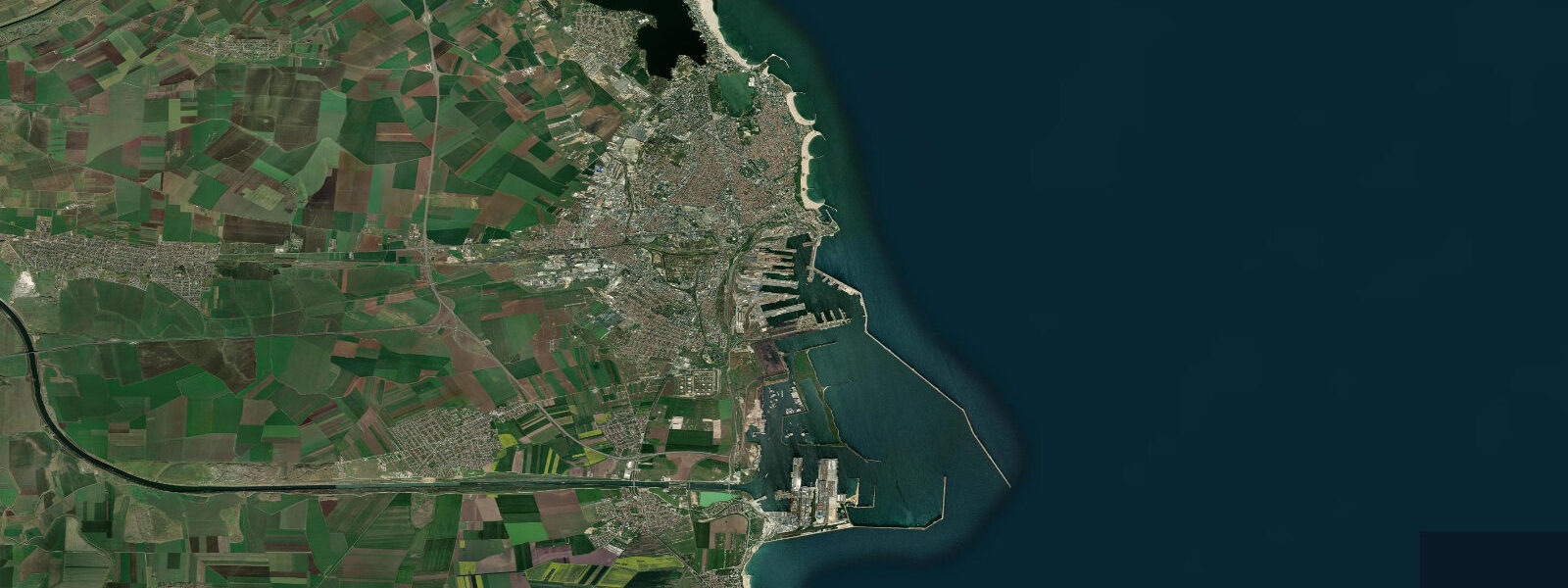
Constanța Beach tide times
Constanța Beach tide forecast — heights relative to MSL.
Today's tide times for Constanța Beach
Tide times at Constanța Beach on Tuesday, 4 August 2026: first low tide at 03:00am, first high tide at 08:00am. Sunrise 05:55am, sunset 08:27pm.
Tide chart for Constanța Beach
24-hour cosine-interpolated curve around the present moment. Heights relative to MSL. Predictions: Predictions: Open-Meteo Marine (MeteoFrance SMOC, 0.08° grid).
Sun, moon and conditions on Tue 04 Aug
Snapshot at build time — refreshes daily. Sea state from Open-Meteo Marine.
Highs and lows next 7 days
Every predicted high and low for the next week, with the daily tidal coefficient (0–120; higher = bigger swing, > 95 means stronger currents).
Other spots nearby
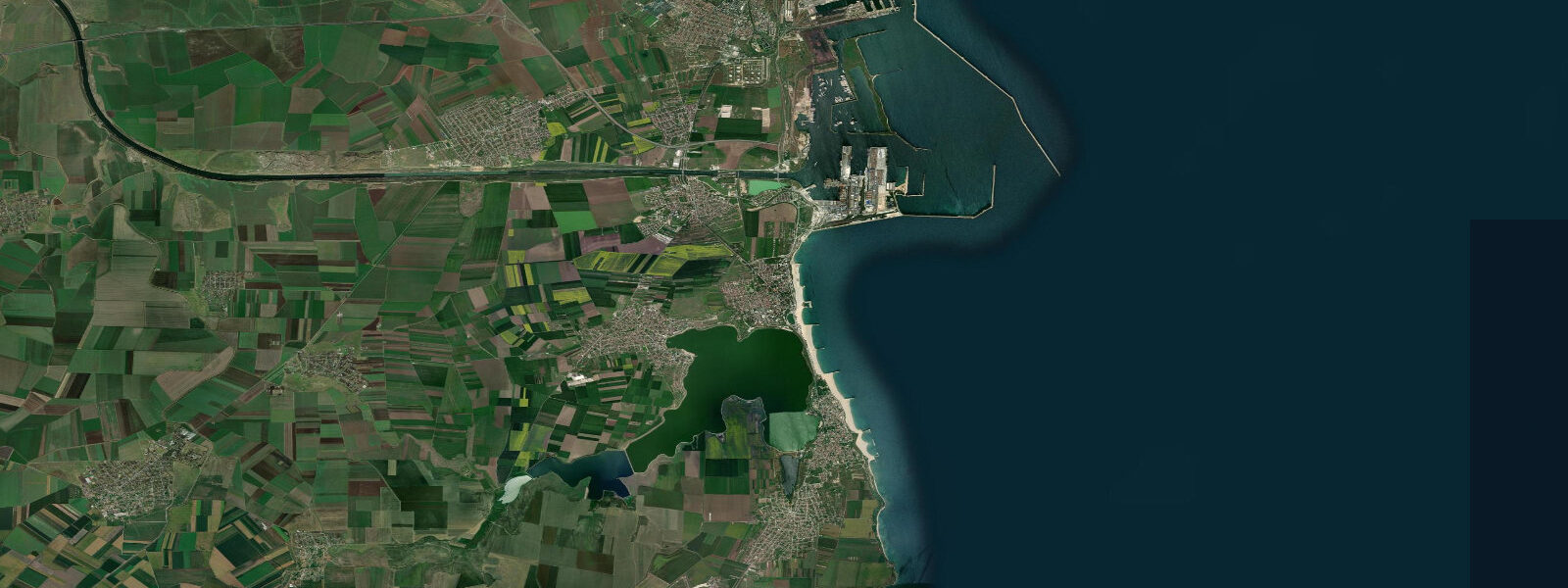
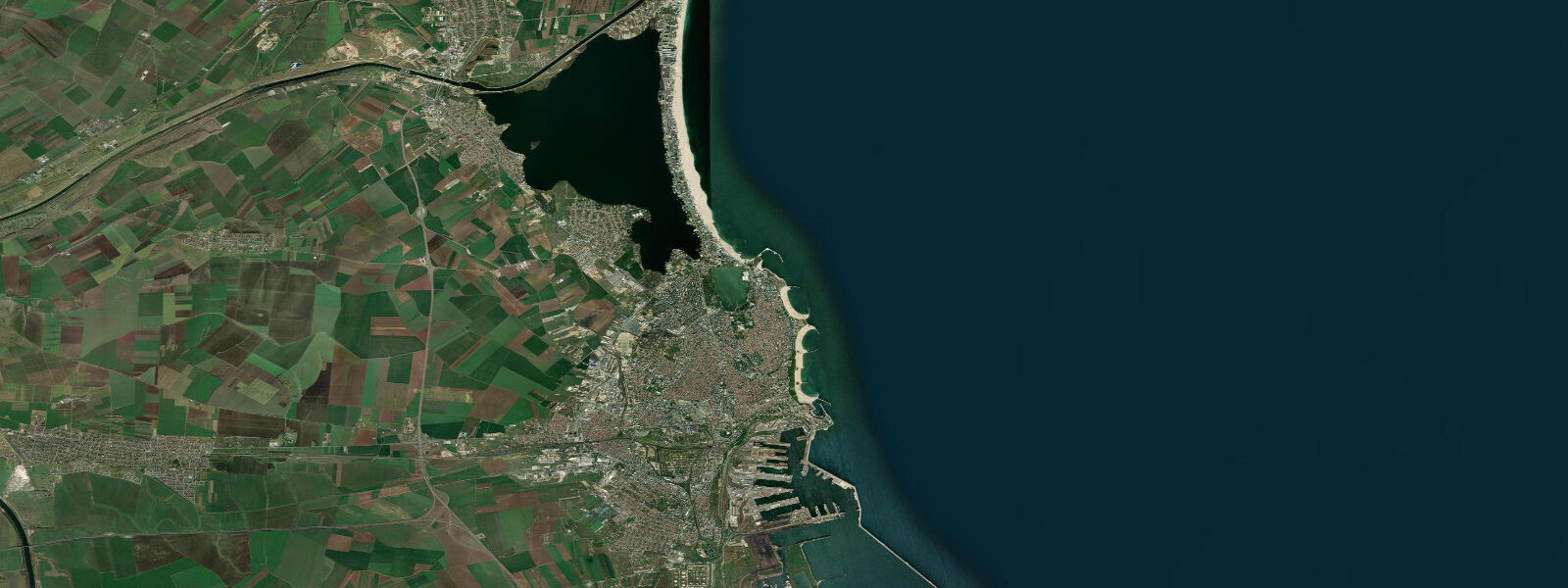
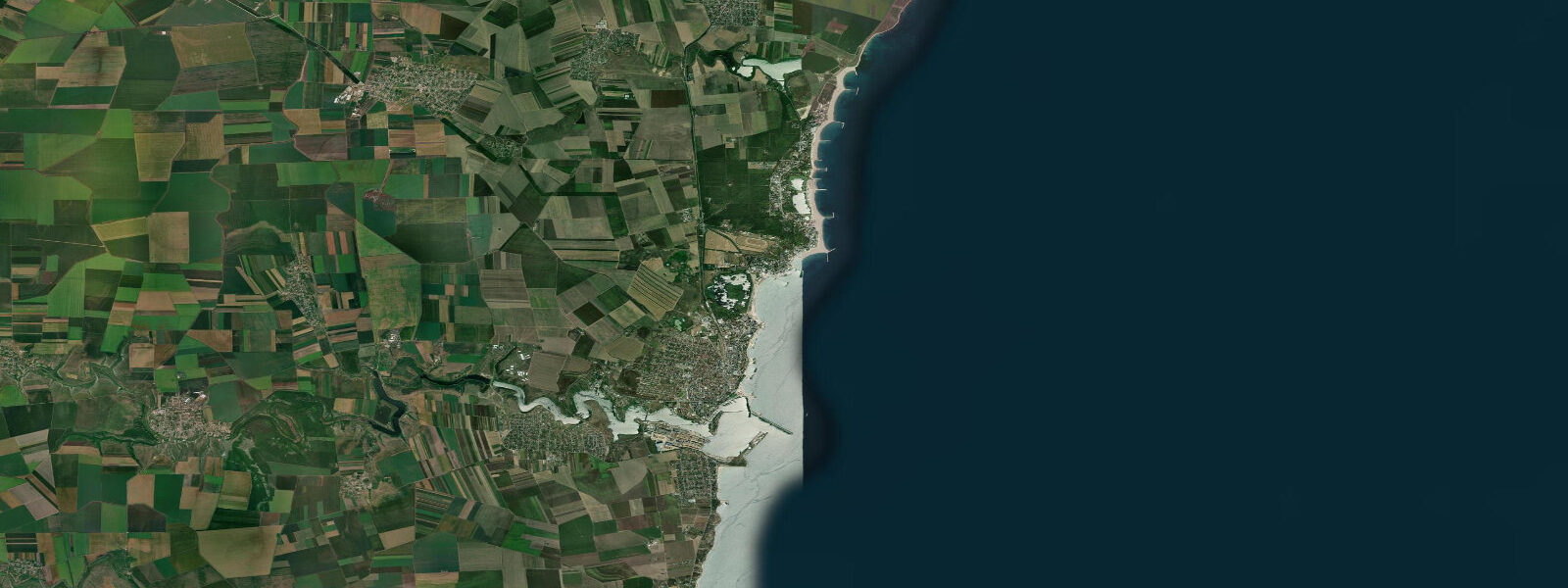
The three closest curated TideTurtle locations to Constanța Beach, measured by great-circle distance.
Today's solunar windows
Solunar tradition: major periods are the ≈3h windows around moon transit and opposition; minor are ≈2h around moonrise and moonset. Pair with the local tide stage and wind for the best read.
About tides at Constanța Beach
A short guide to the coastline at Constanța Beach — geography, sea state, and what the tide is actually doing under your feet.
Constanța is Romania's largest seaport and its oldest continuously inhabited city — known in antiquity as Tomis, a Greek colony founded in the 6th century BCE on a low limestone promontory where the shelf meets the Black Sea. The old centre still sits on that promontory. The Roman Mosaic, a 4th-century CE floor covering 850 square metres, lies displayed in situ beneath a dedicated museum building on the site where it was excavated; it is one of the largest and best-preserved Roman floor mosaics in the world.
In the central square, Ovid's statue stands above the inscription recording his exile here — Emperor Augustus banished the poet in 8 CE, and Ovid spent his final years at Tomis writing the Epistulae ex Ponto and the Tristia, letters addressed back to Rome from the edge of the empire. The port currently handles around 50 million tonnes of cargo per year and includes one of the largest container terminals on the Black Sea; the port infrastructure occupies the southern and eastern flanks of the promontory, and the public beach areas — Plaja Modern and Plaja Telegraf — are north of the port waterfront, sheltered from commercial vessel traffic. The beach in the immediate vicinity of the old town promontory is a protected area with limited concession development; families with children prefer the broader sandy stretches further north toward Mamaia, where the shelf is gentler and the water shallower.
Shore anglers fishing from the breakwaters and rocky points around the port work for mullet, bream, and bluefish in season; the best sessions typically come in the hour before sunset when the Black Sea thermal circulation draws baitfish inshore. The astronomical tide at Constanța is 5 to 15 centimetres — negligible, and below the threshold of practical relevance for beach use or angling. Water level along this coast is controlled almost entirely by wind and atmospheric pressure.
The NIMR (National Institute of Marine Research 'Grigore Antipa') Constanța gauge, maintained since the 19th century, is the reference station for Romanian Black Sea sea-level observations and is integrated into the European sea-level network. Real-time and historical data are accessible through the European sea-level service. The Crivăț northeasterly wind is the main driver of storm setup along this coast; events in late October and November historically produce the highest water-level anomalies, coinciding with the autumn deepening of synoptic pressure patterns across the Black Sea basin.
8 metres above the mean is well within the range of documented events at the Constanța gauge; the astronomical tide of 5 to 15 cm is a minor signal in comparison. Photographers and tourists visiting the old city combine the Roman Mosaic, the Genoese lighthouse (built on the remains of an older Roman lighthouse), and the clifftop walk overlooking the sea; the Constanța History and Archaeology Museum and the Mosque with its minaret (the Mahmudiye Mosque, 1910) are in the same compact historic centre. The casino building on the seafront, a 1910 Art Nouveau structure, is currently undergoing restoration.
The Constanța area holds several additional sites within short reach: the Histria fortress ruins 55 kilometres north (founded as a Greek colony around 657 BCE, one of the oldest urban settlements on the current Romanian territory), the Cernavodă nuclear power plant visible from the coastal road bridge over the Danube-Black Sea Canal (the canal itself runs 64 kilometres from Constanța to the Danube, shortening the river-to-sea shipping route by over 400 kilometres), and the coastal wetlands of the Razelm-Sinoe lagoon complex that forms the southern boundary of the Danube Delta Biosphere Reserve. For the city itself, the morning walk from Plaja Modern through the old town to the Roman Mosaic is straightforward and completable in two hours including the mosaic museum. Predictions on this page come from Open-Meteo Marine, a gridded global ocean model.
3 metres on height — substantially exceeds the actual astronomical tidal signal at Constanța. Use NIMR's gauge data and the synoptic weather forecast for any activity dependent on precise water level.
Tide questions about Constanța Beach
Quick answers to the most common questions about tide times, range, and water access at Constanța Beach.
What are the tide times at Constanța?
The hero block at the top of this page shows the next predicted high and low at Constanța in local Eastern European Time (EET/EEST, UTC+2/UTC+3). The astronomical tide here is 5 to 15 centimetres — below any practical threshold for beach use, angling, or port planning. The Black Sea has effectively no tide; the water level at any given time is determined by the wind and atmospheric pressure forecast. NIMR (the National Institute of Marine Research 'Grigore Antipa') operates the Constanța reference gauge and publishes authoritative sea-level data for the Romanian coast.
What is the NIMR Constanța gauge and where can I access it?
NIMR is the National Institute of Marine Research 'Grigore Antipa', the Romanian state marine science institution based in Constanța. Its sea-level gauge at Constanța is the primary reference station for the Romanian Black Sea coast and is integrated into the European sea-level monitoring network (ESEAS/SONEL). The gauge record extends back to the 19th century, making it one of the longer continuous sea-level records on the Black Sea. Real-time and historical data are accessible through NIMR directly and through the European sea-level service portal.
What is the Roman Mosaic at Constanța?
The Roman Mosaic (Mozaicul Roman) is a 4th-century CE commercial building floor found during 1959 construction work in the old centre. It covers 850 square metres in geometric and floral patterns using multi-coloured marble, limestone, and terracotta tesserae; it is among the largest Roman floor mosaics surviving in the world. The mosaic is preserved in situ beneath a purpose-built museum, open to visitors year-round. The building it floored was part of the Roman port warehouse district of ancient Tomis, which was a significant commercial hub on the Pontic coast.
Where do these predictions come from?
Open-Meteo Marine, a gridded global ocean model; accuracy is typically plus or minus 45 minutes on timing and 0.2 to 0.3 metres on height. At Constanța, where the astronomical tide is 5 to 15 centimetres, the model height uncertainty substantially exceeds the actual tidal signal. The values shown reflect wind-driven and atmospheric water-level variation rather than a meaningful astronomical tide — the Black Sea has essentially no astronomical tidal cycle. For authoritative sea-level data, use the NIMR Constanța gauge, which has operated continuously since the 19th century and is the primary reference for Romanian Black Sea sea-level monitoring.
Is this page safe to use for navigation?
No. Constanța port is one of the largest commercial harbours on the Black Sea, handling over 50 million tonnes of cargo per year; the port approaches, anchorages, and inner channels carry deep-draught commercial traffic and operate under mandatory pilotage for vessels above a certain length. Use official Romanian hydrographic charts published by the Autoritatea Navală Română and the relevant Notices to Mariners. Current forecasts for the Black Sea coast are issued by NIMR and by the Romanian National Meteorological Administration. Open-Meteo Marine gridded predictions are not gauge-calibrated harmonic data and are not authoritative for any vessel operation.
1-day tide table — Constanța Beach
Heights relative to MSL. Predictions: Open-Meteo Marine (MeteoFrance SMOC, 0.08° grid) — heights relative to MSL (not chart datum / LAT). Model-derived.
| Day | Type | Time | Height |
|---|---|---|---|
| Tue 04 Aug | Low | 03:00 | -0.4m |
| High | 08:00 | -0.4m |