Peniche, Centro Coast tide times
Peniche, Centro Coast tide forecast — heights relative to MSL.
Today's tide times for Peniche, Centro Coast
Tide times at Peniche, Centro Coast on Monday, 3 August 2026: first low tide at 01:00, first high tide at 05:50, second low tide at 11:50, second high tide at 18:02. Sunrise 06:38, sunset 20:48.
Tide chart for Peniche, Centro Coast
24-hour cosine-interpolated curve around the present moment. Heights relative to MSL. Predictions: Predictions: Open-Meteo Marine (MeteoFrance SMOC, 0.08° grid).
Sun, moon and conditions on Mon 03 Aug
Snapshot at build time — refreshes daily. Sea state from Open-Meteo Marine.
Highs and lows next 7 days
Every predicted high and low for the next week, with the daily tidal coefficient (0–120; higher = bigger swing, > 95 means stronger currents).
Other spots nearby
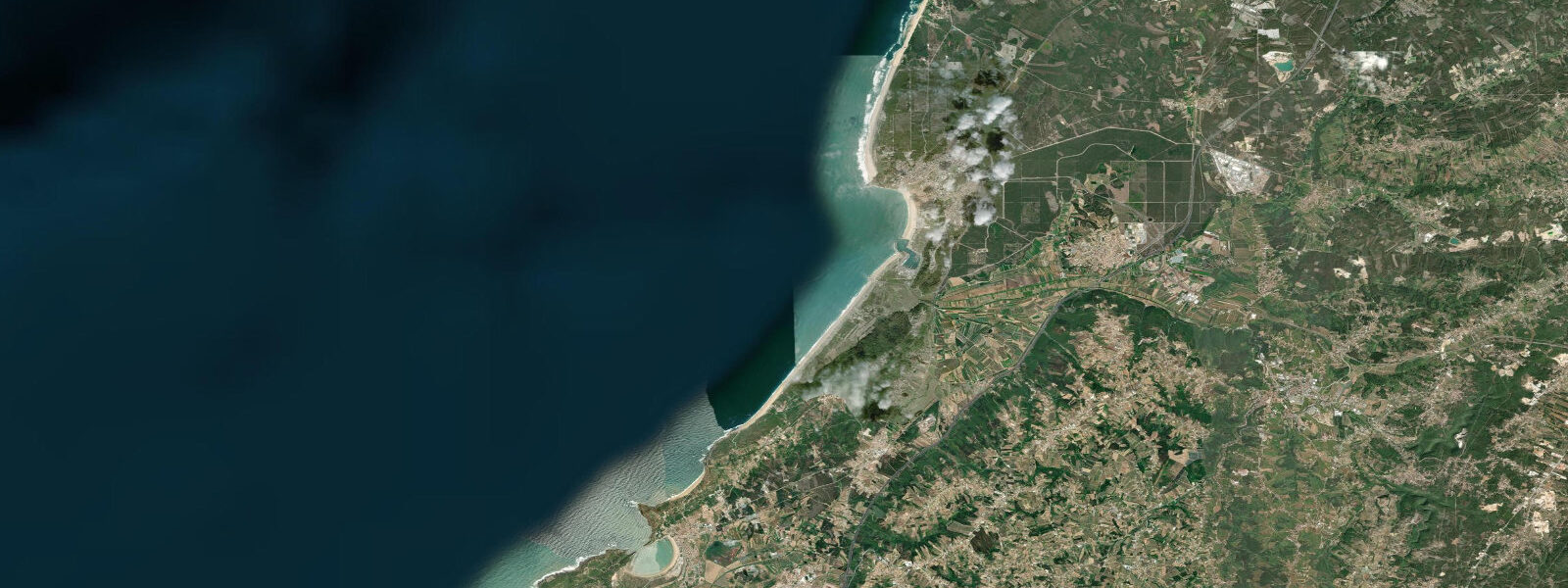
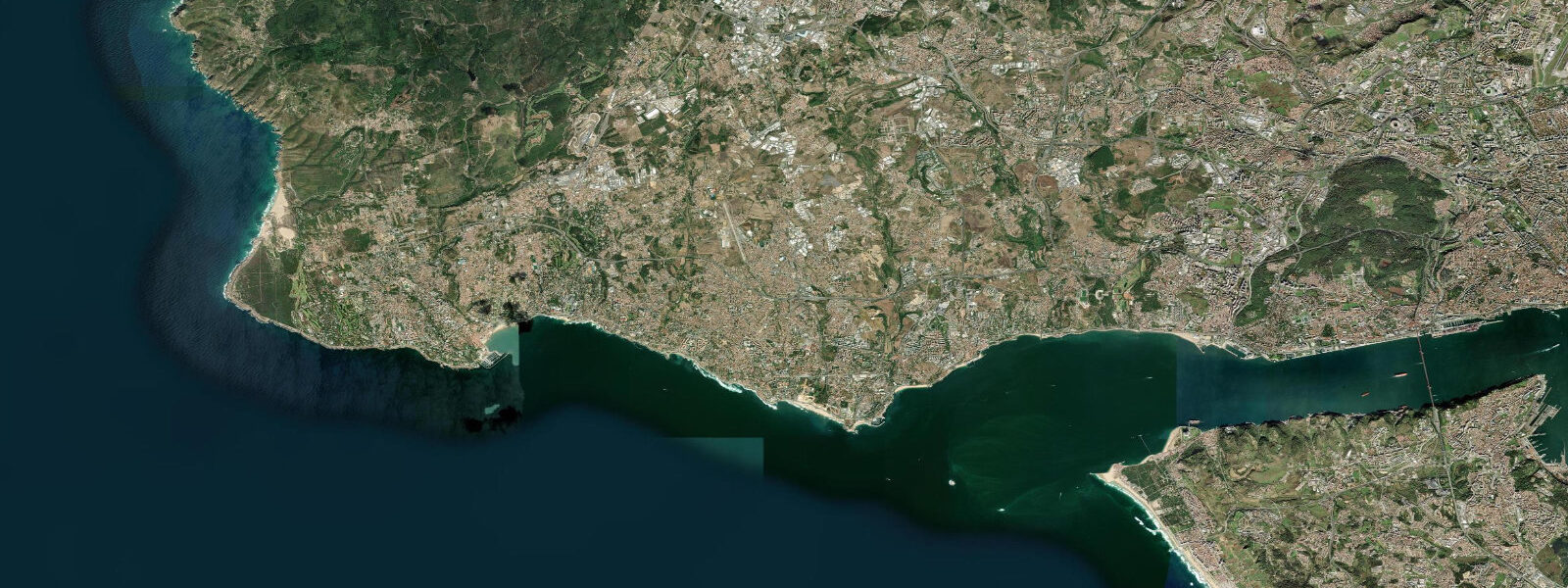
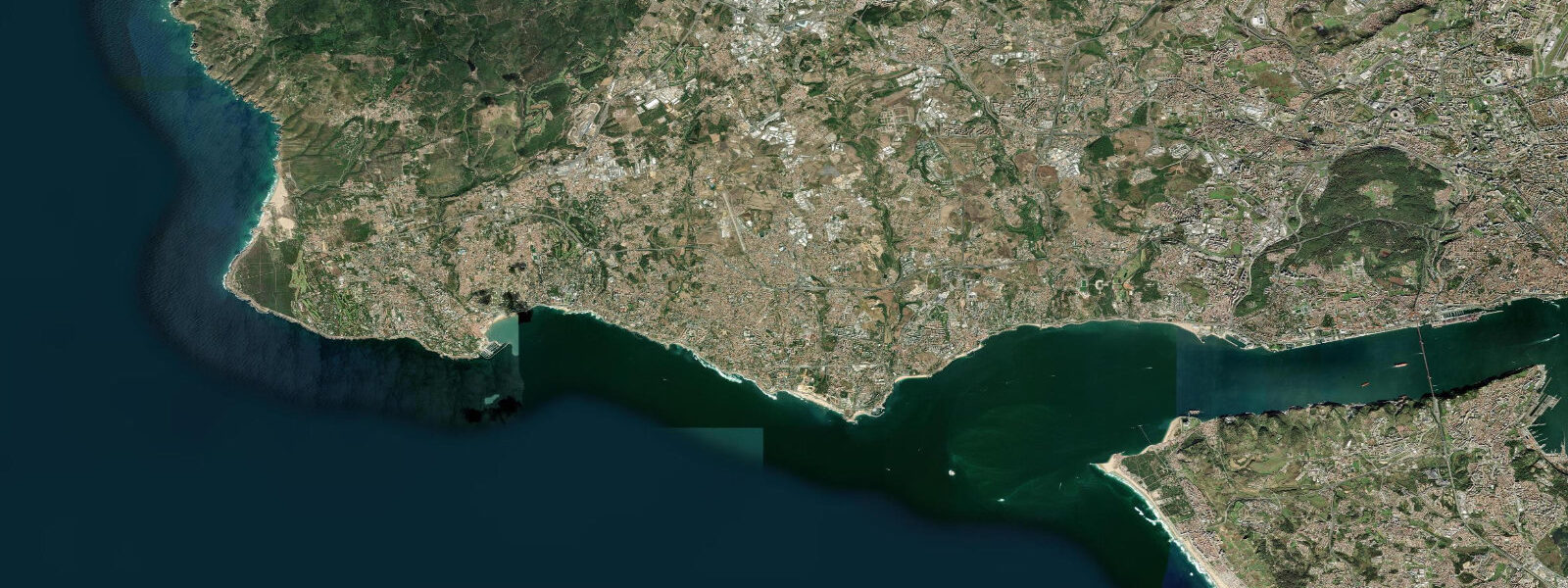
The three closest curated TideTurtle locations to Peniche, Centro Coast, measured by great-circle distance.
Today's solunar windows
Solunar tradition: major periods are the ≈3h windows around moon transit and opposition; minor are ≈2h around moonrise and moonset. Pair with the local tide stage and wind for the best read.
Cycle dates near Peniche, Centro Coast
Last spring tide on Mon 03 Aug (range 2.4m). Next spring tide on Sun 09 Aug (range 1.9m). Next neap on Fri 07 Aug.
Spring tides cluster around new and full moons (biggest swings). Neap tides land on quarter moons (smallest swings). See the spring tide and neap tide glossary entries for the why.
About tides at Peniche, Centro Coast
A short guide to the coastline at Peniche, Centro Coast — geography, sea state, and what the tide is actually doing under your feet.
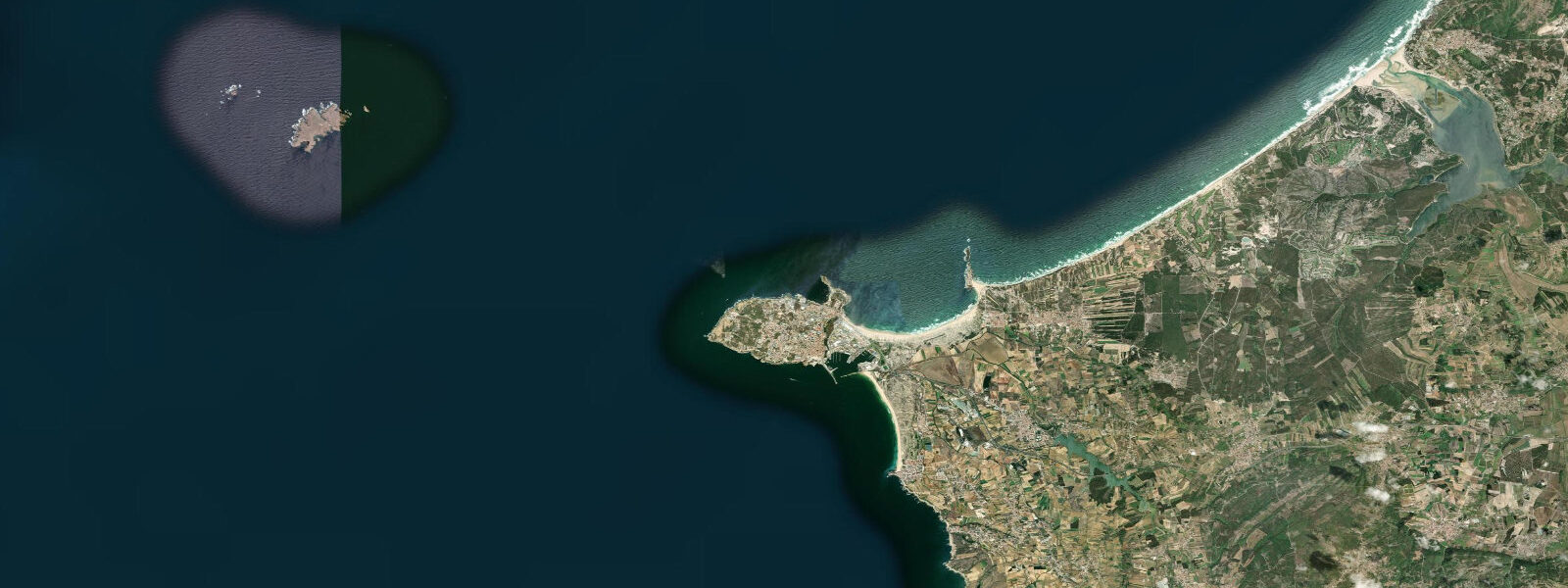
Peniche is a peninsula, not a beach town — 2 km of exposed Atlantic rock jutting west into the ocean 80 km north of Lisbon. The town itself sits near the peninsula's base; the headlands extend north to Cabo Carvoeiro and east to Cabo da Papoa, with the open Atlantic on three sides. That geometry, combined with Portugal's largest semidiurnal tidal range on this stretch of coast, makes tide state a practical concern for almost every activity here.
The mean spring range at Peniche runs 3.0 to 3.5 m. Two full tidal cycles per day, predictable to the minute. High water marks where the whitewash reaches the fortifications of the Fortaleza de Peniche — the 16th-century fortress that juts into the harbour on the east side of the peninsula. Low water drops the harbour entrance shallows by 1.5 m and leaves the rocky platforms along Cabo Carvoeiro's north face accessible to anglers and shore crabbers who know the timing. You will not find those platforms by accident at high tide; they are underwater.
Cabo Carvoeiro is the northwest tip of the peninsula. The lighthouse sits at the point; below it, limestone stacks and sea arches have been undercut by Atlantic swell for millennia. The tidal currents around Cabo Carvoeiro reach 2 to 3 knots on spring tides — fast enough to affect kayakers trying to round the headland. Timing a paddle around Carvoeiro means leaving the main harbour beach at slack before the flood, reaching the cape while the current is slack or running with you, and returning on the ebb. Miscalculate by an hour and you're fighting 2.5 knots of current with a headwind.
Cabo da Papoa on the east side creates the same acceleration effect in reverse. The channel between the mainland shore and the cape is narrow; on a flooding spring tide the water piles up on the Atlantic side faster than it can drain north, producing a tidal set toward the cape that catches inexperienced boat operators.
Peniche harbour is one of Portugal's busiest fishing ports. The lota — the fish auction — opens when the fleet comes in on the flood, typically morning arrivals. The timing varies by fishing grounds and distance, but the fleet schedules arrival to enter the harbour entrance channel on a rising tide with at least 1.5 m of water over the bar. Early-morning high tides in autumn and winter bring the sarda (Atlantic mackerel) boats in before 07:00. The quayside wholesale market is worth seeing if you're up before sunrise.
Supertubos — Praia de Supertubos — is Peniche's world-famous beach break, the venue for the Rip Curl Pro Portugal WSL event. It sits 2 km south of the town centre, a sandsanks beach break driven by a northwest Atlantic groundswell. The tide is critical to how it works: Supertubos performs at mid to low tide. As the water drops below 1.0 m above chart datum the banks shift from a fat, heavy wave to something considerably more critical. High water buries the banks, the wave closes out in a wall rather than peeling, and the lineup fills with beginner whitewater. Locals paddle out between one and two hours before low water and stay until the banks start drowning again on the flood. For non-surfers watching from the beach, the same timing applies — low tide extends the beach width by 60 to 80 m, creating dry sand for spectating that doesn't exist at high water.
Berlengas Archipelago sits 12 km offshore, a designated UNESCO Biosphere Reserve and nature reserve. The main island, Berlenga Grande, has a small fishing community, a 17th-century fort (Forte de São João Baptista), and exceptional snorkelling in the coves to the south. The ferry from Peniche harbour runs in calm weather only; the crossing takes approximately 40 minutes. The Carreiro do Mosteiro is the rock channel on the island's north side, a narrow cut between the sea cliffs. At low water with flat swell, the channel is passable by small tender; at high water in any significant swell it is not navigable for non-commercial craft. Berlengas day-trippers should check the tidal state for the return crossing — an afternoon swell building on a spring flood can make the harbour approach at Peniche rougher than the morning outbound trip.
For shore anglers, the north face platforms below Cabo Carvoeiro are productive for bass, black sea bream (choupa), and wrasse on the last two hours of the ebb and the first hour of the flood. The rock pools in this zone hold octopus at low water; the legal minimum size in Portugal is 750 g and hand-collecting in nature reserve zones is restricted.
The Fortaleza de Peniche — the old Portuguese fortress now used as a historical museum — sits exactly at mean high-water level on the harbour-facing (east) side. Swells from the southeast in winter occasionally wash across the car park in front. On calm high-water spring tides you can walk the seawall with the Atlantic on both sides; on the same tide in a storm, the peninsula roads along the north face close.
Tide data for Peniche, Centro Coast comes from the Open-Meteo Marine API, a gridded model product. Timing accuracy is ±45 minutes, height accuracy ±0.3 m — usable for trip planning, not for navigation.
Tide questions about Peniche, Centro Coast
Quick answers to the most common questions about tide times, range, and water access at Peniche, Centro Coast.
When does Supertubos work best with the tide?
Supertubos performs at mid to low tide. As water drops below roughly 1.0 m above chart datum, the sandbanks tighten and the wave begins to pitch and peel properly. High water buries the banks and the wave closes out — it stops being a performance wave and becomes heavy, disorganised whitewater. Most local surfers paddle out one to two hours before low water and exit the water as the flood starts filling back in. On a spring low tide, the beach also widens by 60 to 80 m, giving spectators significantly more dry sand to watch from. Check the tide table the night before: the two best sessions per day are usually in opposite halves of the tidal cycle, so one will often fall at an unsociable hour.
What are the tidal currents like around Cabo Carvoeiro?
Currents around Cabo Carvoeiro reach 2 to 3 knots on spring tides — strong enough to make kayaking the headland a real planning exercise. The current accelerates as the tide flows around the northwest tip of the peninsula; on the flood it runs roughly southeast along the north face, on the ebb it reverses northwest. Timing a circumnavigation means departing the main harbour beach at slack water before the flood, rounding the cape while the current is still manageable, and completing the south-side return before the ebb builds. The eastern headland, Cabo da Papoa, has a similar acceleration effect in the channel between the peninsula and the adjacent mainland shore. Both headlands are unsuitable for close coastal paddling on fast spring tides without local knowledge.
How do I time a Berlengas day trip around the tides?
The ferry operates from Peniche harbour, and the crossing to Berlenga Grande takes about 40 minutes. The outbound morning departure is usually on a calmer sea; the return afternoon crossing can encounter building swell on a flood tide. The Carreiro do Mosteiro rock channel on the island's north side is the most sensitive spot — passable in a small tender at low water in calm conditions, not navigable for non-commercial craft in significant swell at high water. Berlengas day-trippers should note the afternoon tide state before booking: if the return coincides with a spring high water and any swell from the northwest, the harbour approach at Peniche can be rough. The ferry operators cancel sailings on their own criteria, but you should understand the tidal context independently.
When does the Peniche fish market (lota) open?
The lota opens when the fleet arrives, which is tied to the fishing grounds and the state of the tide at the harbour entrance. Vessels typically schedule arrival on a rising tide with at least 1.5 m over the bar — which in autumn and winter can mean arrivals before 07:00. In summer the fleet often arrives later in the morning. There is no fixed clock time; the market is dictated by the catch. If you want to see the wholesale auction, check the day's tide table, identify the morning flood, and plan to be on the quayside 30 to 60 minutes after high water begins. The retail fish shops nearby open on fixed hours regardless of fleet timing.
Is shore fishing accessible at Peniche at any tide?
The most productive platform fishing at Peniche is on the north face rock shelves below Cabo Carvoeiro lighthouse, and those shelves are only accessible on the lower half of the ebb. At high water spring tides, the platforms are under 1.5 to 2.0 m of water — completely inaccessible and dangerous to approach. You have roughly a three-hour window centred on low water: the last two hours of the ebb and the first hour of the flood. Target species are bass, black sea bream (choupa), and wrasse. Rock pool areas in the same zone hold octopus at low water; note that hand-collecting in the designated nature reserve zones around Berlengas has restrictions, and the legal minimum for octopus in Portugal is 750 g. Always check weather forecasts independently — Atlantic swell on a low-water spring can still break over lower platforms.
8-day tide table — Peniche, Centro Coast
Heights relative to MSL. Predictions: Open-Meteo Marine (MeteoFrance SMOC, 0.08° grid) — heights relative to MSL (not chart datum / LAT). Model-derived.
| Day | Type | Time | Height |
|---|---|---|---|
| Mon 03 Aug | Low | 01:00 | -1.4m |
| High | 05:50 | 0.7m | |
| Low | 11:50 | -1.5m | |
| High | 18:02 | 0.9m | |
| Tue 04 Aug | Low | 00:19 | -1.6m |
| High | 18:45 | 0.7m | |
| Wed 05 Aug | Low | 01:01 | -1.5m |
| High | 07:15 | 0.5m | |
| Low | 13:21 | -1.3m | |
| High | 19:35 | 0.5m | |
| Thu 06 Aug | Low | 01:52 | -1.4m |
| High | 08:10 | 0.4m | |
| Low | 14:23 | -1.2m | |
| High | 20:39 | 0.3m | |
| Fri 07 Aug | Low | 02:58 | -1.2m |
| High | 09:23 | 0.3m | |
| Low | 15:44 | -1.1m | |
| High | 22:03 | 0.3m | |
| Sat 08 Aug | Low | 04:19 | -1.1m |
| High | 10:48 | 0.4m | |
| Low | 17:13 | -1.2m | |
| High | 23:33 | 0.3m | |
| Sun 09 Aug | Low | 05:43 | -1.2m |
| High | 12:05 | 0.6m | |
| Low | 18:32 | -1.4m | |
| Mon 10 Aug | High | 00:00 | 0.4m |