Nazaré tide times
Nazaré tide forecast — heights relative to MSL.
Today's tide times for Nazaré
Tide times at Nazaré on Monday, 3 August 2026: first low tide at 01:00, first high tide at 05:51, second low tide at 11:50, second high tide at 18:04. Sunrise 06:36, sunset 20:48.
Tide chart for Nazaré
24-hour cosine-interpolated curve around the present moment. Heights relative to MSL. Predictions: Predictions: Open-Meteo Marine (MeteoFrance SMOC, 0.08° grid).
Sun, moon and conditions on Mon 03 Aug
Snapshot at build time — refreshes daily. Sea state from Open-Meteo Marine.
Highs and lows next 7 days
Every predicted high and low for the next week, with the daily tidal coefficient (0–120; higher = bigger swing, > 95 means stronger currents).
Other spots nearby
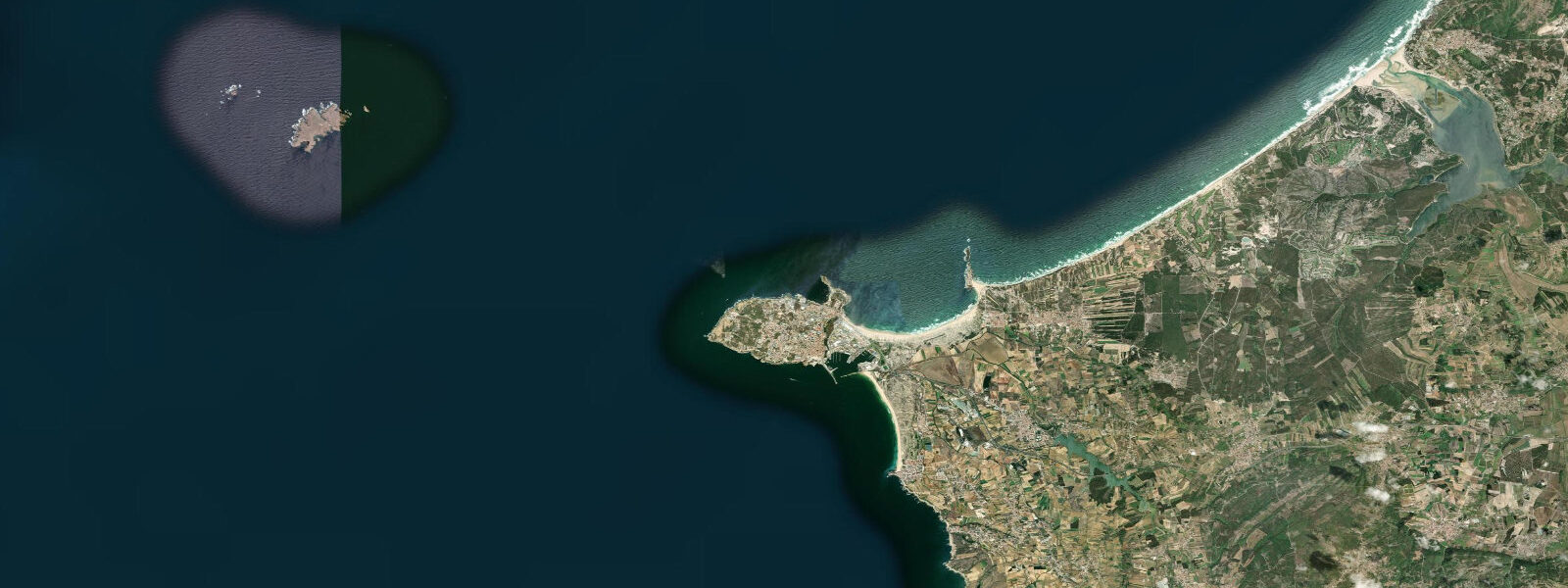
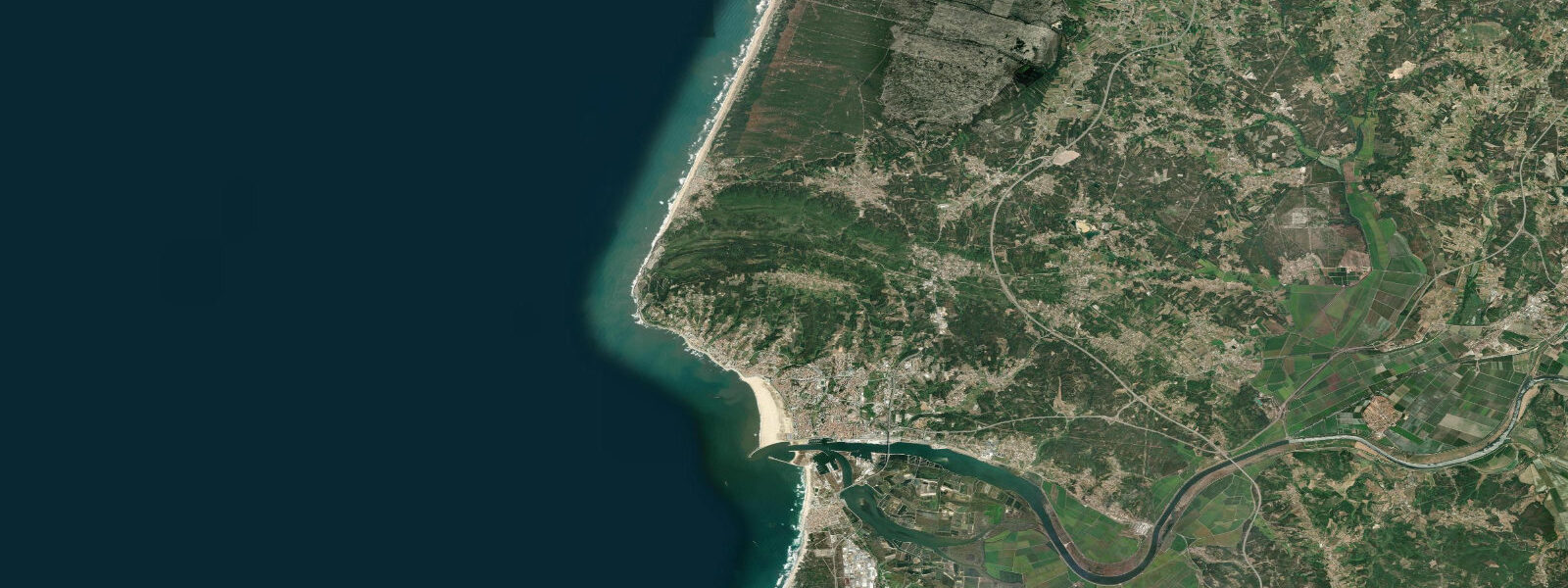
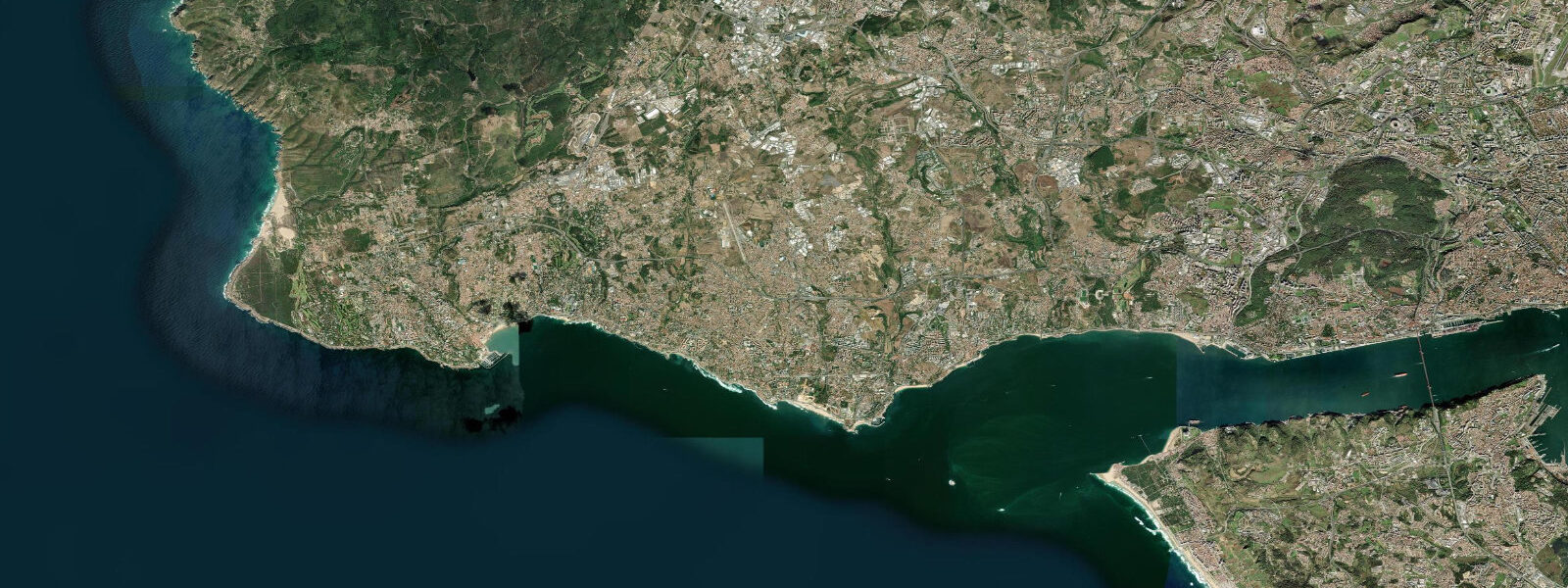
The three closest curated TideTurtle locations to Nazaré, measured by great-circle distance.
Today's solunar windows
Solunar tradition: major periods are the ≈3h windows around moon transit and opposition; minor are ≈2h around moonrise and moonset. Pair with the local tide stage and wind for the best read.
Cycle dates near Nazaré
Last spring tide on Mon 03 Aug (range 2.4m). Next spring tide on Sun 09 Aug (range 1.9m). Next neap on Fri 07 Aug.
Spring tides cluster around new and full moons (biggest swings). Neap tides land on quarter moons (smallest swings). See the spring tide and neap tide glossary entries for the why.
About tides at Nazaré
A short guide to the coastline at Nazaré — geography, sea state, and what the tide is actually doing under your feet.
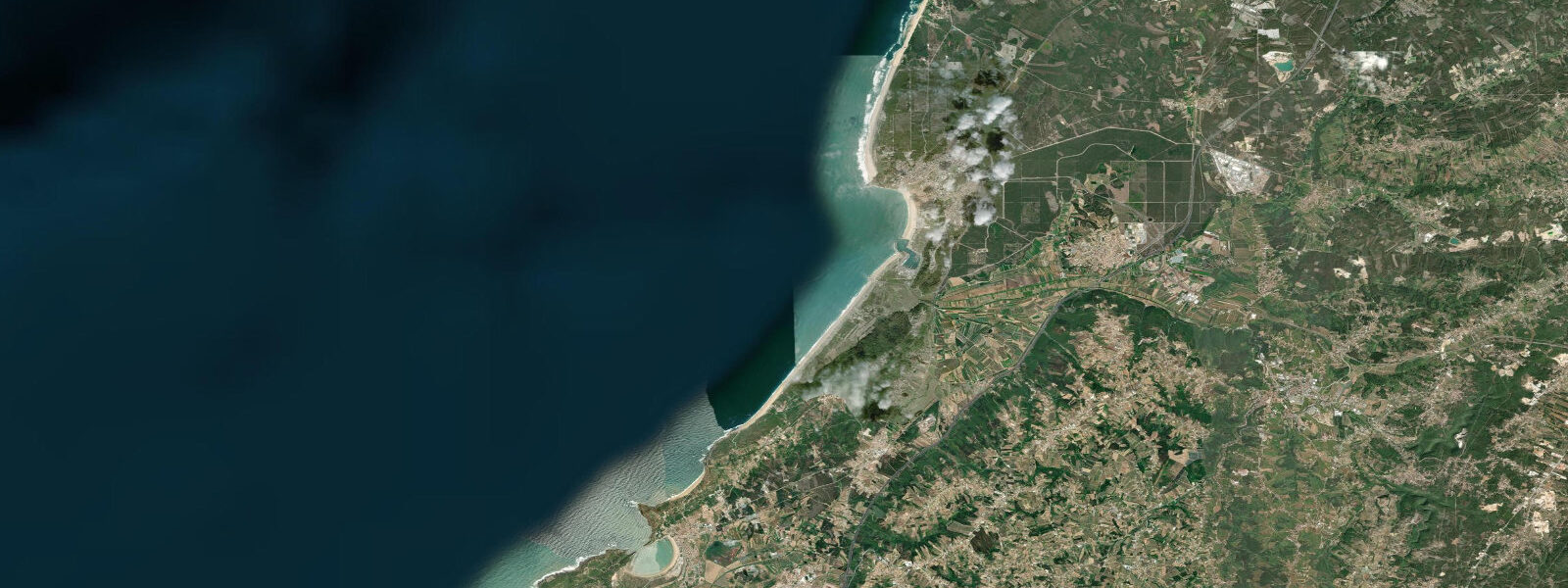
Nazaré is on the central Portuguese coast, 120 kilometres north of Lisbon, and became internationally famous after Garrett McNamara surfed a then-world-record 23-metre wave here in 2011. The cause is the Nazaré Canyon — a submarine trench that starts 5 km offshore and extends 170 km into the Atlantic at depths reaching 5000 metres. The canyon channels and focuses North Atlantic groundswell, amplifying it as it enters the shallow water off the Praia do Norte. Tidal range is 2.4 metres on springs.
The big-wave season is November through March, when Atlantic storms generate massive groundswell that travels thousands of kilometres to arrive at Nazaré's canyon-amplified shore. Waves of 20 to 30 metres face have been ridden here — the current world record (2022) is 26.21 metres, surfed by German surfer Sebastian Steudtner. The surfing is tow-in (jet ski assisted) due to the wave size — paddle-in surfing at Nazaré in big conditions is considered beyond safe limits. Spectators watch from the Sítio cliffs above Praia do Norte; the viewing platform there gives a direct look down at the break.
The town beach (Praia da Nazaré, south-facing, sheltered by the cliff headland) is a conventional beach resort for the remainder of the year — wide sand, promenade, traditional fishing village with women in black fishing-community dress that has become a cultural presentation. The original fishing boat fleet (with the distinctive ox-plough painted bows) is fewer now but the visual identity has been maintained.
Nazaré is divided into two levels: the lower town (beach and promenade) and the Sítio (the clifftop settlement, 110 metres above, connected by a funicular). The Sítio has the 8th-century chapel of Nazaré and the big-wave viewing platform on its western edge.
The canyon does not make all of Nazaré's beach dangerous — the south town beach is sheltered from the canyon-amplified swell by the headland. Only Praia do Norte, on the north side of the headland, receives the full canyon effect. Visitors can swim on the town beach while watching the world's biggest waves break 2 km around the headland.
Predictions on this page come from Open-Meteo Marine, a gridded global ocean model, cross-referenced with Instituto Hidrográfico predictions. For the most accurate Portuguese tide predictions, consult the Instituto Hidrográfico at hidrografico.pt.
Tide questions about Nazaré
Quick answers to the most common questions about tide times, range, and water access at Nazaré.
Why are the waves so big at Nazaré?
The Nazaré Canyon — a 5000-metre deep submarine trench starting 5 km offshore — channels and focuses North Atlantic groundswell, amplifying it significantly as it shoals from deep to shallow water at Praia do Norte. The effect is a wave that can be 2 to 3 times larger than the same swell on a normal beach. Waves of 20 to 30 metres face height have been measured; the current world record is 26.21 metres (Sebastian Steudtner, 2022). The canyon-focused wave is also extremely fast and hollow.
When can I see big-wave surfing at Nazaré?
The big-wave season is November through March, when North Atlantic winter storms generate the necessary groundswell (typically 5 to 8 metres significant wave height in the open Atlantic). Surfing only occurs on specific forecast days; the sessions are announced 24 to 48 hours ahead by the surf community (follow Nazaré big wave surf news channels for real-time alerts). The viewing platform on the Sítio cliff is free to access and gives the best view. The biggest days attract thousands of spectators.
Is the Nazaré town beach safe for swimming?
Yes — Praia da Nazaré on the south side of the headland is sheltered from the canyon-amplified waves. The beach is monitored by lifeguards in summer; the typical conditions are gentle shore break suitable for families. The only time the town beach is affected by canyon swell is during the most extreme events (above 10 m significant wave height in the open ocean), when the bay can receive anomalous swell. Check the beach flag status on any given day.
What is the tidal range at Nazaré?
Mean spring range at Nazaré is approximately 2.4 metres. The tidal state affects the shape of the big waves on Praia do Norte — the timing of low water changes the depth over the shoaling section of the canyon mouth, which affects wave face height and how the wave breaks. Experienced big-wave surfers factor tidal state into their session planning. For the town beach, tidal range is the standard Portuguese Atlantic range — visible in beach width and surf zone position.
How do I get to Nazaré from Lisbon?
Bus from Lisbon's Campo Grande or Sete Rios terminal (Rede Expressos or RODOTEJO) to Nazaré takes about 1.5 to 2 hours. Several buses daily; the journey is direct. By car from Lisbon, the A8 motorway to Caldas da Rainha, then the IC2/IC9 to Nazaré takes about 1.5 hours (120 km). No train station in Nazaré — the nearest rail connection is Valado dos Frades (5 km, taxi from station).
8-day tide table — Nazaré
Heights relative to MSL. Predictions: Open-Meteo Marine (MeteoFrance SMOC, 0.08° grid) — heights relative to MSL (not chart datum / LAT). Model-derived.
| Day | Type | Time | Height |
|---|---|---|---|
| Mon 03 Aug | Low | 01:00 | -1.4m |
| High | 05:51 | 0.7m | |
| Low | 11:50 | -1.5m | |
| High | 18:04 | 0.9m | |
| Tue 04 Aug | Low | 00:19 | -1.5m |
| High | 18:46 | 0.7m | |
| Wed 05 Aug | Low | 01:03 | -1.4m |
| High | 07:16 | 0.5m | |
| Low | 13:22 | -1.3m | |
| High | 19:37 | 0.5m | |
| Thu 06 Aug | Low | 01:54 | -1.3m |
| High | 08:12 | 0.4m | |
| Low | 14:24 | -1.2m | |
| High | 20:42 | 0.3m | |
| Fri 07 Aug | Low | 02:58 | -1.2m |
| High | 09:26 | 0.3m | |
| Low | 15:45 | -1.1m | |
| High | 22:03 | 0.2m | |
| Sat 08 Aug | Low | 04:19 | -1.1m |
| High | 10:50 | 0.4m | |
| Low | 17:15 | -1.2m | |
| High | 23:33 | 0.3m | |
| Sun 09 Aug | Low | 05:45 | -1.2m |
| High | 12:07 | 0.5m | |
| Low | 18:35 | -1.3m | |
| Mon 10 Aug | High | 00:00 | 0.4m |