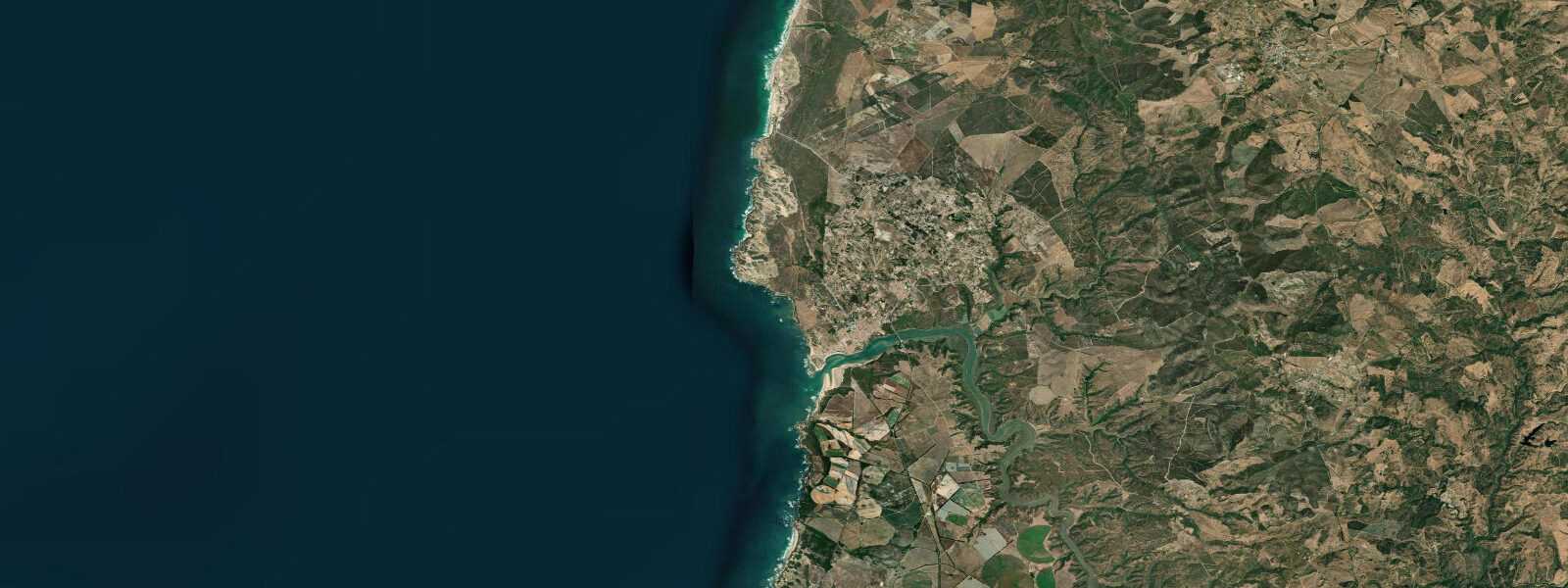
Vila Nova de Milfontes, Alentejo Coast tide times
Vila Nova de Milfontes, Alentejo Coast tide forecast — heights relative to MSL.
Today's tide times for Vila Nova de Milfontes, Alentejo Coast
Tide times at Vila Nova de Milfontes, Alentejo Coast on Monday, 3 August 2026: first low tide at 01:00, first high tide at 05:32, second low tide at 11:32, second high tide at 17:46. Sunrise 06:39, sunset 20:42.
Tide chart for Vila Nova de Milfontes, Alentejo Coast
24-hour cosine-interpolated curve around the present moment. Heights relative to MSL. Predictions: Predictions: Open-Meteo Marine (MeteoFrance SMOC, 0.08° grid).
Sun, moon and conditions on Mon 03 Aug
Snapshot at build time — refreshes daily. Sea state from Open-Meteo Marine.
Highs and lows next 7 days
Every predicted high and low for the next week, with the daily tidal coefficient (0–120; higher = bigger swing, > 95 means stronger currents).
Other spots nearby
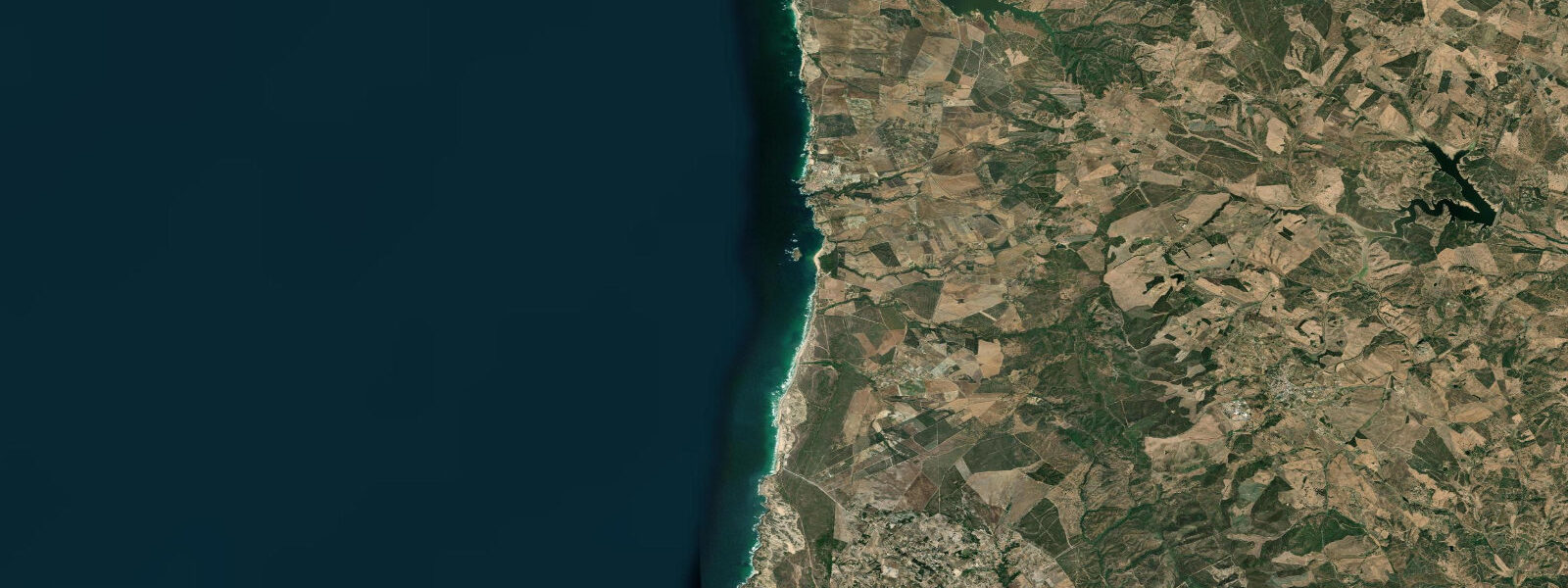
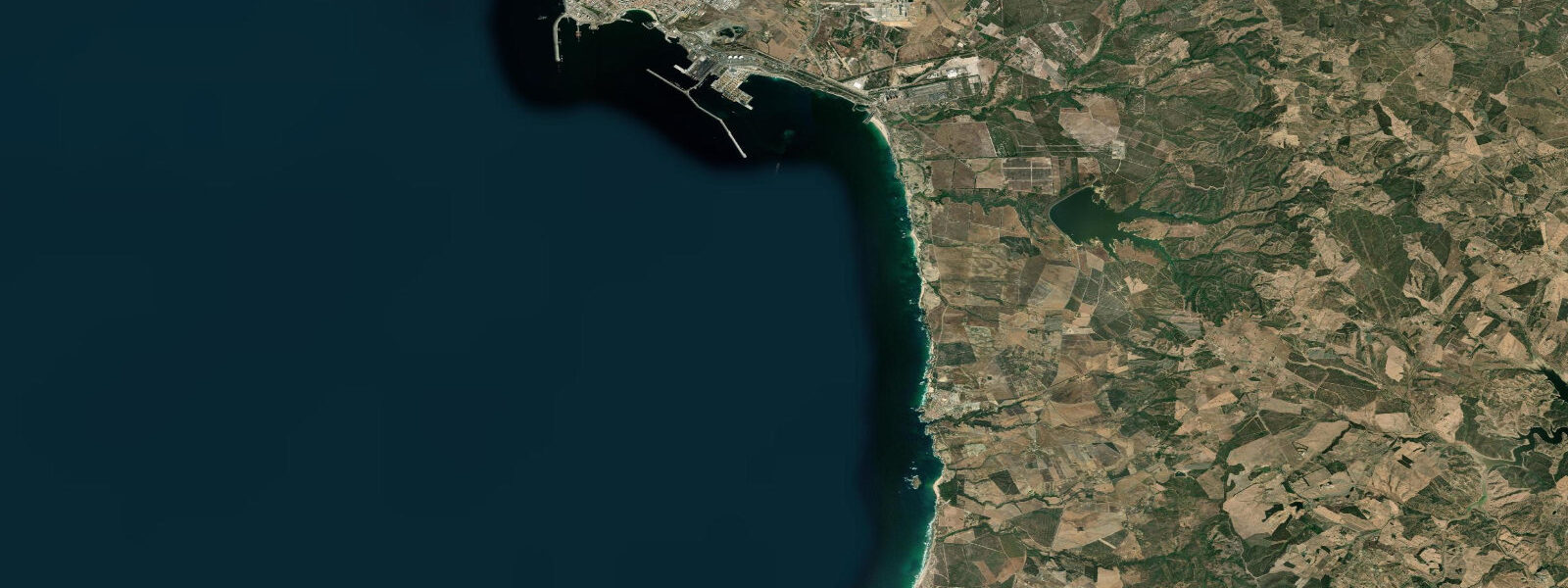
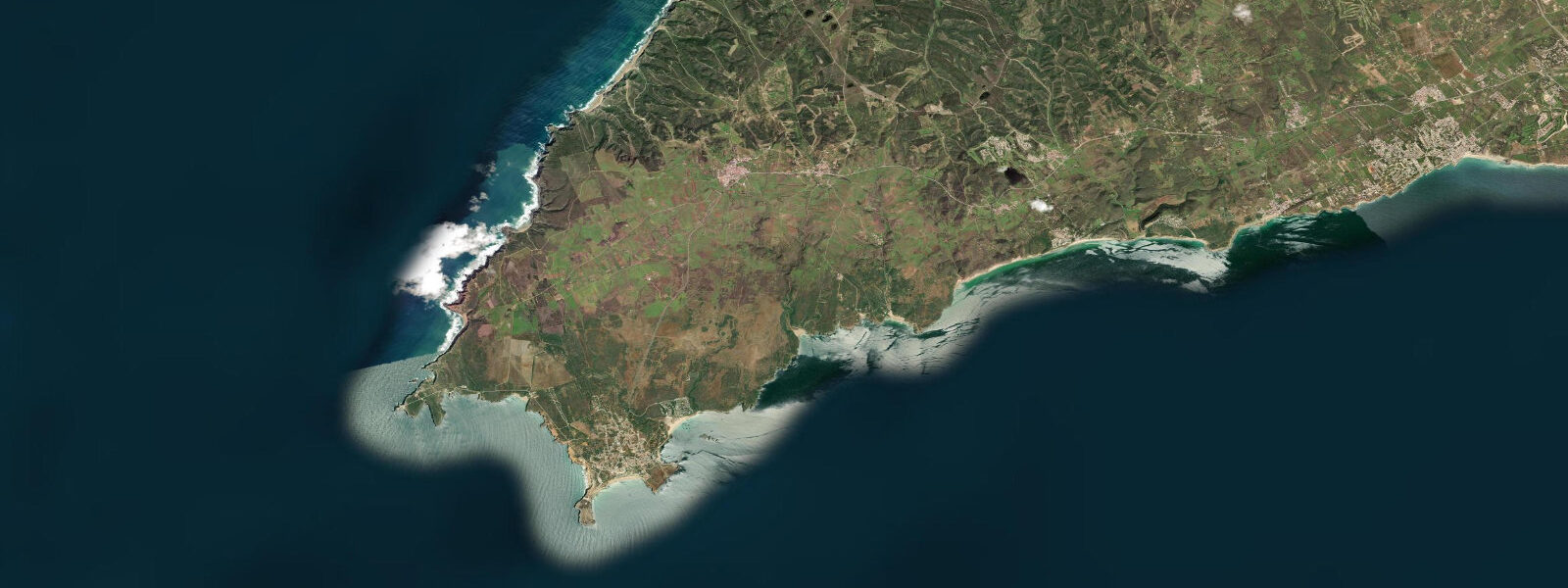
The three closest curated TideTurtle locations to Vila Nova de Milfontes, Alentejo Coast, measured by great-circle distance.
Today's solunar windows
Solunar tradition: major periods are the ≈3h windows around moon transit and opposition; minor are ≈2h around moonrise and moonset. Pair with the local tide stage and wind for the best read.
Cycle dates near Vila Nova de Milfontes, Alentejo Coast
Last spring tide on Mon 03 Aug (range 2.4m). Next spring tide on Sun 09 Aug (range 1.9m). Next neap on Fri 07 Aug.
Spring tides cluster around new and full moons (biggest swings). Neap tides land on quarter moons (smallest swings). See the spring tide and neap tide glossary entries for the why.
About tides at Vila Nova de Milfontes, Alentejo Coast
A short guide to the coastline at Vila Nova de Milfontes, Alentejo Coast — geography, sea state, and what the tide is actually doing under your feet.
Vila Nova de Milfontes is built on a low hill above the point where the Mira river meets the Atlantic. A sandy bar closes off the river mouth, forcing the water to exit through a narrow channel on the south side of the estuary. This bar is the defining feature of the place — it creates a sheltered river behind it, an exposed ocean beach in front of it, and a zone of strong tidal flow through the channel between the two.
The surrounding coast is part of the Southwest Alentejo and Costa Vicentina Natural Park, one of the least-developed Atlantic coastlines in western Europe. Development inside the park boundary is tightly controlled; the landscape behind the coast is cork oak scrub, cistus, and rolling farmland with no visible infrastructure apart from the occasional white village. The park runs 110 km from Sines in the north to Burgau in the south, and the Milfontes stretch sits near the northern end.
Atlantic semidiurnal tides govern the water here. Mean tidal range at the nearest Portuguese gauge (Sines, 35 km north) is approximately 2.5 to 3.0 metres on spring tides; mean range on neaps is 1.2 to 1.5 metres. High water is roughly 20 to 30 minutes earlier at Milfontes than at Sines, given the slightly different geometry of the coast. The tidal signal is clean semidiurnal — two roughly equal high waters and two roughly equal low waters each day.
The bar channel at the river mouth is where the tide makes itself physically obvious. On the ebb, the river's current and the falling tide combine to drive a strong seaward flow through the narrow exit. When a ground swell is running from the west or southwest — which is most of the time on this Atlantic-facing coast — and the ebb tide is opposing it, the bar develops steep, breaking waves and a confused sea surface. Entry and exit through the channel under those conditions is dangerous for small craft and should be timed to the flood tide, with the swell taken into account. On a calm day at high water, the bar is benign. Reading the bar requires watching it for at least 15 minutes before committing.
Inside the Mira estuary, behind the bar, conditions are transformed. The river is sheltered from ocean swell; the water is flat except for the tidal current. Kayakers use the estuary on the flood tide, paddling upriver for several kilometres toward the village of Brunheiras. On the ebb, the return is effortless. The estuary edges hold herons and egrets in the morning; the reed beds on the north bank are a breeding area for several wetland birds. A rental kayak operation runs from the beach near the north bank; no experience is required for the inner estuary on the flood tide.
Praia do Farol is the riverside beach on the south bank, sheltered from ocean swell and warmer than the ocean beach — the shallow estuary water heats up during the day in summer. Access is by footbridge from the town, or a short walk along the south bank. The beach works for families at all tide states but is largest around low water when the sand extends further into the estuary.
Praia das Furnas is the exposed Atlantic beach immediately north of the bar, accessible on foot from the town along the north bank path. Here the full Atlantic fetch arrives unimpeded — swell from Azores low-pressure systems can produce 2 to 3-metre faces. Rip currents run through the breaks in the sandbar; swimming here requires reading the beach first. At low water, the beach extends 100 to 150 metres from the dune base; at high water on a spring tide with swell running, the backwash reaches the dune toe.
Shore fishing from the north breakwater is the local method for bass. The breakwater extends from the north bank to the channel edge; fishing on the ebb tide drop, casting across the current into the channel, is the standard approach. Bass (robalo) hold in the channel flow, feeding on small fish and crustaceans flushed out by the current. Bloodworm on the bottom or large surface plugs on the channel edge are both used. The fishing window is the last two hours of the ebb and the first hour of the flood.
Tide data for Vila Nova de Milfontes, Alentejo Coast comes from the Open-Meteo Marine API, a gridded model product. Timing accuracy is ±45 minutes, height accuracy ±0.3 m — usable for trip planning, not for navigation.
Tide questions about Vila Nova de Milfontes, Alentejo Coast
Quick answers to the most common questions about tide times, range, and water access at Vila Nova de Milfontes, Alentejo Coast.
What is the tidal range at Vila Nova de Milfontes?
Tidal range at Milfontes follows the Atlantic semidiurnal pattern: spring tides reach 2.5 to 3.0 metres, neap tides 1.2 to 1.5 metres. The closest Portuguese Hydrographic Institute gauge is at Sines (35 km north); high water at Milfontes is approximately 20 to 30 minutes earlier than at Sines. The 3-metre spring range is large enough to significantly change beach width, bar channel depth, and access to the lower estuary edges — high and low water states produce noticeably different conditions at every point along the river mouth.
When is it safe to cross the bar channel by kayak or small boat?
The safest window is the flood tide on a day with modest swell — ideally below 1.5 metres significant wave height at the Sines wave buoy. On the flood, tidal flow and incoming swell are aligned; the bar is less broken. On the ebb, river current and tide combine against any incoming swell to create steep, short-breaking waves in the channel — the channel becomes hazardous for small craft. Always watch the bar for at least 15 minutes before entering or exiting. When in doubt, wait for the flood.
What is the river estuary like for kayaking?
The inner Mira estuary behind the bar is sheltered from ocean swell and is suitable for beginners on the flood tide. The flood current runs upriver at 0.5 to 1.0 knots in the main channel; paddling upriver on the flood and returning on the ebb gives an effortless round trip of 8 to 12 km. The estuary edges hold herons, egrets, and multiple wading bird species year-round. Rental kayaks are available near the north bank in summer. The estuary becomes shallow on the falling tide toward low water — allow time to return before the ebb drops to its lowest.
Which beach is better for families — Praia do Farol or Praia das Furnas?
Praia do Farol on the south bank of the Mira estuary is the better choice for families with young children. It is sheltered from ocean swell, the water warms up in the estuary during summer afternoons, and there is no rip current risk. Praia das Furnas, the exposed Atlantic beach north of the bar, receives full Atlantic swell and has rip currents through gaps in the sandbar — it is suitable for competent swimmers and supervised older children who understand rip current behaviour. At Furnas, always swim between the flag markers if lifeguards are present.
What is the best tide state for fishing bass from the north breakwater?
Bass (robalo) fishing from the north breakwater at the Mira channel entrance is most productive during the last two hours of the ebb tide and the first hour of the flood. On the ebb, the channel current is at its strongest and flushes bait — small fish and crustaceans — seaward through the channel; bass hold on the current edges waiting for it. Cast across the channel current with large surface plugs at dawn or dusk, or fish bloodworm on a running ledger on the bottom of the channel during daylight. The first light of dawn on an ebb tide is consistently the most productive window.
8-day tide table — Vila Nova de Milfontes, Alentejo Coast
Heights relative to MSL. Predictions: Open-Meteo Marine (MeteoFrance SMOC, 0.08° grid) — heights relative to MSL (not chart datum / LAT). Model-derived.
| Day | Type | Time | Height |
|---|---|---|---|
| Mon 03 Aug | Low | 01:00 | -1.2m |
| High | 05:32 | 0.7m | |
| Low | 11:32 | -1.4m | |
| High | 17:46 | 0.8m | |
| Tue 04 Aug | Low | 00:02 | -1.5m |
| High | 06:11 | 0.6m | |
| Wed 05 Aug | Low | 00:45 | -1.4m |
| High | 06:58 | 0.5m | |
| Low | 13:05 | -1.3m | |
| High | 19:18 | 0.5m | |
| Thu 06 Aug | Low | 01:36 | -1.3m |
| High | 07:57 | 0.3m | |
| Low | 14:06 | -1.2m | |
| High | 20:23 | 0.3m | |
| Fri 07 Aug | Low | 02:43 | -1.2m |
| High | 09:07 | 0.3m | |
| Low | 15:26 | -1.1m | |
| High | 21:48 | 0.2m | |
| Sat 08 Aug | Low | 04:03 | -1.1m |
| High | 10:33 | 0.4m | |
| Low | 17:00 | -1.1m | |
| Sun 09 Aug | High | 11:50 | 0.5m |
| Low | 18:18 | -1.3m | |
| Mon 10 Aug | High | 00:00 | 0.4m |