Frombork tide times
Frombork tide forecast — heights relative to MSL.
Today's tide times for Frombork
Tide times at Frombork on Tuesday, 4 August 2026: first low tide at 02:00am. Sunrise 04:56am, sunset 08:37pm.
Tide chart for Frombork
24-hour cosine-interpolated curve around the present moment. Heights relative to MSL. Predictions: Predictions: Open-Meteo Marine (MeteoFrance SMOC, 0.08° grid).
Sun, moon and conditions on Tue 04 Aug
Snapshot at build time — refreshes daily. Sea state from Open-Meteo Marine.
Highs and lows next 7 days
Every predicted high and low for the next week, with the daily tidal coefficient (0–120; higher = bigger swing, > 95 means stronger currents).
Other spots nearby
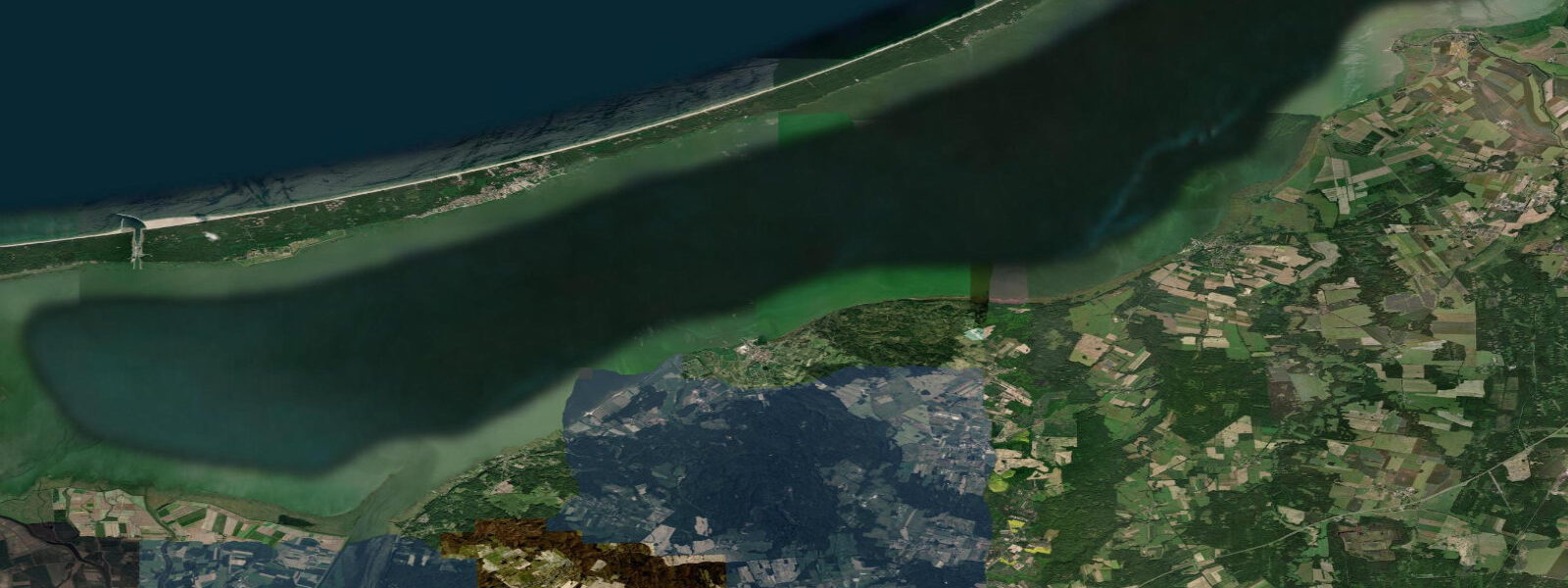
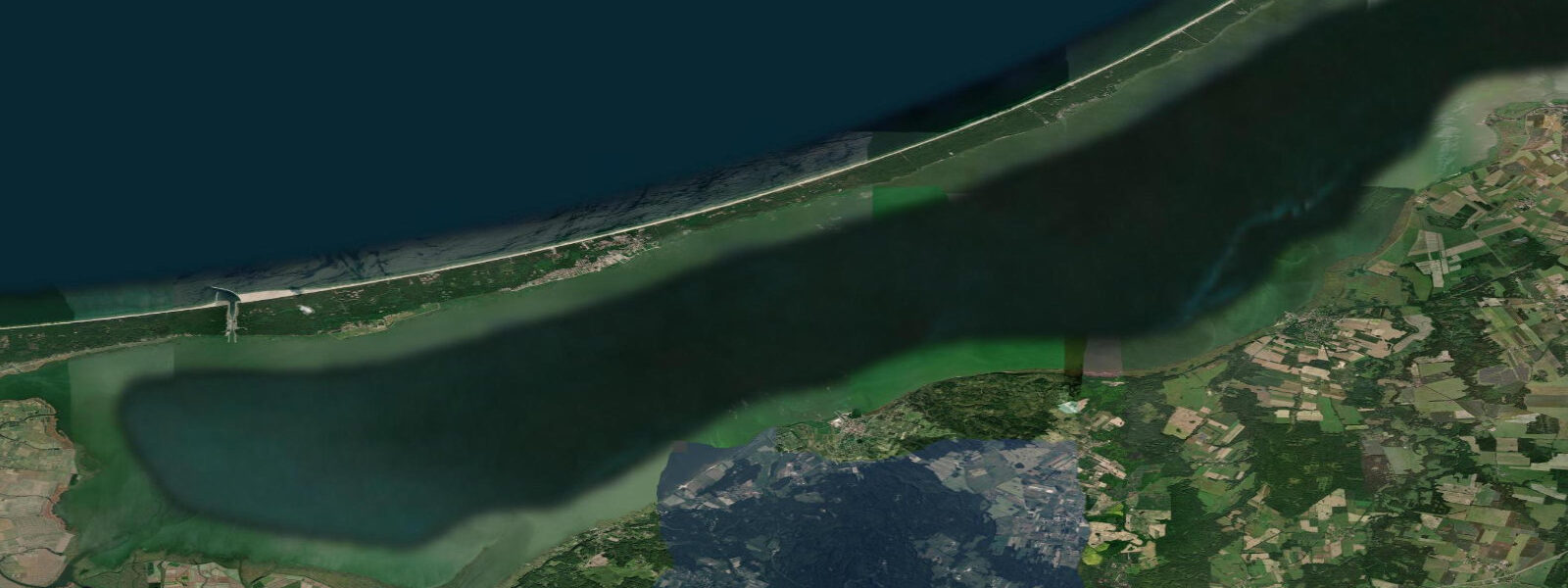
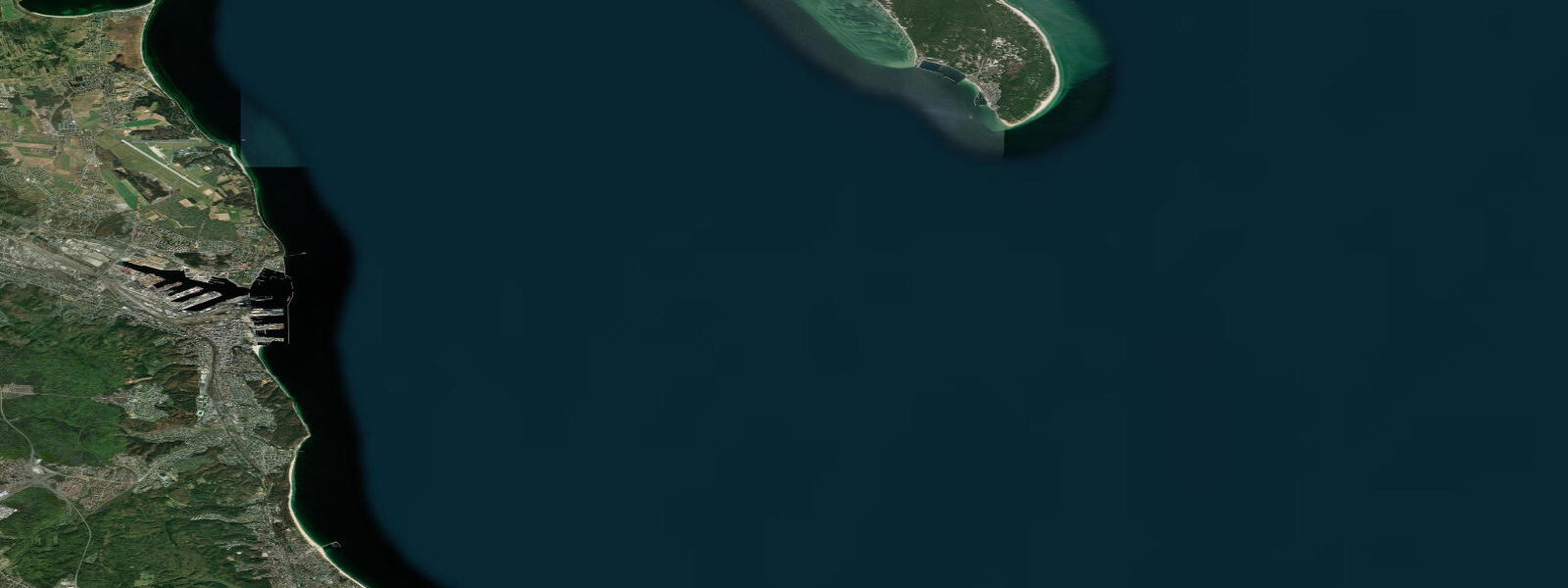
The three closest curated TideTurtle locations to Frombork, measured by great-circle distance.
Today's solunar windows
Solunar tradition: major periods are the ≈3h windows around moon transit and opposition; minor are ≈2h around moonrise and moonset. Pair with the local tide stage and wind for the best read.
About tides at Frombork
A short guide to the coastline at Frombork — geography, sea state, and what the tide is actually doing under your feet.
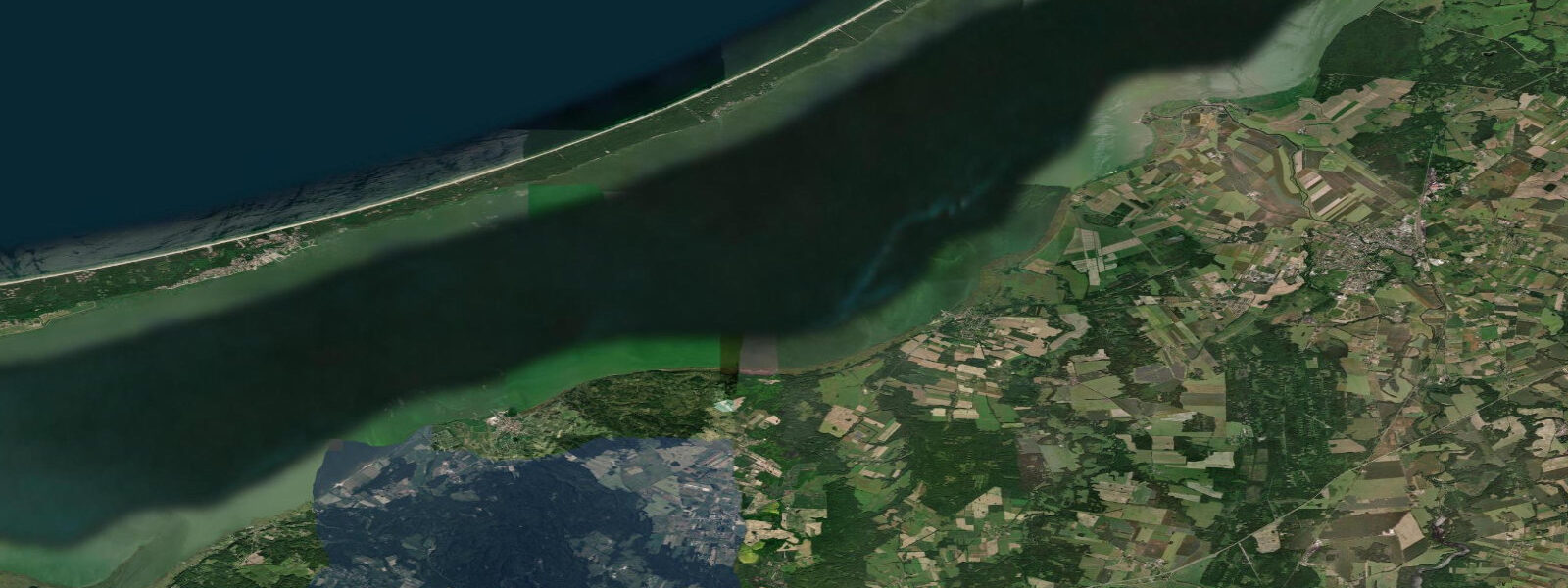
Frombork is a small town on the southern shore of the Vistula Lagoon (Zalew Wiślany), where the low bluff above the waterfront carries one of the most historically significant buildings in northern Europe. The Frombork Cathedral Chapter complex — the Cathedral Basilica of the Assumption of the Virgin Mary, with its accompanying towers and chapter buildings — stands on a walled hill above the lagoon: the dominant structure on the local skyline for kilometres in any direction. Nicolaus Copernicus arrived in Frombork in 1512 as canon of the Warmia Chapter and lived here, with intervals, until his death in 1543.
The northwest tower of the chapter complex served as his observatory; using instruments he constructed himself and observations made over three decades, he developed the heliocentric model of the solar system. De revolutionibus orbium coelestium, the work in which he placed the Sun rather than the Earth at the centre of the planetary system, was published in 1543 — the same year he died. He never saw the reception of the book.
The tower, the chapter buildings, the cathedral, and the museum within the complex (the Frombork Museum, incorporating the Nicolaus Copernicus Museum) are accessible to visitors. A reconstruction of the original observation instruments is displayed in the tower. The astronomical significance of the site makes it one of the more genuinely substantial heritage locations on the Baltic coast — a place where a specific intellectual revolution can be traced to specific observations made from a specific building in a specific town.
The waterfront below the hill is a small working port for fishing boats and pleasure craft accessing the Vistula Lagoon. The lagoon at Frombork is 2 to 3 metres deep, with a soft silt and mud bottom; the water is fresh to brackish depending on the balance between Danube Delta inflow and Baltic exchange through the Baltiysk channel and the new Przekop Mierzei canal to the west. In wet years with high river inflow, the lagoon water near the Elbląg River delta is almost fresh; in dry years with sustained easterly winds pushing Baltic water through the channel, salinity rises.
The astronomical tide in the Vistula Lagoon is 0 to 5 centimetres — negligible, for the same reasons that apply throughout the Baltic. Water level at Frombork is governed by wind direction and atmospheric pressure: a northerly pushes Baltic water through the Baltiysk channel into the lagoon, raising levels; a southerly reverses the gradient. IMGW (the Institute of Meteorology and Water Management, Poland) monitors sea level in the Polish section of the Vistula Lagoon.
Small-boat fishing from the Frombork waterfront and the adjacent lagoon shore targets perch, pike-perch, and bream; the lagoon fishing tradition in the Warmia and Masuria region is long-established. The town is small — approximately 2,300 residents — and the tourist economy is primarily driven by the Copernicus site and by visitors on the sailing and motor-boating circuit of the Vistula Lagoon. The Frombork Cathedral was heavily damaged in 1945 during the Soviet offensive in East Prussia and was restored over several decades after the war; the restoration was completed by the early 1990s.
The cathedral tower provides a panoramic view over the lagoon, the spit, and the Kaliningrad exclave beyond. Copernicus's grave is in the cathedral floor — located by DNA analysis in 2005 comparing skeletal remains found under the cathedral with hair samples preserved in one of his books in Uppsala University library, and reinterred with a formal ceremony in 2010. The town commemorates this with a tomb monument in the cathedral floor near the altar.
Predictions on this page come from Open-Meteo Marine, a gridded global ocean model. 3 metres on height — substantially exceeds the actual tidal signal. Water level here is weather-driven; plan around the wind and pressure forecast.
Tide questions about Frombork
Quick answers to the most common questions about tide times, range, and water access at Frombork.
What is the tide at Frombork?
The astronomical tide in the Vistula Lagoon at Frombork is 0 to 5 centimetres — negligible. The lagoon is enclosed and effectively isolated from Baltic tidal movement. Water level is governed by wind direction and atmospheric pressure: a northerly pushes Baltic water through the Baltiysk channel into the lagoon, raising levels; a sustained southerly lowers them. IMGW (the Institute of Meteorology and Water Management, Poland) monitors lagoon water levels. There is no meaningful tidal cycle here in the astronomical sense.
Why is Frombork significant to astronomy?
Nicolaus Copernicus lived and worked in Frombork from 1512 until his death in 1543, conducting the telescopic-era observations that underpinned his heliocentric model. The northwest tower of the Cathedral Chapter complex served as his observatory; using naked-eye instruments he constructed from his own designs, he measured planetary positions over three decades. His findings were published as De revolutionibus orbium coelestium in 1543 — the foundational text of the Copernican Revolution, which removed the Earth from the centre of the solar system. The tower, cathedral, and Frombork Museum are open to visitors; the observation tower is one of very few surviving buildings directly associated with a specific shift in scientific understanding.
What is the Vistula Lagoon (Zalew Wiślany)?
The Vistula Lagoon is a brackish coastal lagoon approximately 90 km long and 10 to 15 km wide, separated from the Baltic Sea by the Vistula Spit. The Polish portion covers roughly two-thirds of the lagoon area; the eastern third is in the Russian Kaliningrad exclave (where it is known as the Kaliningradskiy Zaliv). The lagoon is shallow — average depth 2 to 3 metres — with a soft mud bottom and water salinity that varies from near-fresh near the Elbląg River inflow to weakly brackish in the eastern section. The Przekop Mierzei canal, opened in 2022, gave Poland a second, independent maritime entry to the lagoon. The Vistula Lagoon supports a traditional fishing economy and summer recreational boating.
Where do these predictions come from?
Open-Meteo Marine, a gridded global ocean model; accuracy is typically plus or minus 45 minutes on timing and 0.2 to 0.3 metres on height. At Frombork, where the astronomical tide in the Vistula Lagoon is 0 to 5 centimetres, the model height uncertainty substantially exceeds the actual tidal signal. The values shown reflect wind-driven and atmospheric water-level variation in the lagoon, not an astronomical tide. IMGW (Instytut Meteorologii i Gospodarki Wodnej — the Institute of Meteorology and Water Management, Poland) monitors the Polish lagoon shore sea levels and is the authoritative source for operational water-level data in this area.
Is this page safe to use for navigation?
No. Navigation in the Vistula Lagoon at and near Frombork requires current Polish hydrographic charts and awareness of the regulated fairway system maintained by the Urząd Morski w Gdyni (Maritime Office in Gdynia). The lagoon floor is soft silt and mud; the channels are shallow (2 to 3 m average) and the bottom outside the marked fairways is soft enough to ground and foul propellers on vessels drawing more than 1 metre. The Frombork waterfront pier is a protected harbour approach. Use Polish Hydrographic Office charts and IMGW water-level data for any vessel operation. Open-Meteo Marine gridded predictions are not authoritative for navigation.
7-day tide table — Frombork
Heights relative to MSL. Predictions: Open-Meteo Marine (MeteoFrance SMOC, 0.08° grid) — heights relative to MSL (not chart datum / LAT). Model-derived.
| Day | Type | Time | Height |
|---|---|---|---|
| Tue 04 Aug | Low | 02:00 | -0.1m |
| Wed 05 Aug | High | 12:00 | -0.0m |
| Thu 06 Aug | — | ||
| Fri 07 Aug | — | ||
| Sat 08 Aug | — | ||
| Sun 09 Aug | — | ||
| Mon 10 Aug | Low | 16:00 | -0.1m |