Zorritos, Peru tide times
Zorritos, Peru tide forecast — heights relative to MSL.
Today's tide times for Zorritos, Peru
Tide times at Zorritos, Peru on Tuesday, 4 August 2026: first high tide at 06:50, first low tide at 13:07, second high tide at 19:12. Sunrise 06:29, sunset 18:27.
Tide chart for Zorritos, Peru
24-hour cosine-interpolated curve around the present moment. Heights relative to MSL. Predictions: Predictions: Open-Meteo Marine (MeteoFrance SMOC, 0.08° grid).
Sun, moon and conditions on Tue 04 Aug
Snapshot at build time — refreshes daily. Sea state from Open-Meteo Marine.
Highs and lows next 7 days
Every predicted high and low for the next week, with the daily tidal coefficient (0–120; higher = bigger swing, > 95 means stronger currents).
Other spots nearby
The three closest curated TideTurtle locations to Zorritos, Peru, measured by great-circle distance.
Today's solunar windows
Solunar tradition: major periods are the ≈3h windows around moon transit and opposition; minor are ≈2h around moonrise and moonset. Pair with the local tide stage and wind for the best read.
Cycle dates near Zorritos, Peru
Last spring tide on Mon 03 Aug (range 1.5m). Next spring tide on Sat 08 Aug (range 1.3m). Next neap on Thu 06 Aug.
Spring tides cluster around new and full moons (biggest swings). Neap tides land on quarter moons (smallest swings). See the spring tide and neap tide glossary entries for the why.
About tides at Zorritos, Peru
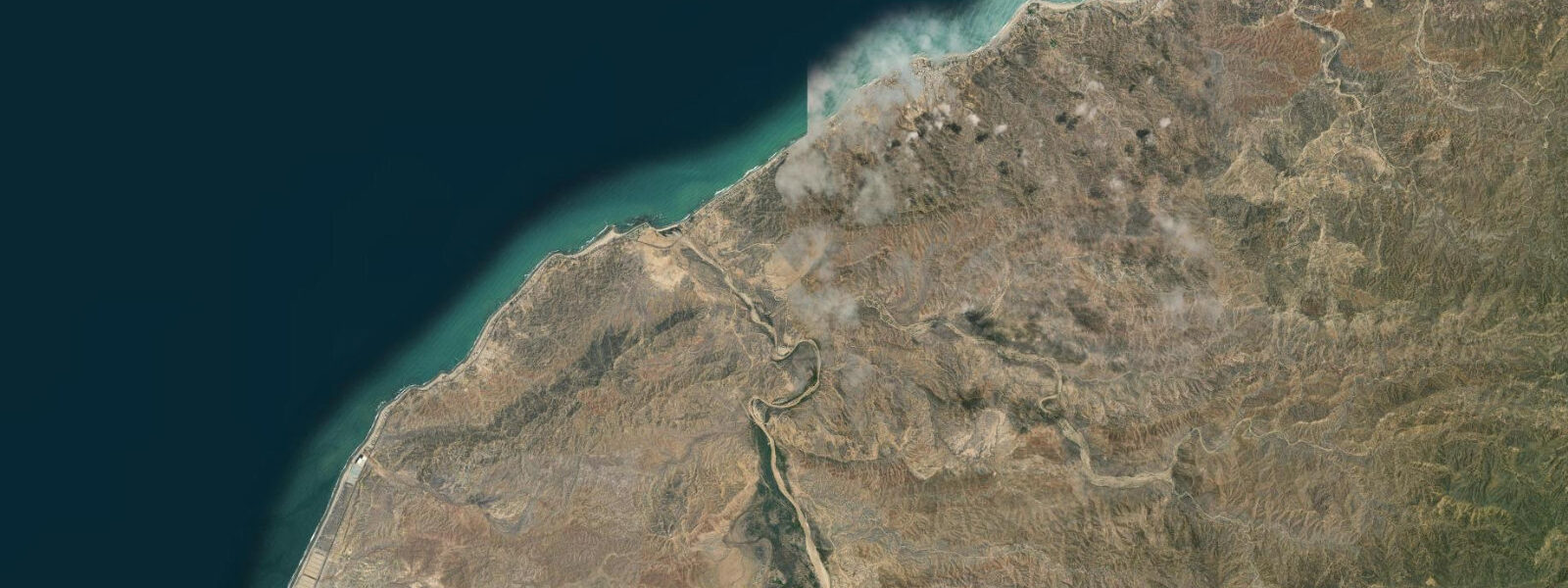
A short guide to the coastline at Zorritos, Peru — geography, sea state, and what the tide is actually doing under your feet.
Zorritos sits 28 kilometres south of the Ecuadorian border, making it the northernmost significant beach settlement on the Peruvian coast. The town is small — a fishing village that has grown a modest domestic tourism layer without abandoning its working waterfront — and it sits in the transition zone where the Humboldt Current's cold upwelling begins to weaken. Water temperature here is 5 to 7°C warmer than at Huanchaco or Lima, regularly reaching 22 to 24°C from January through April and rarely dropping below 18°C at any point in the year. This single fact distinguishes Zorritos from almost every other beach in Peru.
The beach is a broad, flat arc of dark-blonde sand backed by low hills and the coastal road. The surf is moderate — the exposed Pacific runs a regular swell out of the southwest, but the beach's orientation and the relatively gentle offshore gradient produce a rideable beach break rather than heavy slab surf. In the mornings, when the offshore wind from the northeast holds the face up, conditions are consistently good for longboard surfing and SUP. By early afternoon the thermal breeze from the land picks up and the surface chops.
The fishing fleet operates from a small concrete dock in the southern section of town. Artisanal fishers target corvina, bonito, and shellfish; they are on the water by 04:00 and back before the morning heats up. The catch goes directly to the restaurants that line the central street of Zorritos — ceviche made with freshly caught corvina, arroz con mariscos, and the northern Peruvian chicharrón de mariscos that defines the coastal food culture north of Trujillo. The ingredient-to-plate transit time in Zorritos is measured in hours.
The tidal regime here is mixed semidiurnal following the Peruvian Pacific pattern. Spring range runs 1.5 to 2.5 metres at this latitude, with two unequal highs and two unequal lows per day. Low tide exposes a wide sand flat that extends 80 to 120 metres seaward of the high-tide line; the flat is firm enough to drive on in the early morning when fishing vehicles park to unload nets. The incoming flood tide moves fast across the flat — anyone wading far out during low water should watch the rise rate, which accelerates noticeably in the last hour before high water. The large tidal movement combined with the warm water creates good conditions for wading anglers targeting the species that move onto the flat with the flood.
Zorritos has a recognised geothermal feature: thermal springs emerge at the southern edge of town, close to the beach. The springs reach 35 to 40°C and are used locally as outdoor bathing pools. The combination of warm sea water and warm springs makes Zorritos an unusually comfortable coastal destination for northern Peru, where cold Humboldt Current water is usually the limiting factor for casual beach use.
For photographers, the town's working waterfront at dawn is the primary subject: fishing boats unloading in the early light, pelicans hovering over the dock waiting for discarded catch, and the colour contrast between the dark water and the pale coastal hills behind. The light at 06:00 to 07:30 from the east comes flat and warm across the dock before the coastal haze builds.
El Niño years — irregular warm-water anomalies in the Pacific — amplify Zorritos's natural warmth further. Water temperatures can reach 27°C during strong events; the corresponding disruption to the fishery makes El Niño a mixed blessing for the working fleet.
Tide predictions for Zorritos come from Open-Meteo Marine, a global gridded ocean model. Accuracy is within plus or minus 45 minutes on timing and 0.2 to 0.3 metres on height. This is a gridded interpolation — there is no local tide gauge at Zorritos — so verification against observed water level on arrival is the sensible practice.
Tide questions about Zorritos, Peru
Quick answers to the most common questions about tide times, range, and water access at Zorritos, Peru.
Why is the water warmer at Zorritos than at other beaches in Peru?
Zorritos is 28 kilometres south of the Ecuadorian border, at the northern edge of the Peruvian coast where the Humboldt Current's cold upwelling is weakest. Further south — at Huanchaco, Paracas, or Lima — the Humboldt drives cold, nutrient-rich water to the surface year-round, keeping sea temperature between 14 and 18°C. At Zorritos the upwelling signal diminishes, and surface water temperature reaches 22 to 24°C from January through April. During strong El Niño events the temperature can touch 27°C. This makes Zorritos one of the few places on the Peruvian coast where casual swimming without a wetsuit is comfortable for extended periods.
What is the tide range at Zorritos and when is the best time to fish the flats?
Spring tide range at Zorritos runs 1.5 to 2.5 metres — mixed semidiurnal, with two unequal high tides and two unequal low tides each day. Low tide exposes a sand flat extending 80 to 120 metres seaward of the high-tide mark. The best window for wading anglers targeting corvina and flounder on the flat is the last two hours of the ebb and the first hour of the flood, when fish move ahead of the receding and returning tide. The flood moves fast — the flat can refill in under 90 minutes — so plan the exit before the water reaches thigh depth. Tide predictions come from Open-Meteo Marine, accurate within plus or minus 45 minutes on timing and 0.2 to 0.3 metres on height.
Are the thermal springs at Zorritos accessible to visitors?
The geothermal springs on the southern edge of Zorritos emerge close to the beach at temperatures around 35 to 40°C. They are used as open-air bathing pools and are accessible to visitors; local operators maintain the most developed pool sites. The contrast between the warm spring water and the Pacific surf a short walk away is one of the town's specific draws. The springs vary in output and temperature seasonally; the flow is most reliable in the dry months from June through October when groundwater levels are more stable.
What surf conditions should I expect at Zorritos?
Zorritos receives a regular southwest Pacific swell that produces a workable beach break across the main arc of the bay. The wave quality peaks in the mornings when the offshore northeast wind from the land holds up the face and produces cleaner shape — the window from dawn to around 09:00 is the most consistent. By early afternoon the onshore thermal breeze develops and the surface conditions deteriorate. Spring tides expose the sandbanks differently from neap tides, and the bank configuration shifts through the swell season. The break suits longboards and SUP on smaller days; shortboarders find the more powerful sets in the April to October southwest swell window.
How do I get to Zorritos from Tumbes or the Ecuadorian border?
Zorritos is on the Panamericana Norte highway, 28 kilometres south of the Ecuadorian border crossing at Aguas Verdes. From Tumbes city it is approximately 27 kilometres south by road — a 30-minute drive or colectivo taxi ride. From the Aguas Verdes border crossing the road south to Zorritos passes through Tumbes; count on 45 minutes from the border including the crossing formalities. Direct buses from Lima to Tumbes stop at Zorritos on request; the journey from Lima is 19 to 21 hours by overnight bus. There is no train service on this section of the coast.
7-day tide table — Zorritos, Peru
Heights relative to MSL. Predictions: Open-Meteo Marine (MeteoFrance SMOC, 0.08° grid) — heights relative to MSL (not chart datum / LAT). Model-derived.
| Day | Type | Time | Height |
|---|---|---|---|
| Tue 04 Aug | High | 06:50 | 1.2m |
| Low | 13:07 | -0.3m | |
| High | 19:12 | 1.0m | |
| Wed 05 Aug | Low | 13:56 | -0.3m |
| High | 20:06 | 0.9m | |
| Thu 06 Aug | Low | 02:03 | -0.1m |
| High | 08:21 | 1.0m | |
| Low | 14:51 | -0.3m | |
| High | 21:11 | 0.8m | |
| Fri 07 Aug | Low | 03:05 | -0.0m |
| High | 09:25 | 0.9m | |
| Low | 16:00 | -0.2m | |
| Sat 08 Aug | High | 10:40 | 0.9m |
| Low | 17:15 | -0.2m | |
| High | 23:50 | 0.9m | |
| Sun 09 Aug | Low | 05:57 | -0.0m |
| High | 11:55 | 0.9m | |
| Low | 18:34 | -0.4m | |
| Mon 10 Aug | High | 01:02 | 1.0m |
| Low | 07:11 | -0.1m | |
| High | 13:07 | 1.0m | |
| Low | 18:00 | -0.3m |