Port Moresby tide times
Port Moresby tide forecast — heights relative to MSL.
Today's tide times for Port Moresby
Tide times at Port Moresby on Tuesday, 4 August 2026: first high tide at 12:47pm, first low tide at 05:42pm. Sunrise 06:25am, sunset 06:09pm.
Tide chart for Port Moresby
24-hour cosine-interpolated curve around the present moment. Heights relative to MSL. Predictions: Predictions: Open-Meteo Marine (MeteoFrance SMOC, 0.08° grid).
Sun, moon and conditions on Tue 04 Aug
Snapshot at build time — refreshes daily. Sea state from Open-Meteo Marine.
Highs and lows next 7 days
Every predicted high and low for the next week, with the daily tidal coefficient (0–120; higher = bigger swing, > 95 means stronger currents).
Other spots nearby
The three closest curated TideTurtle locations to Port Moresby, measured by great-circle distance.
Today's solunar windows
Solunar tradition: major periods are the ≈3h windows around moon transit and opposition; minor are ≈2h around moonrise and moonset. Pair with the local tide stage and wind for the best read.
Cycle dates near Port Moresby
Next spring tide on Mon 10 Aug (range 2.4m). Last neap on Tue 04 Aug.
Spring tides cluster around new and full moons (biggest swings). Neap tides land on quarter moons (smallest swings). See the spring tide and neap tide glossary entries for the why.
About tides at Port Moresby
A short guide to the coastline at Port Moresby — geography, sea state, and what the tide is actually doing under your feet.
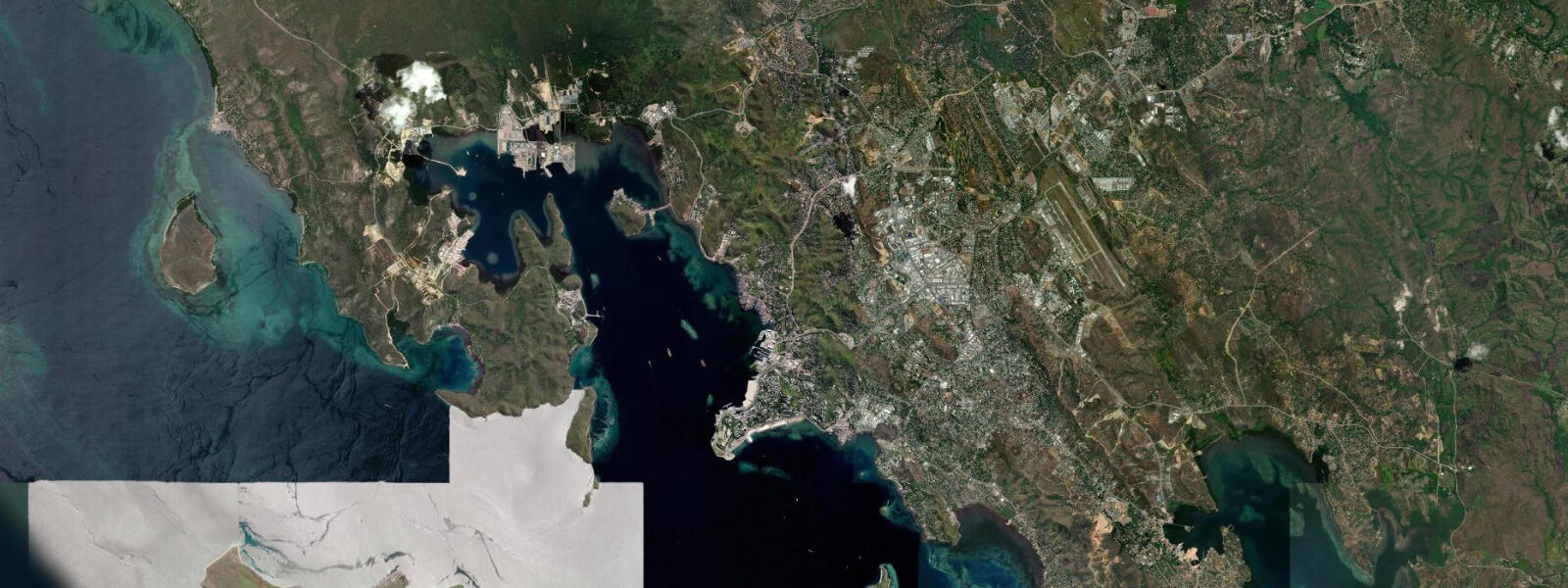
Port Moresby is the capital of Papua New Guinea, positioned on a peninsula of raised coral limestone at the head of Fairfax Harbour on the Coral Sea coast. The city of roughly 400,000 is the largest in the Pacific island region outside Australia and New Zealand. Two natural harbours — Fairfax Harbour to the north and Bootless Bay 12 kilometres to the east — frame the city's coastal access, and the inner harbour has been central to PNG's trade since the colonial period.
The tidal regime at Port Moresby is semidiurnal with a spring range of approximately 2.0 m. Two daily tidal cycles of broadly similar height drive a moderate tidal current through the Basilisk Passage — the main navigable entrance to Fairfax Harbour between the mainland and the reef system to the south. The Papuan Barrier Reef runs along this coast 20–30 kilometres offshore, sheltering the coastal waters from open Coral Sea swell and creating a shallow inner sea between the reef and the mainland coast. This inner sea, 1–5 m deep over its central sections, is an extensive intertidal and sub-tidal habitat that is among the least disturbed in the world. The reefs along the Papuan Barrier Reef are rarely dived — access requires a boat capable of the 20–30 km offshore transit.
Ela Beach is the main urban beach, a 200-metre crescent of sand 2 kilometres southeast of the city centre, adjacent to the Ela Beach Hotel and the Port Moresby Sailing Club. At high spring water the beach narrows to 15–20 metres and the Coral Sea swell arrives directly at the sand; at low spring water the beach widens to 40–50 metres and the reef flat offshore is exposed. The reef immediately south of Ela Beach provides snorkelling at mid-tide and above — coral coverage is moderate given the beach's proximity to the city, but fish diversity is higher than the urban location might suggest. Visibility is 5–12 m close to shore; it improves sharply at the Basilisk Passage mouth where Coral Sea water exchanges with harbour water.
Bootless Bay, 12 km east of the city centre, is the primary recreational marine hub. The bay is enclosed by a reef and headlands that moderate the swell, and several reef dive sites are accessible within 10–15 minutes by boat from the Bootless Bay Marina. The Suzie, Peligrade Point, and Sinub Island sites are within recreational diving range (15–30 m depth) and are accessible at any tidal state, though dive operators time their drops to the slack-water window around high and low tide when current over the reef is minimal. The bay's mangrove margins, accessible by kayak on the upper tidal stages, hold herons, kingfishers, and the variable mudskipper community typical of tropical mangrove coasts.
The fishing from Port Moresby is substantial. The inner coastal waters between the city and the Papuan Barrier Reef support a commercial and recreational fishery for reef species — snapper, coral trout, and emperor — that are lightly exploited relative to the size of the reef system. Offshore beyond the barrier reef, the blue-water fishery produces yellowfin tuna, wahoo, and black marlin. Black marlin weighing over 300 kg are taken regularly in the waters offshore of Port Moresby between October and April, a season driven by the marlin migration through the Coral Sea. The annual Port Moresby game-fishing competition is one of the Pacific's longest-running events.
For families, Ela Beach and the calmer sections of Bootless Bay are the primary swimming locations. Sea temperature is 26–29°C throughout the year. The November–April wet season brings the possibility of rough conditions from tropical weather systems; May through October is the southeast trade-wind season, when conditions are more predictable and the sea state is generally more settled.
For photographers, the Port Moresby Harbour at sunrise — with the traditional lagatoi trading canoes (double-outrigger sailing canoes with crab-claw sails) occasionally visible during the Hiri Moale festival season — and the Ela Beach sunset are the primary coastal subjects. The reefs visible through the Basilisk Passage at low water, with the barrier reef visible on the horizon, give a sense of the scale of the reef system that frames the city.
All tide predictions for Port Moresby come from the Open-Meteo Marine gridded model. Timing accuracy is ±45 minutes; height accuracy is ±0.3 m above Chart Datum.
Tide questions about Port Moresby
Quick answers to the most common questions about tide times, range, and water access at Port Moresby.
What is the tidal range at Port Moresby and how does it affect harbour navigation?
Port Moresby's spring tidal range is approximately 2.0 m, semidiurnal. The tidal current in the Basilisk Passage — the main harbour entrance — runs at 1.0–1.5 knots at peak spring flood and ebb. Large commercial vessels navigate the passage at any tidal state; smaller recreational craft should exercise care at peak spring ebb when the current sets through the reef opening. Bootless Bay is accessible at all tidal states from its own passage. The inner harbour basin (Fairfax Harbour) is deep and well sheltered; tidal range affects fender adjustment but not navigability. Open-Meteo predictions carry ±45 minutes and ±0.3 m uncertainty.
What snorkelling and diving is accessible from Port Moresby?
Ela Beach's fringing reef is the most accessible from shore — snorkeable at mid-tide and above, with moderate coral coverage and good fish diversity. Visibility is 5–12 m near shore, improving at the Basilisk Passage mouth. Bootless Bay, 12 km east, is the primary dive destination: the Suzie, Peligrade Point, and Sinub Island sites are within recreational depth (15–30 m), operated from the Bootless Bay Marina. The outer Papuan Barrier Reef requires an offshore-capable charter boat (20–30 km); it is rarely dived and visibility exceeds 25 m in calm conditions. Dive operators time drops for the slack-water window at each target site.
What is the Papuan Barrier Reef and how does the tide affect access to it?
The Papuan Barrier Reef runs approximately 400 km along PNG's southern coast, 20–30 km offshore. It is among the world's most extensive reef systems and among the least dived. The reef creates a shallow inner sea (1–5 m deep) navigable by shallow-draft boat at mid-tide and above. Charter boats from Bootless Bay Marina reach the outer barrier reef in 45–60 minutes; depth over the coral patches in the inner sea is the critical constraint at low water. The reef crest is awash at low tide; snorkelling and diving are best at the upper tidal stages when depth over the shallowest sections is 0.5–1.5 m.
When is the best season for game fishing off Port Moresby?
Black marlin, the primary target of the Port Moresby game-fishing fleet, are most consistently present from October through April, driven by their migration through the Coral Sea. Fish weighing over 300 kg are taken regularly during this window. The October–November pre-monsoon period and February–April post-monsoon period offer the most comfortable sea conditions alongside the peak marlin run. Yellowfin tuna and wahoo are available year-round but peak in the May–October southeast trade-wind season when upwelling along the barrier reef concentrates baitfish. Game-fishing charters depart from Bootless Bay Marina and from the Coral Sea Marina in Fairfax Harbour. Tidal state affects sea conditions in the harbour approaches but not the offshore fishing grounds beyond the barrier reef.
What are the best beaches for families near Port Moresby?
Ela Beach is the most accessible family beach — 2 km from the city centre by road, with a sandy bottom and generally moderate surf at mid-tide and above. The beach is 40–50 m wide at low spring water and 15–20 m at high. Sea temperature is 26–29°C year-round. Bootless Bay, 12 km east, offers calmer enclosed water behind the reef, and the Bootless Bay area has several resort-beach facilities with managed access. The May–October southeast trade-wind season is the most reliable for beach conditions. The November–April wet season can bring choppy conditions; tropical squalls can develop quickly. Neither beach has lifeguard services outside organised events. Open-Meteo tide predictions carry ±45 minutes and ±0.3 m uncertainty.
8-day tide table — Port Moresby
Heights relative to MSL. Predictions: Open-Meteo Marine (MeteoFrance SMOC, 0.08° grid) — heights relative to MSL (not chart datum / LAT). Model-derived.
| Day | Type | Time | Height |
|---|---|---|---|
| Tue 04 Aug | High | 12:47 | 0.9m |
| Low | 17:42 | 0.6m | |
| Wed 05 Aug | High | 00:04 | 1.1m |
| Low | 20:15 | 0.8m | |
| Thu 06 Aug | High | 01:18 | 1.0m |
| Low | 08:52 | 0.2m | |
| Fri 07 Aug | High | 03:18 | 0.9m |
| Low | 10:02 | 0.1m | |
| Sat 08 Aug | High | 04:36 | 0.9m |
| Low | 11:00 | -0.1m | |
| High | 18:11 | 1.7m | |
| Sun 09 Aug | Low | 00:35 | 0.4m |
| High | 05:38 | 1.0m | |
| Low | 11:48 | -0.3m | |
| High | 18:52 | 1.9m | |
| Mon 10 Aug | Low | 01:14 | 0.2m |
| High | 06:22 | 1.1m | |
| Low | 12:34 | -0.4m | |
| High | 19:27 | 2.0m | |
| Tue 11 Aug | Low | 01:51 | 0.1m |
| High | 07:07 | 1.2m | |
| Low | 09:00 | 0.9m |