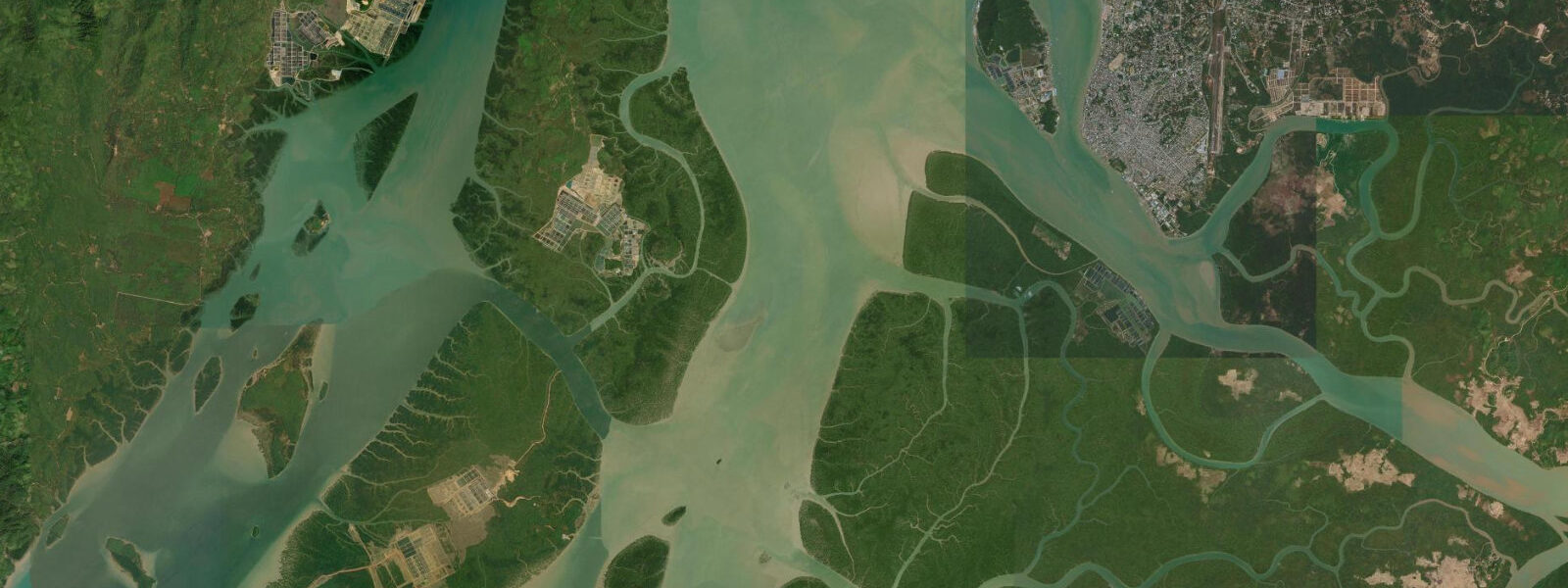
Myeik (Mergui), Myanmar tide times
Myeik (Mergui), Myanmar tide forecast — heights relative to MSL.
Today's tide times for Myeik (Mergui), Myanmar
Tide times at Myeik (Mergui), Myanmar on Tuesday, 4 August 2026: first low tide at 07:05am, first high tide at 01:01pm, second low tide at 07:25pm. Sunrise 05:42am, sunset 06:21pm.
Tide chart for Myeik (Mergui), Myanmar
24-hour cosine-interpolated curve around the present moment. Heights relative to MSL. Predictions: Predictions: Open-Meteo Marine (MeteoFrance SMOC, 0.08° grid).
Sun, moon and conditions on Tue 04 Aug
Snapshot at build time — refreshes daily. Sea state from Open-Meteo Marine.
Highs and lows next 7 days
Every predicted high and low for the next week, with the daily tidal coefficient (0–120; higher = bigger swing, > 95 means stronger currents).
Other spots nearby
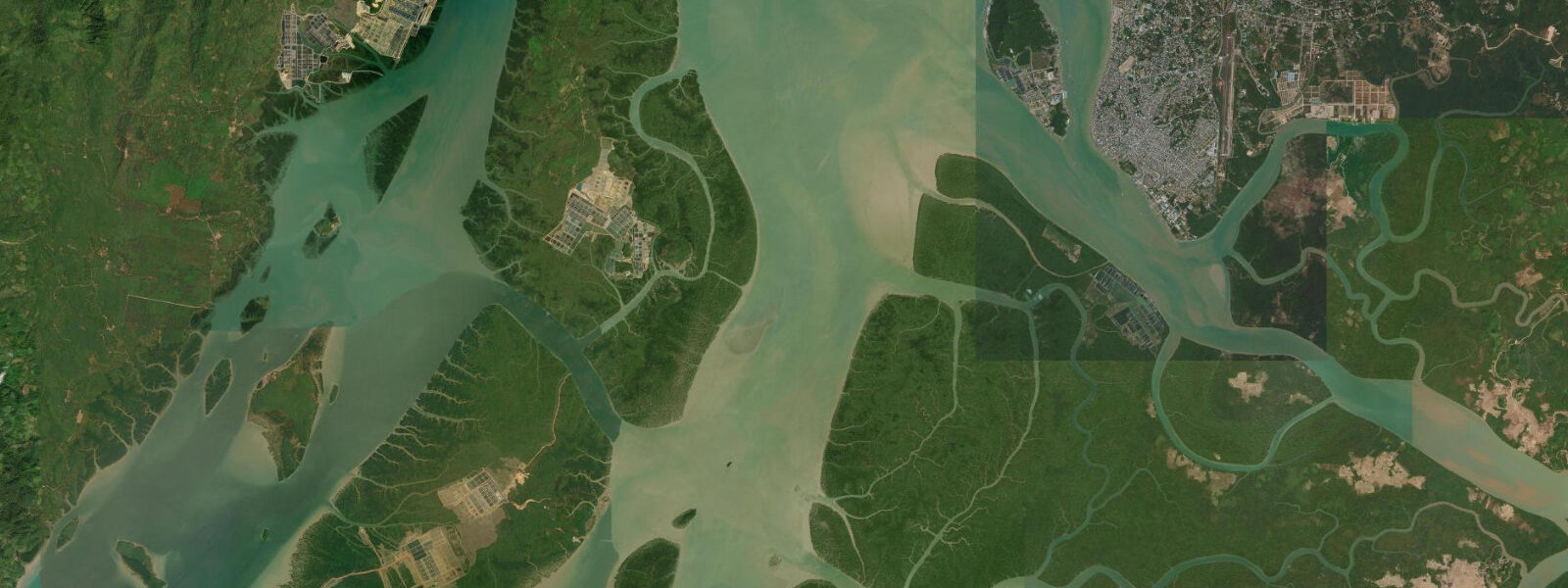
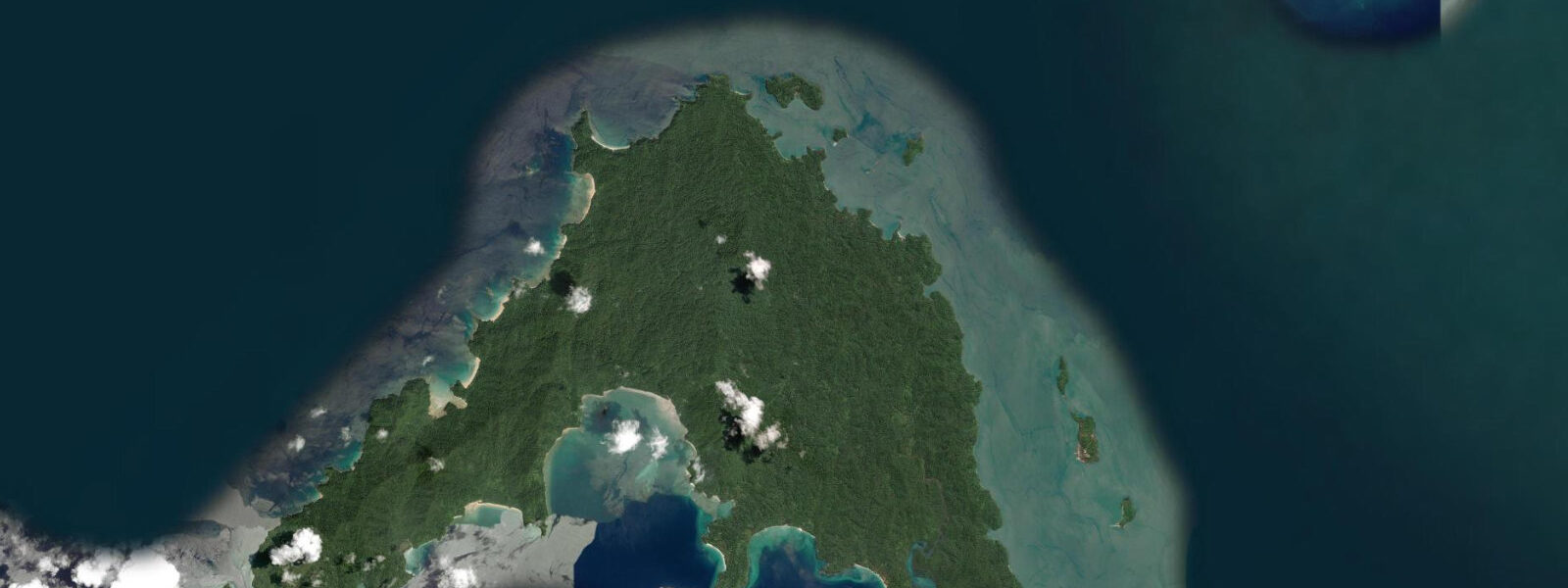
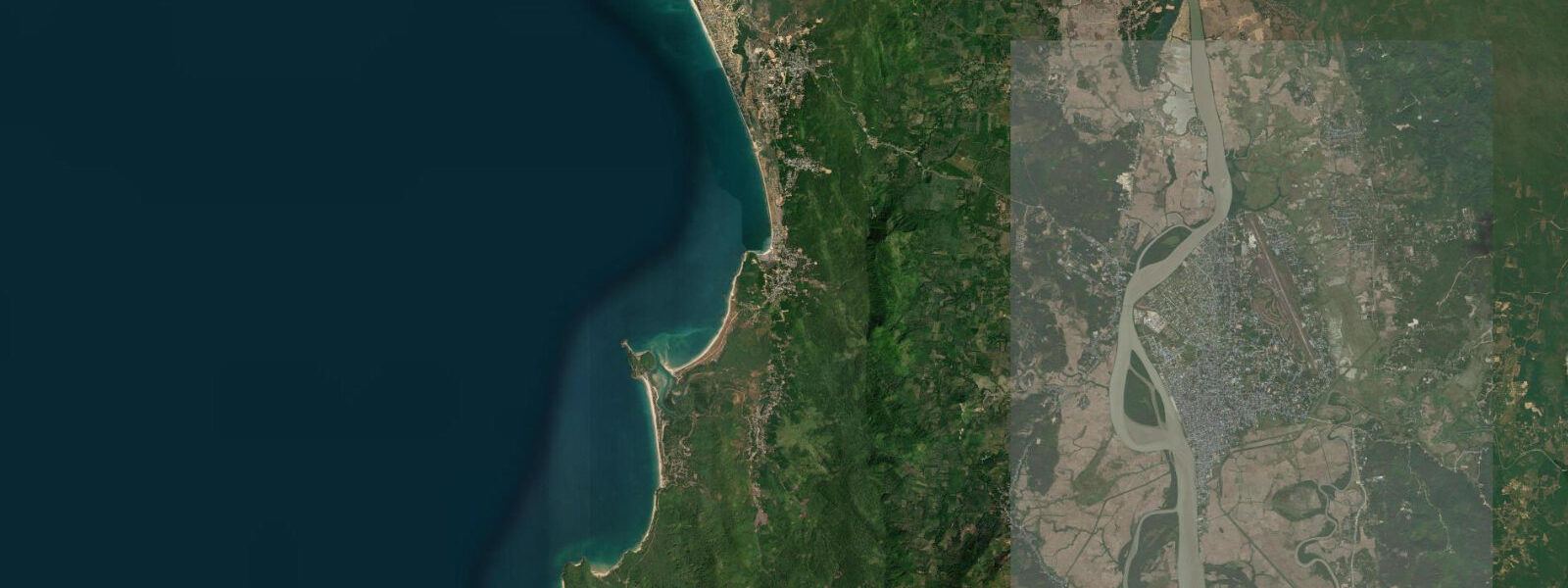
The three closest curated TideTurtle locations to Myeik (Mergui), Myanmar, measured by great-circle distance.
Today's solunar windows
Solunar tradition: major periods are the ≈3h windows around moon transit and opposition; minor are ≈2h around moonrise and moonset. Pair with the local tide stage and wind for the best read.
Cycle dates near Myeik (Mergui), Myanmar
Last spring tide on Tue 04 Aug (range 3.5m). Next spring tide on Mon 10 Aug (range 3.0m). Next neap on Fri 07 Aug.
Spring tides cluster around new and full moons (biggest swings). Neap tides land on quarter moons (smallest swings). See the spring tide and neap tide glossary entries for the why.
About tides at Myeik (Mergui), Myanmar
A short guide to the coastline at Myeik (Mergui), Myanmar — geography, sea state, and what the tide is actually doing under your feet.
Myeik — known historically as Mergui — is the main town of Myanmar's Tanintharyi Region and the practical gateway to the Myeik Archipelago: a chain of more than 800 islands extending 250 km south through the Andaman Sea to the Thai border at Kawthaung. The town sits on a peninsula at the mouth of the Tanintharyi River, with a functioning fishing harbour, a daily market where the morning catch is auctioned on the pier, and the infrastructure of a Burmese provincial capital. The surrounding town has colonial-era buildings, teak-framed shophouses, and gold-spired pagodas on the hilltops — the coastal Burmese town archetype largely unchanged.
The archipelago beyond the town is where the extraordinary lies. More than 800 islands, most without names in regular use, spread across Andaman Sea water that receives almost no recreational visitors. Coral reefs in the Coral Triangle's northwestern reach hold leopard sharks resting in the sand channels, manta rays sweeping along outer reef walls, whale sharks in the open-ocean plankton fronts, and reef biodiversity that specialists rate among the least-degraded in the Andaman basin. Access requires a Myanmar government permit specifically for the Tanintharyi archipelago; independent travel to the outer islands is not permitted for foreign nationals. Licensed liveaboard operators hold the necessary permits and run multi-day itineraries from Myeik, from Ranong in southern Thailand, and from Phuket.
The Andaman Sea at Myeik produces one of Southeast Asia's largest tidal ranges: spring tides run 4.0 to 5.0 m. That range completely transforms the intertidal landscape on the islands. A beach that appears generous at mid-tide disappears entirely on the spring high; a broad rocky and sandy platform emerges on the spring low, exposing coral rubble, sea grass beds, and intertidal reef communities for several hours. The macro-tidal environment means that knowing the tidal state is genuinely important for planning any activity on or near the islands — a campfire spot accessible at mid-tide can be under 2 m of water four hours later.
The dive operators on the liveaboards plan every dive around tidal phase. The ebb current along the outer reef walls builds to 1.5 to 2.5 knots through the island channels, concentrating food and oxygenating the reef, which drives the marine life density. Slack water between the ebb and flood is the 30 to 45 minute window when divers can hover in the visibility peak without fighting the current. Manta rays feed on the tidal convergence fronts where water masses mix at the island headlands; leopard sharks rest on the bottom during the quiet part of the tidal cycle and move on the building ebb.
The Moken sea nomads have inhabited the outer archipelago islands for centuries, living on wooden kabang boats and in seasonal shore camps on uninhabited islands. They maintain detailed practical knowledge of the tidal patterns, currents, and reef geography through direct experience across generations. Cultural protocols around visiting Moken communities are set by the communities themselves and enforced by the licensed operators; observing them is non-negotiable. Predictions on this page come from Open-Meteo Marine (gridded model, ±45 min / ±0.2–0.3 m). At a spring range of 4 to 5 m, the height prediction uncertainty of ±0.2–0.3 m is a small fraction of the total signal; timing is the critical variable. The Myeik fish market operates from early morning daily at the town waterfront; the overnight fishing fleet returns on the tide and the auction starts as the boats dock. Deep-water reef fish, Andaman lobster, crab, and the large pelagic species caught on the outer reef are all present. The fish market is a practical window into the commercial reality of a fully functioning Andaman fishing port — not a tourist attraction, but the most honest daily view of what the archipelago produces.
Tide questions about Myeik (Mergui), Myanmar
Quick answers to the most common questions about tide times, range, and water access at Myeik (Mergui), Myanmar.
When is the next high tide at Myeik?
The hero block shows the next predicted high at Myeik in Myanmar Time (MMT, UTC+6:30). The Andaman Sea at Myeik is semidiurnal: two roughly equal highs and two lows each day, spring range 4.0 to 5.0 m. This is one of the largest tidal ranges in Southeast Asia. At spring high, beaches and intertidal platforms on the archipelago islands disappear; at spring low, broad reef flats are exposed for 2 to 3 hours. Predictions from Open-Meteo Marine (gridded model, ±45 min / ±0.2–0.3 m).
What is the tidal range at Myeik?
Spring range runs 4.0 to 5.0 m in the Andaman Sea off Myeik — among the largest in Southeast Asia. Neap tides during quarter moons compress the range to roughly 1.5 to 2.5 m. The semidiurnal pattern produces two roughly equal cycles per day, approximately 6 hours apart. At the macro-tidal spring range, the tide governs which beaches and reef platforms are accessible hour by hour; planning activity windows around the tide table is essential on these islands. Neap tides during quarter moons reduce the range to 1.5 to 2.5 m, which still exposes significant intertidal area but makes the current through the island channels noticeably weaker and the drift dive conditions calmer.
Where do these predictions come from?
Open-Meteo Marine, a free gridded global ocean model, accuracy ±45 min / ±0.2–0.3 m. Myanmar does not publish openly accessible tidal gauge data for the Tanintharyi coast. At a spring range of 4 to 5 m, the height prediction accuracy of ±0.2–0.3 m is a relatively small fraction of the total signal — timing is the more critical variable for activity planning. Liveaboard operators maintain local tidal timing corrections for the specific island passes they use regularly. Myanmar does not publish open-access tidal gauge data for the Tanintharyi coast; liveaboard operators supplement the model baseline with local current timing observations for each specific island channel they use.
How do I access the Myeik Archipelago?
Foreign visitors require a Myanmar permit specific to the Tanintharyi archipelago; independent access to the outer islands is not permitted under current regulations. Licensed liveaboard operators based in Myeik town, in Ranong (Thailand, across the border), or in Phuket offer multi-day itineraries with all permits included. Dive and snorkel season is October through May when the northeast monsoon brings calm Andaman conditions and visibility of 15 to 25 m on the outer walls. June through September brings the southwest monsoon with rough seas, reduced visibility, and significantly limited access.
Is this safe to use for navigation?
No. TideTurtle is a planning tool, not a nautical resource. The Myeik Archipelago contains uncharted and poorly charted reefs, strong tidal currents through narrow island channels, and grounding hazards that shift with the 4 to 5 m tidal cycle. At spring ebb, the drop of 4 m in 6 hours creates genuine grounding risk on reefs that were covered on the flood. For vessel navigation in these waters, use official Burmese chart sources and experienced local pilots with firsthand knowledge of the specific channels.
8-day tide table — Myeik (Mergui), Myanmar
Heights relative to MSL. Predictions: Open-Meteo Marine (MeteoFrance SMOC, 0.08° grid) — heights relative to MSL (not chart datum / LAT). Model-derived.
| Day | Type | Time | Height |
|---|---|---|---|
| Tue 04 Aug | Low | 07:05 | -1.0m |
| High | 13:01 | 2.5m | |
| Low | 19:25 | -1.0m | |
| Wed 05 Aug | High | 01:24 | 2.4m |
| Low | 07:43 | -0.7m | |
| High | 13:35 | 2.2m | |
| Low | 20:04 | -0.8m | |
| Thu 06 Aug | High | 02:06 | 2.2m |
| Low | 08:30 | -0.4m | |
| High | 14:24 | 1.9m | |
| Low | 20:51 | -0.4m | |
| Fri 07 Aug | High | 03:03 | 2.0m |
| Low | 09:35 | -0.1m | |
| High | 15:26 | 1.6m | |
| Low | 22:02 | -0.1m | |
| Sat 08 Aug | High | 04:28 | 1.7m |
| Low | 11:23 | 0.1m | |
| High | 17:17 | 1.3m | |
| Low | 23:57 | -0.1m | |
| Sun 09 Aug | High | 06:28 | 1.8m |
| Low | 13:15 | -0.1m | |
| High | 19:15 | 1.5m | |
| Mon 10 Aug | Low | 01:30 | -0.3m |
| High | 07:51 | 2.3m | |
| Low | 14:33 | -0.6m | |
| High | 20:30 | 2.0m | |
| Tue 11 Aug | Low | 02:37 | -0.7m |
| High | 05:30 | 0.6m |