Dawei, Myanmar tide times
Dawei, Myanmar tide forecast — heights relative to MSL.
Today's tide times for Dawei, Myanmar
Tide times at Dawei, Myanmar on Tuesday, 4 August 2026: first low tide at 07:13am, first high tide at 01:14pm, second low tide at 07:29pm. Sunrise 05:41am, sunset 06:25pm.
Tide chart for Dawei, Myanmar
24-hour cosine-interpolated curve around the present moment. Heights relative to MSL. Predictions: Predictions: Open-Meteo Marine (MeteoFrance SMOC, 0.08° grid).
Sun, moon and conditions on Tue 04 Aug
Snapshot at build time — refreshes daily. Sea state from Open-Meteo Marine.
Highs and lows next 7 days
Every predicted high and low for the next week, with the daily tidal coefficient (0–120; higher = bigger swing, > 95 means stronger currents).
Other spots nearby
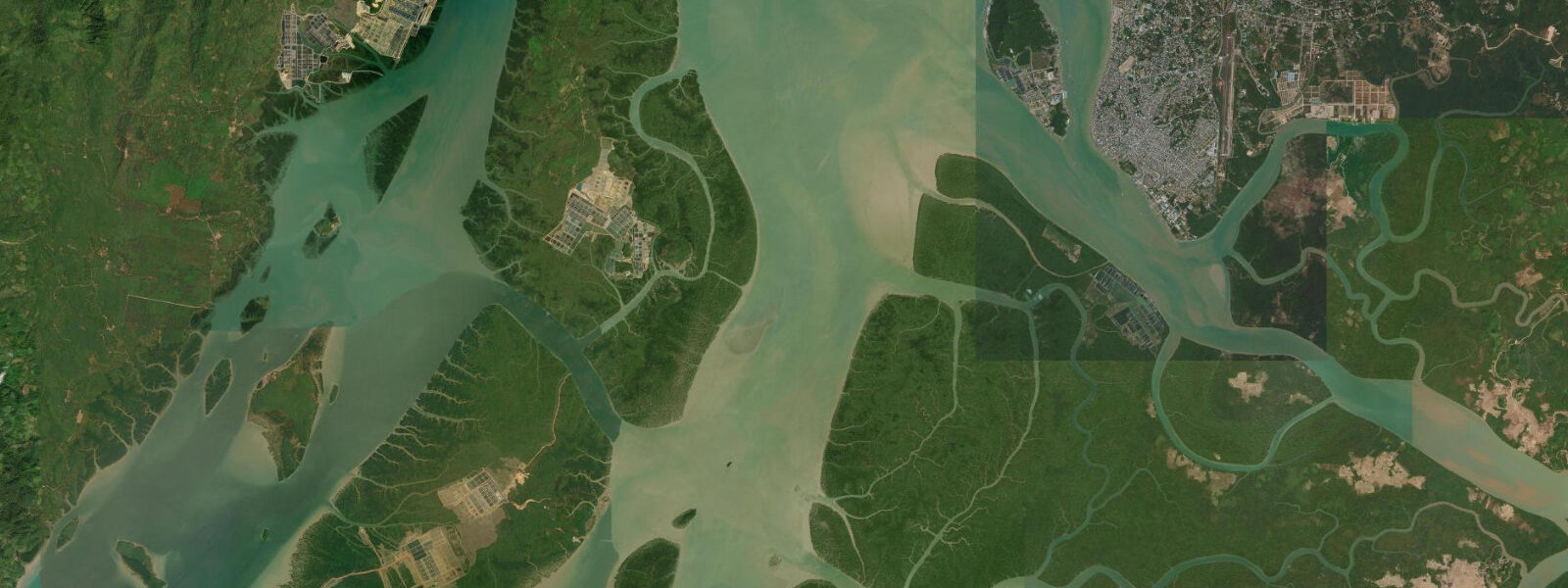
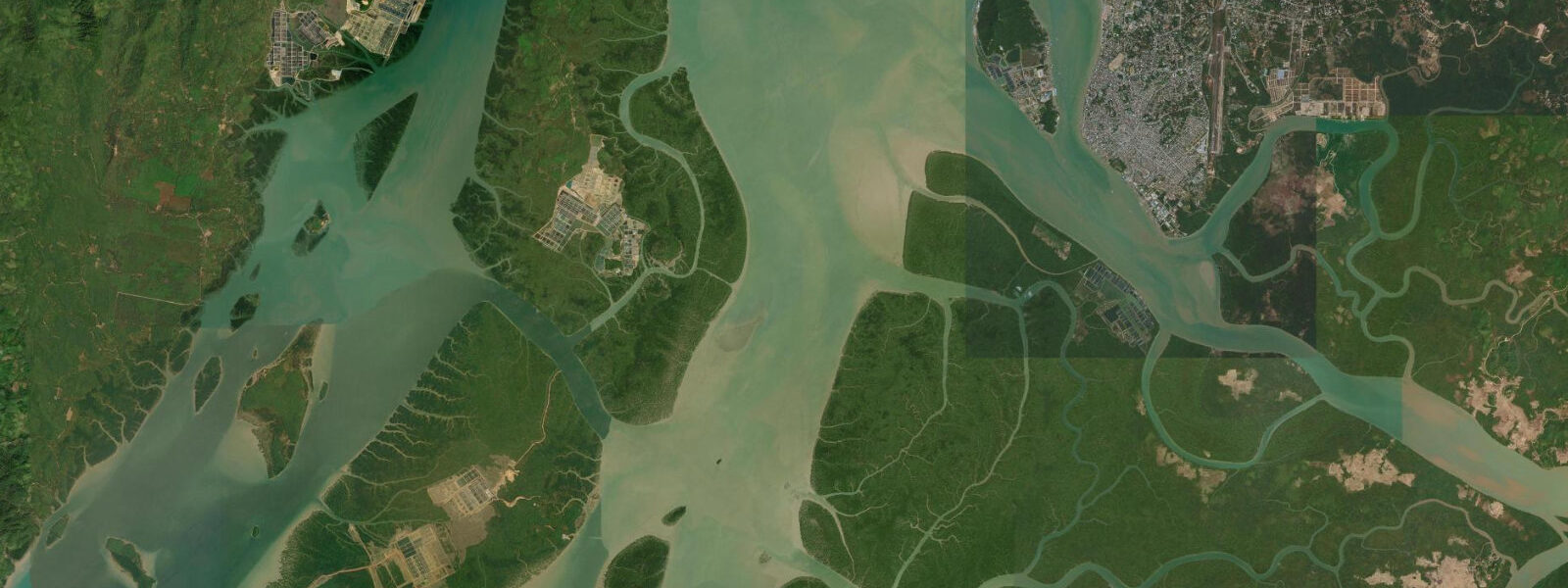
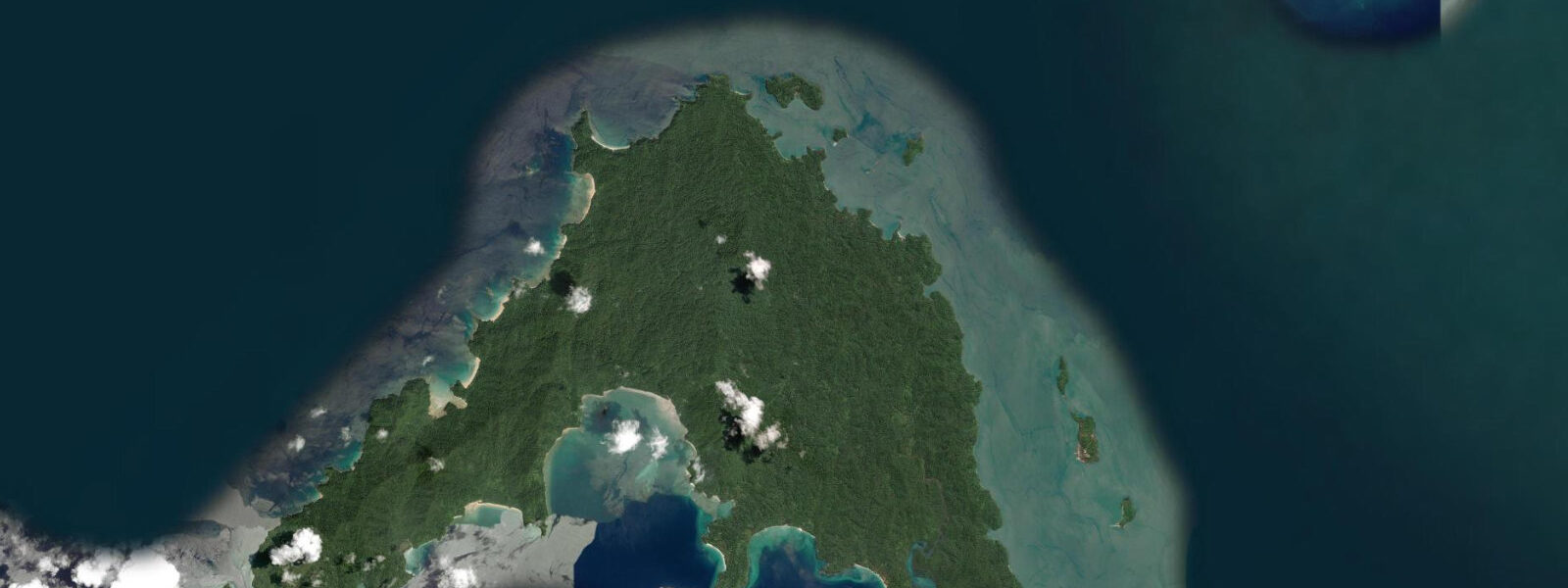
The three closest curated TideTurtle locations to Dawei, Myanmar, measured by great-circle distance.
Today's solunar windows
Solunar tradition: major periods are the ≈3h windows around moon transit and opposition; minor are ≈2h around moonrise and moonset. Pair with the local tide stage and wind for the best read.
Cycle dates near Dawei, Myanmar
Last spring tide on Tue 04 Aug (range 3.1m). Next spring tide on Mon 10 Aug (range 2.9m). Next neap on Fri 07 Aug.
Spring tides cluster around new and full moons (biggest swings). Neap tides land on quarter moons (smallest swings). See the spring tide and neap tide glossary entries for the why.
About tides at Dawei, Myanmar
A short guide to the coastline at Dawei, Myanmar — geography, sea state, and what the tide is actually doing under your feet.
Dawei is the regional capital of northern Tanintharyi, a Burmese town of teak-framed shophouses, pagoda-topped hillocks, a central market, and rubber plantations extending up the surrounding slopes. Tourist infrastructure is minimal — the town has a handful of guesthouses, a few restaurants, and a share-taxi culture that connects it to the coast and the Thai border at Mae Sot/Myawaddy 300 km north. Dawei's primary appeal is that it has largely been bypassed by the Southeast Asian tourism circuit, making it one of the more functional Burmese towns accessible to independent travellers.
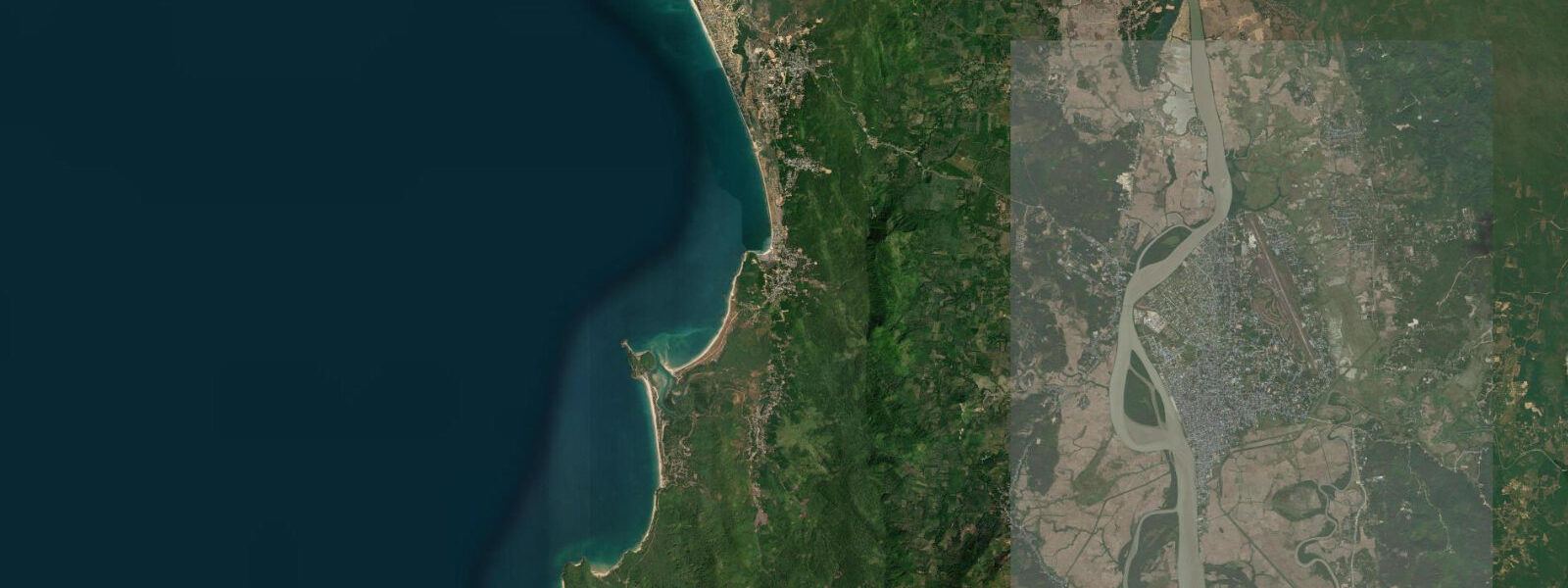
The Dawei Peninsula juts into the Andaman Sea to the west of the town centre. Maungmagan Beach, 14 km from town by shared songthaew or hired motorbike, is the principal coastal destination: a broad arc of pale sand backed by casuarina pines and coconut palms, sheltered at its northern end by a headland that reduces the southwest monsoon swell, and exposed along its southern section to the open Andaman fetch. The beach is predominantly used by domestic visitors and the small resident expat community; facilities are limited to basic guesthouses, a few seafood restaurants, and a village at the northern end.
The Andaman Sea at Maungmagan runs the same semidiurnal macro-tidal regime as the rest of the Tanintharyi coast: spring range 4.0 to 5.0 m. The practical consequence on this beach is dramatic. On the spring ebb, the waterline retreats 300 to 400 m from the high-water mark across the firm sand flat, exposing a vast low-gradient beach that in the morning light — empty of people, its surface smooth from the retreating tide — looks unlike the typical 30 m tropical beach. Walking the spring low-tide flat at dawn is the specific experience that most visitors who find Maungmagan return for.
The headland at the northern end of the beach connects to a rocky reef system accessible on the spring low; fishermen from Maungmagan village work the reef margins from small boats, setting gill nets in the current-driven zones below the point. The tidal current along the headland runs 1 to 2 knots and concentrates fish on the ebb. Shore casting from the rocks for grouper and snapper is the local angling practice; the incoming tide against the headland rocks is the productive window.
The proposed Dawei Special Economic Zone and deep-sea port project, under various forms of negotiation and suspension since 2008, targets the coast north of the peninsula for a major industrial port development. The project's status changes with the political situation in Myanmar; as of 2026 it remains unbuilt. Predictions on this page come from Open-Meteo Marine (gridded model, ±45 min / ±0.2–0.3 m). The 14 km road from Dawei town to Maungmagan Beach passes through rubber plantation landscape — the tapped trees in long rows on either side of the road, collection cups attached — before descending to the coast through casuarina forest. Motorbike hire from Dawei town is the standard transport; the road is paved and the ride takes 25 minutes. There is no public transport scheduled to coincide with the tide; hiring a motorbike for the half-day and timing arrival for 2 hours before the predicted spring low gives the maximum beach flat exposure. The peninsula's west-facing beaches receive significant ocean swell during the southwest monsoon from May through October, when tidal prediction becomes secondary to sea state for swimmer safety. During the northeast monsoon from November through February, the coast calms and tidal rhythm governs beach access on the flatter sections. The fishing port of Dawei operates a substantial fleet of longtail boats and larger vessels working the Andaman Sea; crews read tide and current together, since the spring ebb out of the estuaries can run against wind-driven swell at the river mouths. Snorkellers visiting the rocky outcrops south of Dawei town find visibility best on the last two hours of the flood, before suspended material from the riverine discharge dilutes clarity. The beach at Maungmagan, the closest swimming beach to town, has a gentle gradient that exposes a wide sand flat on spring lows — walkable dry, but the sand stays firm for 30 to 40 minutes after the tide turns on a fast-rising day.
Tide questions about Dawei, Myanmar
Quick answers to the most common questions about tide times, range, and water access at Dawei, Myanmar.
When is the next high tide at Dawei?
The hero block shows the next predicted high at Dawei in Myanmar Time (MMT, UTC+6:30). The Andaman Sea here is semidiurnal, spring range 4.0 to 5.0 m. At Maungmagan Beach, the spring low tide retreats the waterline 300 to 400 m from the high-water mark, exposing a broad sand flat. The 7-day table covers all tidal extremes for planning beach activity windows. Predictions from Open-Meteo Marine (gridded model, ±45 min / ±0.2–0.3 m). The spring low window at Maungmagan — approximately 2 to 3 hours centred on the predicted low — is the specific planning target; arrive at the beach 2 hours before the predicted spring low for the widest flat.
What is the tidal range at Dawei / Maungmagan?
Spring range runs 4.0 to 5.0 m; neap range roughly 1.5 to 2.5 m. Two semidiurnal cycles per day, approximately 6 hours apart. The macro-tidal range at Maungmagan changes the beach character significantly across the cycle — from a narrow high-water beach against the casuarina fringe at high water, to a 300 to 400 m wide sand flat at spring low. The low-tide window of maximum beach exposure lasts approximately 2 to 3 hours around the spring low. Two semidiurnal cycles per day means two low-tide windows per day at Maungmagan, though the two lows on a given day are not identical in depth; the deeper low of the two gives the wider flat.
Where do these predictions come from?
Open-Meteo Marine, a free gridded global ocean model, accuracy ±45 min / ±0.2–0.3 m. No openly accessible Myanmar tidal gauge data is available for this section of the Andaman coast at time of writing. At the 4 to 5 m spring range, the height uncertainty of ±0.2–0.3 m is a small fraction of the total signal; timing accuracy of ±45 minutes governs activity window planning. At the 4 to 5 m spring range, the height prediction accuracy of ±0.2–0.3 m represents about 5 to 7% of the total signal — more useful than at microtidal sites where uncertainty can exceed the range.
When is the best season to visit Dawei?
November through April is the dry season and the calm period on the Andaman Sea — the northeast monsoon keeps skies clear and the sea flat at Maungmagan's sheltered northern bay. May through October is the southwest monsoon; the exposed southern section of the beach builds swell and the beach character shifts. December and January are the coolest and most comfortable months for beach walking. The spring low tides that expose the widest beach flat occur year-round but are most pleasant to walk in the dry-season morning light.
Is this safe to use for navigation?
No. TideTurtle is a planning tool, not a nautical resource. The Tanintharyi coast and the Dawei Peninsula approaches have strong tidal currents near the rocky headlands and reef hazards not apparent at the surface. At 4 to 5 m spring range, conditions change rapidly through the tidal cycle; what appeared a safe anchorage on the flood can be a dangerous shoal on the ebb. Use official chart sources for any vessel operation on this coast. The Tanintharyi coast has strong tidal currents near the headlands at spring ebb; any vessel operation on this coast should account for the rapid water level changes of a 4 to 5 m macro-tidal environment.
8-day tide table — Dawei, Myanmar
Heights relative to MSL. Predictions: Open-Meteo Marine (MeteoFrance SMOC, 0.08° grid) — heights relative to MSL (not chart datum / LAT). Model-derived.
| Day | Type | Time | Height |
|---|---|---|---|
| Tue 04 Aug | Low | 07:13 | -0.8m |
| High | 13:14 | 2.2m | |
| Low | 19:29 | -0.9m | |
| Wed 05 Aug | High | 01:42 | 2.1m |
| Low | 07:50 | -0.5m | |
| High | 13:46 | 2.0m | |
| Low | 20:08 | -0.6m | |
| Thu 06 Aug | High | 02:26 | 2.0m |
| Low | 08:33 | -0.2m | |
| High | 14:36 | 1.7m | |
| Low | 20:46 | -0.3m | |
| Fri 07 Aug | High | 03:24 | 1.8m |
| Low | 09:45 | 0.1m | |
| High | 15:44 | 1.4m | |
| Low | 22:05 | 0.0m | |
| Sat 08 Aug | High | 05:13 | 1.7m |
| Sun 09 Aug | Low | 00:23 | 0.0m |
| High | 07:02 | 1.8m | |
| Low | 13:43 | -0.1m | |
| High | 19:41 | 1.5m | |
| Mon 10 Aug | Low | 01:51 | -0.3m |
| High | 08:15 | 2.2m | |
| Low | 14:46 | -0.6m | |
| High | 20:47 | 1.9m | |
| Tue 11 Aug | Low | 02:52 | -0.7m |
| High | 05:30 | 0.5m |