Myeik tide times
Myeik tide forecast — heights relative to MSL.
Today's tide times for Myeik
Tide times at Myeik on Tuesday, 4 August 2026: first low tide at 07:05am, first high tide at 01:01pm, second low tide at 07:25pm. Sunrise 05:42am, sunset 06:21pm.
Tide chart for Myeik
24-hour cosine-interpolated curve around the present moment. Heights relative to MSL. Predictions: Predictions: Open-Meteo Marine (MeteoFrance SMOC, 0.08° grid).
Sun, moon and conditions on Tue 04 Aug
Snapshot at build time — refreshes daily. Sea state from Open-Meteo Marine.
Highs and lows next 7 days
Every predicted high and low for the next week, with the daily tidal coefficient (0–120; higher = bigger swing, > 95 means stronger currents).
Other spots nearby
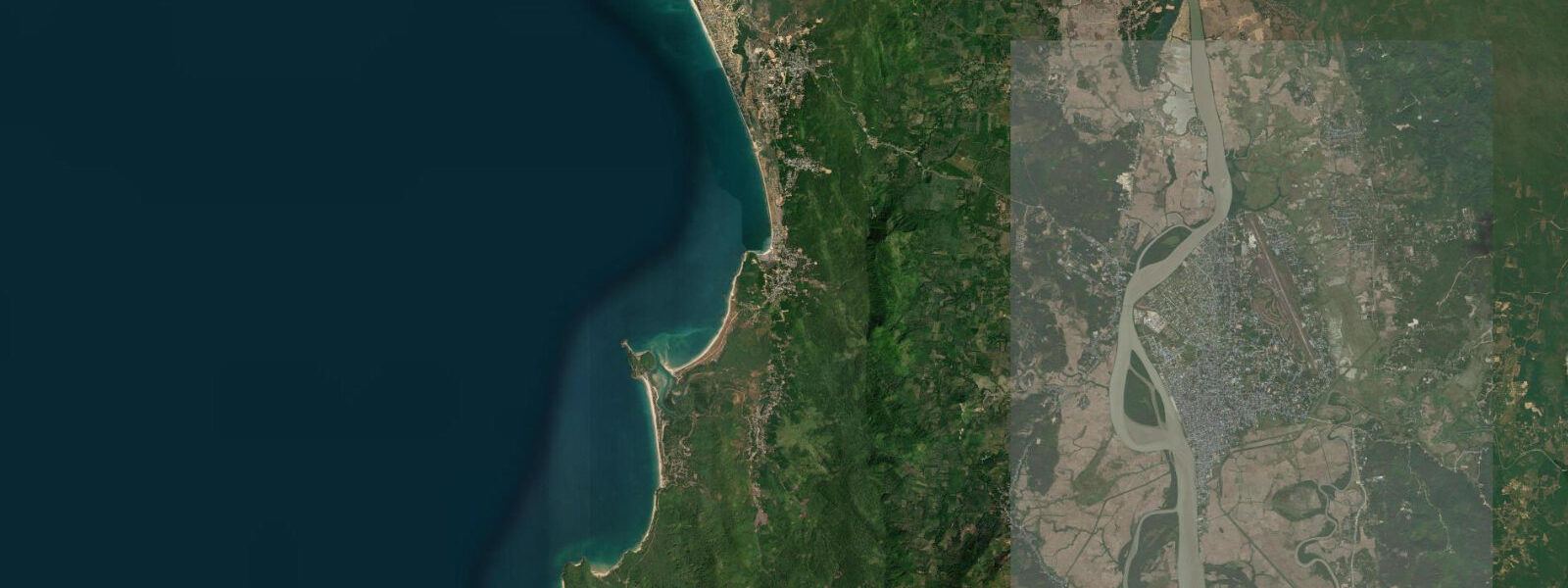
The three closest curated TideTurtle locations to Myeik, measured by great-circle distance.
Today's solunar windows
Solunar tradition: major periods are the ≈3h windows around moon transit and opposition; minor are ≈2h around moonrise and moonset. Pair with the local tide stage and wind for the best read.
Cycle dates near Myeik
Last spring tide on Tue 04 Aug (range 3.5m). Next spring tide on Mon 10 Aug (range 3.0m). Next neap on Fri 07 Aug.
Spring tides cluster around new and full moons (biggest swings). Neap tides land on quarter moons (smallest swings). See the spring tide and neap tide glossary entries for the why.
About tides at Myeik
A short guide to the coastline at Myeik — geography, sea state, and what the tide is actually doing under your feet.
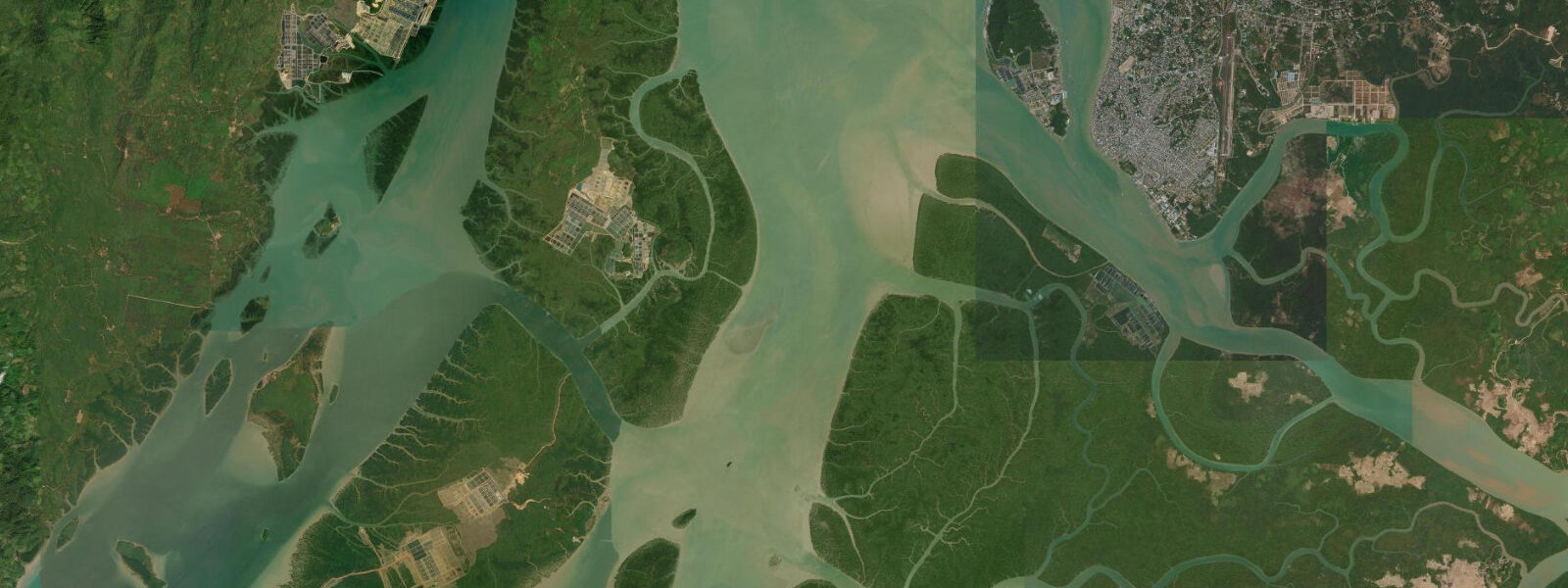
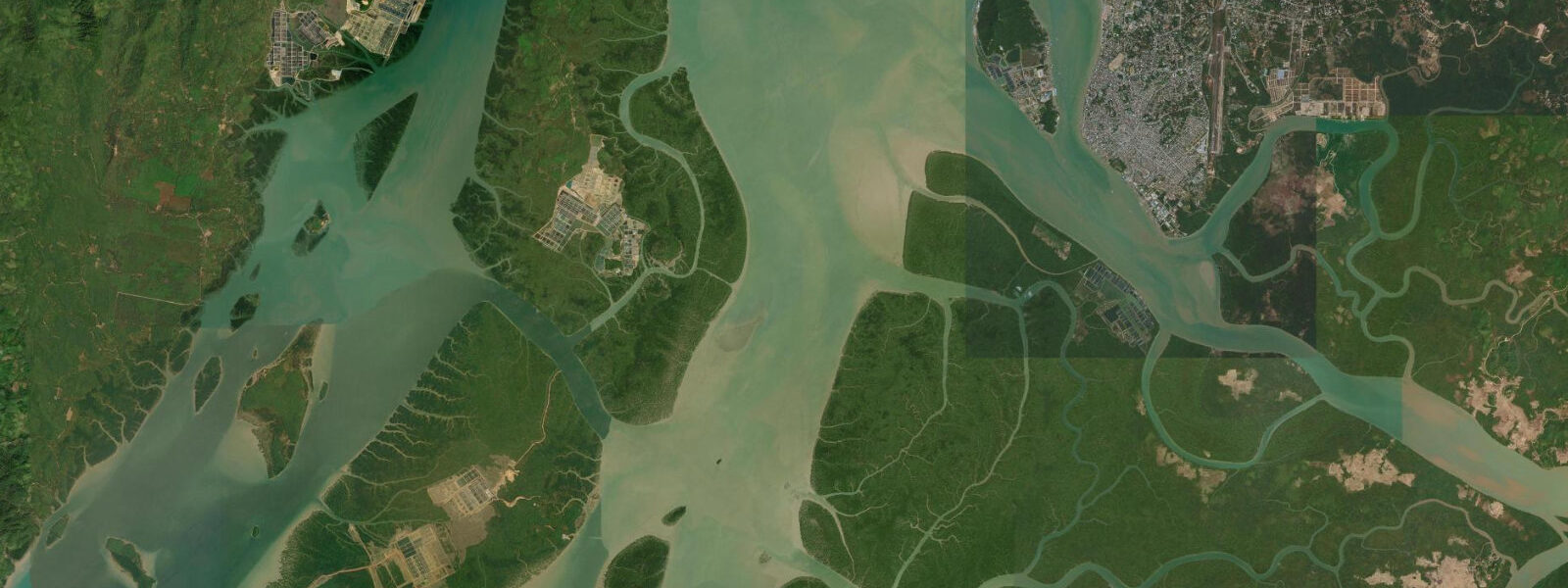
Myeik — also spelled Mergui — is a city of approximately 170,000 people on the Andaman Sea coast of southern Myanmar, at the northern gateway to the Mergui Archipelago. The city occupies an island in the Myeik (Mergui) estuary, connected to the mainland by a causeway, and its harbour is the primary commercial port for the lower Tanintharyi Region. The harbour handles cargo, fishing vessels, and the liveaboard dive boats that access the Mergui Archipelago to the south.
The tidal regime at Myeik is mixed semidiurnal with a large spring range of approximately 3.5 to 4.5 metres — among the larger ranges in Southeast Asia. The Andaman Sea is a semi-enclosed basin that amplifies the tidal wave propagating from the Indian Ocean; the northern Andaman Sea and its coastal inlets experience tidal ranges significantly higher than the open Bay of Bengal. The estuarine mudflats around Myeik are exposed for hundreds of metres at low water springs, and the tidal current in the Myeik channel is strong enough to be relevant for vessel navigation — commercial vessels entering the harbour must account for the tidal stream when manoeuvring.
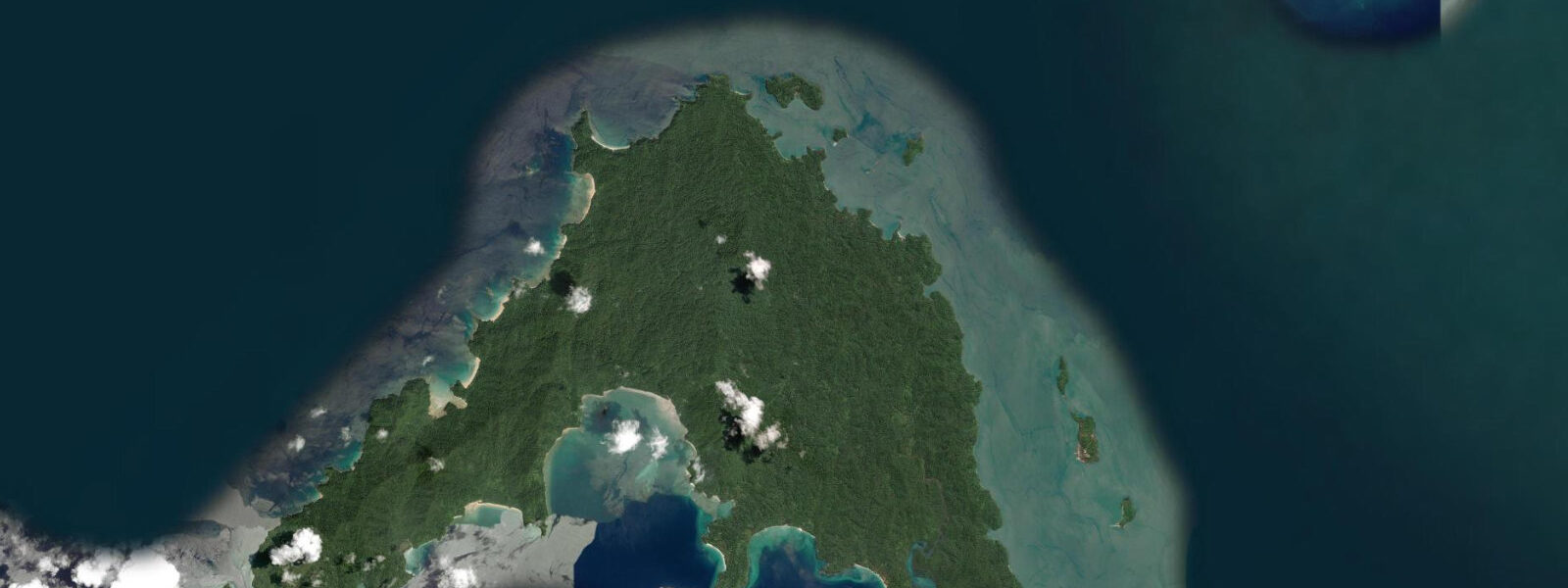
The Mergui Archipelago, which extends south of Myeik to the Thai border at Kawthaung, contains over 800 islands across approximately 36,000 square kilometres. Most islands are uninhabited, forested to the shoreline, and surrounded by reefs that have had minimal fishing pressure by international standards. The liveaboard season runs from November to April, aligned with the northeast monsoon that brings clear water, stable winds, and manageable sea conditions. The southwest monsoon (May to October) generates rough conditions across the archipelago and most liveaboard operations suspend during this period.
The Moken people — semi-nomadic sea nomads known in Burmese as Salon — have inhabited the Mergui Archipelago for centuries. Historically, Moken families spent the monsoon season sheltering in island coves and the dry season moving through the archipelago by kabang (traditional Moken boat), fishing, gathering sea cucumbers and shells, and trading. The kabang is a dugout canoe with extended bow and stern and a palm-thatched roof — a functional dwelling as well as a vessel. Government resettlement policies have established permanent Moken villages on some islands and on the mainland, reducing but not eliminating the traditional nomadic cycle. Sea cucumber and fish are dried on the boat decks and sold to Chinese traders who meet the kabang at designated islands.
For the fishing community based at Myeik, the large tidal range is a practical constraint on harbour operations. The fishing fleet works the coastal and offshore grounds during the northeast monsoon, returning on the flood tide to enter the harbour approaches safely. Gill-net fishing on the tidal flats south of the city targets the prawns, squid, and reef fish that move with the tidal stream.
Bird life on the mudflats around Myeik in the northern winter migration includes large wader assemblages: whimbrel, bar-tailed godwit, terek sandpiper, and great knot use the extensive low-water flats as feeding grounds. The mangrove creek mouths are hunting grounds for white-bellied sea eagle and brahminy kite year-round.
Predictions on this page come from Open-Meteo Marine, a gridded global ocean model. Accuracy is typically within plus or minus 45 minutes on timing and 0.2 to 0.3 metres on height — model-derived, not from a local gauge. The local tide authority is the Myanmar Department of Meteorology and Hydrology (DMH).
Tide questions about Myeik
Quick answers to the most common questions about tide times, range, and water access at Myeik.
What is the tidal range at Myeik?
Spring tidal range at Myeik is approximately 3.5 to 4.5 metres — among the larger ranges in Southeast Asia. The Andaman Sea amplifies the tidal signal from the Indian Ocean; the northern Andaman coast experiences ranges significantly larger than the open Bay of Bengal. At low water springs, the estuarine mudflats around the city are exposed for hundreds of metres. The tidal current in the Myeik channel is strong enough to require consideration for vessel navigation. Predictions here come from Open-Meteo Marine (±45 minutes on timing, ±0.3 m on height). Not for navigation; consult the Myanmar Department of Meteorology and Hydrology (DMH).
What is the best way to access the Mergui Archipelago from Myeik?
By liveaboard dive boat during the northeast monsoon season (November to April). Several operators based in Myeik and Kawthaung run 5 to 10 day liveaboard itineraries through the archipelago. Permits are required for foreign visitors to enter Myanmar by sea through Myeik; coordinate visa and permit arrangements with your liveaboard operator well in advance. Day trips by chartered boat to the nearest islands are possible but limited in range compared to a multi-day liveaboard. The southwest monsoon (May to October) makes the archipelago largely inaccessible due to rough sea conditions.
Who are the Moken people of the Mergui Archipelago?
The Moken are a Malayo-Polynesian ethnic group, traditionally semi-nomadic sea nomads who have lived in and around the Mergui Archipelago for centuries. Their traditional vessel, the kabang, is a dugout canoe with a thatched palm-leaf roof — a functional home as well as a boat. Moken families traditionally spent the northeast monsoon moving through the archipelago, fishing, gathering sea cucumbers and shells, and trading. Government resettlement has established permanent villages on some islands, but traditional knowledge of the archipelago's tides, currents, and resources remains in the community. The Moken are one of the last semi-nomadic sea peoples of Southeast Asia.
What wildlife can I see on the Myeik mudflats?
The estuarine mudflats around Myeik are significant wader habitat in the northern winter migration (October to March). Species recorded include whimbrel, bar-tailed godwit, terek sandpiper, great knot, common redshank, and grey plover. The mangrove creek mouths hold white-bellied sea eagle and brahminy kite year-round. In the Mergui Archipelago waters, dugong have been recorded in seagrass beds around some islands; Irrawaddy dolphin are present in the coastal zone. Sea turtle nesting (green turtle, hawksbill) occurs on some of the remoter archipelago beaches.
How do I get to Myeik?
By domestic flight from Yangon to Myeik Airport — approximately 1.5 hours. Myanmar National Airlines and KBZ Air operate the route. By road, Myeik is connected to Dawei to the north via the Tanintharyi highway, an approximately 5-hour journey. Foreign visitors require a standard Myanmar tourist visa; additional permits may be required for sea travel into the Mergui Archipelago, which has historically had restricted access for foreign nationals. Confirm current permit requirements with your liveaboard operator or a Myanmar specialist travel agent before booking.
8-day tide table — Myeik
Heights relative to MSL. Predictions: Open-Meteo Marine (MeteoFrance SMOC, 0.08° grid) — heights relative to MSL (not chart datum / LAT). Model-derived.
| Day | Type | Time | Height |
|---|---|---|---|
| Tue 04 Aug | Low | 07:05 | -1.0m |
| High | 13:01 | 2.5m | |
| Low | 19:25 | -1.0m | |
| Wed 05 Aug | High | 01:24 | 2.4m |
| Low | 07:43 | -0.7m | |
| High | 13:35 | 2.2m | |
| Low | 20:04 | -0.8m | |
| Thu 06 Aug | High | 02:06 | 2.2m |
| Low | 08:30 | -0.4m | |
| High | 14:24 | 1.9m | |
| Low | 20:51 | -0.4m | |
| Fri 07 Aug | High | 03:03 | 2.0m |
| Low | 09:35 | -0.1m | |
| High | 15:26 | 1.6m | |
| Low | 22:02 | -0.1m | |
| Sat 08 Aug | High | 04:28 | 1.7m |
| Low | 11:23 | 0.1m | |
| High | 17:17 | 1.3m | |
| Low | 23:57 | -0.1m | |
| Sun 09 Aug | High | 06:28 | 1.8m |
| Low | 13:15 | -0.1m | |
| High | 19:15 | 1.5m | |
| Mon 10 Aug | Low | 01:30 | -0.3m |
| High | 07:51 | 2.3m | |
| Low | 14:33 | -0.6m | |
| High | 20:30 | 2.0m | |
| Tue 11 Aug | Low | 02:37 | -0.7m |
| High | 05:30 | 0.6m |