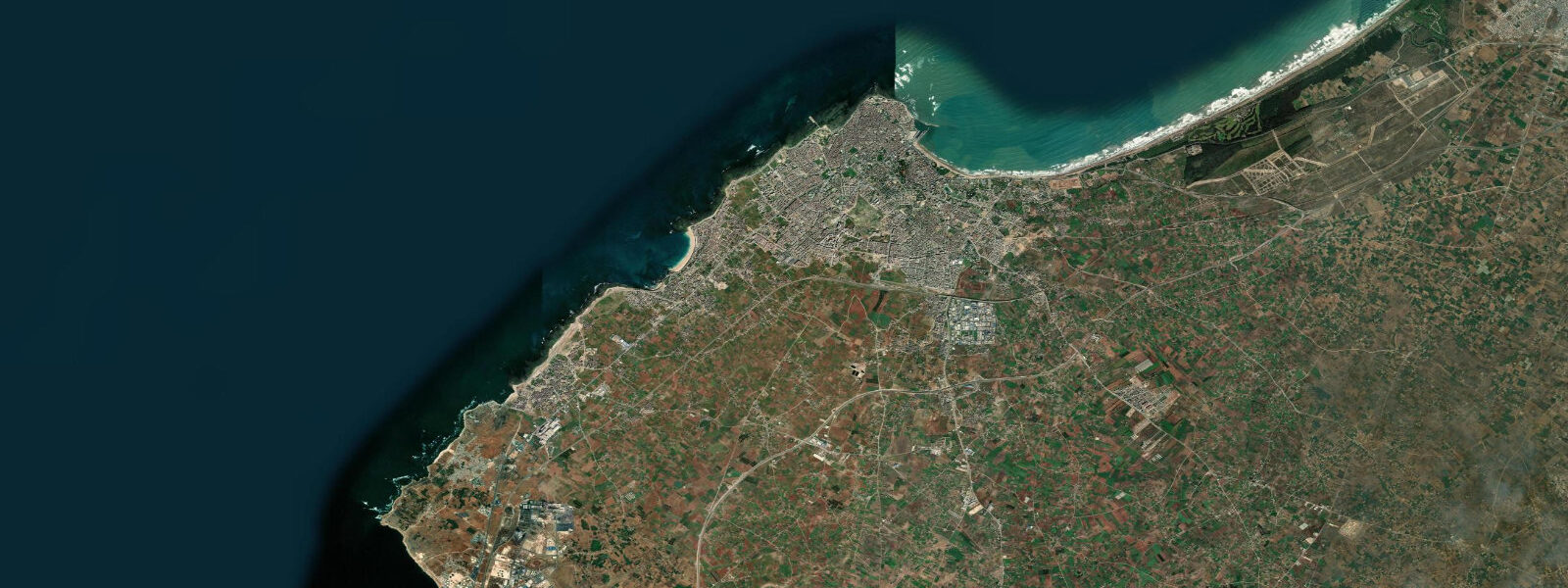
El Jadida, Casablanca-Settat tide times
El Jadida, Casablanca-Settat tide forecast — heights relative to MSL.
Today's tide times for El Jadida, Casablanca-Settat
Tide times at El Jadida, Casablanca-Settat on Tuesday, 4 August 2026: first low tide at 01:00, first high tide at 05:50, second low tide at 11:52, second high tide at 18:06. Sunrise 06:48, sunset 20:31.
Tide chart for El Jadida, Casablanca-Settat
24-hour cosine-interpolated curve around the present moment. Heights relative to MSL. Predictions: Predictions: Open-Meteo Marine (MeteoFrance SMOC, 0.08° grid).
Sun, moon and conditions on Tue 04 Aug
Snapshot at build time — refreshes daily. Sea state from Open-Meteo Marine.
Highs and lows next 7 days
Every predicted high and low for the next week, with the daily tidal coefficient (0–120; higher = bigger swing, > 95 means stronger currents).
Other spots nearby
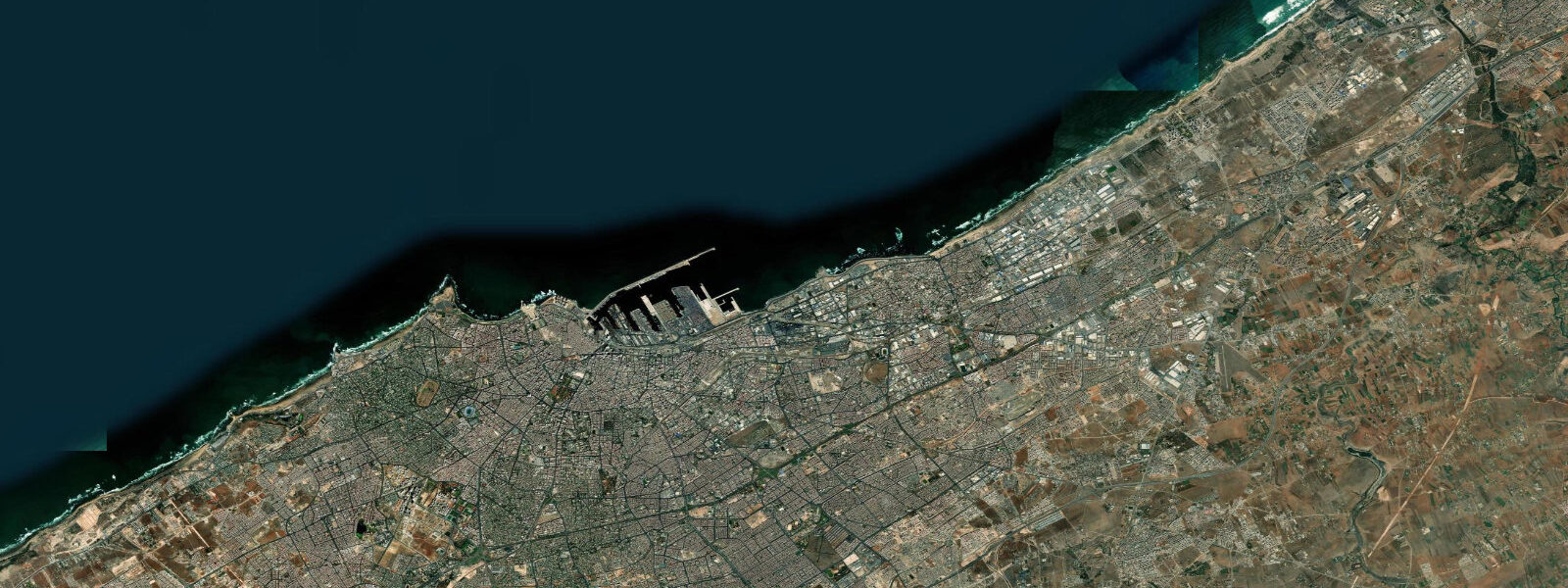
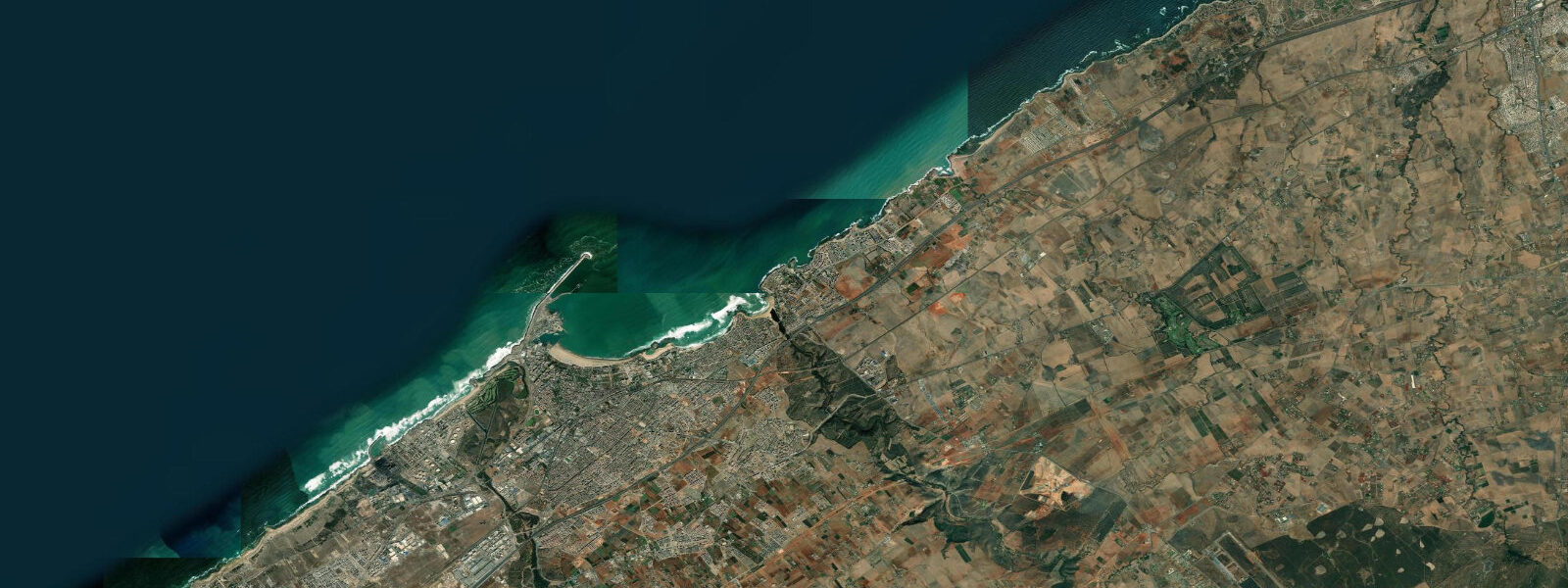
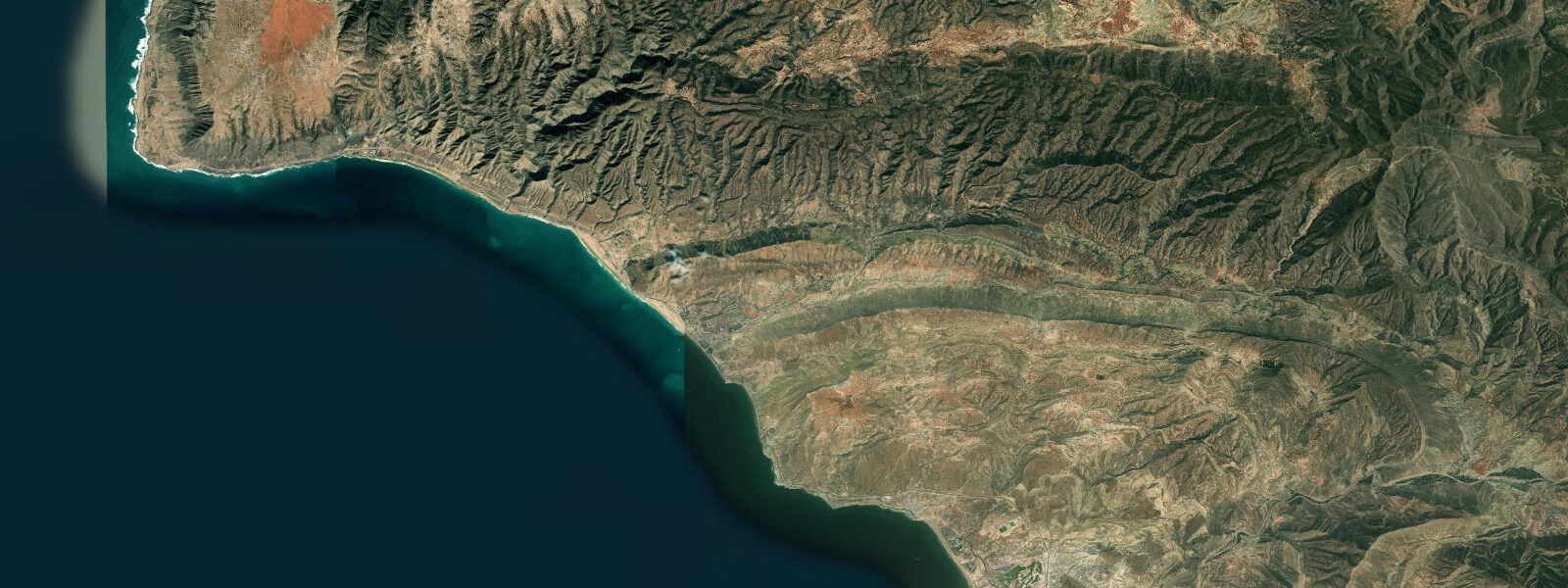
The three closest curated TideTurtle locations to El Jadida, Casablanca-Settat, measured by great-circle distance.
Today's solunar windows
Solunar tradition: major periods are the ≈3h windows around moon transit and opposition; minor are ≈2h around moonrise and moonset. Pair with the local tide stage and wind for the best read.
Cycle dates near El Jadida, Casablanca-Settat
Last spring tide on Tue 04 Aug (range 2.1m). Next spring tide on Mon 10 Aug (range 2.4m). Next neap on Fri 07 Aug.
Spring tides cluster around new and full moons (biggest swings). Neap tides land on quarter moons (smallest swings). See the spring tide and neap tide glossary entries for the why.
About tides at El Jadida, Casablanca-Settat
A short guide to the coastline at El Jadida, Casablanca-Settat — geography, sea state, and what the tide is actually doing under your feet.
El Jadida — formerly known as Mazagan under Portuguese rule — is one of the most architecturally significant coastal towns in Morocco. The Cité Portugaise, a UNESCO World Heritage Site since 2004, is a walled medina built by Portuguese colonisers in the early 16th century and still almost entirely intact: bastions, ramparts, a church, and a cistern, all from the 1500s, still standing at the Atlantic edge 96 km south of Casablanca.
The tide is not a background detail at El Jadida. It is embedded in the architecture.
The Citerne Portugaise — the Portuguese cistern — is one of the most unusual interior spaces in North Africa. Built under the fortification as a water store, it was sealed for centuries after the Portuguese withdrawal in 1769 and rediscovered in 1916 by the French colonial administration. When the cistern was cleared, a channel was found through the old city wall connecting the cistern's floor to the sea. At the highest spring tides, seawater enters through this channel and partially floods the cistern floor — a shallow sheet of water, typically 10 to 30 cm deep, that reflects the cistern's vaulted ceiling in perfect stillness. The effect is famous; the cistern appeared in Orson Welles' 1952 film Othello, shot partly in El Jadida. The flooding is not guaranteed on every visit — it depends on the tidal height reaching the threshold for the channel to admit water, which only happens on the higher spring tides (roughly the top 20% of high waters by height). The cistern is open for visits regardless of tide; the flooded version requires checking the tide table and arriving within 90 minutes of a spring high water.
The semidiurnal tidal range at El Jadida runs 2.5 to 3.5 m on spring tides, consistent with the wider Moroccan Atlantic coast. The Portuguese ramparts along the seaward bastions sit at approximately mean high-water level on the oceanward face. Orson Welles described standing on the Bastion de l'Ange and watching the water come to the base of the stonework — that is still true on spring high tides today. The seaward face of the bastions has been undercut by Atlantic wave action since the Portuguese withdrawal; erosion accelerated after a rock revetment was placed seaward of the walls in the 1980s, which changed the wave reflection pattern. The base of the Bastion de l'Ange is noticeably undercut at low water on a spring tide — accessible for close inspection from the beach, which drops 1.5 to 2.0 m below the revetment crest.
Plage d'El Jadida is the open Atlantic beach north of the old city. It is wide and long — at spring low tide the sand extends 150 to 200 m from the dune line, hard-packed and flat. The beach is the primary leisure space for El Jadida's 150,000 residents and receives significant summer visitor traffic from Casablanca and Marrakech. The Atlantic exposure here is significant: northwest swell arrives without obstruction, and the beach break is energetic in autumn and winter (1.5 to 2.5 m faces in October). Summer is calmer — 0.3 to 0.8 m waves most days.
The modern port of Mazagan (retained name on maritime charts) is north of the old city, handling phosphate exports from the Khouribga mines inland. The port is operational 24 hours and loading is tide-independent for large bulk carriers using the outer deep-water berths. The port breakwater creates a calmer zone immediately north of the medina waterfront, reducing wave action on the old city's seaward face — a side effect that has altered the sediment distribution along the shore compared to pre-port conditions.
For visitors focused on the Cité Portugaise, the medina's narrow lanes and whitewashed walls are best photographed in the two hours before noon when the sun is at a south-southwest angle and the lane shadows are still partial. The cistern interior itself is dim at all times — the vaulted ceiling admits light only through one small opening — and the flooded version requires long exposure or a fast lens to capture the reflection properly.
Anglers target bass (robalo) from the rocky revetment at the base of the bastions at low water when the stones are exposed and accessible. The surf zone along Plage d'El Jadida holds flatfish — sole and flounder — in the sandy troughs that form parallel to shore at low tide, particularly on a calm day following a period of swell that has built and reorganised the beach profiles.
The medina wall's seaward face is best seen at low water spring tide, when 1.5 to 2.0 m of additional height is visible below the normal tide line — including the undercut base of the Bastion de l'Ange that is invisible at high water. This is also the safest time to walk the revetment rocks below the rampart for close inspection of the stonework.
Tide data for El Jadida, Casablanca-Settat comes from the Open-Meteo Marine API, a gridded model product. Timing accuracy is ±45 minutes, height accuracy ±0.3 m — usable for trip planning, not for navigation.
Tide questions about El Jadida, Casablanca-Settat
Quick answers to the most common questions about tide times, range, and water access at El Jadida, Casablanca-Settat.
Does the Portuguese cistern actually flood with seawater?
Yes, but not at every tide. The Citerne Portugaise has a channel through the old city wall that admits seawater at the highest spring tides — roughly the top 20% of high-water events by height. When the tide reaches the threshold, a shallow sheet of water (typically 10 to 30 cm deep) covers the cistern floor and reflects the vaulted ceiling in stillness. The effect is striking and worth timing your visit around. To maximise the chance of seeing the flooded cistern, check the tide table for El Jadida and arrive within 90 minutes of a high water that is at or above the upper spring range — specifically, high waters of 3.2 m or more above chart datum. The cistern is open for visits at any tide; the flooded version requires the right tidal conditions.
What is the tidal range at El Jadida?
El Jadida has a semidiurnal Atlantic tide with a mean spring range of 2.5 to 3.5 m. Two full cycles occur per day, with the two high waters in each day being slightly unequal in height — diurnal inequality of 0.2 to 0.4 m. The practical effect for beach visitors is significant: on spring low tides, Plage d'El Jadida extends 150 to 200 m from the dune line; at spring high water the beach narrows to 50 to 70 m. The Portuguese ramparts along the seaward bastions sit at approximately mean high-water level, so the visible stonework varies substantially between tide states — at low water, an additional 1.5 to 2.0 m of the walls' base is visible, including erosion that is hidden at high tide.
Can I walk along the base of the ramparts at El Jadida?
The revetment rocks at the base of the bastions, including the Bastion de l'Ange, are accessible on foot during the lower half of the tidal cycle. At low water spring tides, you can walk the exposed rock shelf and inspect the base stonework — the undercut erosion at the foot of the Bastion de l'Ange is visible here and not accessible at any other state of the tide. The window is roughly three hours centred on low water. The rocks are uneven and algae-covered; footwear with grip is necessary. At high water, the base is submerged and the revetment crest is the lowest safe point. After significant Atlantic swell, wave wash on the revetment continues even at low water — check conditions before approaching.
When is Plage d'El Jadida best for swimming?
The incoming mid-tide is the most comfortable swimming window — water is deepening over clean sand, wave frequency is moderate, and the beach is wide enough to spread out behind the surf zone. In northwest swell above 1.5 m the beach break becomes energetic and entry is rough, particularly in the shore-break zone 30 to 50 m from the water's edge. Summer is generally calmer (0.3 to 0.8 m waves) and suitable for families. Autumn and winter bring 1.5 to 2.5 m faces and rip currents along the beach that make swimming inadvisable without strong open-water experience. Water temperature is 18 to 20°C in summer, 15 to 17°C in winter, kept cool by the Canary Current upwelling.
What is the Bastion de l'Ange and why does the tide affect it?
The Bastion de l'Ange is one of the four corner bastions of the Cité Portugaise, the seaward-facing fortification of El Jadida's UNESCO-listed old city. It sits at the southwest corner of the ramparts, directly facing the Atlantic. The bastion walls sit at approximately mean high-water level on their seaward face; at spring high water the sea reaches the base of the stonework, and at spring low water an additional 1.5 to 2.0 m of the bastion's base is exposed. That lower section shows significant undercutting — erosion accelerated since a rock revetment was placed seaward of the walls in the 1980s, which changed wave reflection patterns and concentrated wave energy at the wall base. The undercutting is visible at low water and is the subject of ongoing heritage preservation concern.
8-day tide table — El Jadida, Casablanca-Settat
Heights relative to MSL. Predictions: Open-Meteo Marine (MeteoFrance SMOC, 0.08° grid) — heights relative to MSL (not chart datum / LAT). Model-derived.
| Day | Type | Time | Height |
|---|---|---|---|
| Tue 04 Aug | Low | 01:00 | -1.3m |
| High | 05:50 | 0.6m | |
| Low | 11:52 | -1.3m | |
| High | 18:06 | 0.7m | |
| Wed 05 Aug | Low | 00:25 | -1.4m |
| High | 06:38 | 0.5m | |
| Low | 12:43 | -1.2m | |
| High | 18:57 | 0.5m | |
| Thu 06 Aug | Low | 01:18 | -1.2m |
| High | 07:33 | 0.4m | |
| Low | 13:46 | -1.1m | |
| High | 20:05 | 0.4m | |
| Fri 07 Aug | Low | 02:26 | -1.1m |
| High | 08:48 | 0.3m | |
| Low | 15:10 | -1.0m | |
| Sat 08 Aug | High | 10:15 | 0.4m |
| Low | 16:41 | -1.1m | |
| High | 23:01 | 0.4m | |
| Sun 09 Aug | Low | 05:12 | -1.1m |
| High | 11:32 | 0.6m | |
| Low | 17:58 | -1.3m | |
| Mon 10 Aug | High | 00:13 | 0.6m |
| Low | 06:19 | -1.3m | |
| High | 12:34 | 0.9m | |
| Low | 19:00 | -1.5m | |
| Tue 11 Aug | High | 00:00 | 0.6m |