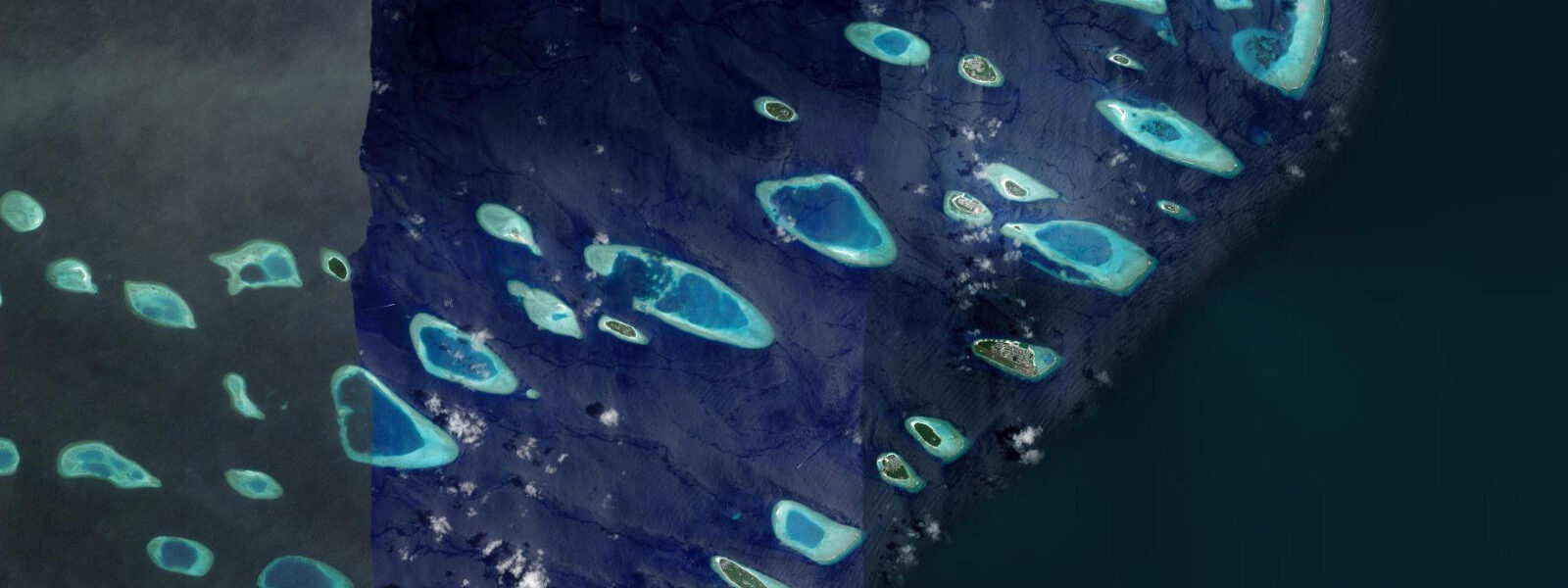
Dharavandhoo tide times
Dharavandhoo tide forecast — heights relative to MSL.
Today's tide times for Dharavandhoo
Tide times at Dharavandhoo on Tuesday, 4 August 2026: first high tide at 05:00, first low tide at 09:00, second high tide at 14:52, second low tide at 21:37. Sunrise 06:03, sunset 18:23.
Tide chart for Dharavandhoo
24-hour cosine-interpolated curve around the present moment. Heights relative to MSL. Predictions: Predictions: Open-Meteo Marine (MeteoFrance SMOC, 0.08° grid).
Sun, moon and conditions on Tue 04 Aug
Snapshot at build time — refreshes daily. Sea state from Open-Meteo Marine.
Highs and lows next 7 days
Every predicted high and low for the next week, with the daily tidal coefficient (0–120; higher = bigger swing, > 95 means stronger currents).
Other spots nearby
The three closest curated TideTurtle locations to Dharavandhoo, measured by great-circle distance.
Today's solunar windows
Solunar tradition: major periods are the ≈3h windows around moon transit and opposition; minor are ≈2h around moonrise and moonset. Pair with the local tide stage and wind for the best read.
Cycle dates near Dharavandhoo
Last spring tide on Tue 04 Aug (range 0.7m). Next neap on Fri 07 Aug.
Spring tides cluster around new and full moons (biggest swings). Neap tides land on quarter moons (smallest swings). See the spring tide and neap tide glossary entries for the why.
About tides at Dharavandhoo
A short guide to the coastline at Dharavandhoo — geography, sea state, and what the tide is actually doing under your feet.
Dharavandhoo is a small inhabited island in Baa Atoll, northeastern Maldives, home to approximately 700 residents and a growing guesthouse community that has positioned the island as a local-island alternative to resort stays in the biosphere reserve. The island has its own domestic airport — Dharavandhoo Airport — making it accessible in 25 minutes from Malé's Velana International Airport, which removes the need for the inter-island speedboat transfer that characterises access to many Baa Atoll destinations.
The house reef at Dharavandhoo is the island's defining asset. The reef begins within 50 metres of the shoreline and drops in a series of coral-covered terraces to 25 to 30 metres. The incoming tide brings cleaner, cooler water from the Indian Ocean over the reef, improving visibility (typically 15 to 25 metres on the flood) and triggering feeding activity across the reef community. The falling tide drains the lagoon and concentrates fish at the reef edge — the drop-off point at 8 to 12 metres becomes the most active section of the reef on the ebb, as predatory fish stack at the edge to intercept baitfish swept off the lagoon.
The coral garden in 3 to 8 metres is accessible without a dive guide for snorkellers comfortable in open water. Table corals (Acropora hyacinthus) up to 2 metres across dominate the shallow terrace. In the gaps between table corals: juvenile Napoleon wrasse, moorish idols, and parrotfish in sleeping colours (their nighttime camouflage pattern, visible when they shelter in coral heads in the afternoon). Larger fish on the deeper terraces include white-tip reef shark, grey reef shark, and giant trevally that patrol the reef edge on the incoming tide.
Hanifaru Bay is a 10 to 15 minute speedboat ride from Dharavandhoo, making the island one of the closest inhabited island bases to the manta feeding site. Guesthouses on the island run daily Hanifaru excursions in the manta season (June to October), timed to the spring tide flood phase when the aggregation is most reliable. On non-aggregation days in the season, manta rays visit the house reef directly — particularly in the early morning on incoming tides, when individual mantas glide over the shallow reef terrace at 3 to 5 metres, occasionally within touching distance of snorkellers on the surface.
The tidal range at Dharavandhoo is approximately 0.8 to 1.2 metres at springs, consistent with Baa Atoll's atoll lagoon dynamics. The bikini beach — the designated swimming area for guesthouse guests on the outer reef flat — is accessible at low water by walking across the exposed reef flat from the island shoreline. The reef flat crossing takes 5 minutes at low water springs; at high water the flat is submerged and the bikini beach is reached by boat or requires swimming.
For underwater photographers, Dharavandhoo house reef offers the combination of manta ray access (Hanifaru 10 minutes away), diverse coral architecture in good ambient light (3 to 12 metres depth, clear water), and the practical advantages of a guesthouse base: fixed location, no day-by-day liveaboard repositioning, and easy repeat dives on the same reef section over multiple days. The east side of the reef, where the current runs most consistently on the incoming tide, concentrates the most diverse fish aggregations.
Predictions on this page come from Open-Meteo Marine, a gridded global ocean model. Accuracy is typically within plus or minus 45 minutes on timing and 0.2 to 0.3 metres on height — model-derived, not from a local gauge. The local tide authority is the Maldives Meteorological Service.
Tide questions about Dharavandhoo
Quick answers to the most common questions about tide times, range, and water access at Dharavandhoo.
Is Dharavandhoo a good base for visiting Hanifaru Bay?
Yes. Dharavandhoo is 10 to 15 minutes by speedboat from Hanifaru Bay, making it one of the closest inhabited island bases to the manta aggregation site. Guesthouses run daily Hanifaru excursions in the manta season (June to October), timed to spring tide flood phases. The island also has its own domestic airport with 25-minute flights from Malé — no inter-island boat transfer needed for the initial arrival. The combination of airport access, proximity to Hanifaru, and a quality house reef makes Dharavandhoo a practical and cost-effective alternative to Baa Atoll resort islands for the manta season.
Can manta rays be seen directly from the Dharavandhoo house reef?
Yes, particularly in the manta season (June to October) and on incoming morning tides. Individual manta rays visit the house reef, gliding over the shallow terrace at 3 to 5 metres depth. These are more intimate encounters than the mass aggregation at Hanifaru Bay — single or paired animals, moving slowly over the coral garden, sometimes passing within 3 to 4 metres of snorkellers on the surface. The east side of the house reef, where the incoming tide current runs most directly, is the most reliable location. Encounters are not guaranteed on any given day.
What is the snorkelling like at Dharavandhoo house reef?
The house reef begins within 50 metres of the shoreline and drops in coral terraces to 25 to 30 metres. Visibility is typically 15 to 25 metres on the incoming tide. In 3 to 8 metres: table coral formations up to 2 metres across, with moorish idols, parrotfish, and juvenile Napoleon wrasse in the gaps. At 8 to 12 metres on the reef drop-off: white-tip reef shark, grey reef shark, and giant trevally on the incoming tide. Gear rental (mask, fins, snorkel) is available from guesthouses. Entry is direct from the island shoreline at any tide state that provides sufficient water over the reef flat.
How do I get to Dharavandhoo?
By domestic flight from Velana International Airport, Malé, to Dharavandhoo Airport — approximately 25 minutes. Multiple airlines operate the route. Confirm your guesthouse is arranging an airport pickup (the airport is on the island, so the transfer is a few minutes by vehicle or on foot). Alternatively, by seaplane transfer from Malé to Baa Atoll followed by a speedboat to Dharavandhoo — seaplanes land on the lagoon outside the atoll. Seaplane transfers are more expensive than domestic flights. Book domestic flights as far in advance as possible, particularly for July and August peak season.
What is the tidal range at Dharavandhoo?
Spring tidal range at Dharavandhoo is approximately 0.8 to 1.2 metres. The regime is mixed semidiurnal with a moderate diurnal inequality. The bikini beach on the outer reef flat is accessible at low water by walking across the exposed flat — about 5 minutes at low water springs. At high water the flat is submerged and the beach requires a boat or a swim. For the house reef, the most important tidal distinction is the difference between incoming and outgoing: incoming tide brings cleaner water and better visibility; outgoing concentrates fish at the reef edge. Predictions here come from Open-Meteo Marine (±45 minutes on timing, ±0.3 m on height).
8-day tide table — Dharavandhoo
Heights relative to MSL. Predictions: Open-Meteo Marine (MeteoFrance SMOC, 0.08° grid) — heights relative to MSL (not chart datum / LAT). Model-derived.
| Day | Type | Time | Height |
|---|---|---|---|
| Tue 04 Aug | High | 05:00 | 0.6m |
| Low | 09:00 | 0.3m | |
| High | 14:52 | 0.8m | |
| Low | 21:37 | 0.0m | |
| Wed 05 Aug | High | 15:10 | 0.7m |
| Low | 22:04 | 0.0m | |
| Thu 06 Aug | High | 05:00 | 0.7m |
| Low | 10:00 | 0.4m | |
| High | 15:18 | 0.7m | |
| Low | 22:47 | 0.0m | |
| Fri 07 Aug | High | 06:10 | 0.6m |
| Low | 23:21 | 0.0m | |
| Sat 08 Aug | High | 09:00 | 0.6m |
| Sun 09 Aug | — | ||
| Mon 10 Aug | Low | 02:50 | 0.1m |
| High | 11:42 | 0.7m | |
| Low | 19:00 | 0.4m | |
| High | 21:00 | 0.4m | |
| Tue 11 Aug | Low | 04:00 | 0.0m |