Palanga tide times
Palanga tide forecast — heights relative to MSL.
Tide chart for Palanga
24-hour cosine-interpolated curve around the present moment. Heights relative to MSL. Predictions: Predictions: Open-Meteo Marine (MeteoFrance SMOC, 0.08° grid).
Sun, moon and conditions on Tue 04 Aug
Snapshot at build time — refreshes daily. Sea state from Open-Meteo Marine.
Highs and lows next 7 days
Every predicted high and low for the next week, with the daily tidal coefficient (0–120; higher = bigger swing, > 95 means stronger currents).
Other spots nearby
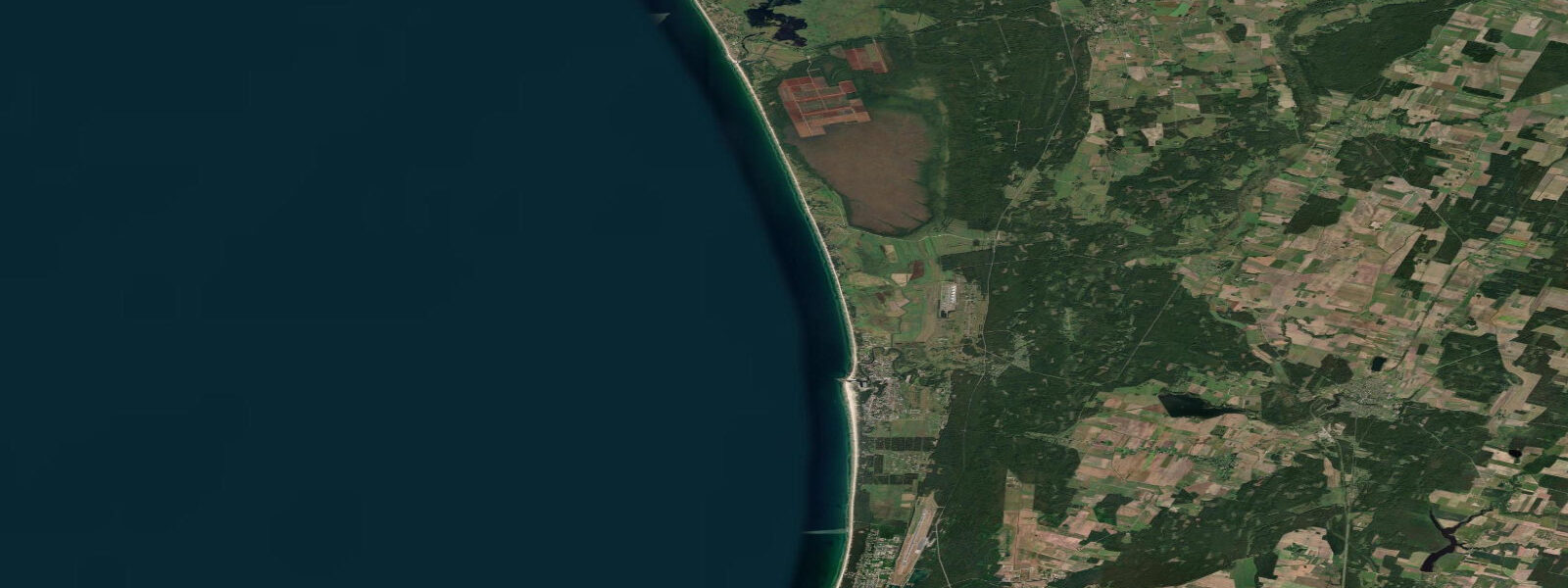
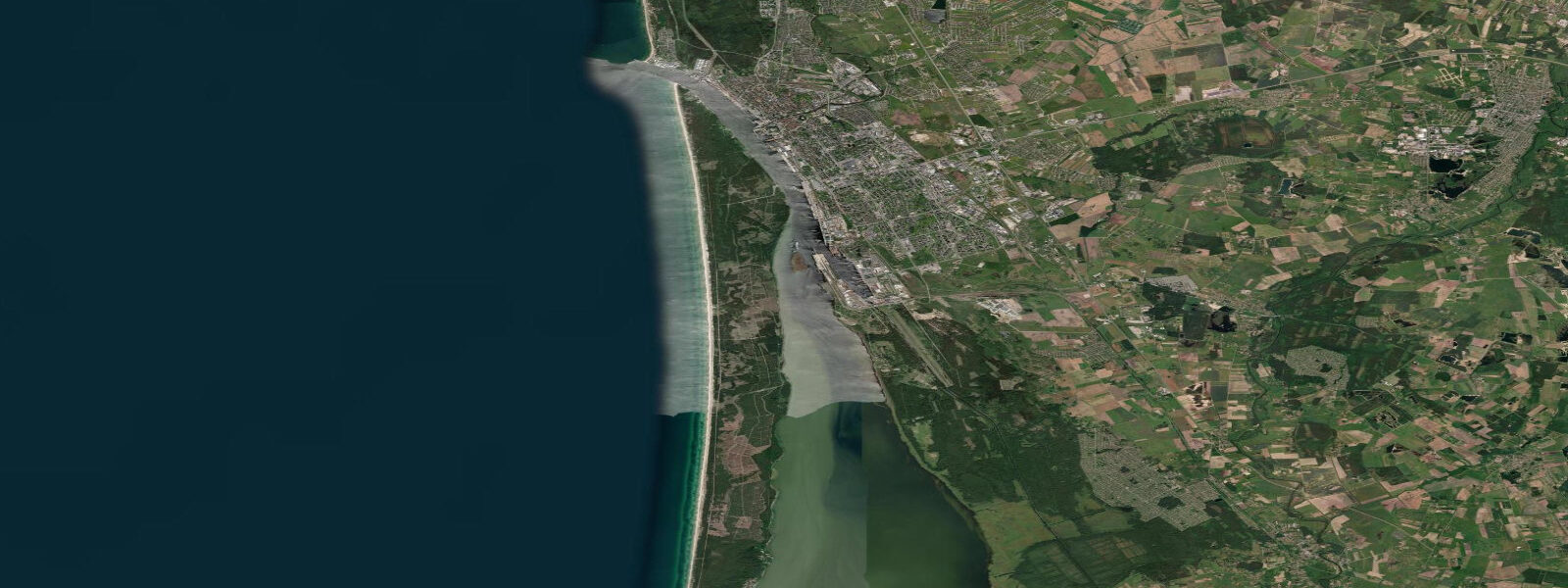
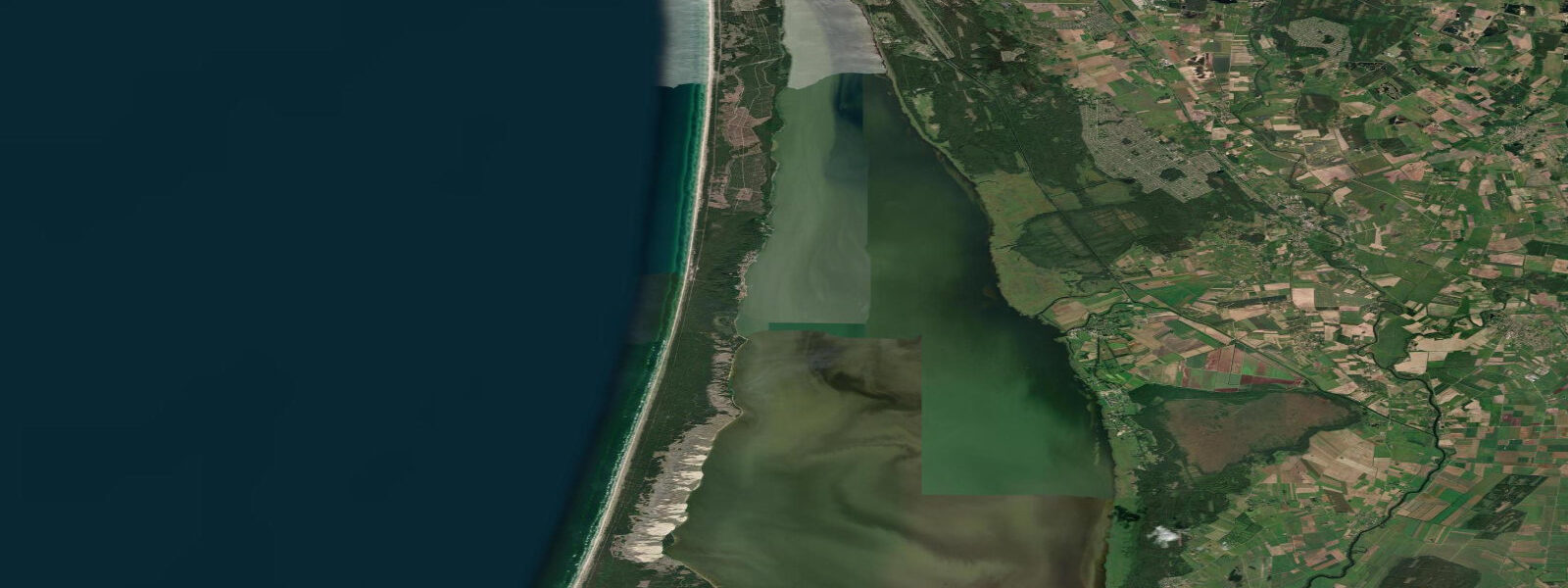
The three closest curated TideTurtle locations to Palanga, measured by great-circle distance.
Today's solunar windows
Solunar tradition: major periods are the ≈3h windows around moon transit and opposition; minor are ≈2h around moonrise and moonset. Pair with the local tide stage and wind for the best read.
About tides at Palanga
A short guide to the coastline at Palanga — geography, sea state, and what the tide is actually doing under your feet.
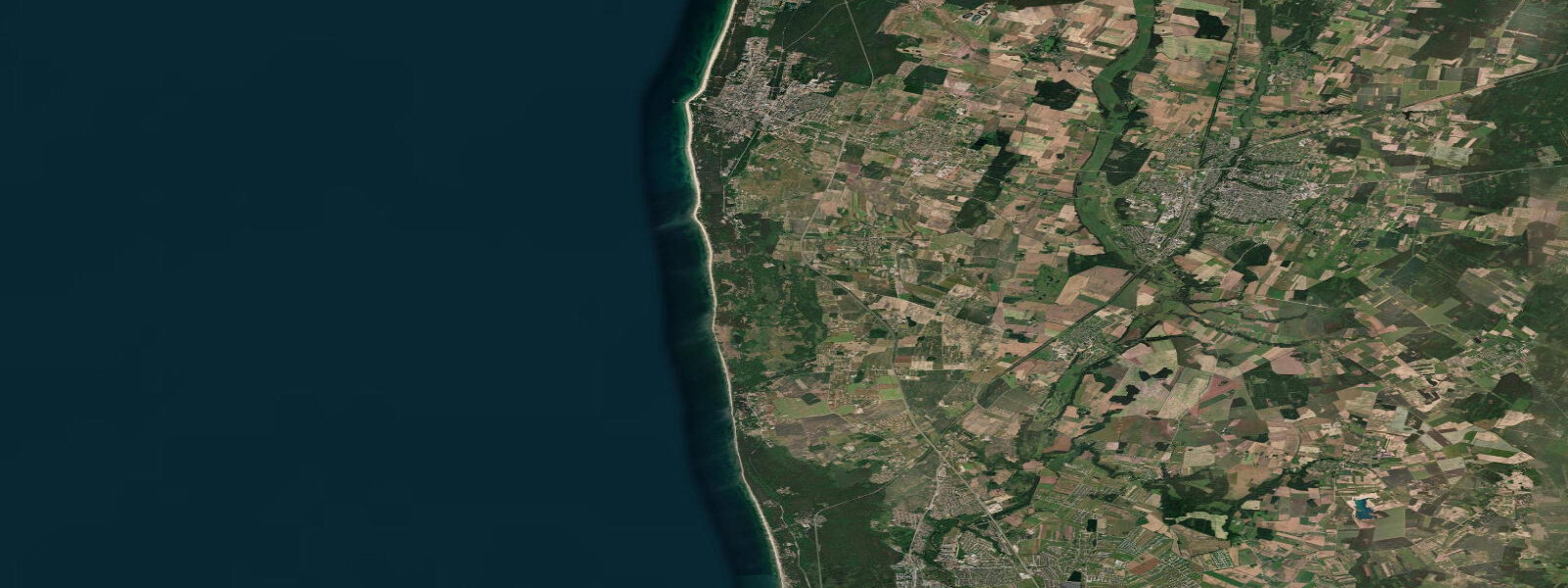
Palanga is Lithuania's main beach resort, 25 km north of Klaipėda on the open Baltic coast. The town has been a resort since the 19th century — the Tiskevicius Palace and its botanical park, Palanga Botanical Garden, anchor the town inland, while a long pier extending 470 m into the Baltic is the town's central gathering point. The beach runs straight for 6–8 km in either direction from the pier, backed by dune-stabilising pine forest planted in the Soviet era. In July and August Palanga is crowded; in May and September it is largely empty, the beach wide and quiet.
The Baltic Sea at Palanga is essentially non-tidal. Mean astronomical range is under 10 cm. What drives water level here is wind and barometric pressure. A sustained westerly or northwesterly wind, tracking across the open Baltic toward the Lithuanian coast, produces wave heights of 1.5–2.5 m and wind-driven water level rise of 0.2–0.5 m on the beach face. This is the most exposed section of the Lithuanian Baltic coast — there is no Curonian Spit to the west to break the swell (Palanga sits north of the Spit's northern terminus at Klaipėda). The difference between Palanga and Nida or Juodkrantė to the south is exactly this: Palanga faces the open Baltic fetch.
For the summer beach visitor, Palanga's working conditions are determined entirely by the weather. On a calm high-pressure day in late July, the Baltic is nearly flat, the water is 17–20 °C, and the 60–80 m wide beach between the dune line and the water is a family beach. On a westerly blow, 1.5 m white-capped waves roll into the pier and the beach absorbs significant wave energy — entertaining to watch from the pier but not a swimming day. The pier extends far enough into the Baltic that even in moderate conditions, the end of the pier sees spray and wave action that surprises visitors unfamiliar with Baltic storms.
The Palanga pier is the town's social centre and the vantage point for sunset photography. The pier faces almost due west; sunset over the Baltic from the pier end in June occurs around 21:50–22:00 local time. It is a genuine marine-horizon sunset — no land obstruction to the west for 100+ km. Calm evenings in June and August produce exceptional conditions: still water, long colour gradients across the sky, and the silhouette of the pier railings as foreground. After a storm, the pier at the beginning of a high-pressure recovery — when the swell is still 0.8–1.0 m but the sky is clearing — produces the most dramatic wave-and-light combinations.
For cyclists and walkers, the coastal path north and south from Palanga runs through pine forest behind the first dune line. The 6-km walk north to Šventoji takes 90 minutes; Šventoji has its own river mouth, small fishing harbour, and a quieter beach without the resort infrastructure of Palanga. The walk south toward the Klaipėda suburb beaches is 8–10 km through uninterrupted dune forest.
Anglers at Palanga fish from the pier and from the beach. Flounder and Baltic herring are the primary beach-casting species in season. Herring appear inshore in April–May for spawning; the pier is a platform for net casting during this period (regulated). Bluefish (lufer) arrive occasionally in autumn if shoals move north past Klaipėda. Sea trout can be taken by spinning from the beach at dawn and dusk in autumn, particularly after storm events when the surf disturbs the bottom and stimulates feeding.
All tide predictions for Palanga come from the Open-Meteo Marine gridded model. Timing accuracy is ±45 minutes; height accuracy is ±0.3 m above Chart Datum. The astronomical range under 10 cm is within the model's stated uncertainty. Wind and swell govern all beach and water conditions at Palanga.
Tide questions about Palanga
Quick answers to the most common questions about tide times, range, and water access at Palanga.
When is the best time to visit Palanga beach?
July and August are peak season with warm water (17–20 °C) and the widest range of facilities, but the beach and pier are crowded. Late June and early September offer nearly the same sea temperatures with dramatically fewer people. May and October are cold but quiet — the beach is effectively empty and the pine forests are at their best. There is no tidal variation to time a visit around. The operative variable is weather: a calm high-pressure window in late June gives the best combination of warm water, long evenings, and manageable crowds. Check the Baltic swell forecast for 2 days ahead; a westerly swell of 1.0 m or more changes the swimming assessment.
Is Palanga pier safe to walk on during rough weather?
The Palanga pier is a solid timber-and-concrete structure 470 m long, built to withstand Baltic storm conditions. During westerly storms, wave spray reaches the pier deck at the exposed outer sections and the pier may be closed by the resort management for safety. During moderate conditions — swell 0.5–1.0 m — the pier is open and wave action at the end is energetic and photogenic but not dangerous for adults standing clear of the railings. Children on the pier end in any swell above 0.3 m should be closely supervised. The pier entrance building has weather information; check it before walking to the far end in borderline conditions.
Can you swim at Palanga when the waves are up?
When Baltic swell at Palanga exceeds 0.8–1.0 m, the beach break produces shorebreak and shore-parallel current that makes swimming uncomfortable and potentially dangerous for weaker swimmers and children. The lifeguard service (operating July–August) posts flag conditions: green for safe, yellow for caution, red for closed. The non-tidal character of the Baltic means there are no daily safe windows based on tidal phase — the swell state is purely weather-driven. Morning before 09:00 tends to have the flattest conditions on days with afternoon sea-breeze development; all-day calm requires a high-pressure weather system.
What fish can you catch from Palanga pier and beach?
Flounder is the main beach-casting target at Palanga, fished on a bottom rig with ragworm along the sand bottom at 40–60 m range. Baltic herring appear inshore in April–May for spawning and can be taken by net from the pier (regulated by Lithuanian fishing rules). Sea trout run the Baltic beach in autumn (September–November) and can be taken by spinning through the surf at dawn. The pier provides elevated access for viewing schools of fish in clear conditions and for jigging for small perch and Baltic herring. A Lithuanian fishing permit covers all species from the pier and beach.
Is there a coastal walking or cycling path from Palanga?
Yes. A well-maintained coastal path runs through the pine dune forest behind the first dune line north and south of Palanga. North: 6 km to Šventoji village (90-minute walk) with its small river mouth harbour, fishing boats, and quieter beach. South: 8–10 km toward Klaipėda's northern suburb beaches through uninterrupted forest with dune-crest viewpoints over the Baltic. Both routes are suitable for cycling. The beach itself is also walkable at low-energy conditions: the firm wet sand at the waterline is the smoothest surface. Water level at the waterline varies with wind rather than tide — check weather before planning an extended beach walk after storm periods when driftwood and debris accumulate at the high-water line.
8-day tide table — Palanga
Heights relative to MSL. Predictions: Open-Meteo Marine (MeteoFrance SMOC, 0.08° grid) — heights relative to MSL (not chart datum / LAT). Model-derived.
| Day | Type | Time | Height |
|---|---|---|---|
| Tue 04 Aug | — | ||
| Wed 05 Aug | — | ||
| Thu 06 Aug | — | ||
| Fri 07 Aug | — | ||
| Sat 08 Aug | High | 07:00 | 0.0m |
| Sun 09 Aug | Low | 18:00 | -0.1m |
| Mon 10 Aug | — | ||
| Tue 11 Aug | High | 02:00 | -0.0m |