Lamu Town tide times
Lamu Town tide forecast — heights relative to MSL.
Today's tide times for Lamu Town
Tide times at Lamu Town on Tuesday, 4 August 2026: first low tide at 03:00am, first high tide at 06:52am, second low tide at 01:01pm, second high tide at 07:01pm. Sunrise 06:22am, sunset 06:23pm.
Tide chart for Lamu Town
24-hour cosine-interpolated curve around the present moment. Heights relative to MSL. Predictions: Predictions: Open-Meteo Marine (MeteoFrance SMOC, 0.08° grid).
Sun, moon and conditions on Tue 04 Aug
Snapshot at build time — refreshes daily. Sea state from Open-Meteo Marine.
Highs and lows next 7 days
Every predicted high and low for the next week, with the daily tidal coefficient (0–120; higher = bigger swing, > 95 means stronger currents).
Other spots nearby
The three closest curated TideTurtle locations to Lamu Town, measured by great-circle distance.
Today's solunar windows
Solunar tradition: major periods are the ≈3h windows around moon transit and opposition; minor are ≈2h around moonrise and moonset. Pair with the local tide stage and wind for the best read.
Cycle dates near Lamu Town
Last spring tide on Tue 04 Aug (range 2.4m). Next spring tide on Mon 10 Aug (range 2.3m). Next neap on Sat 08 Aug.
Spring tides cluster around new and full moons (biggest swings). Neap tides land on quarter moons (smallest swings). See the spring tide and neap tide glossary entries for the why.
About tides at Lamu Town
A short guide to the coastline at Lamu Town — geography, sea state, and what the tide is actually doing under your feet.
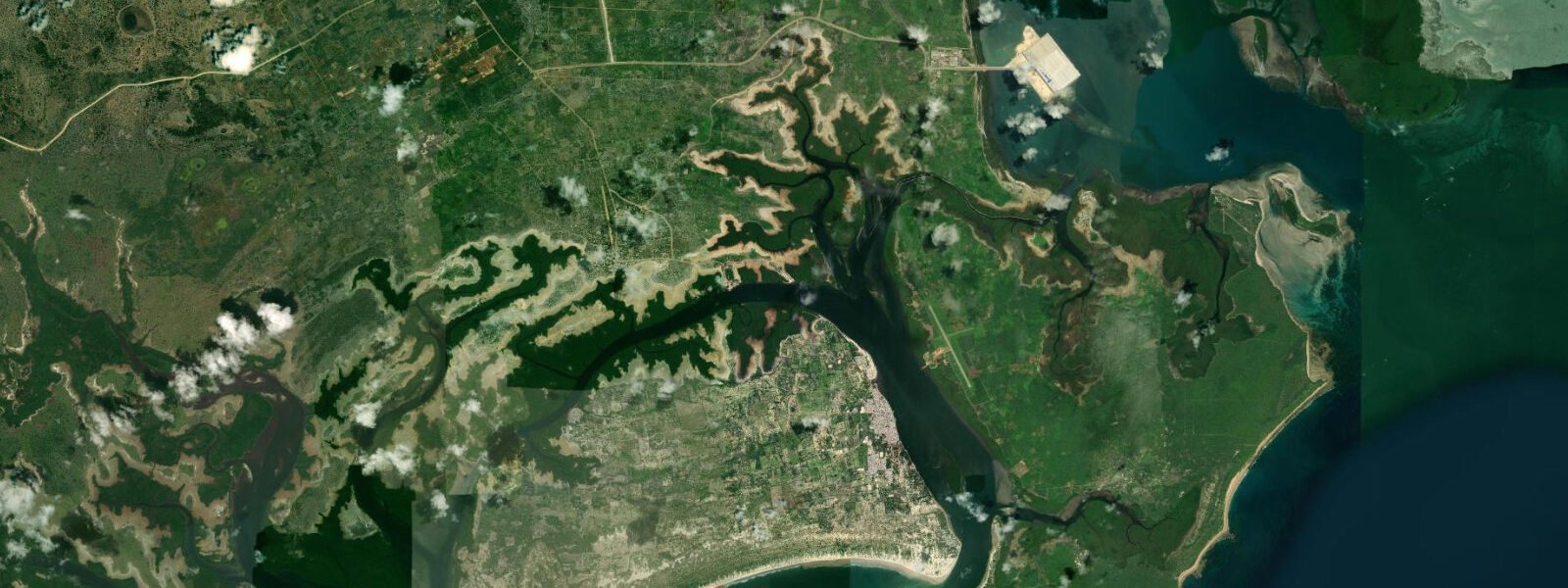
Lamu Town sits on the western coast of Lamu Island, facing the Lamu Channel — the 600-metre waterway that separates Lamu from Manda Island to the north. The town has been continuously inhabited since at least the 14th century and the built fabric of the old town is intact in a way that is unusual anywhere in the world: coral stone buildings of three and four storeys, carved wooden doors, inner courtyards open to the sky, and lanes too narrow for a vehicle. No motorised vehicles are permitted on the island except one government tractor; donkeys carry freight and people. The town was designated a UNESCO World Heritage Site in 2001.
The Lamu Waterfront — the seafront promenade running the length of the old town, from the Fort and the Lamu Museum at the south to the dhow harbour at the north — runs directly on the tidal channel. The channel is active throughout the day with dhow traffic, inter-island ferry crossings (Lamu–Manda–Shela), and local fishing boats. Tidal current direction reverses with each tidal phase: on the ebb, the channel current runs westward toward the open sea beyond Manda Bay; on the flood, it reverses and runs eastward into the deeper parts of the archipelago. At spring tides, this current reaches 2 to 3 knots in the narrower sections of the channel — fast enough that the dhow captains time their departures to the tidal phase rather than to a fixed clock schedule.
The spring tidal range at Lamu is approximately 3.0 metres; neap range around 1.5 metres. The tidal cycle here has the same semidiurnal character with diurnal inequality as the rest of the Kenyan coast. The Lamu Channel between the town waterfront and Manda Island experiences some of the strongest tidal currents in the Kenyan archipelago due to the channel geometry — narrow and moderately deep, with both ends opening to the larger tidal body of the archipelago. At peak spring ebb, the current against the mangrove fringe of the Manda Island shore visible from the waterfront is visible as a standing wake: the water piles against the mangrove roots and the surface is rough even in calm wind conditions.
The dhow harbour in front of the Fort and the Old District at the southern end of the waterfront is the operational centre of Lamu's maritime activity. Traditional jahazi ocean dhows and the smaller dau dhows are moored at the deep-water end of the harbour at high water; at spring low water, many of the smaller vessels ground out on the mud in front of the old warehouses and the harbour effectively becomes a tidal flat. This is when maintenance work happens: caulking the planks, painting the below-waterline hull sections, clearing marine growth. The cycle repeats with each spring tide.
For visitors, the waterfront at any tidal state is the centre of Lamu Town activity — the afternoon promenade from the museum to the dhow harbour is the town's main social artery. The best light for photography of the dhows falls in the late afternoon from roughly 16:30 onward, when the low sun catches the lateen sails of any dhows still moving on the channel. At the largest spring low tides, the mud flat in front of the Fort exposes widely and the grounded dhows create a photographic composition that is specific to the spring low-water condition — available for roughly 2 hours centred on the low water time shown on this page.
The inter-island water taxi to Shela (3 kilometres south on the waterfront track or a 15-minute boat ride) departs from the main Lamu jetty throughout the day; at very low spring water, the boat may take a longer route around the exposed sandbar rather than the direct channel crossing. The trip to Shela Beach, the 12-kilometre undeveloped beach south of the Shela settlement, requires a boat or a 45-minute walk on the inland track from Lamu Town.
Tide predictions for Lamu Town come from Open-Meteo Marine, a gridded global ocean model. Accuracy is typically plus or minus 45 minutes on timing and 0.2 to 0.3 metres on height. The complex multi-channel tidal hydrography of the Lamu Archipelago means that local timing offsets and current patterns can exceed the model's baseline accuracy; treat these predictions as planning guidance. KMFRI (Kenya Marine and Fisheries Research Institute) at Mombasa is the regional oceanographic reference. These predictions are not for navigation.
Tide questions about Lamu Town
Quick answers to the most common questions about tide times, range, and water access at Lamu Town.
How does the tidal current affect dhow travel in the Lamu Channel?
The Lamu Channel between the town waterfront and Manda Island runs at 2 to 3 knots at peak spring tides. Dhow captains time their departures to ride the tidal current rather than fight it: vessels heading west toward the open sea depart on the ebb, which runs westward; vessels returning to the inner archipelago time their arrival on the flood, which runs eastward. At neap tides, the current is weaker (around 1 to 1.5 knots) and the scheduling is more flexible. The inter-island ferry to Shela is powered and runs on a fixed schedule regardless of tidal phase, but the crossing time varies by 3 to 5 minutes depending on whether the current assists or opposes. The traditional sail-only dhows are more strongly affected and their departure times are set by the tide table.
When is the Lamu dhow harbour accessible by boat at low tide?
The main dhow harbour in front of the Fort at the south end of the Lamu waterfront maintains adequate depth for the inter-island ferries and most motorised vessels at all tidal states — the harbour channel is dredged to approximately 2 metres below chart datum. Smaller vessels and traditional dhows ground out on the mud in front of the old warehouses at spring low water; this is deliberate and is used for below-waterline maintenance. The mud flat in front of the warehouses exposes for roughly 2 hours centred on spring low water. For the water taxi to Shela, the normal route is via the channel rather than the mud flat and operates at any tidal state, though the captain may adjust course slightly at the lowest spring tides to clear the sandbar at the south end of the harbour approach.
Can I walk from Lamu Town to Shela Beach along the waterfront?
The inland track from Lamu Town to Shela village is walkable at any tidal state and takes 30 to 45 minutes on foot (approximately 3 kilometres of unpaved track through the village of Shela and along the edge of the palm-covered interior). The waterfront route — along the beach and mangrove fringe south of the town — is only accessible at low water when the tidal creek at the south end of Lamu Town is fordable; at high water, the creek is knee to waist deep and the route is blocked. The low-water window for the waterfront route is centred on the predicted low water time on this page, with a usable window of about 90 minutes either side. Water taxis to Shela depart from the main Lamu jetty throughout the day; the 15-minute boat crossing is the most convenient option at any tidal state.
Is Lamu Town safe to visit as a tourist?
The UK Foreign Commonwealth and Development Office (FCDO) and other government travel advisories have periodically flagged security concerns for the Lamu Archipelago due to its proximity to the Kenya-Somalia border and historical incidents in the wider county. Before travel, check the current advice from your government's travel advisory service — FCDO at gov.uk/foreign-travel-advice/kenya, or equivalent for your nationality. The situation can change; advice that was current when this page was written may have been updated. Lamu Town itself has been host to international tourism for decades and the town's resident population has a long-established relationship with visitors. The practical travel question is whether the current advisory affects entry to Lamu County or flight access from Mombasa/Nairobi to Lamu Airport.
Where do the tide predictions for Lamu Town come from?
Open-Meteo Marine, a gridded global ocean model. The model estimates tidal height from a geographic grid rather than from harmonic analysis of a local gauge. Accuracy is typically plus or minus 45 minutes on timing and 0.2 to 0.3 metres on height. The multi-channel tidal hydrography of the Lamu Archipelago — where tidal timing and current direction can differ significantly between adjacent channels — means that local conditions may vary from the Open-Meteo grid prediction by more than the stated accuracy envelope. KMFRI (Kenya Marine and Fisheries Research Institute) in Mombasa holds the regional tidal and oceanographic dataset for the Kenyan coast. These predictions are not for navigation, channel crossings, or commercial vessel operations.
8-day tide table — Lamu Town
Heights relative to MSL. Predictions: Open-Meteo Marine (MeteoFrance SMOC, 0.08° grid) — heights relative to MSL (not chart datum / LAT). Model-derived.
| Day | Type | Time | Height |
|---|---|---|---|
| Tue 04 Aug | Low | 03:00 | -0.0m |
| High | 06:52 | 1.7m | |
| Low | 13:01 | -0.6m | |
| High | 19:01 | 1.4m | |
| Wed 05 Aug | Low | 01:07 | -0.7m |
| High | 19:40 | 1.2m | |
| Thu 06 Aug | Low | 01:43 | -0.5m |
| High | 08:15 | 1.5m | |
| Low | 14:44 | -0.3m | |
| Fri 07 Aug | High | 09:22 | 1.3m |
| Low | 16:11 | -0.1m | |
| High | 21:57 | 0.6m | |
| Sat 08 Aug | Low | 03:50 | -0.2m |
| High | 11:00 | 1.3m | |
| Low | 18:13 | -0.2m | |
| Sun 09 Aug | High | 00:10 | 0.6m |
| Low | 05:43 | -0.1m | |
| High | 12:44 | 1.4m | |
| Low | 19:41 | -0.4m | |
| Mon 10 Aug | High | 01:44 | 0.8m |
| Low | 07:19 | -0.3m | |
| High | 13:57 | 1.6m | |
| Low | 20:40 | -0.7m | |
| Tue 11 Aug | High | 02:00 | 1.1m |