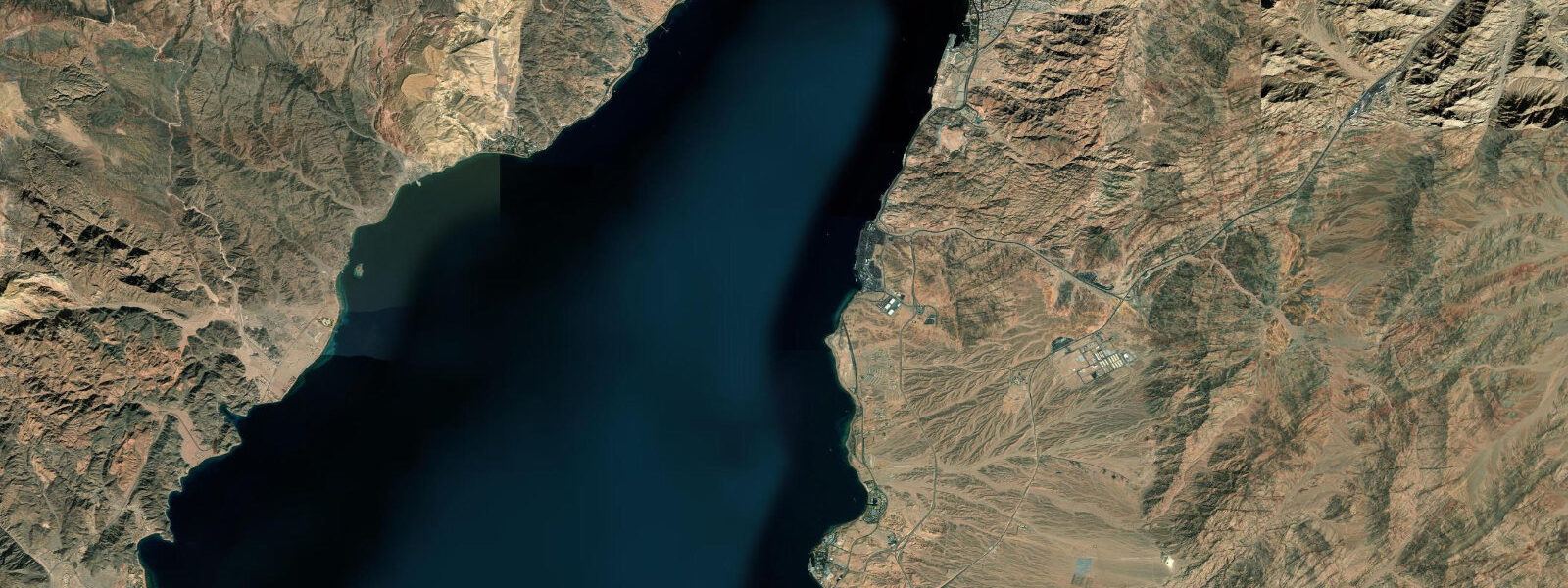
Aqaba Marine Park tide times
Aqaba Marine Park tide forecast — heights relative to MSL.
Today's tide times for Aqaba Marine Park
Tide times at Aqaba Marine Park on Tuesday, 4 August 2026: first low tide at 04:12am, first high tide at 10:20am, second low tide at 04:12pm, second high tide at 10:38pm. Sunrise 06:01am, sunset 07:30pm.
Tide chart for Aqaba Marine Park
24-hour cosine-interpolated curve around the present moment. Heights relative to MSL. Predictions: Predictions: Open-Meteo Marine (MeteoFrance SMOC, 0.08° grid).
Sun, moon and conditions on Tue 04 Aug
Snapshot at build time — refreshes daily. Sea state from Open-Meteo Marine.
Highs and lows next 7 days
Every predicted high and low for the next week, with the daily tidal coefficient (0–120; higher = bigger swing, > 95 means stronger currents).
Other spots nearby
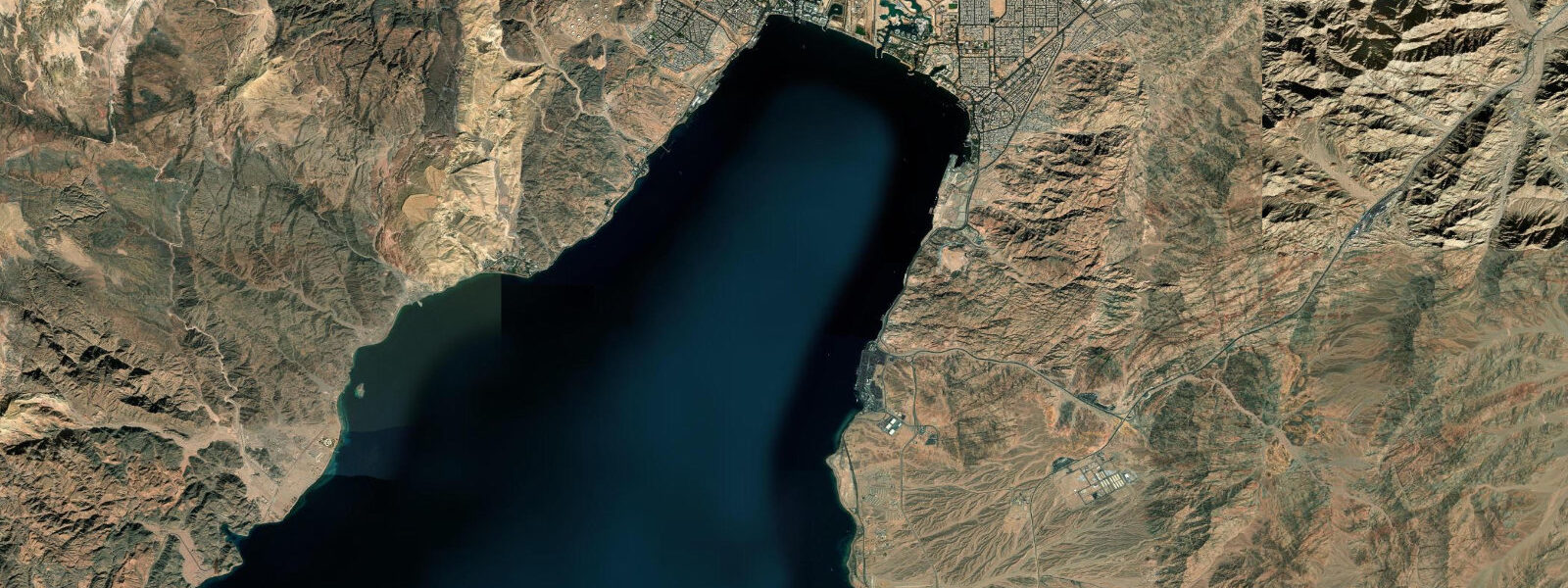
The three closest curated TideTurtle locations to Aqaba Marine Park, measured by great-circle distance.
Today's solunar windows
Solunar tradition: major periods are the ≈3h windows around moon transit and opposition; minor are ≈2h around moonrise and moonset. Pair with the local tide stage and wind for the best read.
Cycle dates near Aqaba Marine Park
Last spring tide on Tue 04 Aug (range 0.6m). Next spring tide on Mon 10 Aug (range 0.5m). Next neap on Thu 06 Aug.
Spring tides cluster around new and full moons (biggest swings). Neap tides land on quarter moons (smallest swings). See the spring tide and neap tide glossary entries for the why.
About tides at Aqaba Marine Park
A short guide to the coastline at Aqaba Marine Park — geography, sea state, and what the tide is actually doing under your feet.
The Aqaba Marine Park occupies the southern section of Jordan's 27-kilometre coastline on the Gulf of Aqaba, running from the port breakwater south toward the Saudi border. It was formally established in 1997, after decades of coastal development — port expansion, resort construction, and phosphate loading — had degraded sections of the reef that had been among the healthiest in the Red Sea. The park's protected zone covers approximately 7 kilometres of reef and sandy seafloor, and restoration work has brought back significant coral cover in areas that were largely dead by the mid-1990s.
The reef here sits at the southern end of the Jordanian continental shelf, where the Gulf of Aqaba — a narrow, deep tectonic rift — drops steeply to 1,800 metres within a few kilometres of shore. That depth creates a cold-water upwelling effect that keeps the reef more resilient to bleaching than many Red Sea sites: the corals at Aqaba have survived temperature anomalies that caused mass mortality on the shallower reefs of Sinai and the Saudi coast to the south and west.
The main reef for shore diving and snorkelling is the First Bay (locally called the Marine Reserve Beach), accessible from the beachfront parking area just south of the Aqaba port. The sandy approach to the reef runs about 80 metres from shore; the reef top sits at 1–3 metres and drops on a wall to 15–25 metres on the outer face. Coral cover includes Acropora tables, brain corals, and leather corals in good condition. Fish life in the park is noticeably richer than areas outside it — lionfish, pufferfish, sea turtles, and occasional reef sharks are regular sightings.
The Gulf of Aqaba tide is semidiurnal with a well-known spring range of around 0.7–0.9 metres. This is meaningfully larger than the wider Red Sea (which is nearly tideless) because the Gulf of Aqaba sits at the end of a resonant basin that amplifies the tidal wave entering from the south. The semidiurnal period of roughly 12.4 hours is close to the natural resonance period of the 180-kilometre long Gulf, which produces this amplification. For divers, the tidal state matters: the ebb draws cooler, nutrient-rich water from depth along the wall, and fish activity tends to peak on the tidal flow changes. Plan entries around slack water for the clearest visibility; plan observation dives for the first hour of ebb for the best pelagic fish activity.
Shamal wind afternoons are the main planning variable for surface conditions. The NW Shamal typically builds from around 10:00–11:00 and peaks at 20–30 knots by early afternoon before dying with sunset. Morning entries before 09:30 give flat-calm surface conditions. Equipment rental and diving services are available from the park entrance area and multiple operators along the Aqaba corniche to the north.
Predictions on this page come from Open-Meteo Marine. For Gulf of Aqaba conditions, local dive shops provide real-time visibility and current updates that complement the tidal prediction.
The park's location at the north end of the Red Sea gives it unusual biological significance as a connectivity node: larvae from Aqaba's reef drift south with the currents into the central Red Sea, while larvae from deeper Red Sea populations occasionally recruit northward into the Gulf of Aqaba. This larval exchange is part of what makes the park worth protecting beyond purely local dive tourism — it is a regional ecological anchor. Jordan's investment in reef restoration, including transplanting coral fragments from healthy sections to degraded areas, has been running since the early 2000s and the results are measurable in coral cover surveys.
The park entrance area has basic facilities: changing rooms, toilets, and a small fee station. Parking is adjacent to the beach access. All major Aqaba dive centres are familiar with the Marine Park sites and can arrange day trips with equipment included.
Tide questions about Aqaba Marine Park
Quick answers to the most common questions about tide times, range, and water access at Aqaba Marine Park.
What can I expect to see diving or snorkelling in Aqaba Marine Park?
The reef inside the park has been recovering since protection began in 1997 and now holds significant coral cover — Acropora tables, brain corals, leather corals — in the 1–20 metre range. Fish life is noticeably richer than unprotected sections nearby: lionfish are common in crevices, pufferfish cruise the sandy edges, reef sharks (mostly whitetip) patrol the outer wall on quieter mornings, and sea turtles are a regular sighting year-round. The park's deeper water occasionally hosts Napoleon wrasse. Visibility typically runs 15–25 metres in calm conditions — among the clearest in the northern Red Sea — due to the Gulf of Aqaba's oligotrophic (low-nutrient) deep water. Jellyfish blooms are uncommon but occur occasionally in spring.
What is the tidal range at Aqaba Marine Park?
Mean spring range at Aqaba is approximately 0.7–0.9 metres — larger than the wider Red Sea because the Gulf of Aqaba is a narrow, elongated basin whose natural resonance period is close to the semidiurnal tidal frequency, amplifying the tidal wave that enters from the Straits of Tiran to the south. The tide is cleanly semidiurnal (two roughly equal highs per day). For diving, the tidal state affects both visibility and fish activity: slack water gives the clearest conditions; the first hour of ebb — when cooler, nutrient-rich deep water moves along the wall — typically produces the most active fish behaviour. Local dive shops track both tidal state and current strength on the outer wall.
What is the best time of day to dive or snorkel at the Marine Park?
Morning, before the NW Shamal wind develops. The Shamal is a regional wind pattern that typically builds from 10:00–11:00 local time, reaching 20–30 knots by early afternoon before easing with sunset. Before the Shamal arrives, the Gulf surface is flat calm, entry and exit from the rocky sections is easy, and visibility is unaffected by surface chop. For tidal optimisation: check the tidal chart and aim for the incoming tide to slack transition for the clearest water, or for early ebb if you want to see pelagic fish active on the wall. Year-round water temperature at the park runs 21°C in February to 27°C in August — full exposure in winter, a 3mm shorty in summer, no wetsuit needed June through September for most divers.
Is the Marine Park accessible for beginner divers and snorkellers?
Yes, with appropriate guidance. The sandy approach from the main beach to the reef is shallow (0.5–1.5 metres) and about 80 metres long — manageable for snorkellers in calm conditions, though reef shoes are advisable as the bottom has occasional coral rubble and sea urchins. The reef top at 1–3 metres is accessible to confident snorkellers and is where much of the coral and fish life is concentrated. Beginner divers can access the wall with a local guide — all the major Aqaba dive operators offer introductory and PADI Open Water courses with Marine Park dives included. The Shamal afternoon conditions make morning dives strongly preferable for beginners; afternoon entries in the Shamal are not advisable without experience.
How does Jordan protect the Marine Park, and can I collect anything?
The Aqaba Marine Park is managed by the Aqaba Special Economic Zone Authority (ASEZA) under Jordanian environmental law. Collection of any marine life — coral, shells, sea urchins, fish — is prohibited. Anchoring is restricted to designated buoys; dive boats moor to permanent buoy lines to prevent anchor damage to the reef. A small entry fee applies for non-Jordan residents. Littering carries fines. The park employs rangers who patrol the beach and reef areas, particularly during summer weekends. Underwater cameras and dive torches are fine. Spearfishing is prohibited throughout the park and the wider Jordanian territorial waters.
8-day tide table — Aqaba Marine Park
Heights relative to MSL. Predictions: Open-Meteo Marine (MeteoFrance SMOC, 0.08° grid) — heights relative to MSL (not chart datum / LAT). Model-derived.
| Day | Type | Time | Height |
|---|---|---|---|
| Tue 04 Aug | Low | 04:12 | -0.4m |
| High | 10:20 | 0.2m | |
| Low | 16:12 | -0.3m | |
| High | 22:38 | 0.2m | |
| Wed 05 Aug | Low | 04:50 | -0.3m |
| High | 11:06 | 0.2m | |
| Low | 17:00 | -0.2m | |
| High | 23:18 | 0.2m | |
| Thu 06 Aug | Low | 17:54 | -0.2m |
| Fri 07 Aug | High | 00:15 | 0.2m |
| Low | 07:00 | -0.3m | |
| Sat 08 Aug | High | 01:42 | 0.1m |
| Low | 20:45 | -0.2m | |
| Sun 09 Aug | High | 15:54 | 0.2m |
| Low | 22:06 | -0.2m | |
| Mon 10 Aug | High | 04:00 | 0.2m |
| Low | 10:38 | -0.4m | |
| High | 17:00 | 0.2m | |
| Low | 23:10 | -0.3m | |
| Tue 11 Aug | High | 02:00 | -0.1m |