Hiroshima tide times
Hiroshima tide forecast — heights relative to MSL.
Today's tide times for Hiroshima
Tide times at Hiroshima on Friday, 31 July 2026: first high tide at 09:58, first low tide at 16:05, second high tide at 22:52. Sunrise 05:19, sunset 19:13.
Tide chart for Hiroshima
24-hour cosine-interpolated curve around the present moment. Heights relative to MSL. Predictions: Predictions: Open-Meteo Marine (MeteoFrance SMOC, 0.08° grid).
Sun, moon and conditions on Fri 31 Jul
Snapshot at build time — refreshes daily. Sea state from Open-Meteo Marine.
Highs and lows next 7 days
Every predicted high and low for the next week, with the daily tidal coefficient (0–120; higher = bigger swing, > 95 means stronger currents).
Other spots nearby
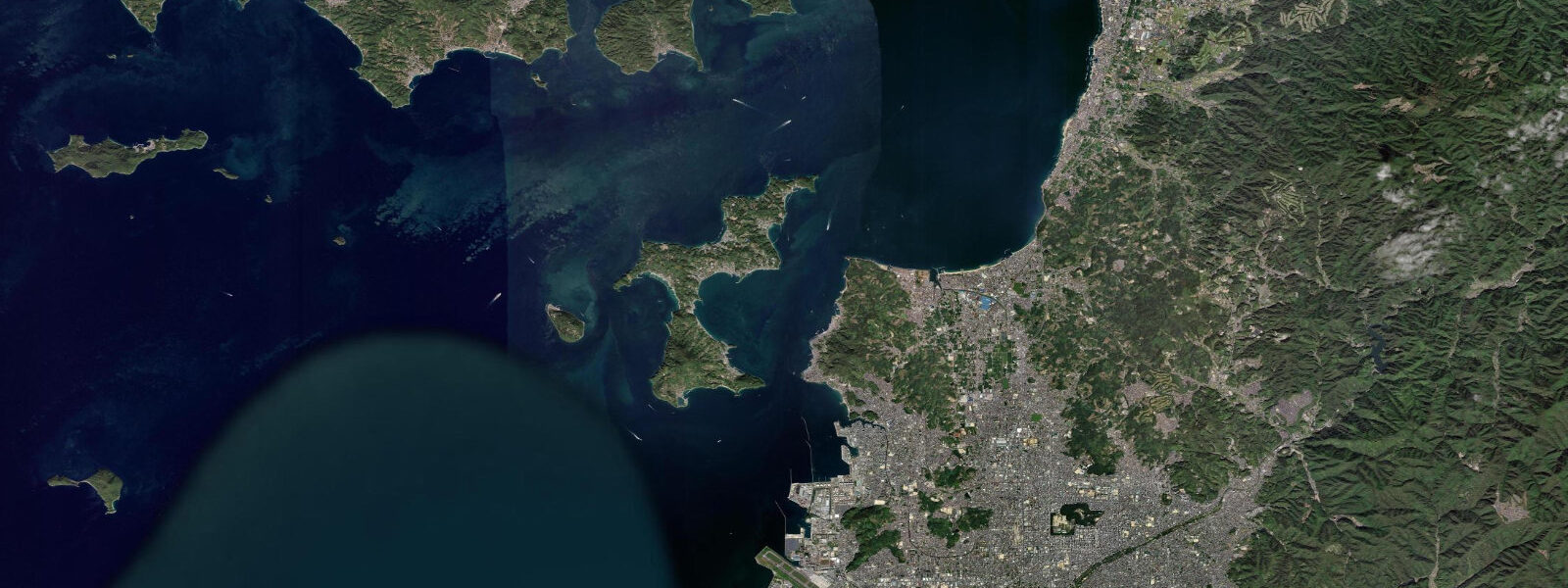
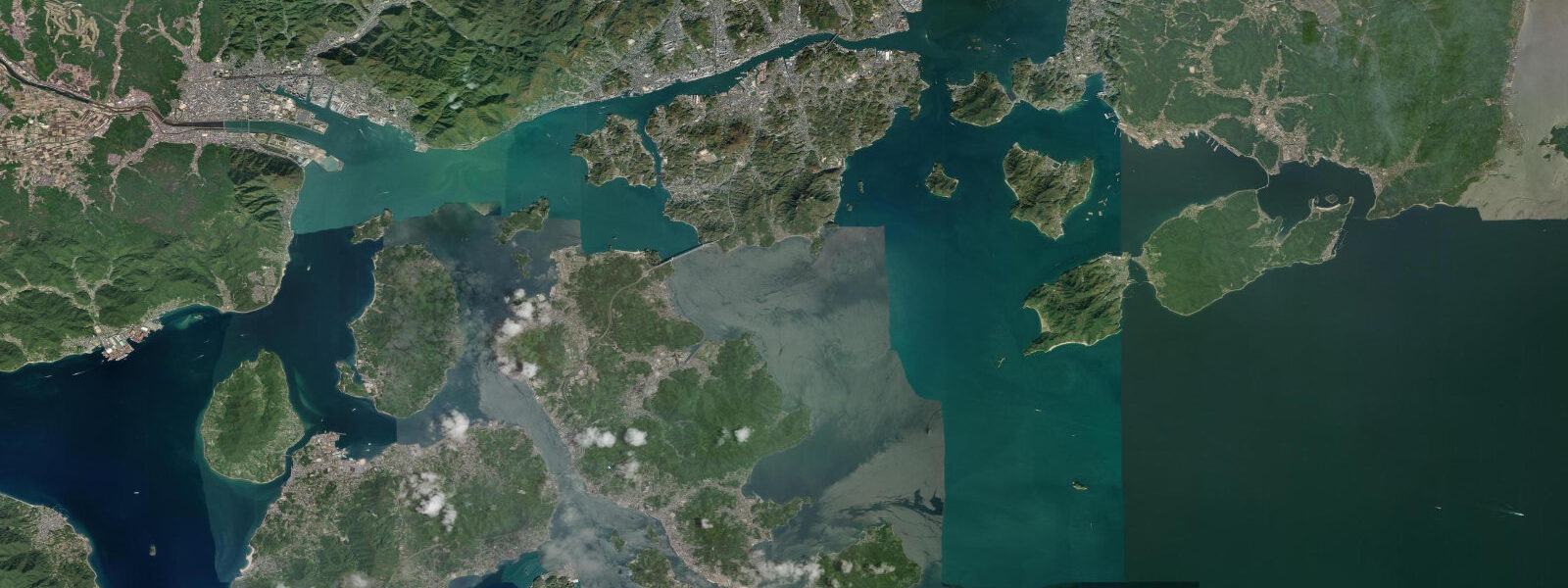
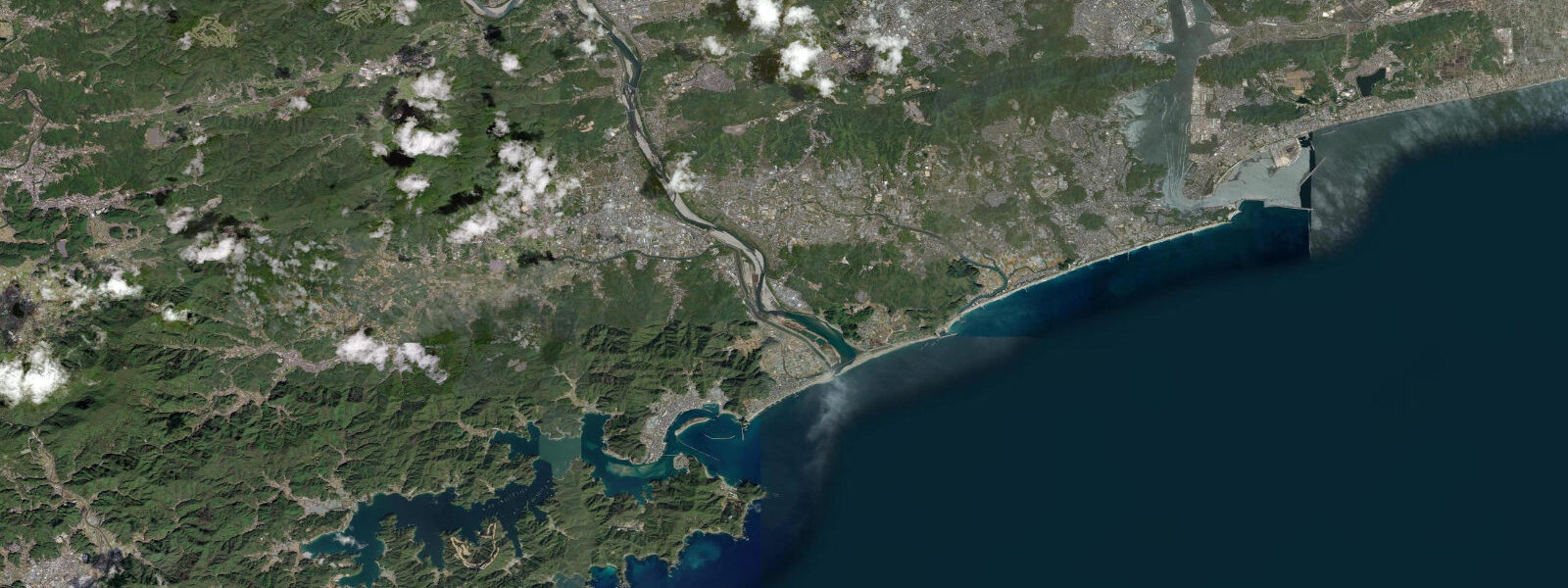
The three closest curated TideTurtle locations to Hiroshima, measured by great-circle distance.
Today's solunar windows
Solunar tradition: major periods are the ≈3h windows around moon transit and opposition; minor are ≈2h around moonrise and moonset. Pair with the local tide stage and wind for the best read.
Cycle dates near Hiroshima
Last spring tide on Fri 31 Jul (range 2.5m). Next neap on Thu 06 Aug.
Spring tides cluster around new and full moons (biggest swings). Neap tides land on quarter moons (smallest swings). See the spring tide and neap tide glossary entries for the why.
About tides at Hiroshima
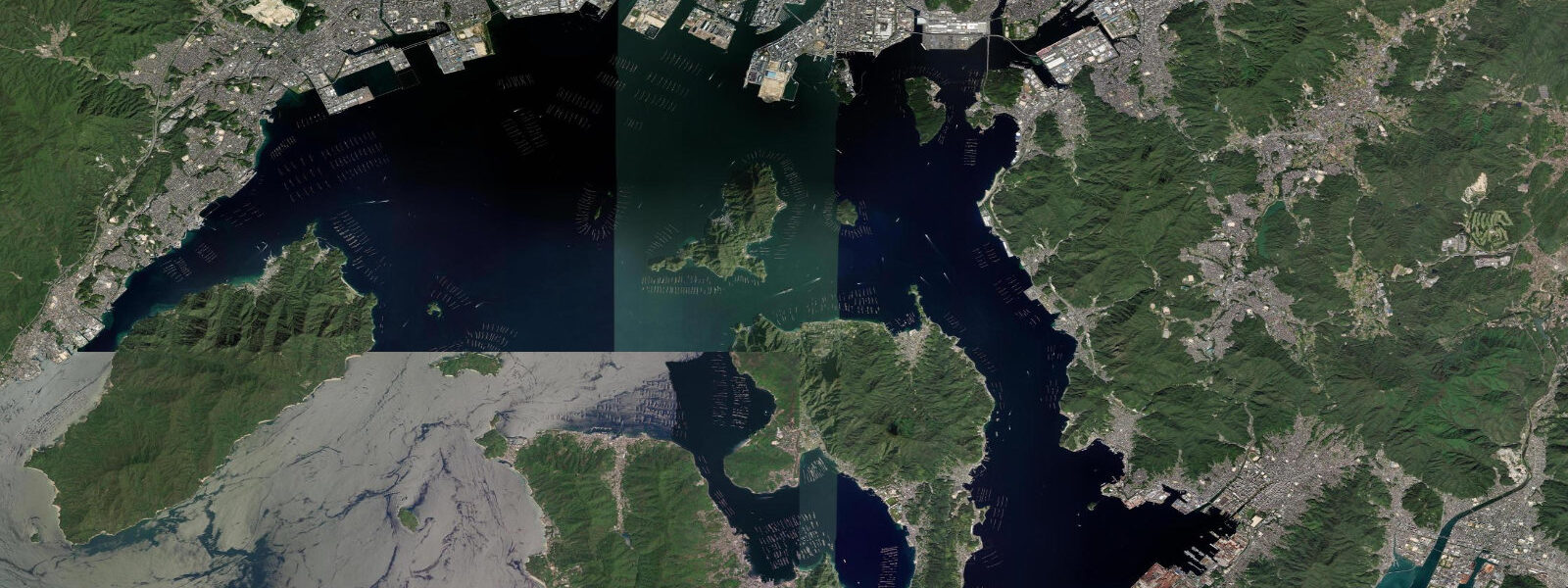
A short guide to the coastline at Hiroshima — geography, sea state, and what the tide is actually doing under your feet.
Hiroshima lies at the head of Hiroshima Bay on the northern coast of the Seto Inland Sea, where the Ota River delta fans out across a flat coastal plain and a scatter of small islands extends south toward Miyajima and the broader sea beyond. The Seto Inland Sea — Setonaikai — is one of the world's most geographically complex tidal environments: a 450 km enclosed sea connecting to the Pacific through the Kii and Naruto Channels in the east and through the Kanmon Strait near Kitakyushu in the west, with more than 3,000 islands creating a labyrinth of channels, shallows, and constrictions. The tidal character it produces is semidiurnal — two roughly equal highs and two roughly equal lows per day — with a mean range in Hiroshima Bay of approximately 1.5 to 2.0 m.
That range, combined with the gently-shelving seabed of the inner bay and the many island-enclosed tidal flats, means the sea-level change is visible in a way it is not on microtidal coasts. And nowhere in the Seto Inland Sea is the tide's visual consequence more famous than at Miyajima Island, 20 km southwest of Hiroshima city by ferry.
Miyajima — officially Itsukushima — holds the Itsukushima Shrine, a Shinto complex built over the water that has been a sacred site since the sixth century and a UNESCO World Heritage Site since 1996. The shrine's defining feature is the O-torii, a 16-metre vermilion gate of two great pillars joined by a curved crossbeam, standing in the tidal flat approximately 200 m offshore from the shrine's waterfront walkways. At high tide, water surrounds the gate's base and rises to obscure the lowest structural members: the gate appears to float on the sea surface, the reflection shimmering across calm water. It is one of the most reproduced images in Japan, appearing on postcards, currency, and travel photography across a century of documentation.
At low tide, the tidal flat is exposed for 200 to 300 m in front of the gate. The sandy and gravelly bottom, lightly colonised by shore-crabs and small wading birds at the margins, allows visitors to walk out from the shoreline and stand directly at the gate's base, touching the barnacled lower pillars, looking up at the crossbeam 16 m overhead. These are two fundamentally different experiences of the same structure, separated by roughly six hours of tidal cycle. The gate appears to float at high water; it stands on exposed ground at low. The tide makes a landmark change character completely twice each day.
Local photography guides consistently recommend arrival two hours before high tide to capture the gate with water around it but still at an angle that catches the crossbeam reflection clearly; at the precise high water, if conditions are calm, the reflection is at its fullest. Two hours after low water, the flat is walkable but not yet fully dried, giving firm sand for a close approach. The tidal height predictions on this page — model-derived from Open-Meteo Marine, typically within plus or minus 45 minutes on timing and 0.2 to 0.3 m on height — are sufficient for planning the visit to within a reasonable window. For the exact minutes of high and low at Miyajima specifically, the Japan Meteorological Agency publishes harmonic predictions for Miyajima station directly.
Beyond Miyajima, the Hiroshima waterfront and the Seto Inland Sea ferry network define this coast's practical character. Ferries from Hiroshima's Ujina port serve Matsuyama on Shikoku, the Etajima island, and the island cluster around Osaki Kamijima. Fishing vessels work the tidal channels between islands for sea bream (tai), which is culturally associated with the Seto Inland Sea to the point of being the region's defining seafood. The tidal currents around the island narrows concentrate bream and smaller reef species; sea anglers on the overnight charter boats time their jigging to the tide change windows.
Kayaking in Hiroshima Bay and among the inner Seto islands is a growing activity. The island-hopping routes between Hiroshima, Etajima, and the Kure coast to the southeast are covered by paddlers on calm-season trips. The 1.5 to 2.0 m range creates tidal streams through the narrower island passages that require planning: the Nomi Strait between Etajima and the Kure shore runs at 2 to 3 knots on spring ebbs. Experienced paddlers transit narrows at slack water; beginners stay in the sheltered coves and avoid the main channel passages on spring tides.
The Japan Coast Guard and Japan Meteorological Agency maintain the authoritative Hiroshima and Miyajima tide records. Predictions on this page come from Open-Meteo Marine gridded ocean modelling — sufficient for activity planning, not a replacement for official data in navigational or safety-critical decisions.
Tide questions about Hiroshima
Quick answers to the most common questions about tide times, range, and water access at Hiroshima.
When can I walk to the Miyajima torii gate at low tide?
The tidal flat in front of the Itsukushima Shrine O-torii gate is accessible on foot for roughly two to three hours centred on low tide, when the water recedes 200 to 300 m from the shoreline and exposes firm sand and gravel around the gate's base. The low-tide window for walking out begins when the water level drops below roughly 0.3 m above chart datum and closes again as the flood returns. The tide at Miyajima follows Hiroshima Bay's semidiurnal cycle with mean range of approximately 1.5 to 2.0 m. Check the tide table for the day — two low tides occur each day, and both are walkable if the height is low enough. The Japan Meteorological Agency publishes harmonic predictions specifically for Miyajima station.
When does the Miyajima torii gate appear to float?
The gate appears to float during the two to three hours centred on high tide, when water surrounds the base of both pillars and the sea surface rises close to the lower structural members. At full high water on spring tides, the water depth at the gate base is roughly 1 to 1.5 m, enough to obscure the barnacled lower section and create a clean floating-gate reflection if the bay is calm. The image is best in early morning or late afternoon light, and best on a calm day when the bay surface holds the reflection. Photography guides recommend arriving about 90 minutes before predicted high to catch the gate with water around it and a low sun angle for the reflection.
What is the tidal range in Hiroshima Bay?
Mean astronomical range in Hiroshima Bay runs approximately 1.5 to 2.0 m, classed as mesotidal. The tide is semidiurnal — two roughly equal highs and two roughly equal lows per day — driven by the Seto Inland Sea's enclosed-basin tidal dynamics. Spring tides around new and full moons push toward the upper end; neap tides two weeks later produce a noticeably smaller swing. This range is enough to visibly transform the Miyajima tidal flat twice daily, and is sufficient to drive meaningful tidal currents through the island channels of the inner sea.
Is it safe to kayak around the Seto Inland Sea islands near Hiroshima?
Island-hopping kayak routes between Hiroshima, Etajima, and the Kure coast are a legitimate and growing activity. The main safety consideration is tidal current through the island narrows — the Nomi Strait and similar constrictions run at 2 to 3 knots on spring tides and are best transited at or near slack water, which occurs roughly 1 to 2 hours after the predicted high or low at Hiroshima. Beginners should stay in sheltered coves and avoid the main channel crossings on spring tides. Ferry traffic in the Hiroshima ferry lanes and the Kure naval base approaches requires awareness; the Inland Sea shipping lanes carry large commercial vessels. The calm-season window is April through October.
Where do these tide predictions come from?
Open-Meteo Marine, a free gridded global ocean model. Accuracy is typically within plus or minus 45 minutes on timing and 0.2 to 0.3 m on height — model-derived, not a local gauge. For Miyajima-specific timing, this margin means the predicted high or low could be up to 45 minutes earlier or later than the actual event. For casual trip planning, this is usually fine. For precision photography timing at the O-torii gate or for navigating Seto Inland Sea channels, use the Japan Meteorological Agency's published harmonic predictions for Hiroshima and Miyajima stations directly.
8-day tide table — Hiroshima
Heights relative to MSL. Predictions: Open-Meteo Marine (MeteoFrance SMOC, 0.08° grid) — heights relative to MSL (not chart datum / LAT). Model-derived.
| Day | Type | Time | Height |
|---|---|---|---|
| Fri 31 Jul | High | 09:58 | 1.1m |
| Low | 16:05 | -0.9m | |
| High | 22:52 | 1.7m | |
| Sat 01 Aug | Low | 04:55 | -0.3m |
| High | 10:39 | 1.2m | |
| Low | 16:40 | -0.8m | |
| High | 23:18 | 1.6m | |
| Sun 02 Aug | Low | 05:24 | -0.4m |
| High | 11:14 | 1.2m | |
| Low | 17:10 | -0.7m | |
| High | 23:44 | 1.6m | |
| Mon 03 Aug | Low | 05:55 | -0.5m |
| High | 11:56 | 1.2m | |
| Low | 17:45 | -0.5m | |
| Tue 04 Aug | High | 00:10 | 1.5m |
| Low | 06:27 | -0.5m | |
| High | 12:38 | 1.2m | |
| Low | 18:22 | -0.3m | |
| Wed 05 Aug | High | 00:35 | 1.4m |
| Low | 07:00 | -0.5m | |
| High | 13:26 | 1.2m | |
| Low | 19:02 | 0.1m | |
| Thu 06 Aug | High | 00:56 | 1.3m |
| Low | 07:47 | -0.4m | |
| High | 14:34 | 1.2m | |
| Low | 20:10 | 0.4m | |
| Fri 07 Aug | High | 01:21 | 1.2m |
| Low | 08:00 | -0.3m |