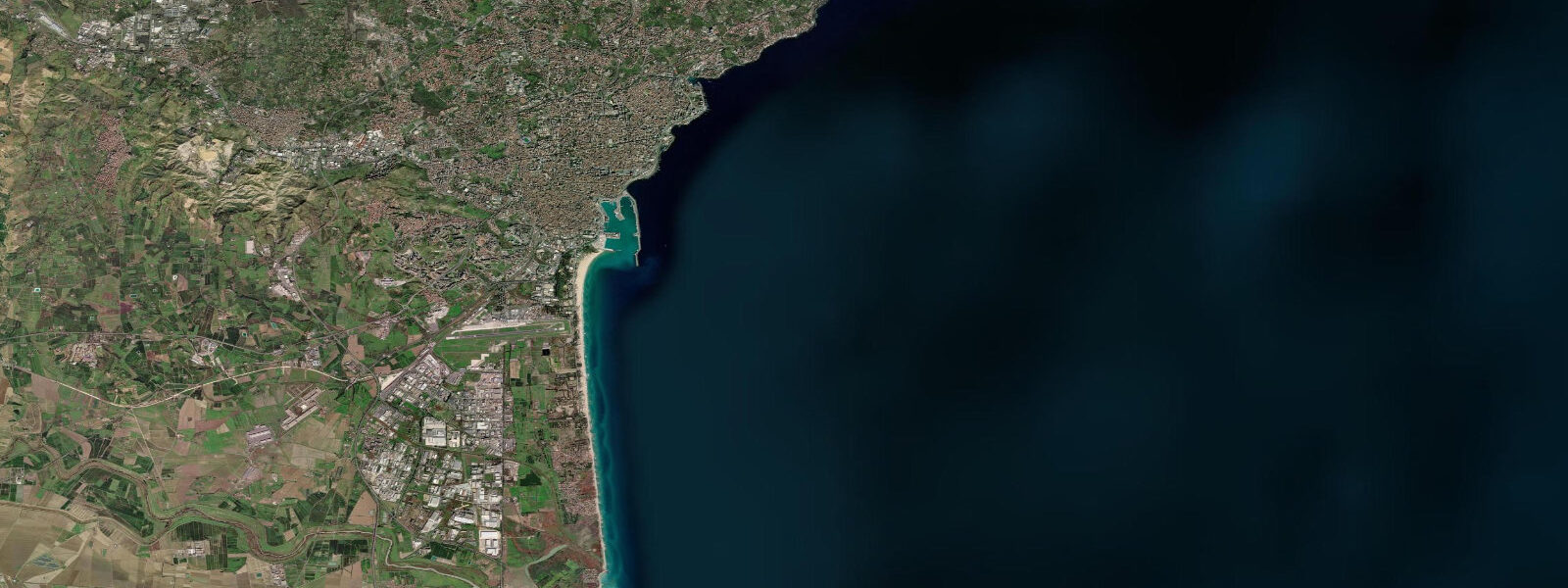
Catania, Sicily tide times
Catania, Sicily tide forecast — heights relative to MSL.
Today's tide times for Catania, Sicily
Tide times at Catania, Sicily on Monday, 3 August 2026: first low tide at 02:00, first high tide at 18:00. Sunrise 06:04, sunset 20:06.
Tide chart for Catania, Sicily
24-hour cosine-interpolated curve around the present moment. Heights relative to MSL. Predictions: Predictions: Open-Meteo Marine (MeteoFrance SMOC, 0.08° grid).
Sun, moon and conditions on Mon 03 Aug
Snapshot at build time — refreshes daily. Sea state from Open-Meteo Marine.
Highs and lows next 7 days
Every predicted high and low for the next week, with the daily tidal coefficient (0–120; higher = bigger swing, > 95 means stronger currents).
Other spots nearby
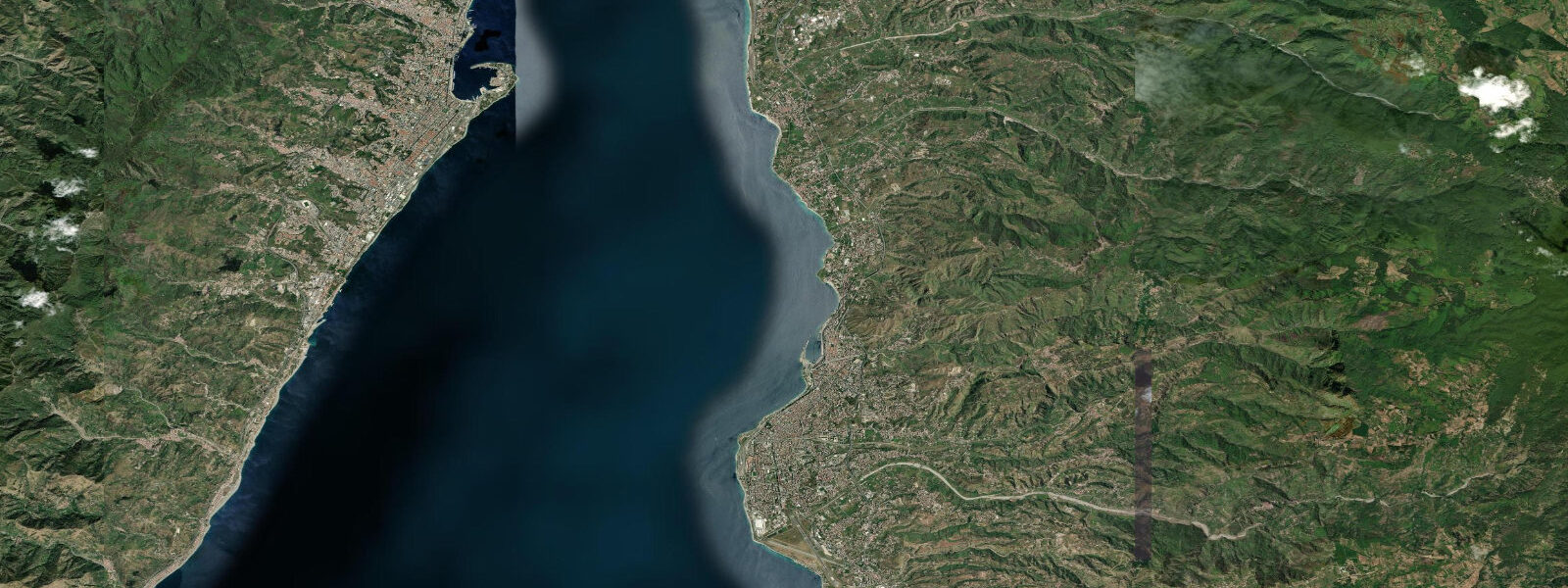
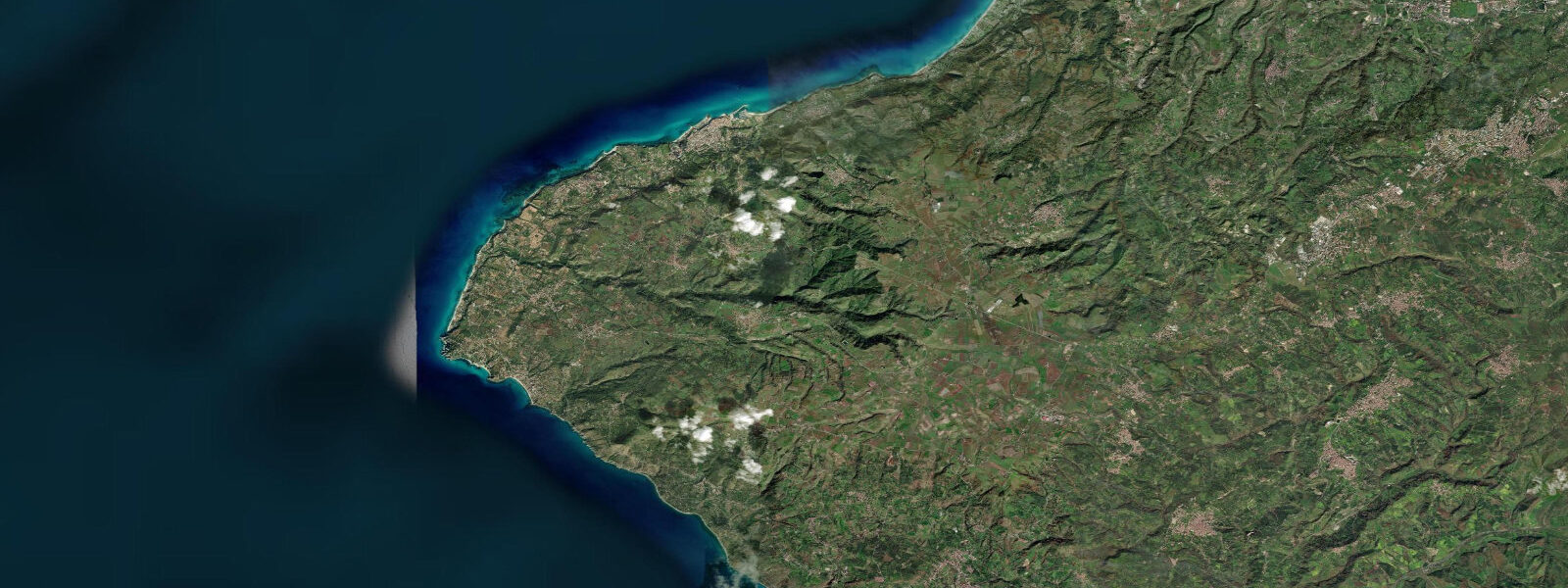
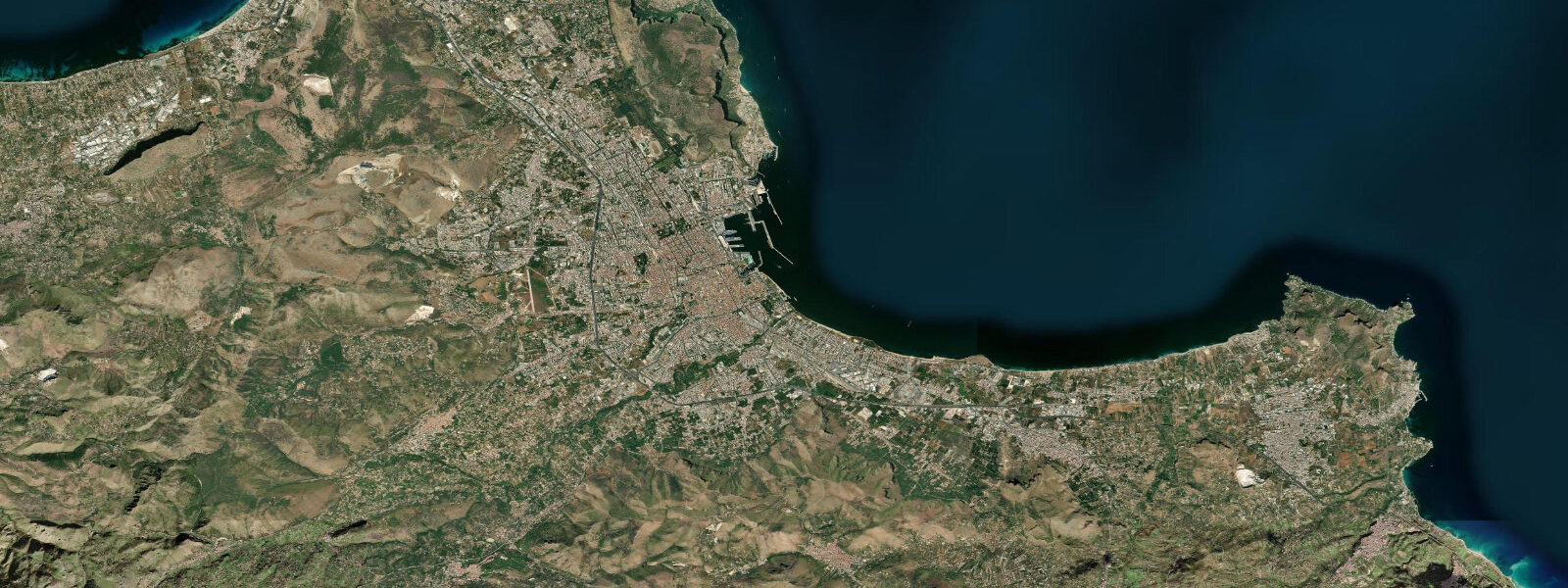
The three closest curated TideTurtle locations to Catania, Sicily, measured by great-circle distance.
Today's solunar windows
Solunar tradition: major periods are the ≈3h windows around moon transit and opposition; minor are ≈2h around moonrise and moonset. Pair with the local tide stage and wind for the best read.
About tides at Catania, Sicily
A short guide to the coastline at Catania, Sicily — geography, sea state, and what the tide is actually doing under your feet.
Catania sits at the base of Mount Etna on Sicily's east coast, and the sea here carries the fingerprints of the volcano. The Porto di Catania is built partly on lava that reached the water in 1669, one of Etna's most destructive eruptions. The harbour mole and the old city walls are constructed from or over solidified basalt flows — black stone, sea-polished at the waterline, that gives the shoreline a hardness you don't find on sandy coasts. Standing at the harbour entrance and looking north, Etna fills the skyline, snowcapped in winter, exhaling a pale steam plume the rest of the year. The relationship between the mountain and the sea defines everything here, including the fishing.
The Mediterranean tidal regime along the east coast of Sicily is microtidal. Mean range at Catania runs 0.15–0.25 m — roughly the width of a hand. Tides are mixed semidiurnal, with two unequal high waters and two unequal low waters per day. The practical effect is that the water level moves in short, quiet increments rather than the broad sweeps you'd see on an Atlantic coast. For anyone planning access to the foreshore, the governing factor isn't tide height but weather: easterly swells and sirocco winds push the sea against the lava reefs far more dramatically than the tidal cycle does.
La Pescheria, the fish market, opens at 07:00 in the courtyard beneath the Palazzo dei Chierici. The fish sold there come in overnight — swordfish, sea bream, red mullet, tuna, sea urchins from the lava reefs — and the best of the catch is gone by 09:00. If you're timing a morning around the market, arriving at 07:15 is more useful than knowing the exact tide height, but understanding that local boats work the pre-dawn hours at low water, when fish holding along the reef edges are easier to approach, helps explain what's on the slab. The swordfish season runs May through September; the boats target the Strait of Messina, 80 km north, where Etna's ash-fed currents create a productive feeding lane.
The Scogliera di Aci Castello lies immediately north of Catania's main harbour, a continuous lava reef platform extending from the shoreline. At the lower tides — which in the Mediterranean means perhaps 0.1–0.15 m below mean sea level rather than the dramatic reef exposures of tidal coasts — the flat sections of the reef are accessible on foot. Shore fishing from the lava platform for sea bass, dentex, and painted comber is productive in the early morning and evening. The footing is uneven; reef rock here has the rough, vesicular texture of cooled basalt, which grips well when dry and poorly when wet. Wading shoes with a rigid sole are more practical than bare feet.
Kayakers use the Porto di Catania as a launch point for exploring the lava coast north toward Aci Trezza, where the Faraglioni — a cluster of sea stacks made of ancient volcanic rock — rise 30 m from the water. At low water, small arches and sea caves along the base of the stacks are accessible by paddle. The crossing from the harbour to the Faraglioni is approximately 5 km; the route is exposed to south and southeast winds, so morning departures before the sea breeze builds are the standard approach.
The Fiumefreddo nature reserve, 25 km north of Catania on the coastal plain below Etna, is one of Sicily's few permanent rivers — fed by Etna's snowmelt and underground springs rather than seasonal rainfall. The estuary at Fiumefreddo is a small tidal wetland where the freshwater river meets the sea in a brackish transition zone. Reed beds, grey mullet, and wading birds concentrate here, particularly in the winter months. Access is on foot from the SS114 highway; the reserve is small and the tidal influence is subtle — a rise of 0.1 m is enough to shift the reed margin.
For beach families, the lava coast north of Catania has a specific character: black basalt platforms alternating with small, dark-sand coves. The beaches at San Giovanni Li Cuti, within walking distance of the city centre, are sheltered from the north and face directly east. The morning sun is on the water by 07:30 in summer; the easterly orientation means the afternoon shadow from the city arrives early. The water is clear — the basalt bottom scatters less sediment than sand — and the visibility improves further at low water when wave action over the reef is minimal.
Tide data for Catania, Sicily comes from the Open-Meteo Marine API, a gridded model product. Timing accuracy is ±45 minutes, height accuracy ±0.3 m — usable for trip planning, not for navigation.
Tide questions about Catania, Sicily
Quick answers to the most common questions about tide times, range, and water access at Catania, Sicily.
What is the tidal range at Catania, and does it affect harbour access?
Catania has a microtidal range of 0.15–0.25 m — among the smallest in the Mediterranean. This means the water level changes by less than 25 cm between high and low water. For the Porto di Catania, this has almost no effect on harbour access; boats enter and leave at any state of tide. The more significant factor for small boat operators and kayakers is sea state driven by wind and swell, particularly from the southeast. The tidal signal at Catania is mixed semidiurnal, with two cycles per day of unequal height, but in practical terms, weather governs the foreshore far more than tides do.
Can I walk on the lava reefs north of Catania harbour at low water?
Yes, but with caveats. The Scogliera di Aci Castello extends as a platform reef accessible from the shore; at the lower end of the tidal cycle (roughly 0.1–0.15 m below mean sea level) sections of the flat reef emerge or become shallow enough to wade. The basalt surface is vesicular and provides grip when dry, but is slippery when wet or covered with algae, particularly in the warmer months when biofilm growth is heavy. Rigid-sole wading shoes are essential. Check the tide prediction for the day and aim to arrive within an hour of predicted low water. The reef drains quickly given the small tidal range, so the window is short but reliable.
What time does La Pescheria fish market open, and when should I arrive?
La Pescheria opens at 07:00 and operates in the courtyard beneath the Palazzo dei Chierici in Catania's historic centre. Fishing boats land overnight, and the prime catch — swordfish, large sea bream, red mullet, fresh sea urchins — is typically sold within the first 90 minutes. Arriving at 07:15 gives you the full spread; arriving at 09:00 means you're buying what the early buyers passed on. The market runs six days a week, closed Sundays. Swordfish appear from May onward when the boats head north to work the Strait of Messina feeding grounds. The market is best reached on foot from the city centre; parking nearby is difficult in the morning.
Is kayaking from Catania to the Aci Trezza sea stacks practical?
Yes, it's a manageable day paddle for experienced coastal kayakers. The one-way distance from Porto di Catania to the Faraglioni di Aci Trezza is approximately 5 km, following the lava coastline north. The route is exposed to south and southeast winds and to fetch from the open Ionian Sea — morning departures before 09:00 are the standard approach, before the sea breeze builds and before afternoon southerly swells arrive on exposed sections. At low water the sea caves and arches at the base of the stacks are accessible. There is no formal launch ramp; kayaks enter from the harbour beach or from the lava platforms depending on sea state.
What shore fishing species can I target from the Catania lava coast?
The lava reef platform north of the harbour supports sea bass (spigola), dentex (dentice), painted comber (perchia), and various wrasse species. Red mullet are taken on sandy patches between reef sections. Sea urchin harvesting from the shallow reef is traditional and still practised by local fishers, though quotas apply. The most productive sessions are at dawn and dusk, when fish move off the reef into the transition zone between rock and open water. Early morning low water in summer aligns with feeding activity and exposes more of the reef flat. A 4–6 m rod with light terminal tackle is typical for the lava platform; the bottom is irregular and snagging is common on heavier rigs.
8-day tide table — Catania, Sicily
Heights relative to MSL. Predictions: Open-Meteo Marine (MeteoFrance SMOC, 0.08° grid) — heights relative to MSL (not chart datum / LAT). Model-derived.
| Day | Type | Time | Height |
|---|---|---|---|
| Mon 03 Aug | Low | 02:00 | -0.5m |
| High | 18:00 | -0.3m | |
| Tue 04 Aug | — | ||
| Wed 05 Aug | Low | 01:00 | -0.5m |
| Thu 06 Aug | — | ||
| Fri 07 Aug | High | 11:00 | -0.3m |
| Sat 08 Aug | — | ||
| Sun 09 Aug | Low | 07:00 | -0.5m |
| Mon 10 Aug | High | 01:00 | -0.4m |