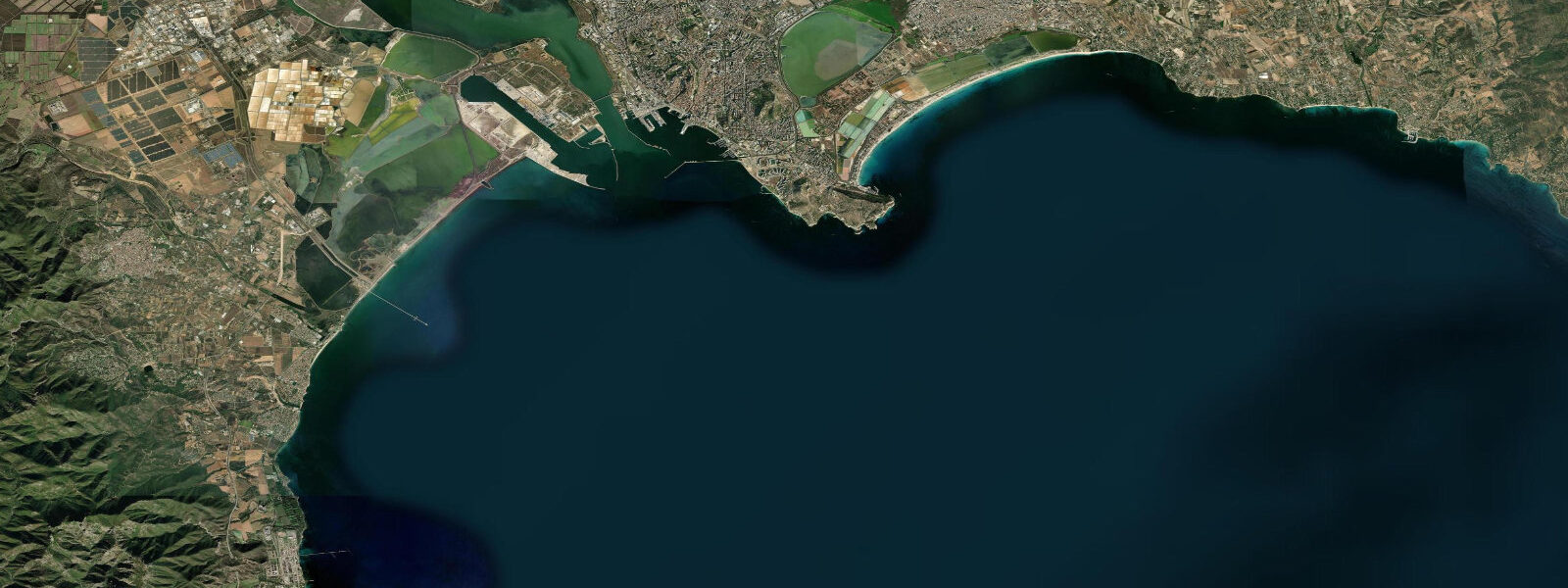
Cagliari tide times
Cagliari tide forecast — heights relative to MSL.
Today's tide times for Cagliari
Tide times at Cagliari on Monday, 3 August 2026: first high tide at 02:00, first low tide at 06:50. Sunrise 06:24, sunset 20:34.
Tide chart for Cagliari
24-hour cosine-interpolated curve around the present moment. Heights relative to MSL. Predictions: Predictions: Open-Meteo Marine (MeteoFrance SMOC, 0.08° grid).
Sun, moon and conditions on Mon 03 Aug
Snapshot at build time — refreshes daily. Sea state from Open-Meteo Marine.
Highs and lows next 7 days
Every predicted high and low for the next week, with the daily tidal coefficient (0–120; higher = bigger swing, > 95 means stronger currents).
Other spots nearby
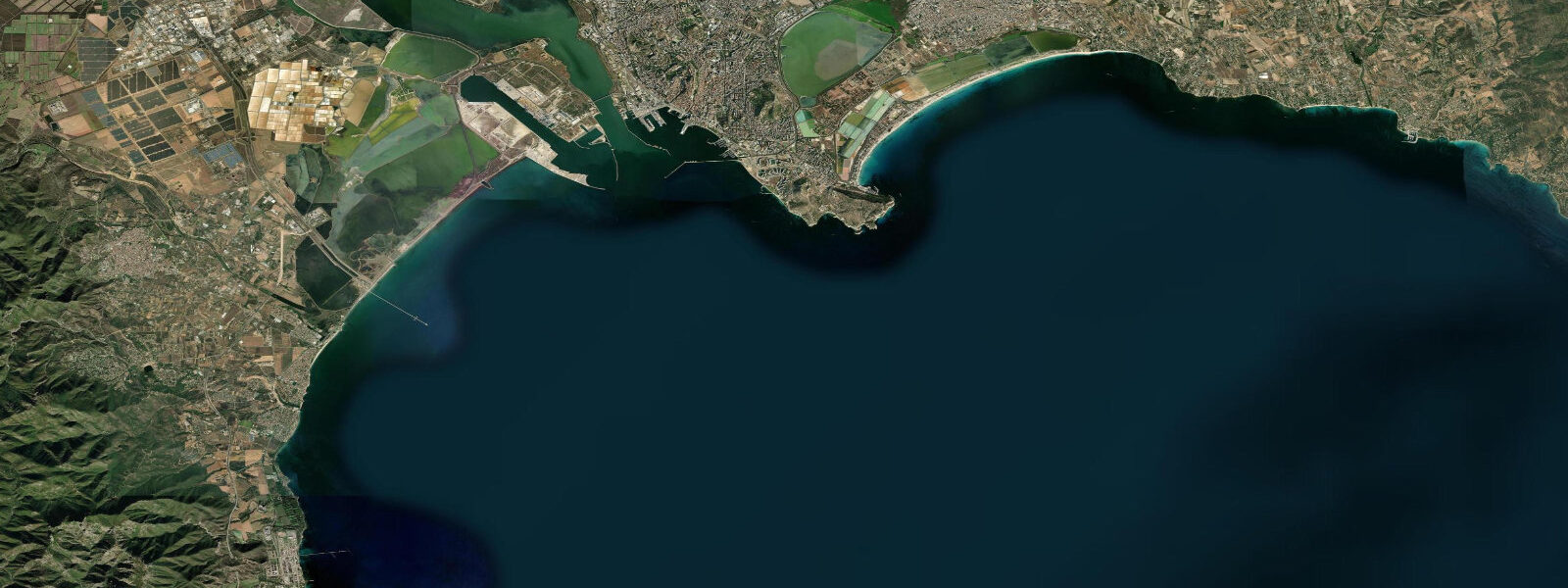
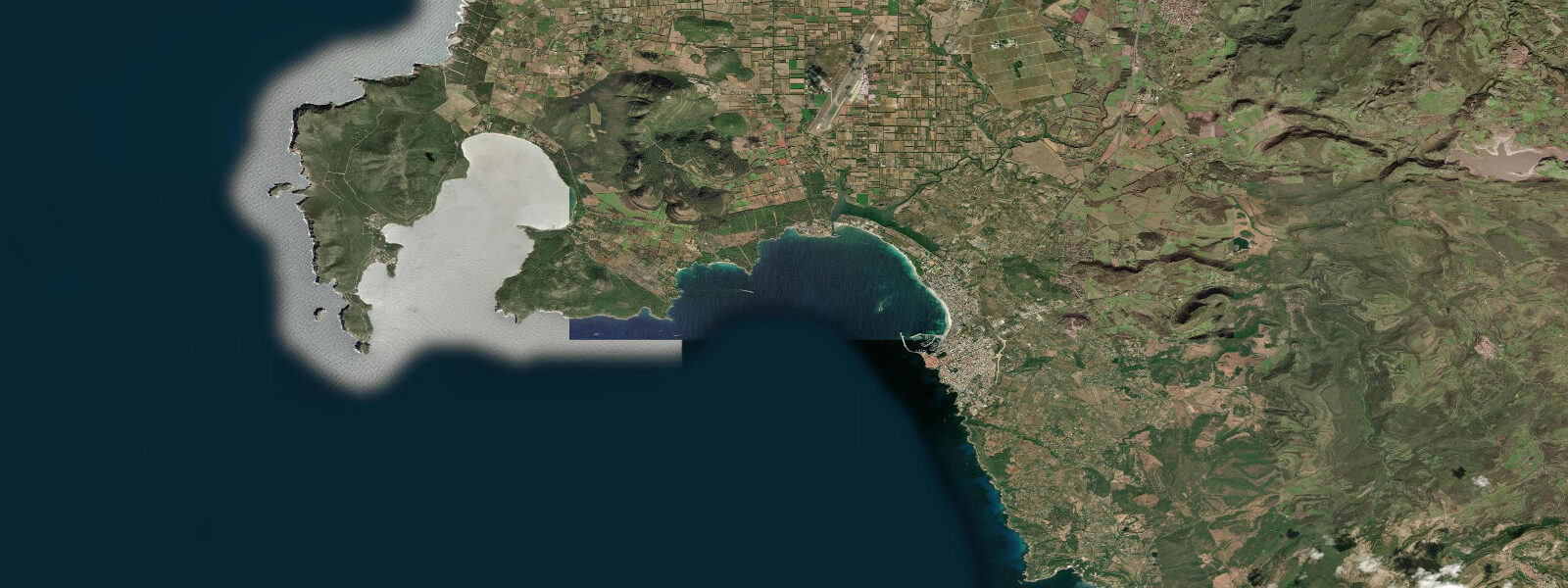
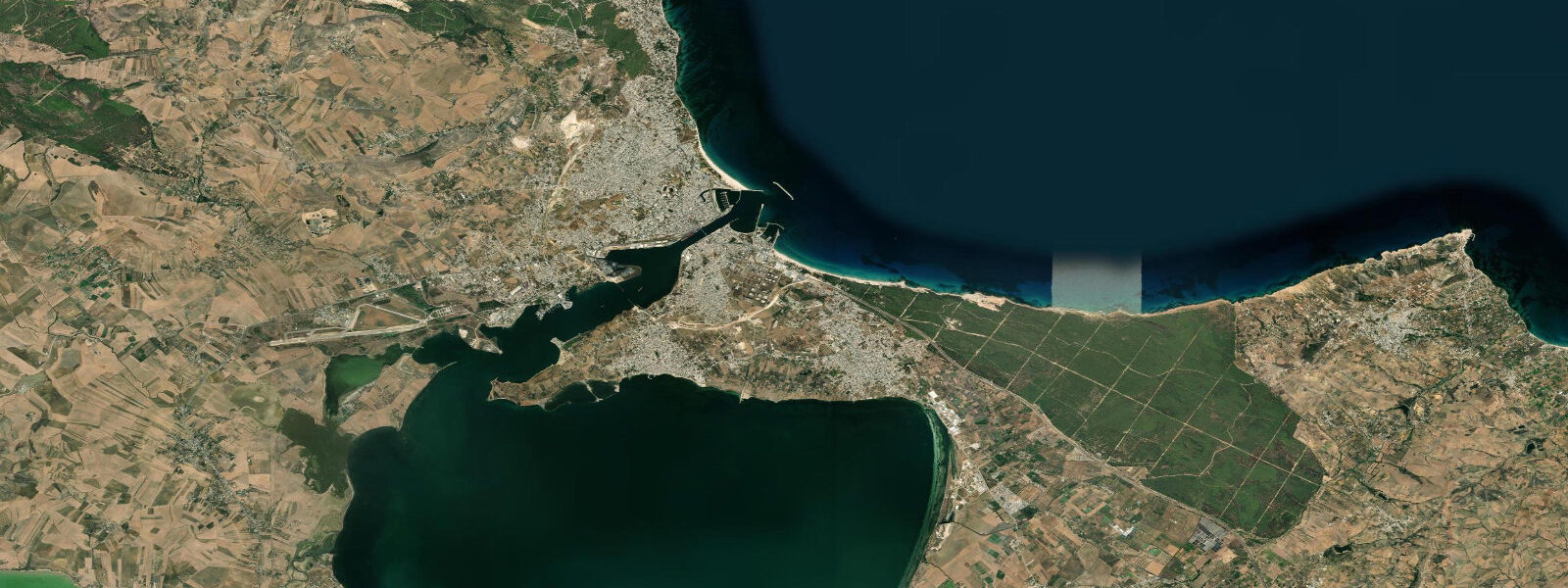
The three closest curated TideTurtle locations to Cagliari, measured by great-circle distance.
Today's solunar windows
Solunar tradition: major periods are the ≈3h windows around moon transit and opposition; minor are ≈2h around moonrise and moonset. Pair with the local tide stage and wind for the best read.
About tides at Cagliari
A short guide to the coastline at Cagliari — geography, sea state, and what the tide is actually doing under your feet.
Cagliari sits at the southern tip of Sardinia, cradled by the Gulf of Angels and backed by the pink-tinged flamingo lagoons of the Molentargius wetland. The city is old — Roman, Phoenician, Pisan, Spanish layers compressed into the Castello district that rises above the waterfront like a stone crown. The sea below is immediate and practical: the Porto Canale handles bulk cargo while the Poetto beach, seven kilometres of dark-sand shoreline, is where the city actually lives in summer.
Tidal range here is modest — the western Mediterranean runs micro-tidal, with springs rarely exceeding 0.3 metres. That means the sea level you see in the morning is roughly what you get in the afternoon. The action is wind-driven. Maestrale, the northwest wind, can stack water against the eastern shore and produce short, steep chop on Gulf of Angels crossing days. Scirocco from the south brings warm air, suspended dust, and a particular flat-sea quality that made this harbour strategically valuable for two thousand years.
For swimmers and paddlers, the Poetto works best on flat-maestrale mornings before the thermal breeze kicks in around noon. The southern end near the Sella del Diavolo headland has rocky outcrops with clear water; the northern stretch is shallower, better for children and entry-level SUP. The Stagno di Cagliari lagoon, visible from the Poetto promenade, hosts Europe's largest breeding colony of greater flamingos — up to 10,000 birds — which puts Cagliari in a unique bracket of cities where you can watch pelagic birdlife and read tide tables in the same afternoon.
Kitesurf and windsurf conditions concentrate around the Poetto when maestrale tops 20 knots, which happens reliably from April through September. The fetch across the Gulf of Angels is long enough for proper wind-wave development. Cagliari's sailing club runs racing circuits in the harbour approaches, and the Saracinesca passage between the city and the barrier islands offers sheltered water for beginners.
The fish market — Mercato di San Benedetto — gives you the clearest read on what the sea is producing by season: ricci (sea urchins) in winter, spigola (sea bass) in spring, aragoste (rock lobster) from the rocky south coast through summer. The port district of Stampace connects the working waterfront to the city's dense medieval streets, and the evening passeggiata drifts naturally from the marina promenade up through the Castello gates.
Predictions on this page come from Open-Meteo Marine, a gridded global ocean model. Accuracy is typically within plus or minus 45 minutes on timing and 0.2 to 0.3 metres on height — model-derived, not from a local gauge. For authoritative Italian tide data, consult ISPRA (Istituto Superiore per la Protezione e la Ricerca Ambientale).
Tide questions about Cagliari
Quick answers to the most common questions about tide times, range, and water access at Cagliari.
What is the tidal range at Cagliari?
Cagliari is in the western Mediterranean, one of the world's most micro-tidal seas. Spring tidal range is typically 0.2 to 0.35 metres — barely noticeable compared to Atlantic coasts. Water level changes here are driven mainly by atmospheric pressure and wind direction, particularly the maestrale (northwest) and scirocco (south) winds, rather than by gravitational tides.
When is the best time to swim at Poetto beach?
Poetto swims best from late May through September. July and August bring guaranteed warmth (sea temperature 26–28°C) but also peak crowds. June and September offer the same clear water with fewer people. Morning is calmer before the thermal breeze builds; maestrale afternoons bring chop on the northern sections but cleaner water near the Sella del Diavolo headland to the south.
Can I see flamingos from the beach at Cagliari?
Yes. The Stagno di Cagliari and Molentargius lagoons directly behind the Poetto promenade host up to 10,000 greater flamingos year-round, with peak numbers in spring. The birds are visible from the beach road and from the Poetto itself at low tide when they feed close to the lagoon margins. No boat trip required — it is one of the few places in Europe where flamingos and open sea are simultaneously in view.
Is Cagliari good for kitesurfing?
When the maestrale blows, yes. The northwest wind funnels across the Gulf of Angels and produces reliable 20–30 knot sessions on the Poetto from spring through early autumn. The beach has a dedicated kite zone on the eastern section away from swimmers. Scirocco south wind sessions also happen but the water quality drops as dust arrives from North Africa. Local schools cluster at the northern Poetto end.
What is the best month to visit Cagliari for sailing?
April through June and September through October are the sailing sweet spots. Summer brings near-daily maestrale that can be strong for novice crews but excellent for experienced sailors. Spring maestrale is lighter and more variable, and the sea temperature is rising. The Gulf of Angels provides a large, open training ground, and the barrier islands (Isola di San Pietro, Sant'Antioco) offer overnight destinations within a day's sail.
7-day tide table — Cagliari
Heights relative to MSL. Predictions: Open-Meteo Marine (MeteoFrance SMOC, 0.08° grid) — heights relative to MSL (not chart datum / LAT). Model-derived.
| Day | Type | Time | Height |
|---|---|---|---|
| Mon 03 Aug | High | 02:00 | -0.3m |
| Low | 06:50 | -0.5m | |
| Tue 04 Aug | High | 00:50 | -0.3m |
| Low | 19:00 | -0.5m | |
| Wed 05 Aug | High | 01:10 | -0.3m |
| Low | 08:10 | -0.5m | |
| High | 14:10 | -0.4m | |
| Thu 06 Aug | Low | 09:00 | -0.6m |
| Fri 07 Aug | High | 03:00 | -0.4m |
| Sat 08 Aug | Low | 11:00 | -0.6m |
| Sun 09 Aug | High | 06:00 | -0.4m |
| Low | 12:10 | -0.6m |