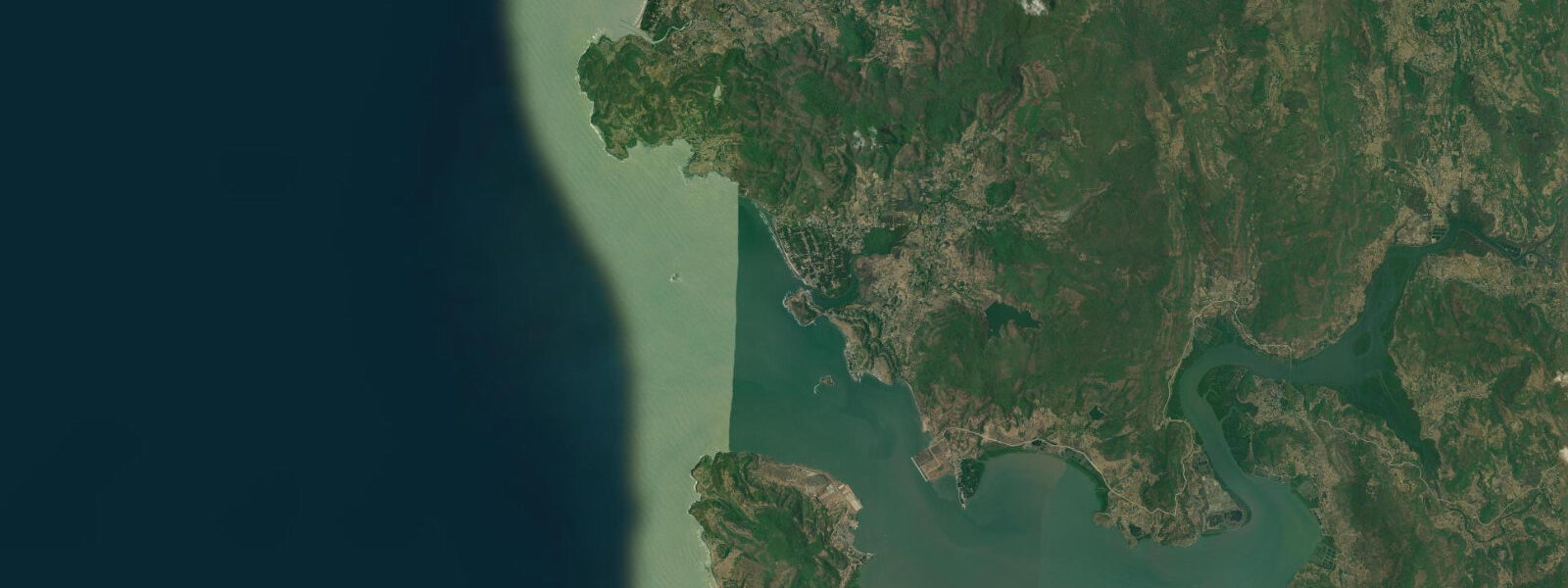
Murud, Maharashtra tide times
Murud, Maharashtra tide forecast — heights relative to MSL.
Today's tide times for Murud, Maharashtra
Tide times at Murud, Maharashtra on Monday, 3 August 2026: first high tide at 05:30, first low tide at 07:08, second high tide at 13:33, second low tide at 19:51. Sunrise 06:16, sunset 19:12.
Tide chart for Murud, Maharashtra
24-hour cosine-interpolated curve around the present moment. Heights relative to MSL. Predictions: Predictions: Open-Meteo Marine (MeteoFrance SMOC, 0.08° grid).
Sun, moon and conditions on Mon 03 Aug
Snapshot at build time — refreshes daily. Sea state from Open-Meteo Marine.
Highs and lows next 7 days
Every predicted high and low for the next week, with the daily tidal coefficient (0–120; higher = bigger swing, > 95 means stronger currents).
Other spots nearby
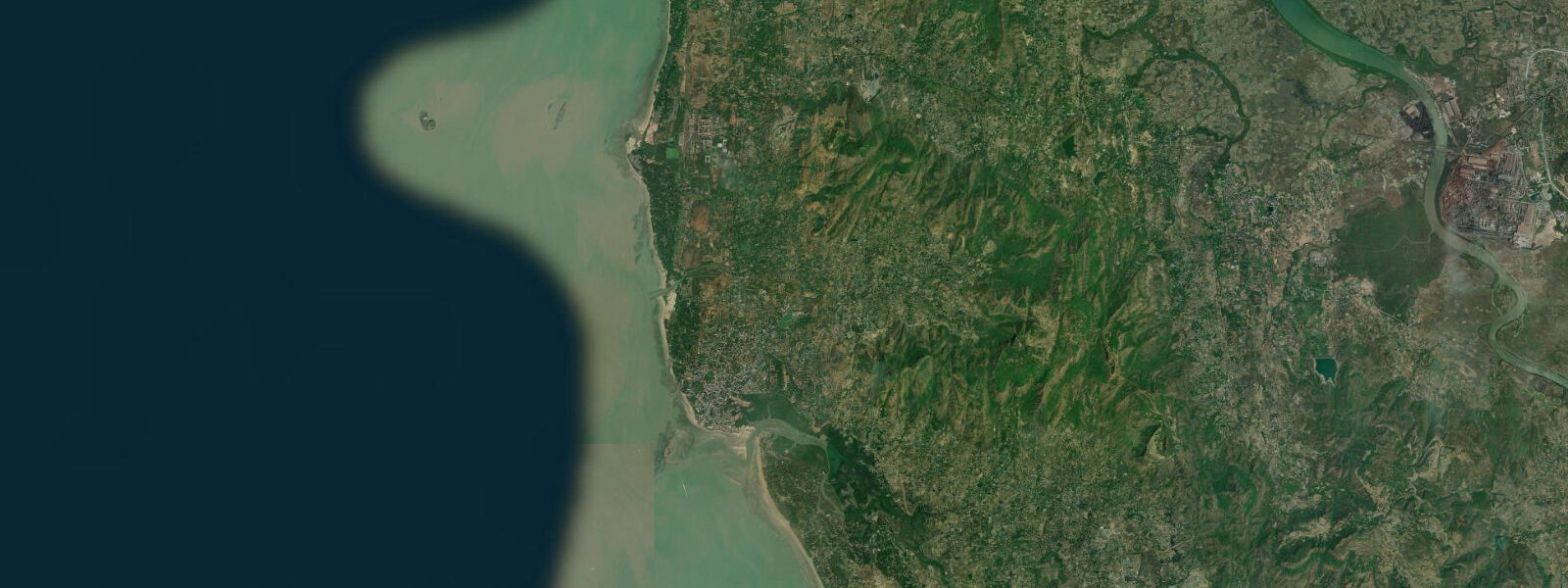
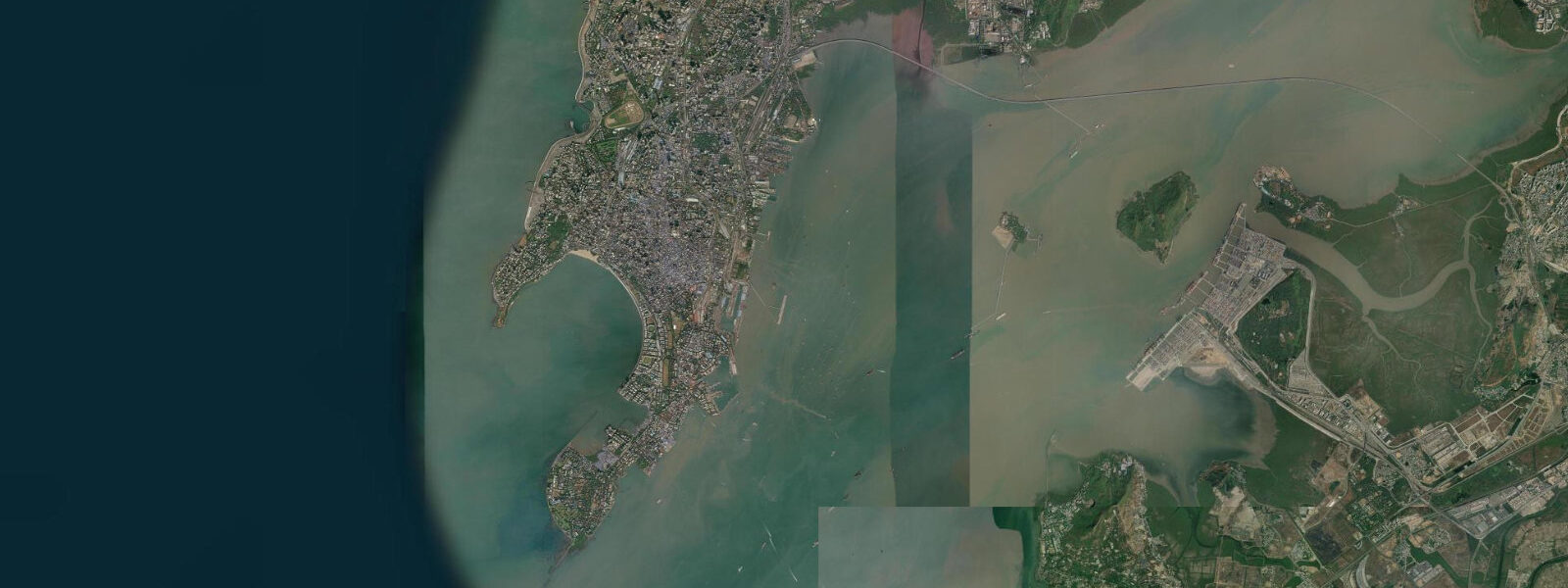
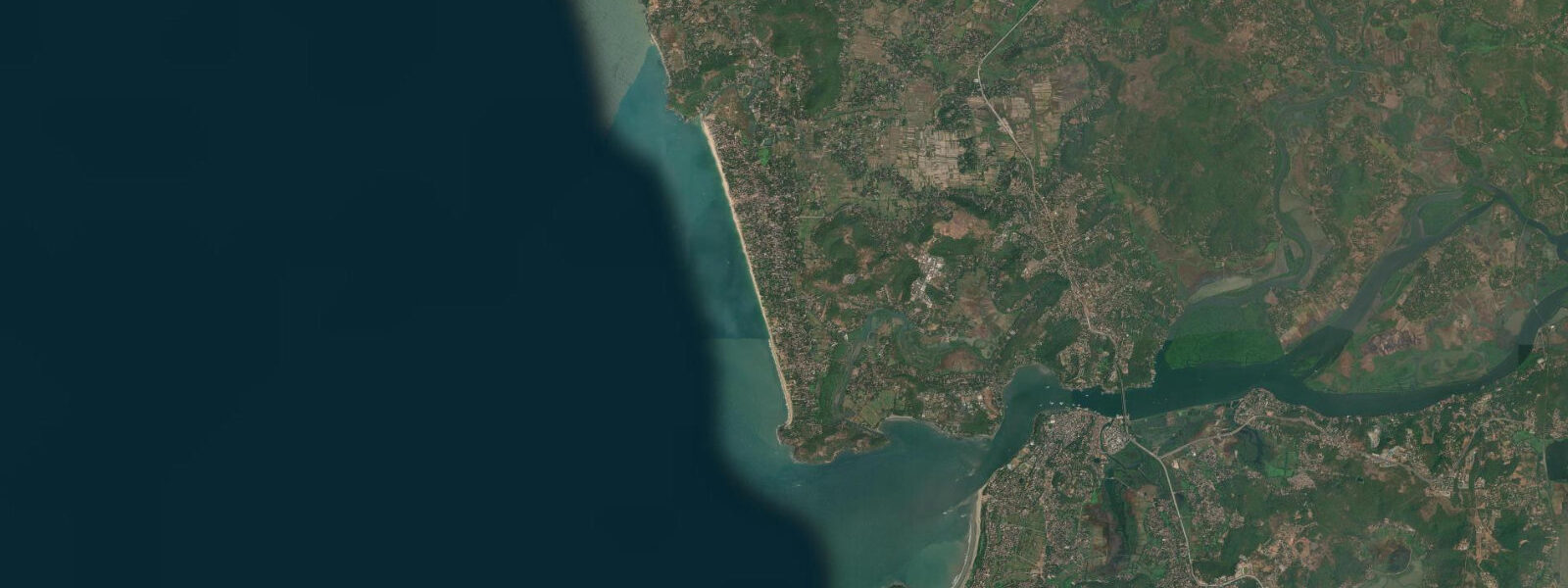
The three closest curated TideTurtle locations to Murud, Maharashtra, measured by great-circle distance.
Today's solunar windows
Solunar tradition: major periods are the ≈3h windows around moon transit and opposition; minor are ≈2h around moonrise and moonset. Pair with the local tide stage and wind for the best read.
Cycle dates near Murud, Maharashtra
Last spring tide on Mon 03 Aug (range 2.5m). Next spring tide on Sun 09 Aug (range 2.6m). Next neap on Fri 07 Aug.
Spring tides cluster around new and full moons (biggest swings). Neap tides land on quarter moons (smallest swings). See the spring tide and neap tide glossary entries for the why.
About tides at Murud, Maharashtra
A short guide to the coastline at Murud, Maharashtra — geography, sea state, and what the tide is actually doing under your feet.
Murud is a small beach town on the Konkan coast, 165 km south of Mumbai, and it occupies a particular position in Indian coastal history. The reason is Janjira Fort — an island sea fort in the estuary mouth that has never been taken by siege, assault, or sustained military campaign. For over 300 years it resisted the Mughals, the Portuguese, the British, and the Marathas under Shivaji and his successors. The fort still stands, essentially intact, on a basalt island roughly 300 m from the Rajapuri jetty on the estuary's eastern bank.
The Arabian Sea tide at Murud is semidiurnal, with a mean spring range of 2.5 m to 3.5 m. That tidal movement drives a notable current through the estuary channel between the Rajapuri jetty and the fort. On spring tides, the channel current reaches 2 to 3 knots — strong enough to affect the local fishing boats and the small wooden passenger vessels that carry visitors to the fort. Boat operators time departures to avoid the strongest phase of the flood or ebb. If you are visiting on a spring tide day, expect some delay or a rougher crossing; the boats handle it, but the journey takes longer against a 3-knot ebb.
The fort walls rise directly from the sea — no beach, no intertidal platform, no landing point except the single protected entrance gate on the western face. At high water, the fort appears to float. At low water, dark basalt reefs emerge around the base of the walls, but there is still no way to walk to the fort dry-shod. Access is always by boat from the Rajapuri jetty, a 10-minute crossing in normal conditions. Boat operators congregate at the jetty from early morning and charge a fixed rate for the return trip.
Inside the fort, the scale is surprising. The walls are 12 m high in places, large enough to contain open ground, ruined residential buildings, a mosque, multiple water cisterns, and — the detail that makes engineers pause — two freshwater lakes. Rainwater was channelled and retained within the fort walls during its construction, providing the garrison with drinking water independent of any outside supply. That supply security was one reason sustained sieges failed: the fort could not be starved of water. Both lakes remain today, the water still sweet despite the saltwater surrounding the island on all sides.
The Janjira Fort was constructed by the Siddis of Janjira — an Abyssinian community who controlled this stretch of the Konkan coast through the 17th and 18th centuries. They repelled a major Maratha attack in 1659 when Shivaji attempted to approach by sea using camouflaged boats; the Siddis saw through the disguise and drove off the fleet. Later Maratha attempts under Shivaji's son Sambhaji and descendants of the Peshwa were similarly unsuccessful. The fort's position in 4–6 m of water at low tide and the strong tidal currents in the approach channel made any surface assault extremely difficult. A partially constructed underwater tunnel — started by the Marathas in an attempt to approach below the waterline — was abandoned before completion.
Murud beach runs for several kilometres to the north and south of town. The sand is dark and volcanic, the beach wide at low tide and steep at high. Murud is quieter than Alibaug and draws fewer day-trippers; the crowd thins out considerably south of the main beach access point. Phadke Island, a smaller islet adjacent to the main Janjira Fort, is visible from the beach and accessible at the lowest spring tides by experienced boatmen, though there is nothing formal to land for.
For paddlers, the estuary and creek systems south of Murud offer sheltered flatwater on the flood tide, with mangrove channels extending several kilometres inland. The tidal creek north of town is calmer and more suitable for beginners. Current in the main estuary channel should be treated with respect — a 2-knot flood tide is manageable in a kayak but will push you significantly if you cross it without adjusting your ferry angle.
Anglers fishing from Murud beach target pomfret and silver biddy in the surf zone during the flood tide. The rocky reefs at the southern end of town, accessible at low water, hold snapper and travelly. Local Koli fishers launch from the beach at first light on the ebb tide and return on the flood — watching the beach from 05:30 gives a sense of how the tidal schedule shapes the working day.
Tide data for Murud, Maharashtra comes from the Open-Meteo Marine API, a gridded model product. Timing accuracy is ±45 minutes, height accuracy ±0.3 m — usable for trip planning, not for navigation.
Tide questions about Murud, Maharashtra
Quick answers to the most common questions about tide times, range, and water access at Murud, Maharashtra.
How do I get to Janjira Fort from Murud?
Janjira Fort is accessible only by boat from the Rajapuri jetty, located about 3 km from Murud beach across the estuary. Local auto-rickshaws connect Murud town to Rajapuri. At the jetty, small wooden passenger boats run a fixed-price return trip to the fort — the crossing takes about ten minutes in calm conditions. On spring tide days (around new and full moon), the tidal current in the estuary channel can reach 2–3 knots, which slows the crossing and prompts boatmen to time departures carefully. There is no direct approach from the sea side — the fort has a single entrance gate on its western face, and the walls drop straight into the water with no beach perimeter.
Why was Janjira Fort never captured?
Janjira Fort's position on a basalt island in 4–6 m of water, combined with the tidal currents of the estuary channel reaching 2–3 knots on spring tides, made surface assault extremely difficult. The fort's Siddi garrison also engineered two freshwater lakes inside the walls during construction — providing a self-sufficient water supply that made it impossible to starve the fort by blockade. Attackers including Shivaji, his son Sambhaji, the Mughals, the Portuguese, and the British all failed to take it. A Maratha attempt to construct an underwater approach tunnel was abandoned. The fort remained under Siddi control from the 17th century through the colonial period and was never successfully breached.
What is the tidal range and current at Murud?
Murud sits on the Konkan coast with a semidiurnal tidal regime — two highs and two lows per day. Mean spring tidal range runs 2.5 m to 3.5 m. Tidal current in the estuary channel between Rajapuri jetty and Janjira Fort reaches 2–3 knots on spring tides, which affects boat crossings and is a serious consideration for kayakers. Neap tidal range drops to approximately 1.0–1.5 m, and estuary currents are proportionally weaker. Tide heights and times from the Open-Meteo Marine model carry an accuracy of ±45 minutes on timing and ±0.3 m on height — adequate for planning, not for navigating close to the fort walls.
Is paddling or kayaking possible at Murud?
The estuary and mangrove creek systems around Murud offer sheltered flatwater paddling, particularly on the flood tide when the water pushes into the creek channels and the current is manageable. The tidal creek north of town is calmer and more suitable for beginners. The main estuary channel between Rajapuri and Janjira Fort carries 2–3 knots of current on spring tides — crossable but requires a correct ferry angle and experience with tidal currents. Paddling directly to the fort is possible for skilled kayakers on a neap tide with calm winds. No commercial kayak hire operates in Murud as of early 2026; bring your own or arrange through Mumbai-based tour operators.
What is the best time of year to visit Murud?
October through March gives the most comfortable conditions — dry, cooler temperatures (22–30 °C), calm seas, and clear visibility across to Janjira Fort from the beach. December and January are the peak months for Indian domestic tourism; weekday visits are noticeably quieter. April and May are hot (30–36 °C) but still dry and good for the beach. The monsoon from June through September brings heavy rain, rough seas, and occasional cancellation of boat services to Janjira Fort — the fort may be inaccessible during peak monsoon weeks. For the best low-tide crossing conditions and calmer estuary currents, plan around a neap tide period during November or February.
8-day tide table — Murud, Maharashtra
Heights relative to MSL. Predictions: Open-Meteo Marine (MeteoFrance SMOC, 0.08° grid) — heights relative to MSL (not chart datum / LAT). Model-derived.
| Day | Type | Time | Height |
|---|---|---|---|
| Mon 03 Aug | High | 05:30 | -0.4m |
| Low | 07:08 | -0.7m | |
| High | 13:33 | 1.7m | |
| Low | 19:51 | -0.9m | |
| Tue 04 Aug | High | 02:04 | 1.3m |
| Low | 07:45 | -0.5m | |
| High | 14:03 | 1.6m | |
| Low | 20:32 | -0.9m | |
| Wed 05 Aug | High | 02:50 | 1.2m |
| Low | 08:31 | -0.3m | |
| High | 14:33 | 1.4m | |
| Low | 21:20 | -1.0m | |
| Thu 06 Aug | High | 03:51 | 1.1m |
| Low | 09:22 | -0.1m | |
| High | 15:12 | 1.2m | |
| Low | 22:14 | -1.0m | |
| Fri 07 Aug | High | 05:15 | 1.0m |
| Low | 10:33 | 0.1m | |
| High | 16:12 | 1.0m | |
| Low | 23:20 | -1.0m | |
| Sat 08 Aug | High | 06:52 | 1.1m |
| Sun 09 Aug | Low | 00:36 | -1.1m |
| High | 08:09 | 1.3m | |
| Low | 13:46 | 0.2m | |
| High | 19:16 | 1.0m | |
| Mon 10 Aug | Low | 01:55 | -1.3m |
| High | 04:30 | -0.6m |