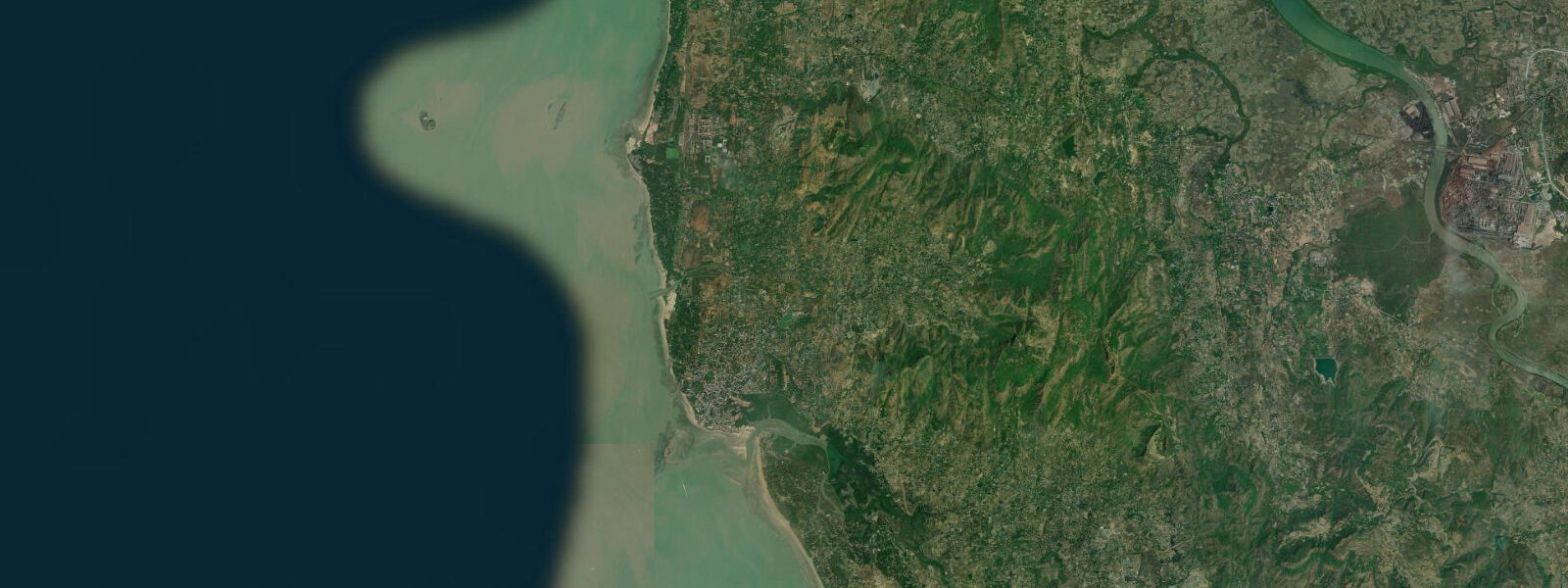
Alibaug, Maharashtra tide times
Alibaug, Maharashtra tide forecast — heights relative to MSL.
Today's tide times for Alibaug, Maharashtra
Tide times at Alibaug, Maharashtra on Monday, 3 August 2026: first high tide at 05:30, first low tide at 07:22, second high tide at 13:45, second low tide at 20:04. Sunrise 06:16, sunset 19:13.
Tide chart for Alibaug, Maharashtra
24-hour cosine-interpolated curve around the present moment. Heights relative to MSL. Predictions: Predictions: Open-Meteo Marine (MeteoFrance SMOC, 0.08° grid).
Sun, moon and conditions on Mon 03 Aug
Snapshot at build time — refreshes daily. Sea state from Open-Meteo Marine.
Highs and lows next 7 days
Every predicted high and low for the next week, with the daily tidal coefficient (0–120; higher = bigger swing, > 95 means stronger currents).
Other spots nearby
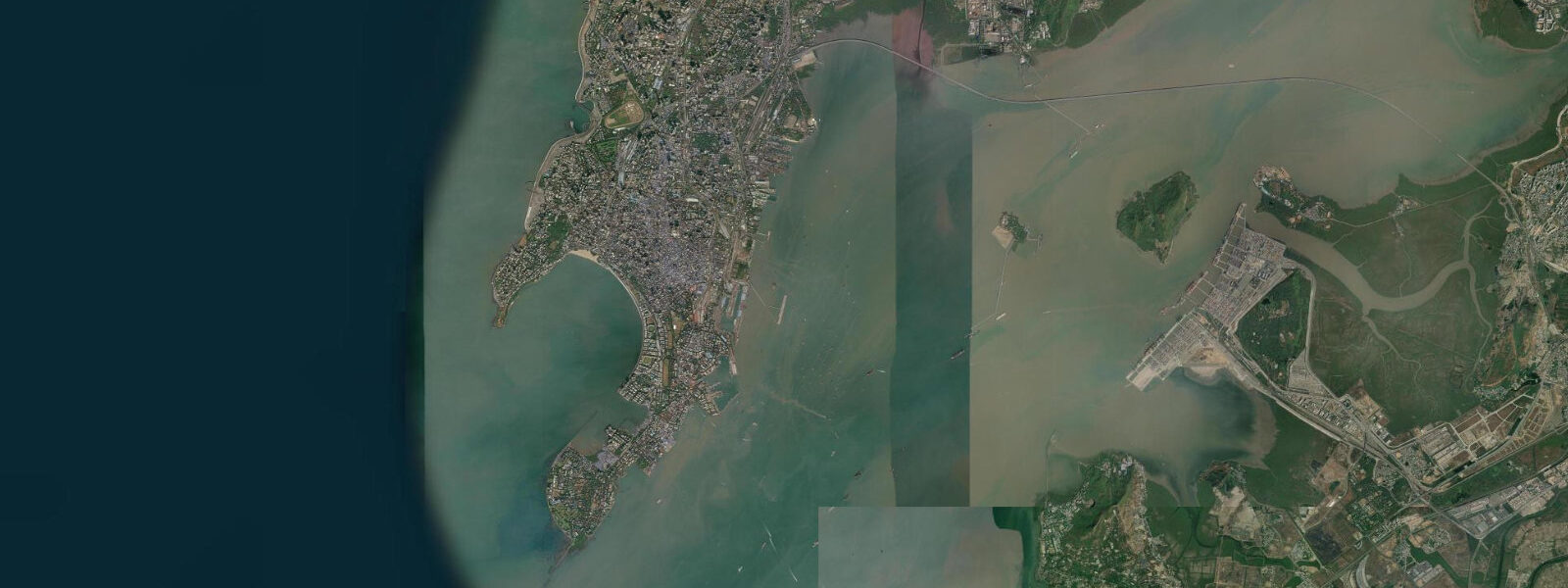
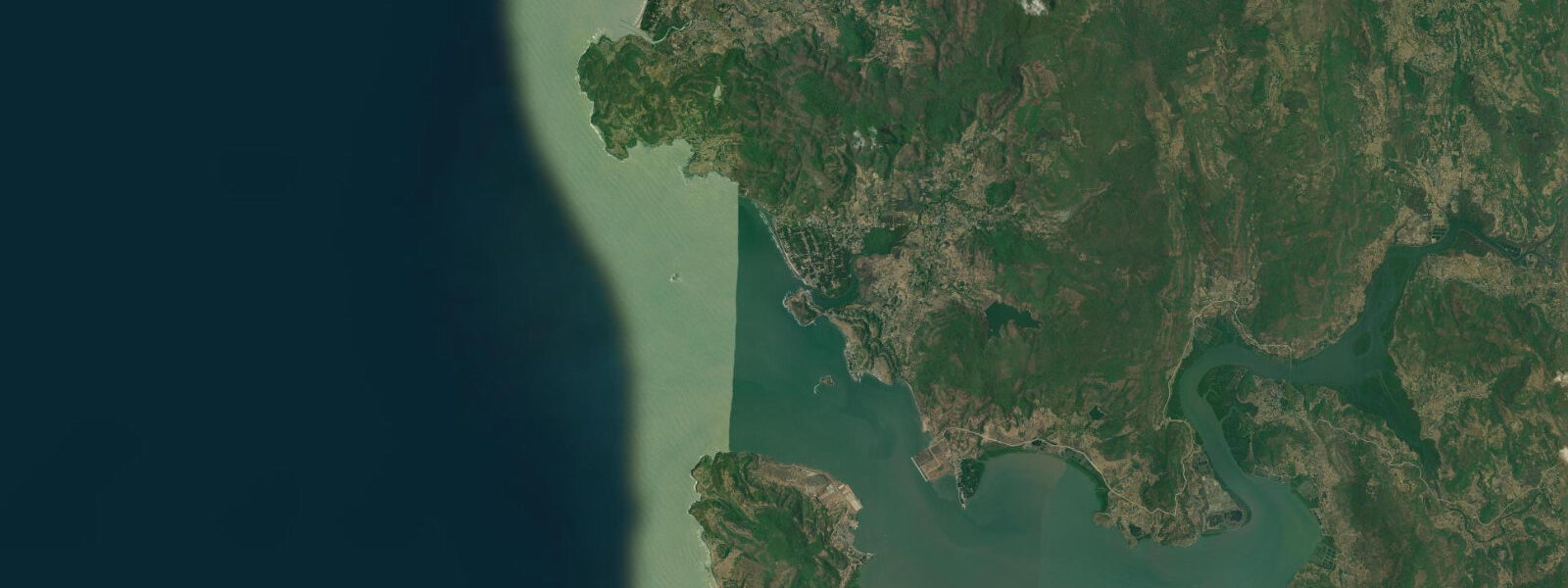
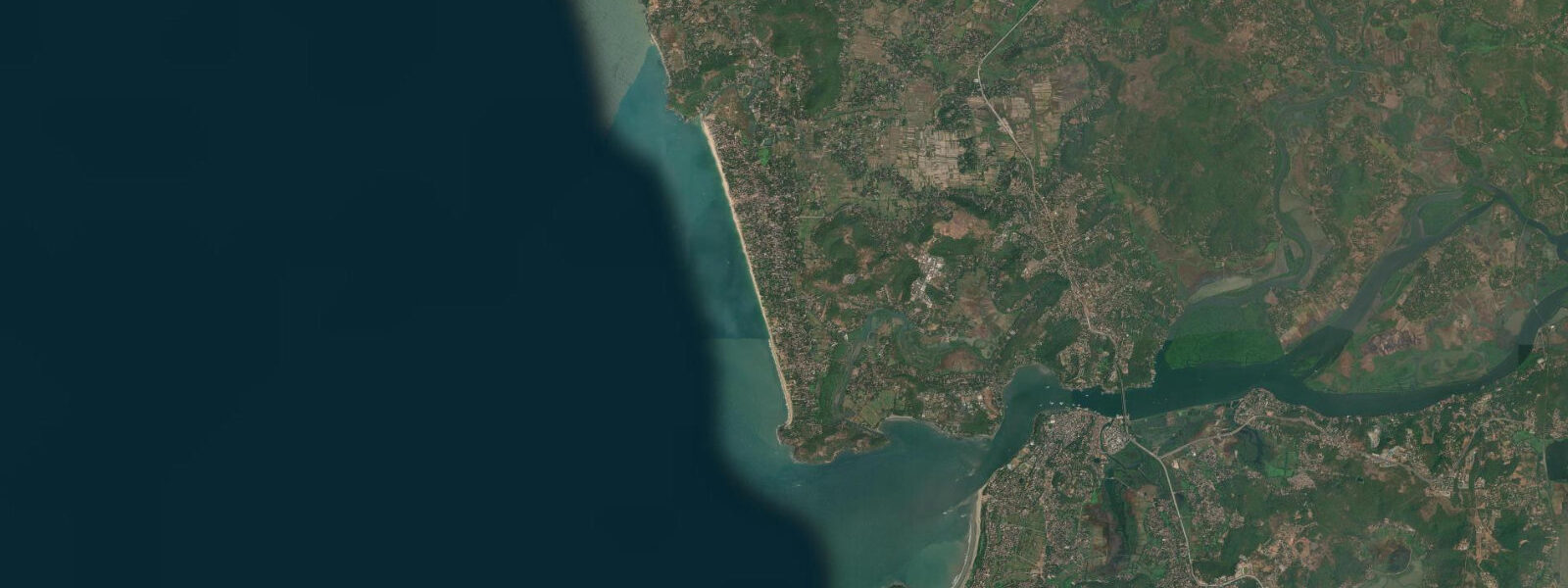
The three closest curated TideTurtle locations to Alibaug, Maharashtra, measured by great-circle distance.
Today's solunar windows
Solunar tradition: major periods are the ≈3h windows around moon transit and opposition; minor are ≈2h around moonrise and moonset. Pair with the local tide stage and wind for the best read.
Cycle dates near Alibaug, Maharashtra
Last spring tide on Mon 03 Aug (range 2.7m). Next spring tide on Sun 09 Aug (range 2.8m). Next neap on Fri 07 Aug.
Spring tides cluster around new and full moons (biggest swings). Neap tides land on quarter moons (smallest swings). See the spring tide and neap tide glossary entries for the why.
About tides at Alibaug, Maharashtra
A short guide to the coastline at Alibaug, Maharashtra — geography, sea state, and what the tide is actually doing under your feet.
Alibaug sits on the Konkan coast 50 km south of Mumbai, close enough to see the city's glow at night but far enough to feel like a different world. The Arabian Sea arrives here in a semidiurnal pattern — two high tides and two low tides each day, with a mean range between 2.5 m and 3.5 m on spring tides. That range makes the tidal state matter for almost everything you might want to do on this stretch of coast.
The centrepiece is Kulaba Fort, known locally as Kolaba Fort, sitting on a reef about 300 m offshore from Alibaug beach. At high water, the fort is an island — saltwater surrounds its walls and the reef is invisible beneath the surface. Drop 2.5 m off the tide and the reef emerges. The sand and rock flat between the beach and the fort dries out over a period of roughly two to three hours centred on the lowest point of the tidal cycle. During that window, you can walk out to the fort across wet rock and sand — no boat required. The walk takes around ten minutes in each direction. Plan to arrive when the water is already receding and you will have the full window. Time it wrong and you are either waiting on the beach or wading back.
To know your window, check the predicted low-tide time on the day you plan to visit. Spring lows — the lowest tides of the fortnightly cycle, occurring around new moon and full moon — expose the most reef and give the most comfortable crossing. Neap tides, which occur around the quarter moons, may not expose the reef fully enough for a safe dry crossing. The height at Alibaug during a spring low typically falls between 0.2 m and 0.5 m above chart datum; anything below 0.4 m is reliable walking ground.
Kulaba Fort was built in the late 17th century under the Maratha navy and has survived centuries of coastal exposure in reasonable shape. The walls enclose a temple, a cistern, and the remnants of residential quarters. At low tide the fort attracts families, photographers, and history walkers. On busy weekends in winter — November through February — the reef fills with people crossing in the same two-hour window. Come on a weekday or during the shoulder season (September or late February) for more space.
Alibaug beach itself runs north–south along the town's waterfront. The sand is grey-brown volcanic, backed by casuarina trees and a line of food stalls. At high water, waves reach the upper beach and swimming is reasonable if the sea is calm — the monsoon (June through August) makes the water rough and swimming inadvisable. At low tide, the beach widens considerably and flat tidal pools form between exposed rocks at the southern end near Varsoli.
The Koli fishing community has worked this coast for generations. Their wooden outrigger boats — painted bright colours, diesel-engined — launch directly off the beach and return according to tidal state and the time of day. An incoming tide after a night at sea means the boats come in with a push from the flood current. Watching the landing at Alibaug beach around dawn, as boats are hauled up the sand on rollers, is worth the early start. The morning fish market adjacent to the beach operates until around 9:00; arrive before 8:30 for anything worth buying.
For anglers, the rocky southern end of Alibaug beach and the reefs around Khanderi Island — visible offshore — hold snapper, pomfret, and travelly. Shore fishing with bait is most productive through the last two hours of the flood tide when fish follow baitfish onto the shallowing reef. Khanderi Island itself is a protected wildlife area (nesting seabirds and Indian rock pythons) and requires permission to land, but the surrounding water is open for fishing from a boat.
Getting here: the fastest route is the Ro-Ro ferry from the Gateway of India in Mumbai to the Mandwa jetty, which takes around one hour. A shared or private taxi from Mandwa to Alibaug town takes another 15 minutes. The ferry runs several times daily but fills up quickly on holiday weekends — pre-book the ticket online. The road route from Mumbai via the Vashi bridge takes three hours under light traffic; plan for longer on Fridays and holiday eves. If you are coming specifically for the Kulaba Fort crossing, check the tide prediction before booking your travel — a spring low tide on a Saturday with a clear-sky forecast is the ideal combination.
Tide data for Alibaug, Maharashtra comes from the Open-Meteo Marine API, a gridded model product. Timing accuracy is ±45 minutes, height accuracy ±0.3 m — usable for trip planning, not for navigation.
Tide questions about Alibaug, Maharashtra
Quick answers to the most common questions about tide times, range, and water access at Alibaug, Maharashtra.
When can I walk to Kulaba Fort from Alibaug beach?
The reef between the beach and Kulaba Fort is exposed for roughly two to three hours centred on the lowest point of the tidal cycle. Spring tides — occurring around new moon and full moon — give the most reliable crossing, with water depths on the reef dropping to 0.2–0.5 m above chart datum. Neap tides may not expose the reef fully. Check the predicted low-tide time and arrive on the beach at least 30 minutes before the low. The crossing takes about ten minutes on foot across wet sand and rock. Leave the fort well before the tide turns or you will be wading. The full accessible window is typically 90 minutes either side of the predicted low, but conditions vary with sea state.
What is the tidal range at Alibaug?
Alibaug has a semidiurnal tidal regime — two high tides and two low tides daily. The mean spring tidal range runs 2.5 m to 3.5 m, putting it in the moderate-to-large category for the Arabian Sea's Konkan coast. Mean neap range is roughly 1.0–1.5 m. The highest tides of the year occur during monsoon season when atmospheric pressure and swell combine with the astronomical tide; the lowest tides tend to occur during winter months (November–February). All heights given by the Open-Meteo Marine model are approximate — timing accuracy ±45 minutes, height ±0.3 m.
What is the best way to get from Mumbai to Alibaug?
The fastest practical option is the Ro-Ro passenger ferry from the Gateway of India to Mandwa jetty, which takes approximately one hour and runs several times daily. From Mandwa, a shared or private taxi covers the 15-km road to Alibaug town in another 15 minutes. Book ferry tickets in advance, especially on weekends and public holidays — the boats fill quickly. The road alternative via the Vashi bridge runs 90–100 km and takes three hours in light traffic, often longer on Fridays. If you are timing a visit around a specific low tide for the Kulaba Fort crossing, check the tide table before booking transport so you are not arriving post-low.
Is swimming safe at Alibaug beach?
Swimming conditions at Alibaug beach are generally calm from October through May, during the dry season. The beach has a gradual slope and the Arabian Sea is relatively mild in winter. Avoid swimming during the June-to-August monsoon — wave height and rip currents increase significantly and the water becomes heavily silted. High tide provides deeper water for swimming; low tide exposes large areas of flat sand and reef, which are better for walking and exploring tidal pools than swimming. There is no lifeguard service at Alibaug, so assess conditions yourself. Children should stay in the shallow water zone.
What fish can I catch from the shore at Alibaug?
The rocky reefs at the southern end of Alibaug beach and around the Kulaba Fort reef hold Indian snapper (lutjanids), pomfret, queenfish, and various travelly species. Shore fishing with bait — squid, crab, and small fish are effective — is most productive through the last two hours of the flood tide as water rises over the reef and fish move shallower to feed. The rocky platforms near Varsoli, 2 km south of town, offer better structure for shore anglers at low tide. A local fishing licence is not required for recreational shore fishing in Maharashtra, though commercial netting is regulated. The Koli community at the beach can advise on current fishing conditions.
8-day tide table — Alibaug, Maharashtra
Heights relative to MSL. Predictions: Open-Meteo Marine (MeteoFrance SMOC, 0.08° grid) — heights relative to MSL (not chart datum / LAT). Model-derived.
| Day | Type | Time | Height |
|---|---|---|---|
| Mon 03 Aug | High | 05:30 | -0.3m |
| Low | 07:22 | -0.8m | |
| High | 13:45 | 1.8m | |
| Low | 20:04 | -1.0m | |
| Tue 04 Aug | High | 14:15 | 1.7m |
| Low | 20:44 | -1.0m | |
| Wed 05 Aug | High | 03:04 | 1.3m |
| Low | 08:41 | -0.3m | |
| High | 14:45 | 1.5m | |
| Low | 21:31 | -1.0m | |
| Thu 06 Aug | High | 04:03 | 1.2m |
| Low | 09:36 | -0.1m | |
| High | 15:24 | 1.3m | |
| Low | 22:26 | -1.0m | |
| Fri 07 Aug | High | 05:28 | 1.1m |
| Low | 10:52 | 0.1m | |
| High | 16:24 | 1.1m | |
| Low | 23:32 | -1.1m | |
| Sat 08 Aug | High | 07:06 | 1.2m |
| Sun 09 Aug | Low | 00:49 | -1.1m |
| High | 08:21 | 1.4m | |
| Low | 14:05 | 0.1m | |
| High | 19:32 | 1.0m | |
| Mon 10 Aug | Low | 02:09 | -1.3m |
| High | 04:30 | -0.7m |