Vasco da Gama, Goa tide times
Vasco da Gama, Goa tide forecast — heights relative to MSL.
Today's tide times for Vasco da Gama, Goa
Tide times at Vasco da Gama, Goa on Monday, 3 August 2026: first low tide at 06:37, first high tide at 12:56, second low tide at 19:36. Sunrise 06:17, sunset 19:04.
Tide chart for Vasco da Gama, Goa
24-hour cosine-interpolated curve around the present moment. Heights relative to MSL. Predictions: Predictions: Open-Meteo Marine (MeteoFrance SMOC, 0.08° grid).
Sun, moon and conditions on Mon 03 Aug
Snapshot at build time — refreshes daily. Sea state from Open-Meteo Marine.
Highs and lows next 7 days
Every predicted high and low for the next week, with the daily tidal coefficient (0–120; higher = bigger swing, > 95 means stronger currents).
Other spots nearby
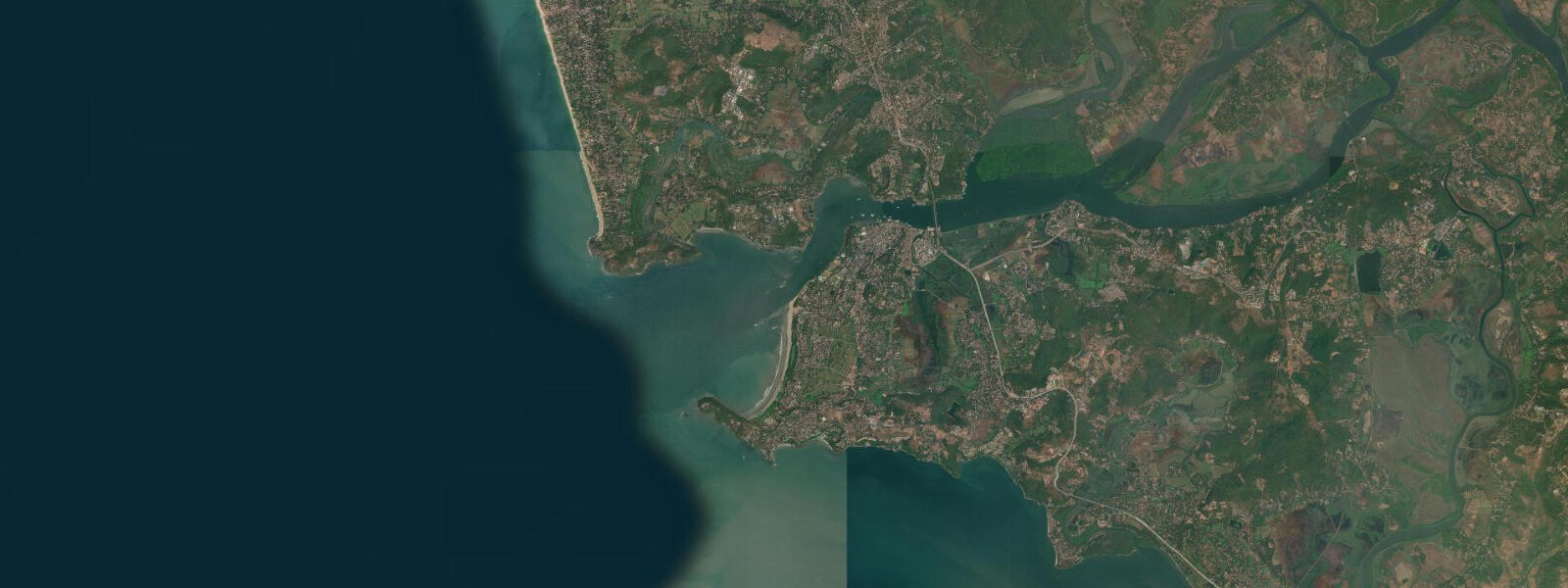
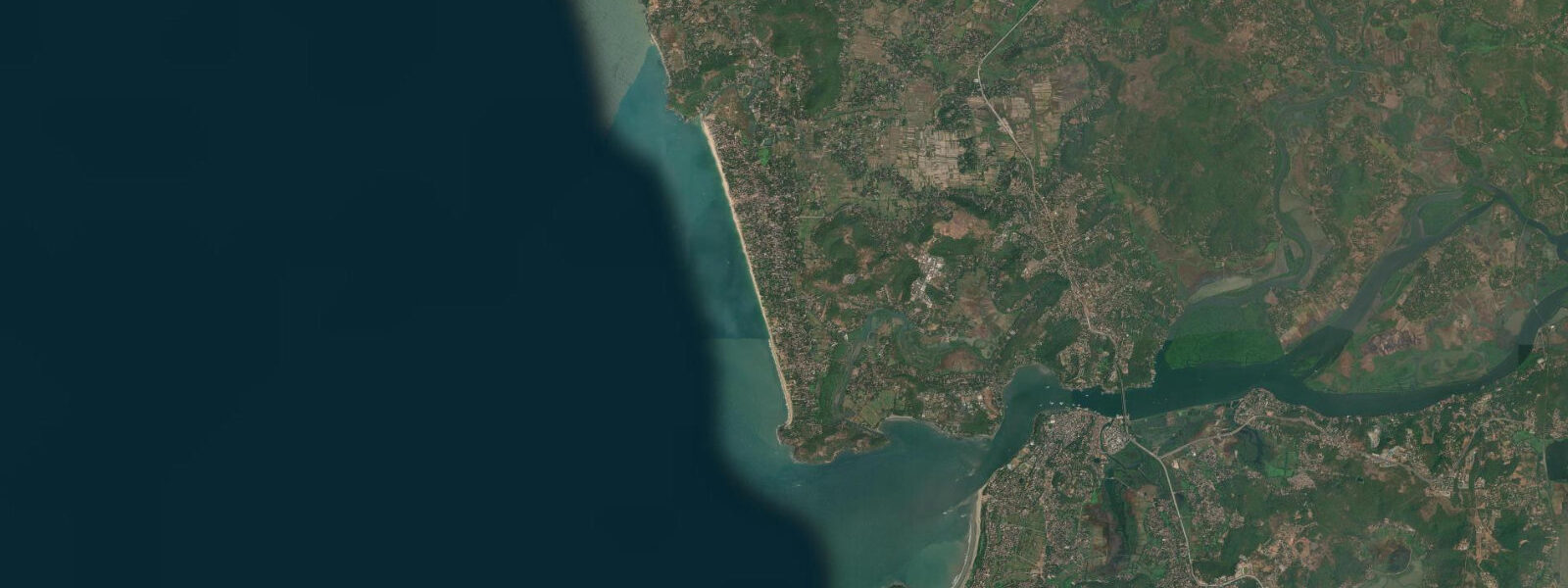
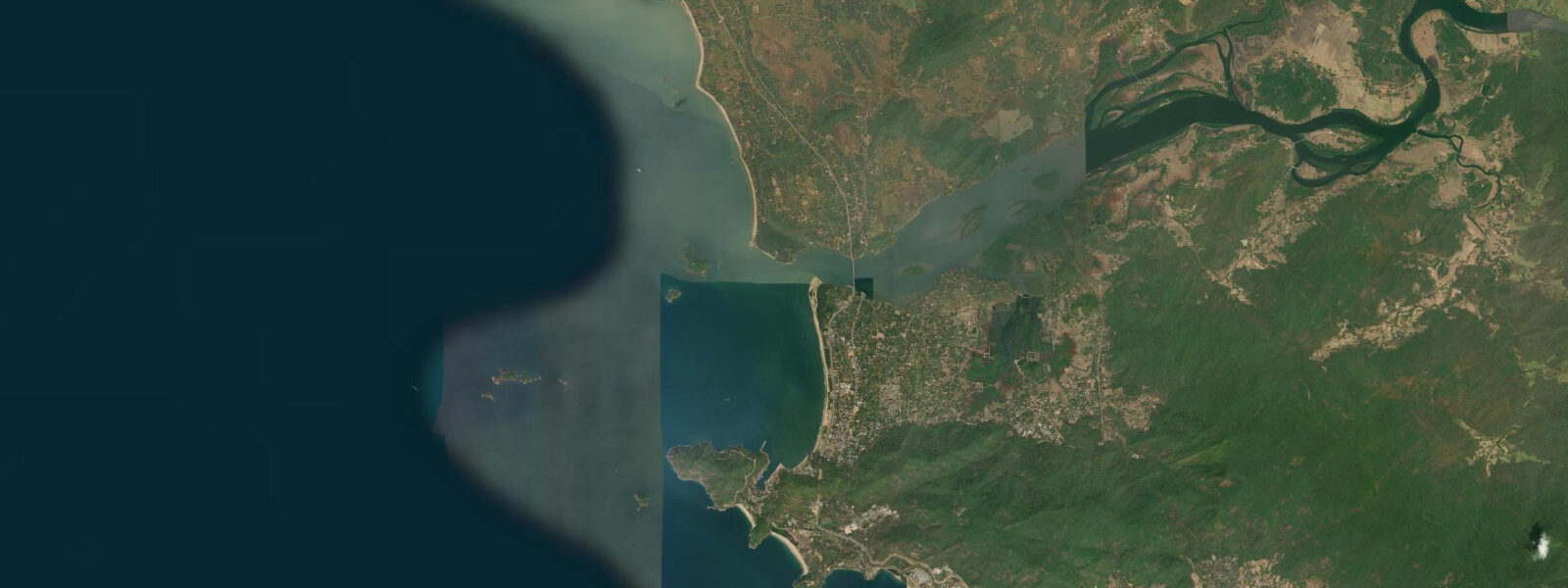
The three closest curated TideTurtle locations to Vasco da Gama, Goa, measured by great-circle distance.
Today's solunar windows
Solunar tradition: major periods are the ≈3h windows around moon transit and opposition; minor are ≈2h around moonrise and moonset. Pair with the local tide stage and wind for the best read.
Cycle dates near Vasco da Gama, Goa
Next spring tide on Thu 06 Aug (range 1.6m). Next neap on Sat 08 Aug.
Spring tides cluster around new and full moons (biggest swings). Neap tides land on quarter moons (smallest swings). See the spring tide and neap tide glossary entries for the why.
About tides at Vasco da Gama, Goa
A short guide to the coastline at Vasco da Gama, Goa — geography, sea state, and what the tide is actually doing under your feet.
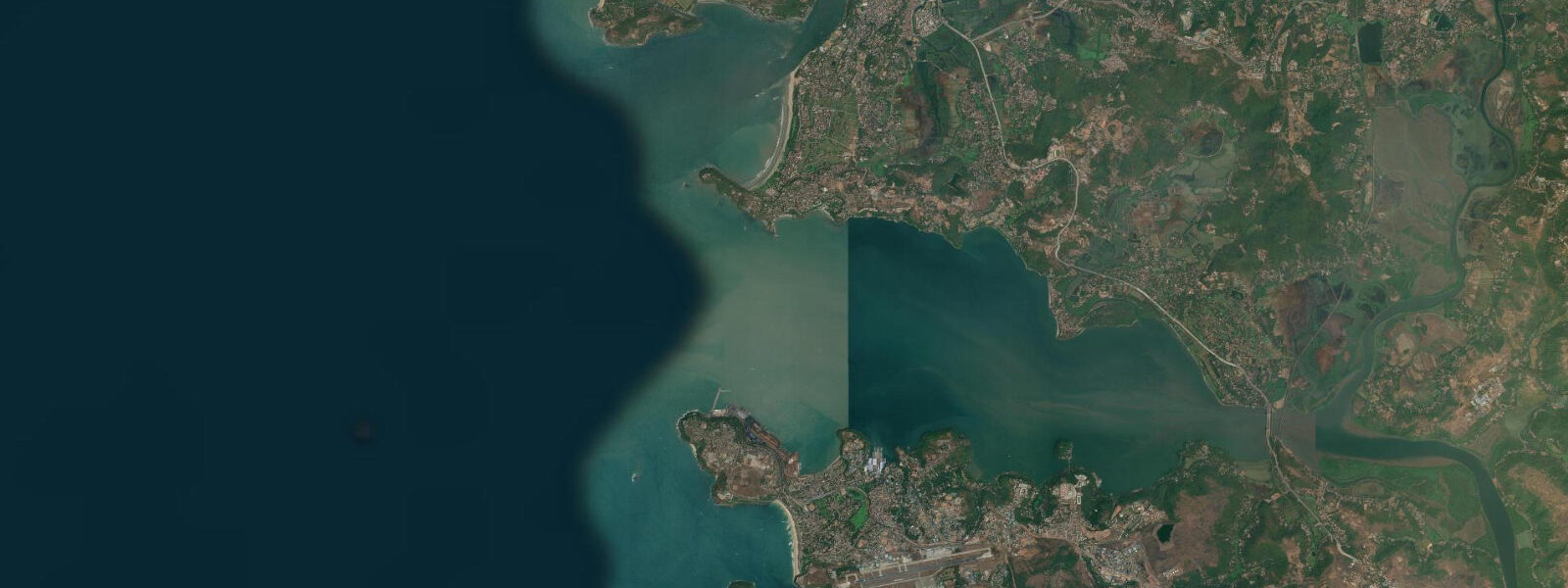
Vasco da Gama is the working end of Goa — the city where the state's commercial port operates, where the cargo vessels anchor off the headland, and where a tidal bay provides the sheltered deep water that makes it all possible. Mormugao Bay, the inlet enclosed by the Mormugao headland, is the reason Goa has been a port city for centuries. The Portuguese named the settlement after the explorer who opened the Indian Ocean sea route, and the port has operated continuously since colonial-era construction.
Mormugao Harbour handles iron ore, coal, and fertiliser. It is one of the major bulk commodity ports on India's west coast, and the cargo side of the operation is constrained by the tides in a way that the tourist beaches to the north are not. The Arabian Sea at Mormugao Bay has a semidiurnal tidal cycle with a mean spring range of 1.5–2.0 m — the same regime as the rest of the Goa coast, positioned well north of the Kerala tidal minimum. High spring water at Vasco reaches roughly 2.0 m above chart datum; low spring water drops to around 0.1 m. The full spring range is therefore close to 1.9 m.
For bulk carriers drawing 13–15 m, that 1.9 m difference matters. A vessel that can enter the harbour and reach the iron ore berths at high water may not have enough underkeel clearance at low water to get off the berth safely. Port scheduling accounts for this: arrival and departure windows for the largest vessels are tide-locked, typically planned for high water or the hours approaching it. The harbour master's office works from the tide table as a primary planning document, not a reference curiosity. Container feeder vessels and smaller bulk carriers with shallower drafts have more flexibility, but the full-size capesize and post-panamax vessels are on a tidal leash.
The Mormugao headland separates this port environment from Bogmalo Beach, 5 km south of Vasco along the coast. Bogmalo is a small cove — perhaps 400 m of arc — tucked behind the southern side of the headland. The headland's mass blocks the dominant northwest and west-southwest swell that reaches the exposed north Goa beaches during the pre-monsoon period. The result is that Bogmalo is calm when Calangute and Baga are rough. During the dry season (October to May), Bogmalo is accessible for swimming on days when the open coast is wind-chopped. The beach is small enough that it does not absorb large crowds; in the mornings before 09:00, it can be quiet even at the height of the tourist season.
Bogmalo is also the primary departure point for diving and snorkelling trips to the offshore sites, most notably the River Princess wreck. The MV River Princess is a bulk carrier — 180 m length — that ran aground on Baichola Reef, approximately 9 km offshore, in 2000 during a storm while waiting at anchorage. The vessel has been on the reef ever since; salvage attempts have been abandoned and the wreck is now a fixed feature. The stern section projects above the water surface at low tide, visible from the beach on clear days as a rust-coloured profile on the horizon. Divers reach the wreck in about 40 minutes from Bogmalo by boat. At the wreck site, the depth ranges from the surface (at the stern) to around 28 m at the keel on the deeper sections. Visibility varies with conditions — post-monsoon and early dry season (October to December) tend to have the best visibility, 10–15 m on good days.
Overhead, Goa Airport's approach path runs directly over Mormugao Bay. Aircraft on the instrument approach for the main runway follow a track from the sea over the bay, crossing the harbour entrance before the runway threshold. The approach path is low enough over the bay that vessels in the anchorage area need to comply with height restrictions, and the flight path is visible from Bogmalo Beach — arriving aircraft track in from the west, over the water, at intervals throughout the day.
Iron ore loading at Mormugao is a night-shift operation as much as a day operation, and the loading facilities — the conveyor gantries and ore stackers — are lit at night and visible from the Bogmalo side of the headland when looking north. The industrial and recreational aspects of the bay coexist in the way typical of working ports: the cargo operation is continuous, and the beach is 5 km and a headland away.
Tide data for Vasco da Gama, Goa comes from the Open-Meteo Marine API, a gridded model product. Timing accuracy is ±45 minutes, height accuracy ±0.3 m — usable for trip planning, not for navigation.
Tide questions about Vasco da Gama, Goa
Quick answers to the most common questions about tide times, range, and water access at Vasco da Gama, Goa.
How does the tide affect shipping operations at Mormugao Harbour?
Mormugao Harbour has a mean spring tidal range of 1.5–2.0 m, with high water reaching around 2.0 m above chart datum and low water dropping to approximately 0.1 m. For bulk carriers drawing 13–15 m — the large iron ore and coal vessels that use the port — this 1.9 m difference is operationally significant. Vessels requiring maximum underkeel clearance must arrive and depart within the high-water window, typically the two to three hours around high tide. Port scheduling at Mormugao is tide-dependent for the largest ships; smaller vessels with shallower drafts have more flexibility. The harbour master's office coordinates vessel movements against the published tide table as a primary operational tool.
Can you see the River Princess wreck from Bogmalo Beach?
On a clear day, the River Princess — a 180 m bulk carrier that has been grounded on Baichola Reef approximately 9 km offshore since 2000 — is visible from Bogmalo Beach as a rust-coloured profile on the horizon. The stern section projects above the surface at low water; at high water, less of the hull is exposed above the waterline. The wreck is most clearly visible in the morning when the sun is behind the viewer and the sea haze is minimal. Bogmalo is the standard boat departure point for dive trips to the wreck, with a transit of around 40 minutes. Wreck depth ranges from surface to approximately 28 m at the deeper sections of the keel.
Is Bogmalo Beach calmer than the north Goa beaches, and why?
Bogmalo is sheltered by the Mormugao headland, which blocks the dominant west-southwest and northwest swell that reaches the exposed north Goa coast. The headland acts as a wave-shadow zone on the southern side. The result is that on days when Calangute or Baga are wind-chopped and rough — particularly in the pre-monsoon period (April to May) — Bogmalo can be calm enough for swimming. The tidal range is the same as the rest of the Goa coast (1.5–2.0 m spring, semidiurnal), but wave action at Bogmalo is consistently lower than the open-coast beaches. The beach is small (around 400 m arc) and has limited shade; early morning visits before 09:00 are the best combination of calm and manageable temperature.
What is the best season for diving on the River Princess wreck from Bogmalo?
Post-monsoon (October to December) gives the best visibility at the River Princess site, typically 10–15 m on good days as the monsoon-stirred sediment settles out. January and February are also consistently good. Visibility degrades as the pre-monsoon season progresses through March and April, and the monsoon months (June to September) make offshore diving from Bogmalo impractical due to sea state. Water temperature at the wreck site runs 26–29°C through the dry season. The wreck depth (surface to approximately 28 m) means it is accessible to recreational divers with Open Water certification for the shallower sections, with Advanced Open Water practical for the deeper areas at the keel.
Why does Goa Airport's approach path go over Mormugao Bay, and is it visible from shore?
Goa's Dabolim Airport sits on the Mormugao headland plateau — its runway threshold is close to the bay shore. Aircraft on the instrument approach from the west track over the Arabian Sea, then over Mormugao Bay itself, arriving at the runway threshold at low altitude. The approach path is clearly visible from Bogmalo Beach: arriving aircraft pass from west to east over the water at intervals throughout the day, at close enough range that individual aircraft types are distinguishable. The approach altitude over the bay is constrained by the runway position on the headland plateau, which means aircraft are low over the water for an extended final approach. Vessels at anchorage in the bay approach area observe height-clearance requirements because of this flight path.
8-day tide table — Vasco da Gama, Goa
Heights relative to MSL. Predictions: Open-Meteo Marine (MeteoFrance SMOC, 0.08° grid) — heights relative to MSL (not chart datum / LAT). Model-derived.
| Day | Type | Time | Height |
|---|---|---|---|
| Mon 03 Aug | Low | 06:37 | -0.3m |
| High | 12:56 | 1.1m | |
| Low | 19:36 | -0.4m | |
| Tue 04 Aug | High | 01:28 | 0.8m |
| Low | 07:17 | -0.2m | |
| High | 13:22 | 1.1m | |
| Low | 20:12 | -0.5m | |
| Wed 05 Aug | High | 02:27 | 0.7m |
| Low | 20:56 | -0.6m | |
| Thu 06 Aug | High | 03:42 | 0.7m |
| Low | 08:43 | 0.1m | |
| High | 14:34 | 0.9m | |
| Low | 21:51 | -0.6m | |
| Fri 07 Aug | High | 05:15 | 0.6m |
| Low | 09:45 | 0.3m | |
| High | 15:26 | 0.8m | |
| Sat 08 Aug | Low | 11:24 | 0.4m |
| High | 16:40 | 0.7m | |
| Sun 09 Aug | — | ||
| Mon 10 Aug | Low | 01:34 | -0.9m |
| High | 04:30 | -0.2m | |