Panaji tide times
Panaji tide forecast — heights relative to MSL.
Today's tide times for Panaji
Tide times at Panaji on Friday, 31 July 2026: first low tide at 05:30, first high tide at 11:53, second low tide at 17:50, second high tide at 23:12. Sunrise 06:16, sunset 19:05.
Tide chart for Panaji
24-hour cosine-interpolated curve around the present moment. Heights relative to MSL. Predictions: Predictions: Open-Meteo Marine (MeteoFrance SMOC, 0.08° grid).
Sun, moon and conditions on Fri 31 Jul
Snapshot at build time — refreshes daily. Sea state from Open-Meteo Marine.
Highs and lows next 7 days
Every predicted high and low for the next week, with the daily tidal coefficient (0–120; higher = bigger swing, > 95 means stronger currents).
Other spots nearby
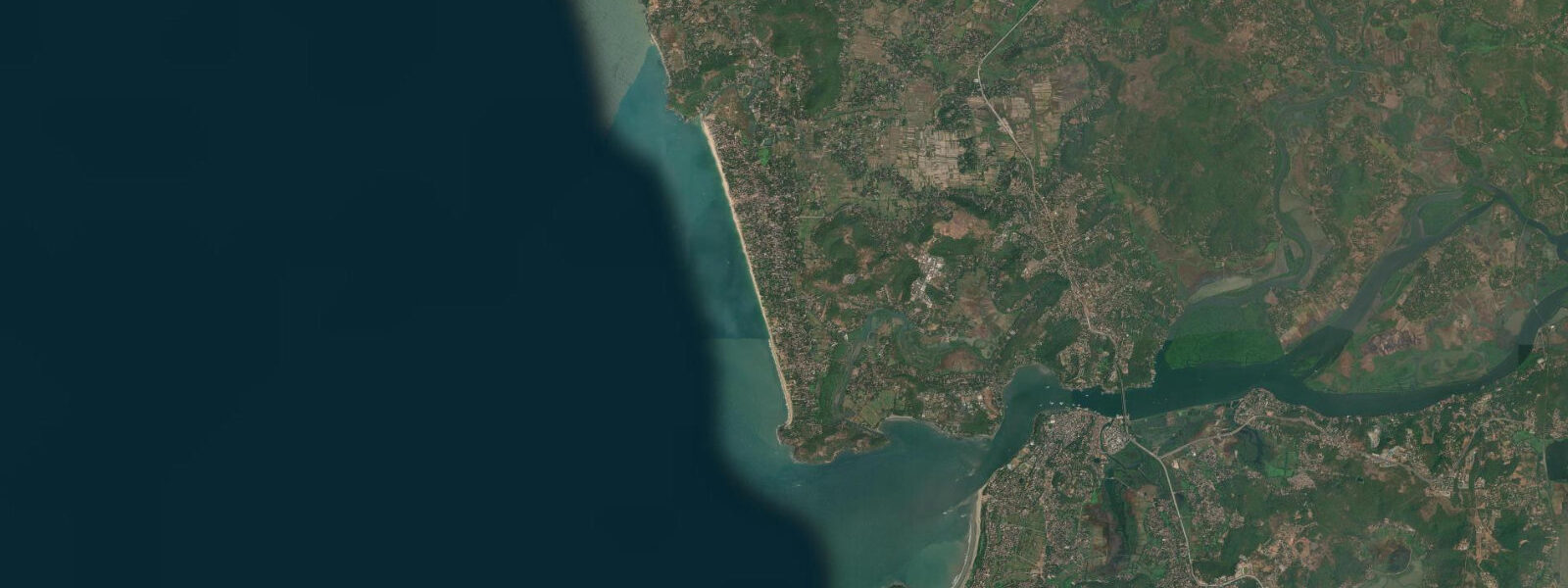
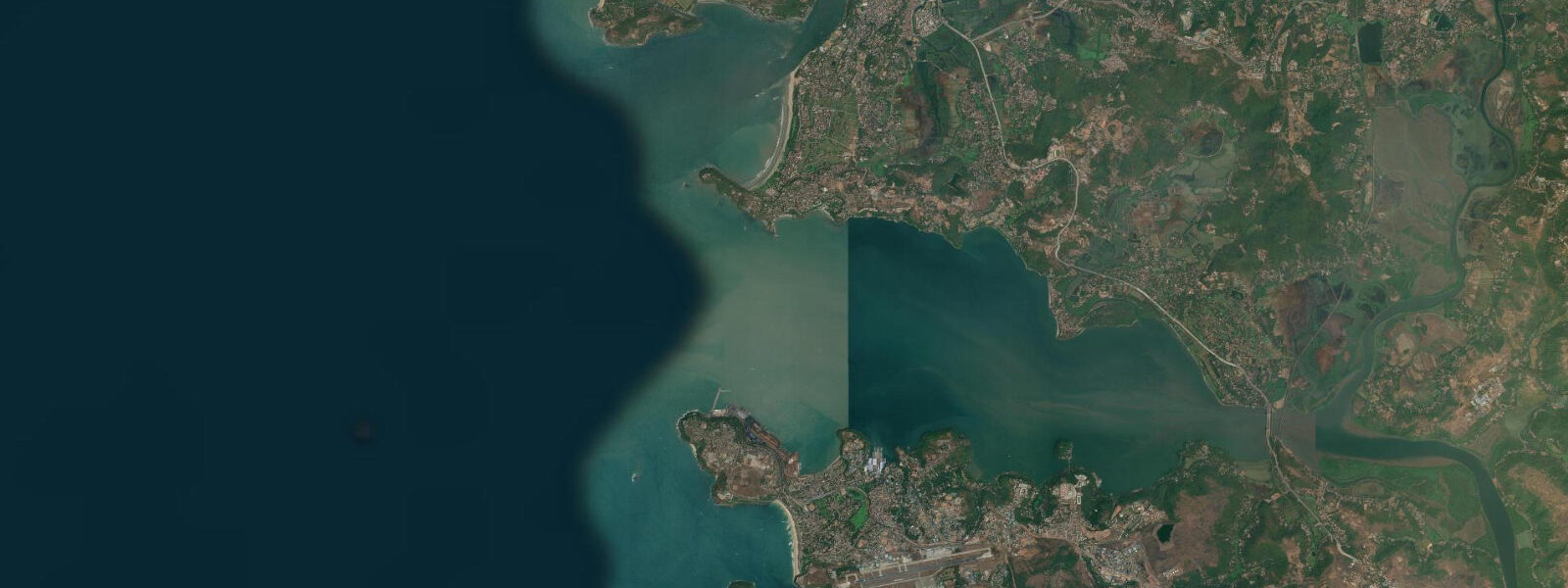
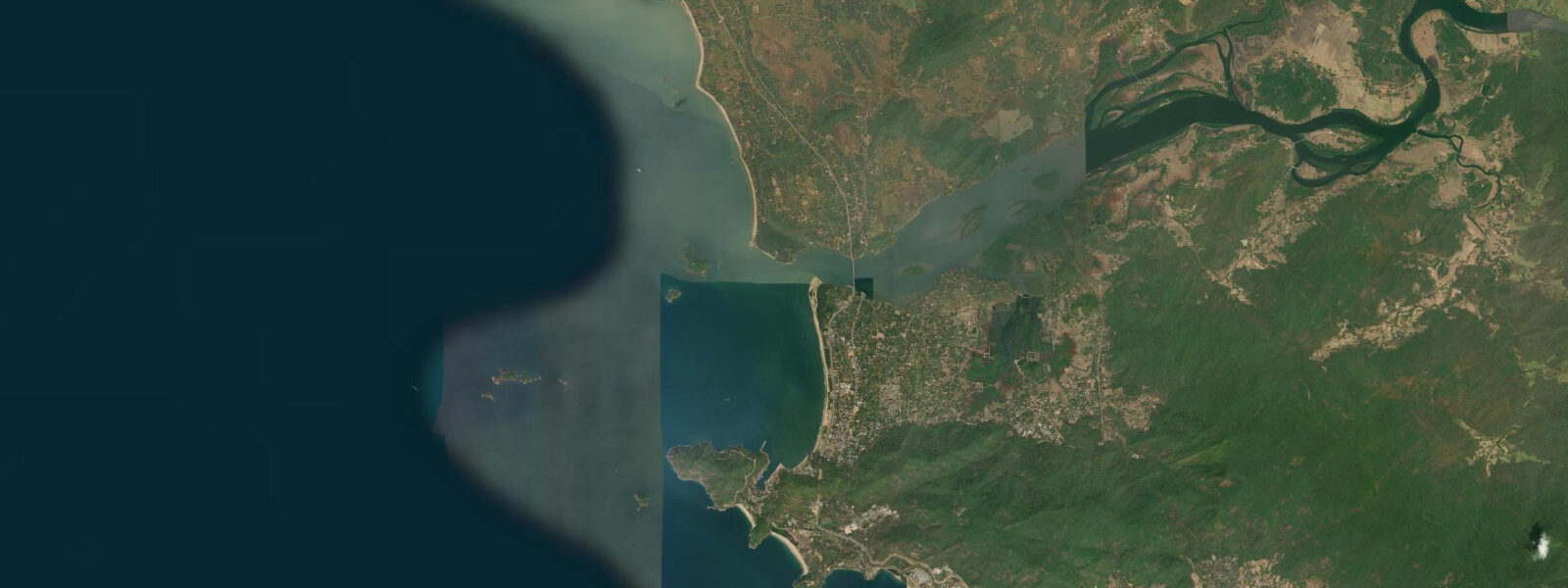
The three closest curated TideTurtle locations to Panaji, measured by great-circle distance.
Today's solunar windows
Solunar tradition: major periods are the ≈3h windows around moon transit and opposition; minor are ≈2h around moonrise and moonset. Pair with the local tide stage and wind for the best read.
Cycle dates near Panaji
Last spring tide on Fri 31 Jul (range 1.7m). Next spring tide on Wed 05 Aug (range 1.6m). Next neap on Sun 02 Aug.
Spring tides cluster around new and full moons (biggest swings). Neap tides land on quarter moons (smallest swings). See the spring tide and neap tide glossary entries for the why.
About tides at Panaji
A short guide to the coastline at Panaji — geography, sea state, and what the tide is actually doing under your feet.
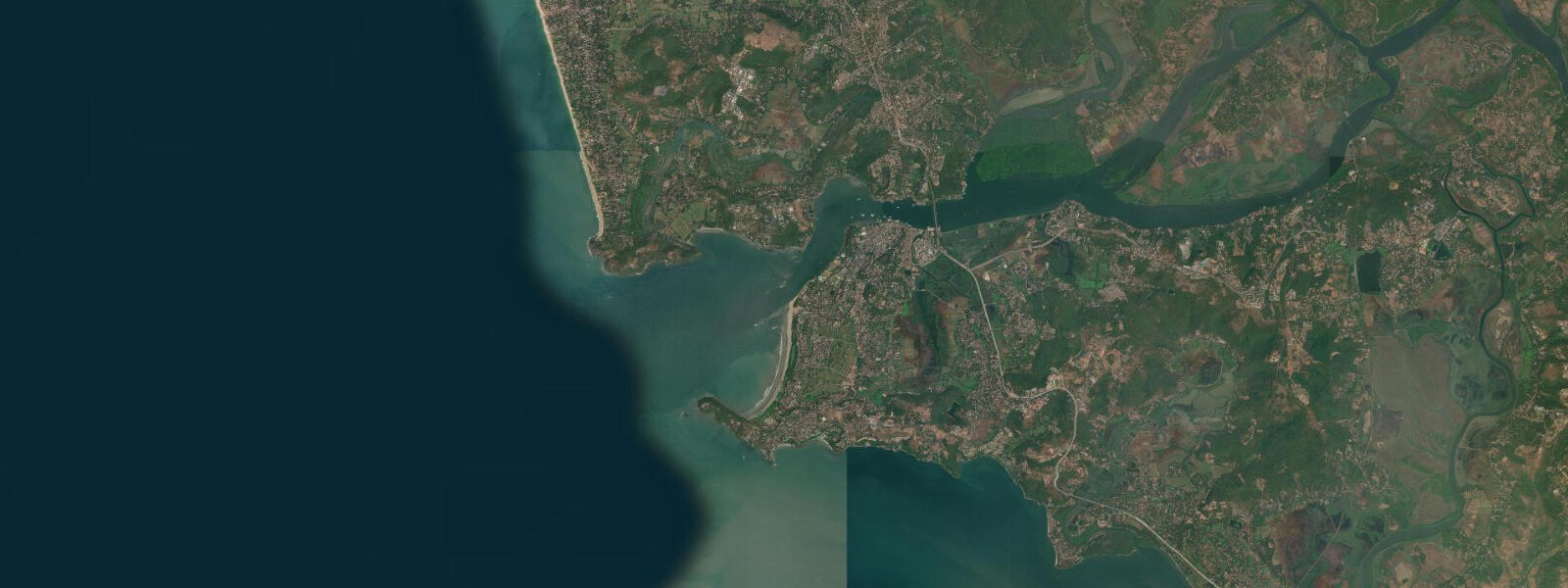
Panaji sits on the south bank of the Mandovi River estuary, a few kilometres inland from where the river crosses its own bar and meets the Arabian Sea. The city is the smallest state capital in India and functions as the administrative and commercial hub of Goa's central coastal strip — the stretch that runs from the Baga and Calangute beaches to the north, through the Aguada headland, down to the Miramar beach promenade at the edge of town, and across the river to the town of Betim via the Panaji ferry. Tidal state defines the daily rhythm here in ways that the beach resorts further north, where the coast is more open, do not feel as directly.
The tidal regime at Panaji is mixed semidiurnal: two highs and two lows each day, with a meaningful inequality between successive highs and between successive lows. Mean spring range is approximately 1.5 to 2.0 metres — moderate by global standards, but enough to drive a measurable current through the Mandovi estuary and to change the character of the river mouth bar entirely between high and low water. On a spring ebb, the Mandovi pushes a significant volume of water across the bar against whatever onshore swell is running. The bar can become rough and breaking on the ebb in moderate swell conditions; experienced skippers read both the tide state and the swell height before committing to a crossing.
The Panaji-Betim ferry is the most tide-visible transport link in central Goa. The wooden ferries that shuttle passengers and motorcycles across the Mandovi have been running this crossing for generations. At low water, the mud banks on either side of the channel constrain the ferry's approach to the landing ramps; the ferries time their manoeuvres to the tidal state as a matter of operational routine. Watching the sequence — approach, swing, berth against the current — gives a clearer sense of what a 1.5-metre tidal current actually means in practice than any chart.
The Mandovi tidal influence extends well inland. The brackish zone — where river water and seawater mix, and where the tidal oscillation is measurable — reaches roughly 10 to 15 kilometres upstream of the bar on a spring flood. Old Goa, the former colonial capital on the river's south bank about 10 kilometres inland, was historically accessed by vessels timing the flood tide upriver; the Santa Catarina Cathedral and the Basilica of Bom Jesus sit above a river reach that was once a tidal anchorage. The Cumbarjua Canal connects the Mandovi to the Zuari River to the south, creating a tidal loop around the central Goa island known as Tiswadi Island — at high water, tidal exchange runs through both rivers and the canal simultaneously.
Kayakers and paddlers work the Mandovi estuary with the tide as the primary planning tool. The flood runs northeast, upstream; the ebb runs southwest, toward the bar and the sea. A round trip from the Panaji waterfront upstream toward Old Goa and back runs most naturally as flood-up, ebb-back — the standard tidal-assist structure. Mangrove channels off the main river — particularly the Chorao Island fringe and the Salim Ali Bird Sanctuary mangroves — are navigable on the higher half of the tide; the low-water mud flat exposure makes them inaccessible for several hours each cycle. Crocodiles are resident in the Mandovi mangroves; this is not a paranoia note, just a fact about the estuary ecosystem.
Beach tourism on the open coast to the north and south of Panaji operates with the tide as background rhythm rather than primary constraint — the rip currents, longshore drift, and seasonal swell are the dominant safety factors. At Miramar Beach at the western edge of Panaji, the beach narrows substantially at high water; the flat, open sand that makes Miramar popular at low tide contracts to a narrow strand under the seawall at high. Fishers working the Miramar shore and the Aguada headland rocks time their sessions to the ebb, when the rocky exposures south of the beach are accessible for shore casting.
Monsoon changes everything from June through September. The Mandovi rises with monsoon rainfall as well as with the tide; the combined river level and tidal elevation raises the waterfront at Panaji significantly above normal dry-season levels. The Adil Shah Palace garden, the Mahalaxmi Temple waterfront area, and the low sections of the Fontainhas neighbourhood have flooded in years when monsoon rainfall and a large spring tide coincide. The open beaches north of Panaji are closed to swimming by sea state and official warning; the Goa beach-lifeguard service withdraws from the open coast during the monsoon core. Post-monsoon from October through May is when conditions normalise: predictable tides, calmer seas, and the full coastal ecosystem — fishing, kayaking, beach tourism, bar crossings — returning to its pre-monsoon rhythm.
Predictions on this page come from Open-Meteo Marine — typically within plus or minus 45 minutes on timing and 0.2 to 0.3 m on height, model-derived, not a local gauge. The National Hydrographic Office of India publishes official tide tables for Goa; for bar crossing, harbour operations, and any navigation on the Mandovi or Zuari, those official sources apply.
Tide questions about Panaji
Quick answers to the most common questions about tide times, range, and water access at Panaji.
When is the next high tide at Panaji?
The next predicted high tide at Panaji, in India Standard Time (IST, UTC+5:30), is shown in the tide table at the top of this page. The tide at Panaji is mixed semidiurnal — two highs and two lows per day, though the two highs are often unequal in height. Mean spring range is approximately 1.5 to 2.0 metres. Predictions come from Open-Meteo Marine, typically accurate to within plus or minus 45 minutes on timing and 0.2 to 0.3 m on height — model-derived, not a local gauge. The National Hydrographic Office of India maintains the official Panaji tide record.
What is the tidal range at Panaji and does it affect river conditions?
Mean spring range at Panaji is approximately 1.5 to 2.0 metres, classified as mesotidal. The Mandovi River carries this tidal signal 10 to 15 kilometres upstream on a spring flood, shifting the river from freshwater to brackish and back twice daily. On the ebb, the river current strengthens toward the bar at the river mouth; combined with incoming swell, this can make the Mandovi bar rough and difficult to cross in a small boat. The Cumbarjua Canal links the Mandovi to the Zuari River, creating a tidal loop around Tiswadi Island. During monsoon, river discharge adds to tidal levels and the combined effect can flood low sections of Panaji's waterfront on large spring tides.
Where does the tide data for Panaji come from?
Tide predictions on this page come from Open-Meteo Marine, a free global ocean model estimating tidal heights from hydrodynamic equations across a geographic grid — not from harmonic analysis of a dedicated Panaji gauge record. Accuracy is typically within plus or minus 45 minutes on timing and 0.2 to 0.3 m on height — model-derived, not a local gauge. The National Hydrographic Office of India publishes official tide tables for Goa's coast and the Mandovi estuary. For bar-crossing decisions, harbour operations, and any safety-critical use, consult those official tables.
Is it safe to swim at Goa beaches during monsoon, and does tide matter?
Swimming on Goa's open beaches — Baga, Calangute, Miramar — is not safe during the southwest monsoon from June through September. The primary hazards are rip currents and longshore drift generated by the monsoon swell, not the tidal range itself. Goa's beach-lifeguard service withdraws from the open coast during the monsoon core. The tide matters in that a falling ebb accelerates the rip current in beach channel systems, but the swell and current regime make the beaches dangerous throughout monsoon regardless of tidal state. Post-monsoon from October through May, conditions normalise and tidal planning becomes relevant again for activities like estuary kayaking and bar crossing.
Can I kayak the Mandovi River mangroves near Panaji?
The mangrove channels off the Mandovi — particularly the Chorao Island fringe and the Salim Ali Bird Sanctuary area — are navigable by kayak on the higher half of the tide, roughly from mid-flood through to an hour or two after high water, before the ebb drops the channel floor into mud. At low water the mangrove creek bottoms expose and become inaccessible without dragging the boat through mud. A flood-up, ebb-back plan from the Panaji waterfront is the standard approach — paddle upstream with the flooding tide, return with the ebb. Note that the Mandovi mangroves have a resident mugger crocodile population; maintain distance from banks and do not enter the water.
8-day tide table — Panaji
Heights relative to MSL. Predictions: Open-Meteo Marine (MeteoFrance SMOC, 0.08° grid) — heights relative to MSL (not chart datum / LAT). Model-derived.
| Day | Type | Time | Height |
|---|---|---|---|
| Fri 31 Jul | Low | 05:30 | -0.6m |
| High | 11:53 | 1.2m | |
| Low | 17:50 | -0.0m | |
| High | 23:12 | 0.8m | |
| Sat 01 Aug | Low | 05:30 | -0.6m |
| High | 12:15 | 1.1m | |
| Low | 18:25 | -0.2m | |
| Sun 02 Aug | High | 12:31 | 1.2m |
| Low | 18:56 | -0.3m | |
| Mon 03 Aug | High | 00:37 | 0.8m |
| Low | 06:36 | -0.3m | |
| High | 12:54 | 1.1m | |
| Low | 19:34 | -0.4m | |
| Tue 04 Aug | High | 01:30 | 0.8m |
| Low | 07:17 | -0.1m | |
| High | 13:23 | 1.1m | |
| Low | 20:12 | -0.5m | |
| Wed 05 Aug | High | 02:27 | 0.7m |
| Low | 07:55 | -0.0m | |
| High | 13:56 | 1.0m | |
| Low | 20:56 | -0.6m | |
| Thu 06 Aug | High | 03:42 | 0.7m |
| Low | 08:43 | 0.2m | |
| High | 14:32 | 0.9m | |
| Low | 21:52 | -0.6m | |
| Fri 07 Aug | High | 04:30 | 0.6m |