Stralsund tide times
Stralsund tide forecast — heights relative to MSL.
Today's tide times for Stralsund
Tide times at Stralsund on Monday, 3 August 2026: first low tide at 02:50, first high tide at 13:10, second low tide at 19:50. Sunrise 05:21, sunset 21:05.
Tide chart for Stralsund
24-hour cosine-interpolated curve around the present moment. Heights relative to MSL. Predictions: Predictions: Open-Meteo Marine (MeteoFrance SMOC, 0.08° grid).
Sun, moon and conditions on Mon 03 Aug
Snapshot at build time — refreshes daily. Sea state from Open-Meteo Marine.
Highs and lows next 7 days
Every predicted high and low for the next week, with the daily tidal coefficient (0–120; higher = bigger swing, > 95 means stronger currents).
Other spots nearby
The three closest curated TideTurtle locations to Stralsund, measured by great-circle distance.
Today's solunar windows
Solunar tradition: major periods are the ≈3h windows around moon transit and opposition; minor are ≈2h around moonrise and moonset. Pair with the local tide stage and wind for the best read.
Cycle dates near Stralsund
Last spring tide on Mon 03 Aug (range 0.1m). Next neap on Fri 07 Aug.
Spring tides cluster around new and full moons (biggest swings). Neap tides land on quarter moons (smallest swings). See the spring tide and neap tide glossary entries for the why.
About tides at Stralsund
A short guide to the coastline at Stralsund — geography, sea state, and what the tide is actually doing under your feet.
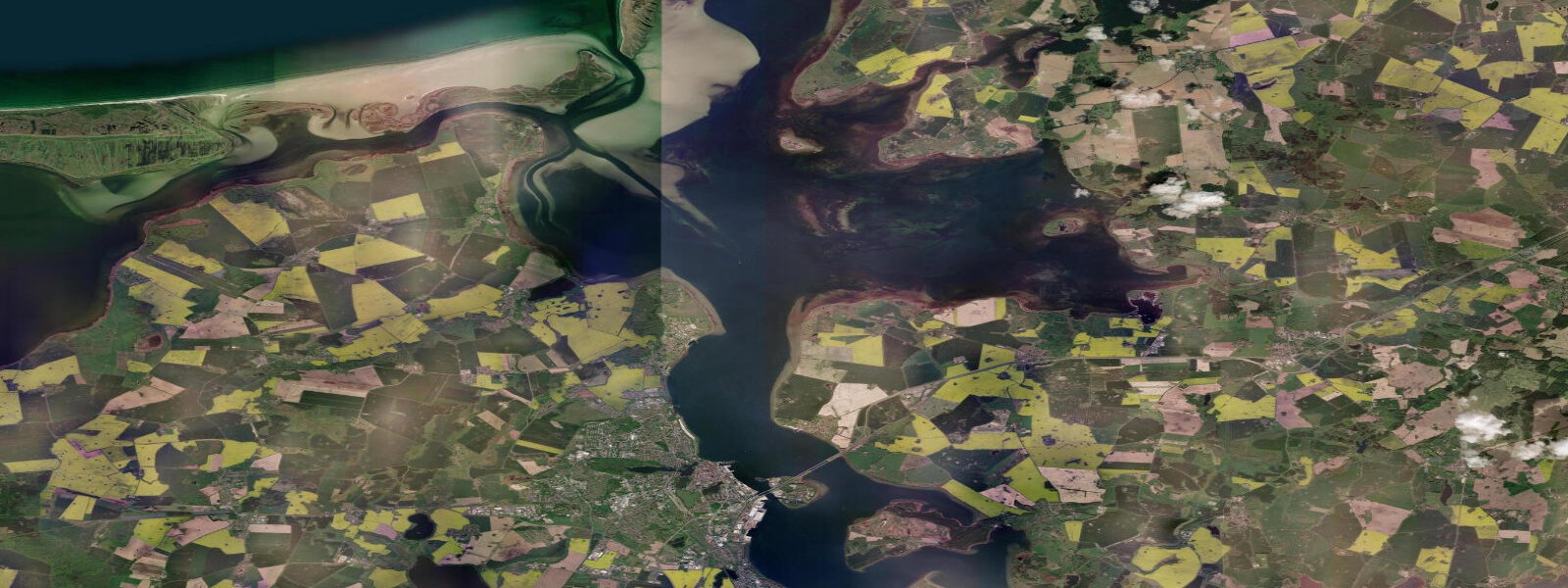
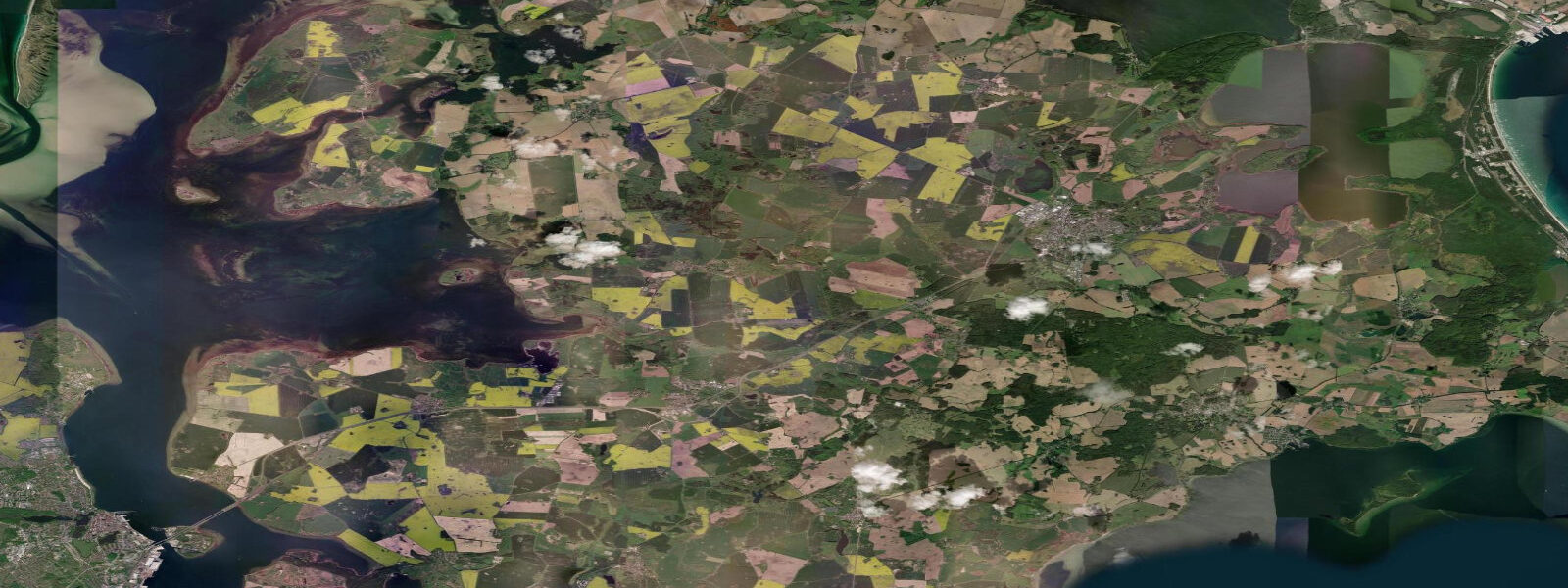
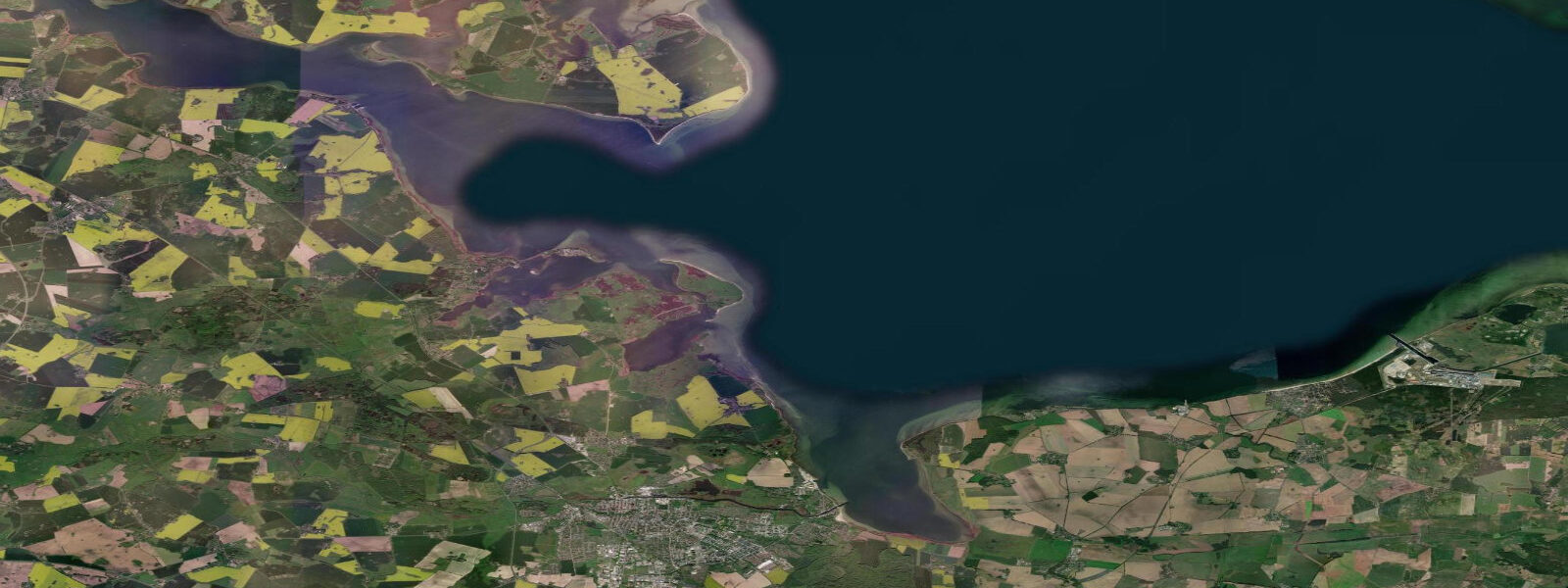
Stralsund stands on the Strelasund — the narrow strait between the mainland of Mecklenburg-Vorpommern and the island of Rügen — and its mediaeval brick-Gothic old town has been a UNESCO World Heritage site since 2002, sharing that designation with Wismar to the west as an outstanding example of Hanseatic brick-Gothic civic architecture. The Marienkirche, the Nikolaikirche, and the Rathaus on the Alter Markt are all 14th-century construction; the scale and survival of the ensemble in the centre of a small city is remarkable. The Baltic Sea is microtidal.
3 metres — essentially the same as the Mediterranean, and for the same reason: a nearly enclosed sea with restricted connection to the Atlantic tidal source. The narrow Danish Straits (Øresund, Store Bælt, Lille Bælt) are the only connection to the North Sea and they attenuate the tidal signal to near-zero by the time it propagates into the eastern Baltic. The dominant driver of water level at Stralsund is not the tide — it is wind and atmospheric pressure.
During persistent NE gales, wind setup can raise the Stralsund quayside water level by 1 metre or more above the normal astronomic prediction. These are Sturmflut events — storm surge floods — and the risk is real: the old town quaysides, the waterfront streets, and the lower-lying areas between the Strelasund and the historic centre flood during significant NE storm events. The Ozeaneum, the marine science museum and aquarium on the northern edge of the old town, opened in 2008 and won the OSPAR Commission's Maritime Award for sustainable architecture.
It holds exhibitions on the Baltic Sea ecosystem and the North Sea, including live tanks with Baltic and North Sea species — sharks, rays, herring, cod, flatfish — in a building that incorporates the waterfront directly into its spatial concept. It is part of the Deutsches Meeresmuseum, which also operates the historic Katharinenkloster (St Catherine's Monastery) museum in the old town. The Rügenbrücke — the Rügen Bridge — connects Stralsund to Rügen island, opened in 2007 with a main span of 128 metres and a clearance of 42 metres for shipping transiting the Strelasund.
Before its opening, the only road access to Rügen was the Rügendamm causeway built in 1937; the bridge now carries the majority of the traffic. The Strelasund beneath the bridges carries tidal exchange between the western Baltic and the bays north of Rügen (Greifswalder Bodde, Kleines Haff), and despite the low astronomical range, the currents in the strait are wind-driven and can run at 1 to 2 knots in sustained onshore gales. The waterways around Stralsund are a productive cruising ground for Baltic sailing and motorboat tourism.
The low tidal range means no locks, no tidal-window constraints, and the ability to go alongside almost any berth at any time — a fundamental contrast with the macrotidal Atlantic coasts. The Bodden waterways behind Rügen and Hiddensee are navigable on flat-bottomed shallow-draft vessels at any state of weather and are among the most sheltered sailing waters in Germany. Amber collecting on the Baltic beach is an occasional reward; amber washing up on Rügen beaches comes from submarine deposits of Eocene-age resin exposed on the seabed and transported by storms.
The correlation is with sea state after significant NW storms rather than with any tidal signal. Predictions on this page come from Open-Meteo Marine, a gridded global ocean model. 3 metres on height — model-derived, not from a local gauge.
de.
Tide questions about Stralsund
Quick answers to the most common questions about tide times, range, and water access at Stralsund.
Does the tide matter at Stralsund, and what drives water level changes instead?
Astronomical tidal range at Stralsund is approximately 0.3 metres — the Baltic is a nearly enclosed sea with very limited tidal connection to the Atlantic through the narrow Danish Straits. The dominant driver of water level variation is wind and atmospheric pressure, not the tide. Persistent NE gales can raise the water level at Stralsund quaysides by 1 metre or more above the astronomical prediction — these Sturmflut (storm surge) events pose a genuine flood risk to the waterfront old town. A strong SW wind does the opposite, lowering the surface. For planning purposes at Stralsund, checking the BSH storm surge forecast alongside the astronomical prediction is more relevant than reading tide heights alone.
What is the Ozeaneum at Stralsund?
The Ozeaneum is a marine science museum and aquarium on the northern waterfront of Stralsund old town, opened in 2008 and operated as part of the Deutsches Meeresmuseum. It holds exhibitions on the Baltic Sea and North Sea ecosystems with live tanks containing Baltic and North Sea species — sharks, rays, herring, cod, flatfish — in a waterfront building that won the OSPAR Maritime Award for sustainable design. The complementary Deutsches Meeresmuseum in the historic Katharinenkloster (St Catherine's Monastery) building focuses on the oceanographic research and maritime history aspects. Together they form one of the most comprehensive marine science museum complexes in northern Europe.
Is Stralsund at risk of flooding, and when does it occur?
Yes. The quaysides and lower-lying areas of Stralsund old town are vulnerable to Sturmflut (storm surge) flooding when persistent NE gales drive Baltic water into the Strelasund strait. Surges of 1 metre or more above mean water level have occurred repeatedly; the frequency is highest in autumn and winter when NE storm tracks are most common across the Baltic. The risk is not associated with the astronomical tidal cycle — the Baltic's 0.3-metre range is too small to be the primary driver — but purely with meteorological setup. BSH (Bundesamt für Seeschifffahrt und Hydrographie) operates the Baltic storm surge warning system and publishes real-time level data and forecasts at bsh.de.
How do you get to Rügen from Stralsund?
Rügen island is connected to Stralsund by two crossings: the Rügendamm causeway (the original connection, built 1937) and the Rügenbrücke cable-stayed bridge, opened 2007, with a main span of 128 metres and 42-metre clearance for shipping. Both carry road traffic; the railway to Rügen also crosses via the Rügendamm. Because the Baltic is microtidal, neither crossing requires any tidal timing — vessels transiting the Strelasund beneath the bridges pass at any state and any time. Ferries also run from Stralsund to Hiddensee (the car-free island west of Rügen) on a scheduled service; the ferry timetable is set by the service schedule, not by tidal windows.
Where does the tide data for Stralsund come from, and how accurate is it?
Predictions on this page come from Open-Meteo Marine, a free gridded global ocean model. They are model-derived, not from a dedicated local gauge at Stralsund — accuracy is typically within plus or minus 45 minutes on timing and 0.2 to 0.3 metres on height. At Stralsund, where the astronomical tidal range is only approximately 0.3 metres, the model uncertainty is of similar magnitude to the tidal signal itself. Tide predictions are of limited practical value here compared with storm surge forecasts. For authoritative German tide and sea-level data, consult BSH (Bundesamt für Seeschifffahrt und Hydrographie) at bsh.de.
7-day tide table — Stralsund
Heights relative to MSL. Predictions: Open-Meteo Marine (MeteoFrance SMOC, 0.08° grid) — heights relative to MSL (not chart datum / LAT). Model-derived.
| Day | Type | Time | Height |
|---|---|---|---|
| Mon 03 Aug | Low | 02:50 | -0.2m |
| High | 13:10 | -0.0m | |
| Low | 19:50 | -0.1m | |
| Tue 04 Aug | High | 01:50 | -0.1m |
| Low | 08:00 | -0.1m | |
| High | 14:00 | -0.1m | |
| Low | 16:00 | -0.1m | |
| High | 22:50 | -0.1m | |
| Wed 05 Aug | Low | 01:00 | -0.1m |
| High | 02:00 | -0.1m | |
| Low | 09:00 | -0.2m | |
| High | 11:10 | -0.1m | |
| Low | 13:00 | -0.2m | |
| High | 15:00 | -0.1m | |
| Low | 17:10 | -0.2m | |
| High | 23:10 | -0.1m | |
| Thu 06 Aug | Low | 02:00 | -0.2m |
| High | 03:00 | -0.2m | |
| Low | 05:50 | -0.2m | |
| High | 08:10 | -0.2m | |
| High | 15:50 | -0.1m | |
| Low | 18:10 | -0.2m | |
| Fri 07 Aug | High | 16:45 | -0.0m |
| Low | 19:00 | -0.1m | |
| High | 20:50 | -0.0m | |
| Low | 23:00 | -0.1m | |
| Sat 08 Aug | High | 01:00 | -0.0m |
| Low | 23:50 | -0.2m | |
| Sun 09 Aug | High | 02:00 | -0.1m |
| Low | 11:50 | -0.2m | |
| High | 15:10 | -0.1m |