Rangiroa tide times
Rangiroa tide forecast — heights relative to MSL.
Today's tide times for Rangiroa
Tide times at Rangiroa on Monday, 3 August 2026: first low tide at 02:00pm, first high tide at 05:42pm. Sunrise 06:12am, sunset 05:41pm.
Tide chart for Rangiroa
24-hour cosine-interpolated curve around the present moment. Heights relative to MSL. Predictions: Predictions: Open-Meteo Marine (MeteoFrance SMOC, 0.08° grid).
Sun, moon and conditions on Mon 03 Aug
Snapshot at build time — refreshes daily. Sea state from Open-Meteo Marine.
Highs and lows next 7 days
Every predicted high and low for the next week, with the daily tidal coefficient (0–120; higher = bigger swing, > 95 means stronger currents).
Other spots nearby
The three closest curated TideTurtle locations to Rangiroa, measured by great-circle distance.
Today's solunar windows
Solunar tradition: major periods are the ≈3h windows around moon transit and opposition; minor are ≈2h around moonrise and moonset. Pair with the local tide stage and wind for the best read.
About tides at Rangiroa
A short guide to the coastline at Rangiroa — geography, sea state, and what the tide is actually doing under your feet.
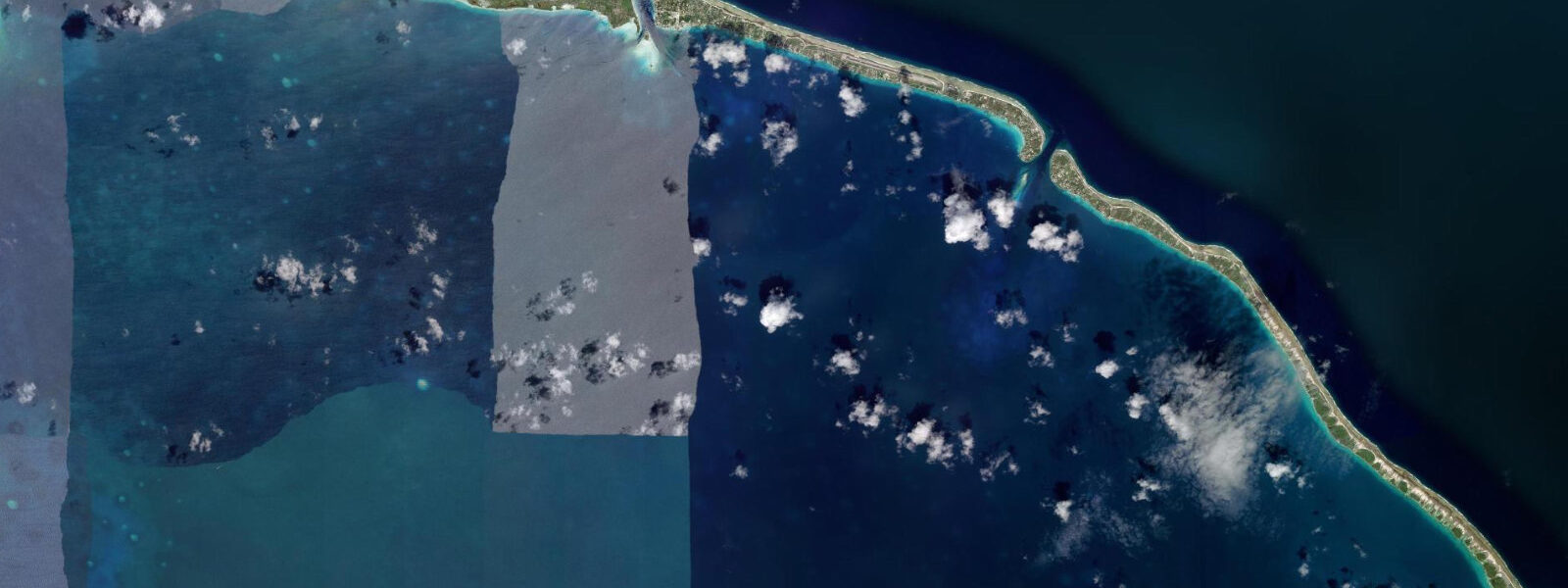
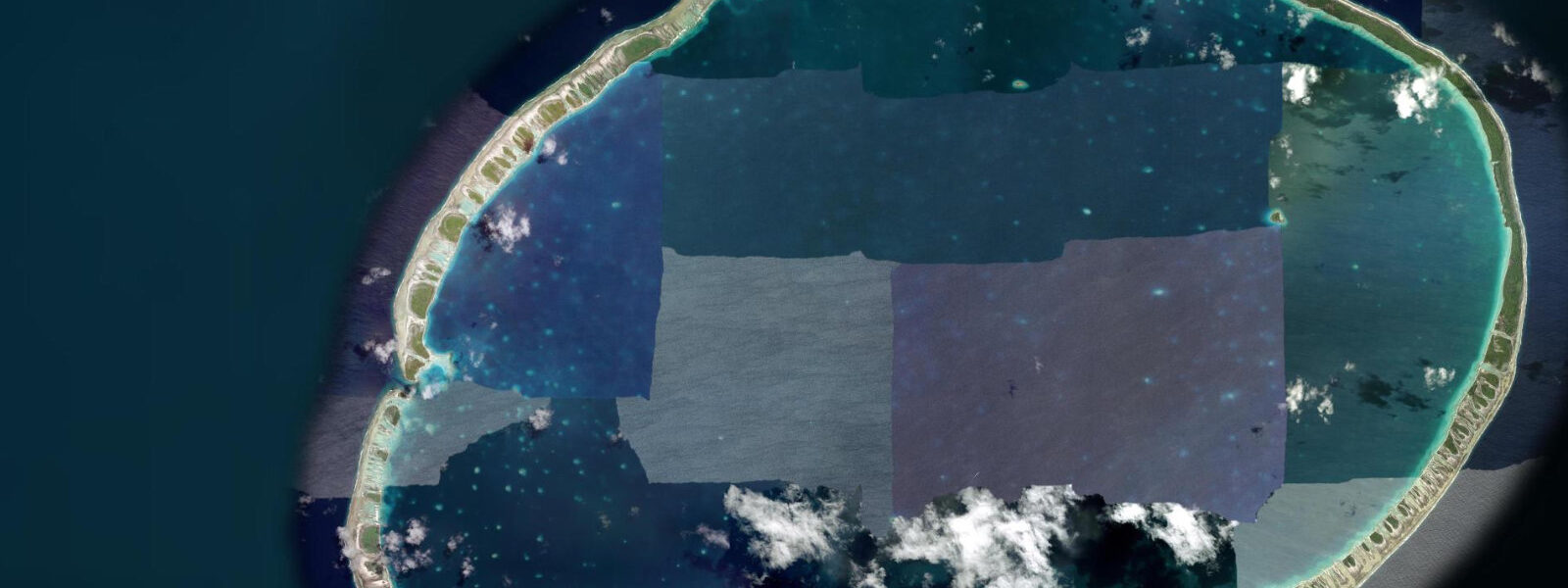
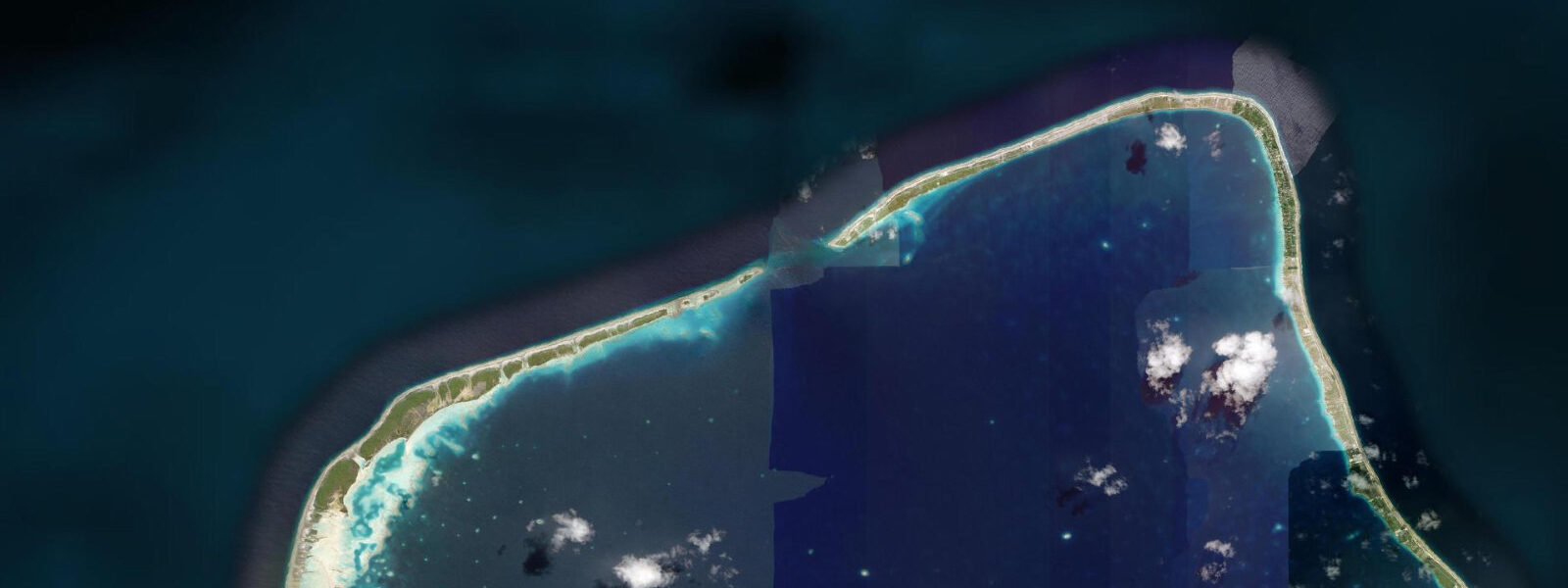
Rangiroa is one of the largest atolls in the world — the lagoon extends approximately 80 kilometres east to west and 30 kilometres north to south, a water body so large that Tahiti could fit inside it. The atoll rim is a narrow rim of coral sand and rock, rising no more than 3 metres above sea level, encircling this enormous lagoon. All the oceanic exchange between the Rangiroa lagoon and the surrounding Pacific happens through two passes: Tiputa Pass on the eastern end and Avatoru Pass further west. The physics of this exchange — enormous volume, narrow bottleneck — produces tidal currents that are among the strongest of any reef pass in French Polynesia.
At spring tides, the current through Tiputa Pass reaches 6 to 8 knots. This is not an exaggeration for effect — at peak flow, the surface of the pass shows standing waves, boils of upwelling water from the bottom, and whirlpools at the channel edges. A swimmer against this current makes no progress. A dive boat running against it at full throttle barely holds position. The current reverses direction four times per day — two flood phases pushing water into the lagoon, two ebb phases draining it — and the transition through slack water, which lasts 15 to 30 minutes at springs, is the window for non-drift diving in the pass.
Spinner dolphins have adopted Tiputa Pass as a daily routine. Each morning on the outgoing tide, a pod of 50 to 200 dolphins surfs the pass current, feeding on fish disoriented by the turbulence and leaping above the standing waves at the pass mouth. The dolphin show in Tiputa is visible from the pass shore in the village of Tiputa, accessible by small boat from Avatoru on the opposite shore. The viewing is best from a boat positioned just inside the lagoon-side entrance of the pass, watching the dolphins work the outgoing current.
Drift diving through Tiputa Pass is the primary marine activity at Rangiroa and is considered one of the world's essential dive sites. The standard profile: enter the water in the blue water just outside the pass mouth on the flood tide, descend to 15 to 25 metres, and allow the current to carry you through the 400-metre pass, across the lagoon-side drop-off, and out into the blue lagoon water. Elapsed time: 20 to 30 minutes. During this transit, the schools of fish in the pass are extraordinary — grey reef shark and blacktip reef shark stacked in the mid-water column, hammerhead shark on the deeper sections (the hammerhead aggregation at Rangiroa is one of the most reliable in French Polynesia), and massive schools of jack and snapper sweeping through the channel.
Avatoru Pass, on the western side of the atoll, carries a smaller volume of water (the pass is narrower than Tiputa) and has a correspondingly gentler current — 2 to 4 knots at springs. The pass has a well-preserved coral community on its inner walls and is more suitable for non-drift reef diving than Tiputa. The village of Avatoru and the airport are on this end of the atoll; most accommodation is on the Avatoru side.
For non-divers, the Blue Lagoon — a shallow section of the outer reef rim on the western atoll, reachable by boat excursion from Avatoru — gives snorkel access to clear, calm water over a sandy and coral bottom with good fish diversity. The boat excursion takes 45 minutes from Avatoru; the site is on the outer rim and accessible in all but rough conditions.
Predictions on this page come from Open-Meteo Marine, a gridded global ocean model. Accuracy is typically within plus or minus 45 minutes on timing and 0.2 to 0.3 metres on height — model-derived, not from a local gauge. The local authority for tide information in French Polynesia is the Service Hydrographique et Océanographique de la Marine (SHOM).
Tide questions about Rangiroa
Quick answers to the most common questions about tide times, range, and water access at Rangiroa.
How fast does the current run through Tiputa Pass?
At peak spring tide flow, the current through Tiputa Pass reaches 6 to 8 knots. At this speed, the surface shows standing waves, upwelling boils, and whirlpools at the channel edges. A swimmer makes no headway against it. The current reverses direction on each tidal phase — flood pushes into the lagoon, ebb drains out — and slack water between phases lasts 15 to 30 minutes at springs. All dive operators plan their Tiputa entries to the tidal cycle. The current timing changes each day by approximately 50 minutes; check with your dive operator for the current day's schedule before any water entry.
Can I see dolphins at Tiputa Pass?
Spinner dolphins (Stenella longirostris) maintain a daily routine at Tiputa Pass. Each morning, as the ebb current runs outward, a pod of 50 to 200 dolphins surfs the standing waves at the pass mouth, feeding on disoriented fish and leaping repeatedly above the current boundary. The viewing is best from a boat positioned inside the lagoon-side entrance, watching the dolphins work the outgoing flow. The performance typically runs for 30 to 90 minutes in the early morning (06:00 to 09:00) as the ebb reaches its peak. Boat excursions to the dolphin watch depart from Avatoru village; book through your accommodation. The dolphin pod is resident year-round.
Is Rangiroa good for non-divers?
Yes. The Blue Lagoon excursion — a boat trip to a shallow section of the outer reef rim — gives snorkellers access to clear, calm water with good fish diversity in 2 to 5 metres depth. The boat trip takes 45 minutes from Avatoru. The excursion is a full-day outing including lunch on a motu (small coral islet) on the outer rim. Day trips to uninhabited motu along the atoll rim can be arranged for beach relaxation in total isolation. The Tiputa dolphin watch is accessible from the surface without diving. Kayak rentals are available in Avatoru for exploring the lagoon's edge.
What sharks can I see at Rangiroa?
Grey reef shark (Carcharhinus amblyrhynchos) and blacktip reef shark (Carcharhinus melanopterus) are present in the pass and surrounding reef year-round, stacked in mid-water columns inside the pass on the tidal current. Hammerhead sharks (Sphyrna lewini, scalloped hammerhead) are present in deeper water at the pass entrances, particularly on early morning flood tides; Rangiroa is one of the most reliable hammerhead sites in French Polynesia. Tiger sharks (Galeocerdo cuvier) have been recorded in the deep water outside the pass. Whale sharks make occasional appearances. All shark observations occur in the context of guided drift dives through the pass.
How do I get to Rangiroa?
Air Tahiti operates multiple daily flights from Papeete (Tahiti-Faa'a Airport) to Rangiroa's Avatoru Airport — approximately 1 hour. The flight is included in some Air Tahiti pass packages. Accommodation ranges from small pensions on the atoll rim to mid-range hotels at Avatoru and higher-end overwater bungalow properties. The atoll has a single road connecting the Avatoru and Tiputa villages (a short boat ride across the pass separates the two ends). Rangiroa is also reachable by the inter-island cargo vessel from Papeete, a 2-day sea journey — schedules vary.
8-day tide table — Rangiroa
Heights relative to MSL. Predictions: Open-Meteo Marine (MeteoFrance SMOC, 0.08° grid) — heights relative to MSL (not chart datum / LAT). Model-derived.
| Day | Type | Time | Height |
|---|---|---|---|
| Mon 03 Aug | Low | 14:00 | 0.6m |
| High | 17:42 | 0.8m | |
| Tue 04 Aug | Low | 00:10 | 0.5m |
| High | 06:15 | 0.7m | |
| Low | 12:10 | 0.5m | |
| High | 18:50 | 0.8m | |
| Wed 05 Aug | — | ||
| Thu 06 Aug | — | ||
| Fri 07 Aug | Low | 16:45 | 0.5m |
| High | 22:45 | 0.8m | |
| Sat 08 Aug | Low | 05:06 | 0.4m |
| High | 11:20 | 0.8m | |
| Sun 09 Aug | Low | 05:50 | 0.4m |
| High | 12:04 | 0.9m | |
| Low | 18:20 | 0.4m | |
| Mon 10 Aug | High | 13:00 | 0.9m |