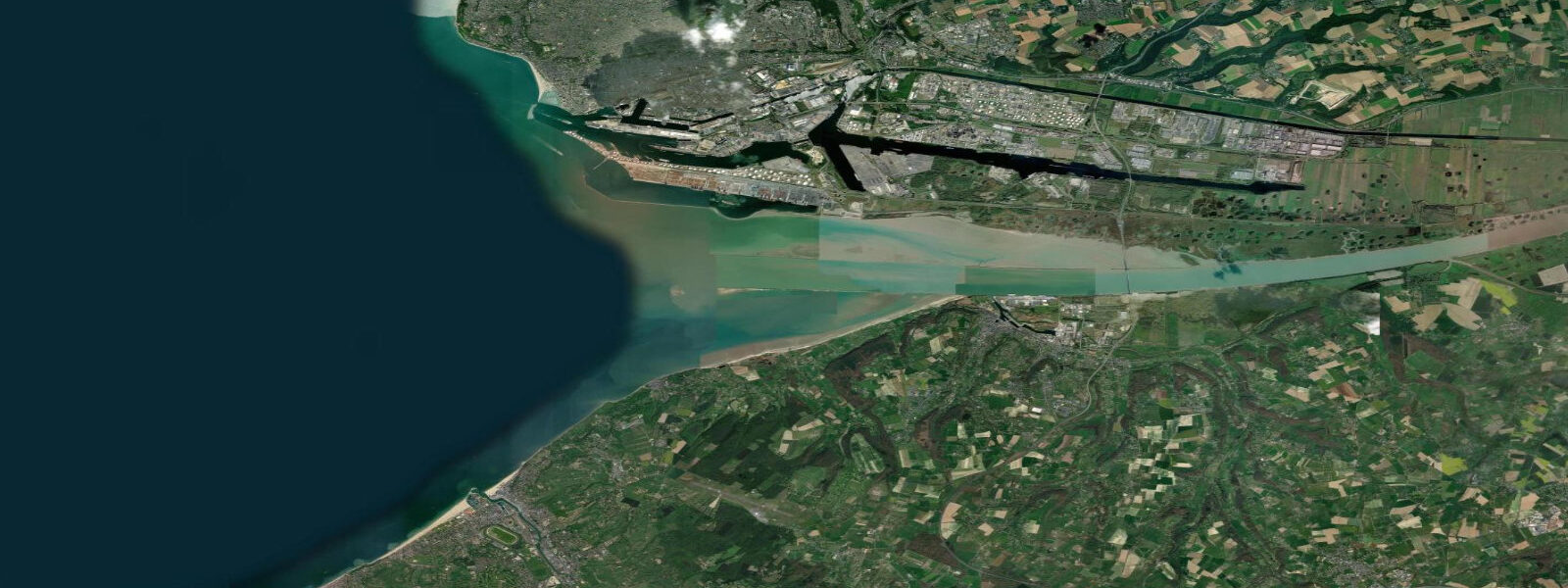
Honfleur tide times
Honfleur tide forecast — heights relative to MSL.
Today's tide times for Honfleur
Tide times at Honfleur on Monday, 3 August 2026: first high tide at 02:00, first low tide at 08:13, second high tide at 13:23, second low tide at 20:25. Sunrise 06:31, sunset 21:38.
Tide chart for Honfleur
24-hour cosine-interpolated curve around the present moment. Heights relative to MSL. Predictions: Predictions: Open-Meteo Marine (MeteoFrance SMOC, 0.08° grid).
Sun, moon and conditions on Mon 03 Aug
Snapshot at build time — refreshes daily. Sea state from Open-Meteo Marine.
Highs and lows next 7 days
Every predicted high and low for the next week, with the daily tidal coefficient (0–120; higher = bigger swing, > 95 means stronger currents).
Other spots nearby
The three closest curated TideTurtle locations to Honfleur, measured by great-circle distance.
Today's solunar windows
Solunar tradition: major periods are the ≈3h windows around moon transit and opposition; minor are ≈2h around moonrise and moonset. Pair with the local tide stage and wind for the best read.
Cycle dates near Honfleur
Last spring tide on Mon 03 Aug (range 6.1m). Next neap on Sat 08 Aug.
Spring tides cluster around new and full moons (biggest swings). Neap tides land on quarter moons (smallest swings). See the spring tide and neap tide glossary entries for the why.
About tides at Honfleur
A short guide to the coastline at Honfleur — geography, sea state, and what the tide is actually doing under your feet.
Honfleur stands at the southern mouth of the Seine Estuary in Calvados, directly opposite Le Havre across a 5-kilometre span of water spanned since 2001 by the Pont de Normandie. The bridge, with its main span of 856 metres and its roadway 52 metres above the water, is visible from virtually everywhere in the town and has become as much a part of the Honfleur horizon as the slate-fronted houses of the Vieux Bassin. The tidal range at Honfleur is among the largest in France.
5 metres, a consequence of the Seine Estuary acting as a tidal funnel: the relatively wide mouth at Le Havre narrows progressively upstream, concentrating tidal energy and amplifying the range. The practical implication for the Vieux Bassin — Honfleur's inner old harbour, surrounded on three sides by the slate-fronted 17th-century buildings that have defined its appearance since Boudin painted it in the 1850s — is that direct tidal access is only possible through lock gates (the écluse) during a window of roughly 2 to 3 hours either side of high water. Vessels in the Vieux Bassin are locked in at any other state.
This is not a minor operational detail for anyone arriving by boat: departure time is fixed by the lock schedule, not by passenger convenience. The Vieux Bassin operates on the tide's terms. Honfleur's reputation as a painters' harbour is earned.
Eugène Boudin was born here and began his career here; he directly introduced Claude Monet to plein-air painting on these quays. Gustave Courbet, Johan Barthold Jongkind, and Cézanne all came. The Musée Eugène Boudin, housed near the Sainte-Catherine church (France's largest wooden church, built by Honfleur's shipwrights), holds an important collection of their work.
The light on the estuary, particularly in the morning with the sun rising over the Pays de Caux plateau to the east, is the same light they were painting. The Seine bore — the mascaret — was historically significant at Honfleur and upstream. Before the barrages at Poses and the channelling works of the 19th century, the bore was a genuine tidal bore advancing up the river channel on spring tides.
0-metre bore can still be observed near the estuary on large spring tides, particularly with an onshore wind reinforcing the surge. It does not announce itself on a fixed schedule independent of the springs-neaps cycle: it requires a large spring tide and the right meteorological conditions, and it does not run on a schedule that allows casual viewing unless you monitor the tide tables closely. The Seine Estuary is a significant migratory bird habitat.
The natural reserve of the Seine Estuary mouth (Réserve naturelle de l'estuaire de la Seine) extends across the intertidal mudflats and saltmarshes on the Le Havre side; from the heights above Honfleur — the Côte de Grâce, with the Notre-Dame de Grâce chapel — the estuary and its birdlife are visible at any state of tide. On a big low spring tide, the exposed mudflats support large numbers of waders and wildfowl. 5-metre spring tidal range at Honfleur has a direct bearing on the fishing and pleasure-craft rhythms of the inner harbour.
Anglers targeting bass and sea trout (truite de mer) fish the ebbing tide at the lock gate sill and along the Vieux Bassin waterfront walls — the ebb current over the stone creates feeding lanes for predatory fish taking advantage of the accelerating flow. Pleasure craft berthed in the inner basin typically depart on the first of flood, taking advantage of both the lock-gate opening and a fair tidal stream down the estuary toward Le Havre if heading for the Channel. The estuary mouth at Honfleur is not the place to anchor or drift without knowing the current state of the tide; the tidal streams in the Seine approach channel are strong enough at springs to set an inattentive vessel significantly off track.
Predictions on this page come from Open-Meteo Marine, a gridded global ocean model. 3 metres on height — model-derived, not from a local gauge. fr.
Tide questions about Honfleur
Quick answers to the most common questions about tide times, range, and water access at Honfleur.
What is the tidal range at Honfleur, and why is it so large?
Mean spring tidal range at Honfleur is approximately 7.5 metres — among the largest in France. The high range is a product of the Seine Estuary's funnel geometry: the estuary is wide at its mouth near Le Havre and narrows progressively inland, concentrating tidal energy and amplifying the vertical range. The same effect, operating at much larger scale, produces the 14-metre springs at the Bay of Mont Saint-Michel. Neap range at Honfleur drops to roughly 3 to 3.5 metres. The 7.5-metre spring range means the water surface at the Vieux Bassin quaysides rises and falls by a storey and a half between low and high water on a big spring day.
When can boats enter or leave the Vieux Bassin at Honfleur?
Access to the Vieux Bassin inner harbour is controlled by lock gates (écluse) that open during a window of approximately 2 to 3 hours either side of high water — the exact window depends on the actual tide height on the day, since the 7.5-metre spring range means the lock-gate sill is submerged at high water but exposed well before low water. Vessels planning to enter or leave the Vieux Bassin must time their arrival or departure within this window. Lock schedules are published by the Port of Honfleur (port-de-honfleur.fr). Outside the lock window, boats in the basin are locked in and cannot leave regardless of weather or schedule.
Is there still a tidal bore (mascaret) on the Seine at Honfleur?
The Seine bore (mascaret) was historically significant at Honfleur and upstream but has been substantially suppressed by the hydraulic engineering — barrages, channelling, dredging — that transformed the Seine into a navigable commercial river. A residual bore of 0.5 to 1.0 metres can still be observed near the estuary mouth on large spring tides, particularly when a southerly or southwesterly wind reinforces the incoming surge. It is not a regular, predictable spectacle that arrives at a fixed time; it requires the combination of a large spring tide and favourable meteorological conditions. Monitoring SHOM tide predictions alongside Météo-France forecasts gives the best indication of when conditions are likely to produce a notable bore.
Why is Honfleur considered a significant artists' location?
Honfleur has a documented history as a centre of plein-air painting dating from the 1850s and 1860s. Eugène Boudin, born in Honfleur in 1824, began painting the estuary light and beach scenes here and directly introduced Claude Monet to outdoor painting on these quays — Monet later credited Boudin as the artist who taught him to see. Gustave Courbet, Johan Barthold Jongkind, and Paul Cézanne all worked here during the same period. The Musée Eugène Boudin in the centre of town holds a substantial collection of their work alongside later 20th-century paintings. The estuary light — particularly the morning sun rising over the chalk plateau to the east and reflecting off the Seine's wide tidal surface — is the same light they were working with.
Where does the tide data for Honfleur come from, and how accurate is it?
Predictions on this page come from Open-Meteo Marine, a free gridded global ocean model. They are model-derived, not from a dedicated local gauge at Honfleur — accuracy is typically within plus or minus 45 minutes on timing and 0.2 to 0.3 metres on height. Given Honfleur's 7.5-metre spring range, the proportional height uncertainty is small — under 4% of spring range — making these predictions a reliable planning reference. For lock-gate timing and commercial navigation, always verify against the official Port of Honfleur lock schedule and SHOM tide tables, available at shom.fr.
8-day tide table — Honfleur
Heights relative to MSL. Predictions: Open-Meteo Marine (MeteoFrance SMOC, 0.08° grid) — heights relative to MSL (not chart datum / LAT). Model-derived.
| Day | Type | Time | Height |
|---|---|---|---|
| Mon 03 Aug | High | 02:00 | 2.1m |
| Low | 08:13 | -3.6m | |
| High | 13:23 | 2.5m | |
| Low | 20:25 | -3.2m | |
| Tue 04 Aug | High | 01:37 | 2.5m |
| Low | 08:40 | -3.4m | |
| High | 14:07 | 2.5m | |
| Low | 21:00 | -3.0m | |
| Wed 05 Aug | High | 02:20 | 2.5m |
| Low | 09:16 | -3.1m | |
| High | 14:52 | 2.3m | |
| Low | 21:37 | -2.8m | |
| Thu 06 Aug | High | 03:12 | 2.2m |
| Low | 10:03 | -2.8m | |
| High | 15:43 | 1.9m | |
| Low | 22:24 | -2.5m | |
| Fri 07 Aug | High | 04:08 | 1.8m |
| Low | 11:01 | -2.5m | |
| High | 16:44 | 1.6m | |
| Sat 08 Aug | Low | 00:10 | -2.1m |
| High | 05:13 | 1.5m | |
| Low | 13:32 | -2.2m | |
| High | 18:05 | 1.4m | |
| Sun 09 Aug | Low | 02:11 | -2.4m |
| High | 07:45 | 1.2m | |
| Low | 14:46 | -2.5m | |
| High | 20:37 | 1.5m | |
| Mon 10 Aug | Low | 01:00 | -1.5m |