Hanko tide times
Hanko tide forecast — heights relative to MSL.
Tide chart for Hanko
24-hour cosine-interpolated curve around the present moment. Heights relative to MSL. Predictions: Predictions: Open-Meteo Marine (MeteoFrance SMOC, 0.08° grid).
Sun, moon and conditions on Tue 04 Aug
Snapshot at build time — refreshes daily. Sea state from Open-Meteo Marine.
Highs and lows next 7 days
Every predicted high and low for the next week, with the daily tidal coefficient (0–120; higher = bigger swing, > 95 means stronger currents).
Other spots nearby
The three closest curated TideTurtle locations to Hanko, measured by great-circle distance.
Today's solunar windows
Solunar tradition: major periods are the ≈3h windows around moon transit and opposition; minor are ≈2h around moonrise and moonset. Pair with the local tide stage and wind for the best read.
About tides at Hanko
A short guide to the coastline at Hanko — geography, sea state, and what the tide is actually doing under your feet.
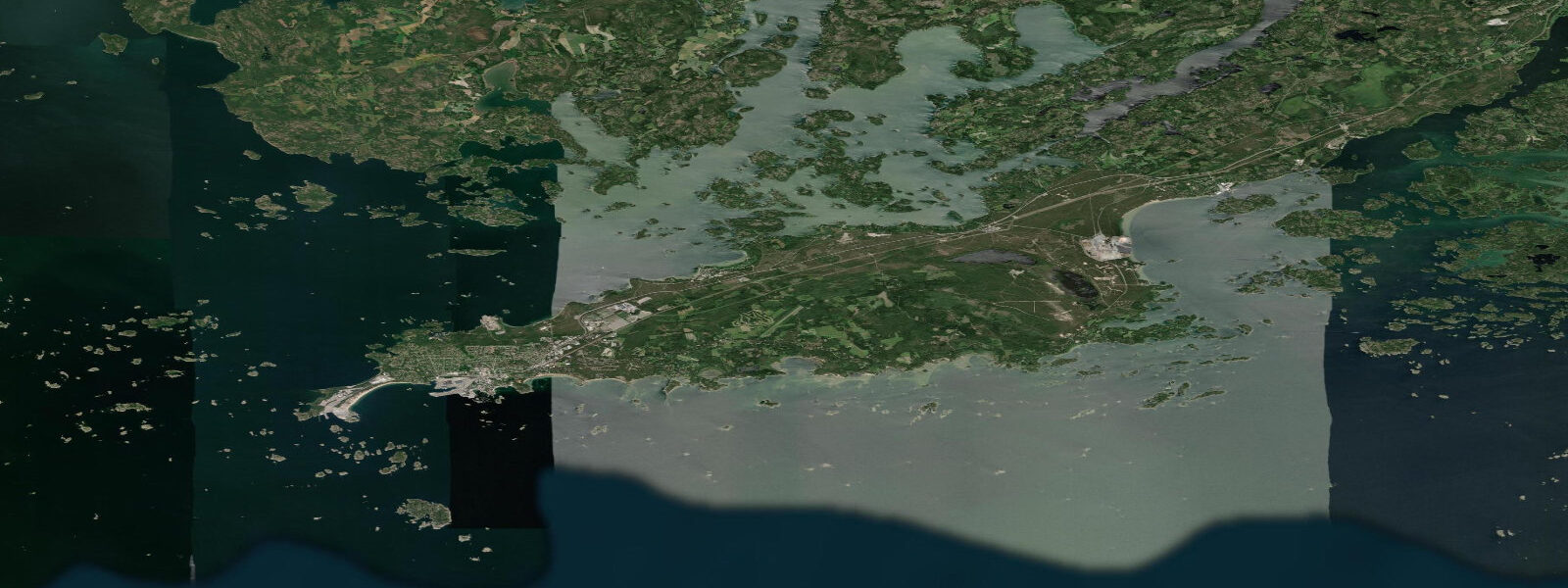
Hanko (Swedish: Hangö) is the southernmost town in Finland, at the tip of a narrow granite peninsula extending south into the Baltic. The geography is emphatic: the peninsula runs roughly 30 kilometres south-southeast from the mainland, narrowing as it goes, and Hanko sits near the southern end. It is the closest point of Finnish territory to the shipping lanes of the central Baltic and the entrance to the Gulf of Finland.
The town also records the highest annual sunshine hours in Finland, a function of the open exposure and the tendency for cloud to clear over the sea. Sandy beaches face the open Baltic on the south and southwest shores of the peninsula; the longest is Itäinen Pitkäniemi (Eastern Long Point Beach), a several-kilometre stretch of Baltic sand backed by pine forest. The beach faces south-southeast; it catches the afternoon sun through to evening in summer.
The water here is the southern Baltic — less saline than the North Sea, clearer than the inner Gulf of Finland, warm in July and August (19 to 22°C in a typical summer, occasionally 24°C in extended heat). The astronomical tide at Hanko is essentially zero. The Baltic Sea is an enclosed basin and the tidal range here is 2 to 5 centimetres — below the threshold of any practical relevance for beach use, swimming, sailing, or angling.
The water level on any given day at Hanko is determined by weather: wind direction and strength, atmospheric pressure, and the seiche oscillation of the Baltic basin (a standing wave with a natural period of roughly 27 hours that adds or subtracts tens of centimetres at any coastal point). A sustained westerly pushes water into the Gulf of Finland and raises levels at Hanko and along the Finnish coast generally; an easterly draws it back. The FMI (Finnish Meteorological Institute) Hanko tide gauge is a long-term reference station in the Finnish sea-level monitoring network; the gauge record is one of the longer continuous records on the Gulf of Finland and contributes to Baltic sea-level rise assessments.
FMI publishes real-time sea-level observations and short-range water-level forecasts through its open-data service. Hanko has a well-documented WWII history. The Moscow Peace Treaty of March 1940 that ended the Winter War required Finland to lease the Hanko peninsula to the Soviet Union for 30 years as a naval base; Soviet forces occupied Hanko from March 1940 to December 1941.
Finnish and Soviet fighting for the peninsula in the Continuation War (June 1941 onwards) left fortifications, gun emplacements, and memorial sites across the peninsula that are accessible to walkers. The Soviet evacuation of Hanko in December 1941 under Finnish and German naval pressure is commemorated at the Hangon Linnoitusmuseo (Hanko Fortification Museum). Sailing is central to summer Hanko: the Hanko Regatta (Hangö Regattan) is the largest sailboat race in Finland, drawing hundreds of boats annually over a course in the outer archipelago.
The absence of tide is characteristic: the sailing calendar is built around wind and weather, not tidal windows. Fishing from the peninsula rocks and from small boats targets perch, pike-perch, and Baltic herring; the solunar tradition has followers here as it does in other Finnish coastal fishing communities, though the angler tradition's predictions are no more or less reliable than elsewhere. Predictions on this page come from Open-Meteo Marine, a gridded global ocean model.
3 metres on height — substantially exceeds the actual tidal signal. The values shown represent weather-driven and seiche water-level variation.
Tide questions about Hanko
Quick answers to the most common questions about tide times, range, and water access at Hanko.
What is the tide like at Hanko?
The astronomical tide at Hanko is 2 to 5 centimetres — essentially zero in practical terms. The Baltic Sea is nearly enclosed and has almost no oceanic tidal connection through the narrow Danish straits. There is no meaningful tidal rise and fall at Hanko: the water level on any given day is governed by wind direction, atmospheric pressure, and the Baltic's seiche oscillation (natural period approximately 27 hours). FMI (Finnish Meteorological Institute) operates the Hanko reference gauge; real-time sea-level data and short-range forecasts are published through the FMI open-data portal at en.ilmatieteenlaitos.fi.
Why does Finland have no tide?
The Baltic Sea is a nearly enclosed basin. Its only oceanic connection is through the narrow Danish straits — the Øresund, the Store Bælt, and the Lillebælt — which are too constricted and shallow to allow a meaningful tidal wave to propagate into the Baltic interior. By the time any tidal signal reaches Finnish waters, it has reduced to 2 to 5 centimetres. The controlling forces on Baltic water level are wind setup, atmospheric pressure (the inverted barometer effect: roughly 1 cm per millibar), and the Baltic's own seiche oscillation, which has a natural period of about 27 hours.
What is the WWII history at Hanko?
The Moscow Peace Treaty of March 1940 ended the Winter War by requiring Finland to cede the Karelian Isthmus to the Soviet Union and to lease the Hanko peninsula for 30 years as a Soviet naval base. Soviet forces occupied and fortified the peninsula from March 1940 to December 1941. In the Continuation War (from June 1941), Finnish and German forces blockaded the Soviet Hanko garrison; the Soviets evacuated by sea in December 1941. The Hangon Linnoitusmuseo (Hanko Fortification Museum) covers the occupation period. Fortification remnants and memorial sites are scattered across the peninsula and accessible on foot.
Where do these predictions come from?
Open-Meteo Marine, a gridded global ocean model; accuracy is typically plus or minus 45 minutes on timing and 0.2 to 0.3 metres on height. At Hanko, where the astronomical tide is 2 to 5 centimetres, the model height uncertainty substantially exceeds the actual tidal signal. The values shown reflect weather-driven and seiche water-level variation in the outer Gulf of Finland, not an astronomical cycle. FMI (Finnish Meteorological Institute) operates the Hanko gauge, one of the long-term reference stations for Finnish sea-level monitoring; the gauge record contributes to Baltic and global sea-level rise datasets.
Is this page safe to use for navigation?
No. The Hanko area sits at the entrance to the Gulf of Finland, one of the busiest commercial shipping corridors in the Baltic. The outer Hanko archipelago contains unmarked reefs and shoals that require current Finnish Hydrographic Office charts (published by Väylävirasto, the Finnish Transport Infrastructure Agency). FMI publishes real-time sea-level data and marine weather forecasts for the Gulf of Finland and the Archipelago Sea. The Finnish Transport Agency publishes maritime notices for Finnish waters. Open-Meteo Marine gridded predictions are not authoritative for any vessel operation in the Hanko fairway.
8-day tide table — Hanko
Heights relative to MSL. Predictions: Open-Meteo Marine (MeteoFrance SMOC, 0.08° grid) — heights relative to MSL (not chart datum / LAT). Model-derived.
| Day | Type | Time | Height |
|---|---|---|---|
| Tue 04 Aug | — | ||
| Wed 05 Aug | — | ||
| Thu 06 Aug | — | ||
| Fri 07 Aug | — | ||
| Sat 08 Aug | — | ||
| Sun 09 Aug | High | 17:00 | 0.0m |
| Mon 10 Aug | — | ||
| Tue 11 Aug | Low | 02:00 | -0.0m |