Turku tide times
Turku tide forecast — heights relative to MSL.
Today's tide times for Turku
Tide times at Turku on Tuesday, 4 August 2026: first high tide at 06:00am. Sunrise 05:13am, sunset 09:59pm.
Tide chart for Turku
24-hour cosine-interpolated curve around the present moment. Heights relative to MSL. Predictions: Predictions: Open-Meteo Marine (MeteoFrance SMOC, 0.08° grid).
Sun, moon and conditions on Tue 04 Aug
Snapshot at build time — refreshes daily. Sea state from Open-Meteo Marine.
Highs and lows next 7 days
Every predicted high and low for the next week, with the daily tidal coefficient (0–120; higher = bigger swing, > 95 means stronger currents).
Other spots nearby
The three closest curated TideTurtle locations to Turku, measured by great-circle distance.
Today's solunar windows
Solunar tradition: major periods are the ≈3h windows around moon transit and opposition; minor are ≈2h around moonrise and moonset. Pair with the local tide stage and wind for the best read.
About tides at Turku
A short guide to the coastline at Turku — geography, sea state, and what the tide is actually doing under your feet.
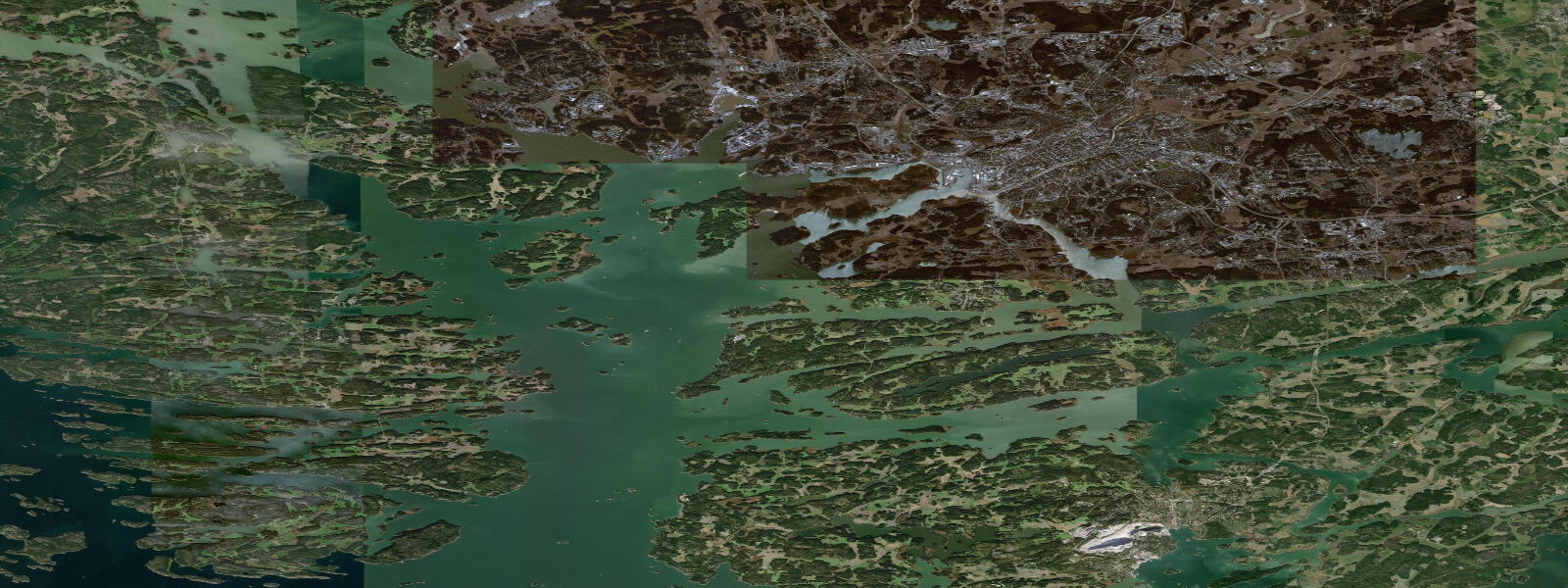
Turku sits at the mouth of the Aura River where it opens into the Archipelago Sea — the most densely islanded marine zone in Europe, with over 20,000 islands, islets, and skerries between the Finnish mainland and the open Baltic. The Aura River runs through the city centre as both a working waterway and an urban living room: restaurant barges and museum vessels line the quays between the medieval cathedral quarter and the market hall, and in summer the river banks are the social backbone of the city. At the river mouth, Turku Castle — completed in its original form in the late 13th century — anchors the western approach. The castle is the oldest surviving stone building in Finland.
The coastal regime at Turku is Baltic non-tidal. Astronomical tidal range is approximately 0.1 metres. Sea level in the Archipelago Sea and the Aura River approach is driven by the same wind-and-pressure dynamics that govern the entire Finnish coast: persistent southwesterlies raise levels, easterlies lower them, and Baltic seiches add a 27-hour oscillation that lingers after weather events have passed. The practical implications for coastal access — boat ramps, shallow approaches in the outer archipelago, the mooring depth along the Aura River quays — respond to these weather-driven changes rather than to any tidal cycle. A strong Baltic low can raise the sea level at Turku by 40 to 70 centimetres above mean; a sustained dry easterly sequence in spring can drop it by a similar margin, temporarily exposing rock ledges that are normally just below the waterline.
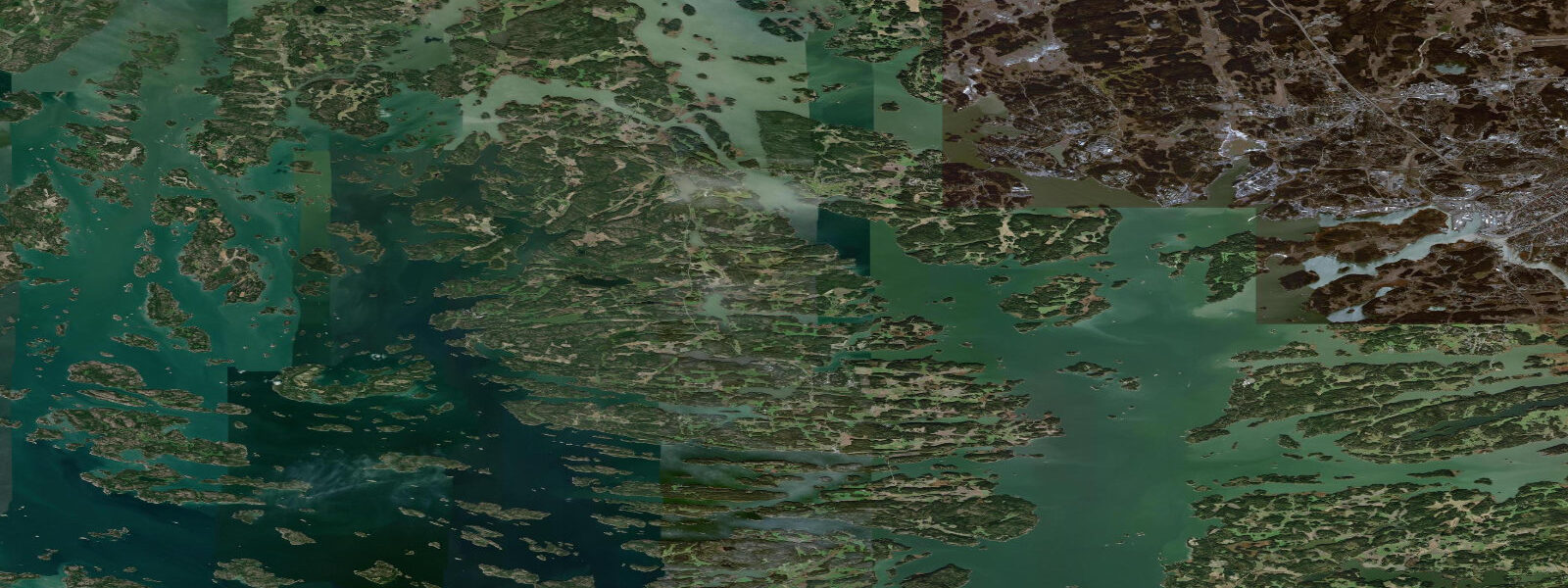
The Turku Archipelago (Turunmaa saaristo) makes Turku the gateway to one of the world's most remarkable coastal environments. The ferry network threading through the archipelago — the Archipelago Ring Road (Saaristotie) and its cable ferries — serves the permanent communities on the larger islands year-round. Viking Line and Silja Line long-distance ferries to Stockholm depart from the harbour west of Turku Castle, running overnight through the outer archipelago and across the Baltic. These ferries operate on fixed schedules regardless of sea level; the deeper approach channels used by large vessels have sufficient depth margin that the 0.1 to 0.7 metre range of Baltic sea-level variation is not operationally significant for them.
For smaller-craft navigation in the inner archipelago, the situation is different. The passages between the tightly packed islands of the inner Archipelago Sea are shallow in places, and the Finnish Maritime Administration's charts show numerous passages where depth at chart datum is under two metres. A 0.4-metre drop in sea level from an easterly weather setup reduces the available depth on those passages by 40 per cent. The FMI (Ilmatieteen laitos) sea-level gauge at Turku Harbour and the real-time coastal monitoring network give the correction that navigators apply to charted depths.
Turku Castle and the cathedral are the two defining historic landmarks. The castle, at the river mouth, houses the Historical Museum of Turku with exhibits spanning eight centuries of Finnish and Baltic maritime history. The medieval cathedral on Cathedral Hill, 1.2 kilometres upriver, is the mother church of the Evangelical Lutheran Church of Finland and the religious centre of the country since the 13th century. The Market Square between them, and the covered market hall (Kauppahalli) on the river bank, form the commercial core of the city.
Sea-kayaking and recreational sailing in the Archipelago Sea are major summer activities from Turku. Day paddles in the inner islands are accessible to intermediate kayakers; the outer archipelago and the open sea approaches to Utö — the southernmost permanently inhabited island in Finland, 100 kilometres southwest of Turku — are serious open-water passage for experienced sea kayakers and offshore sailing vessels. No tidal current to account for, but the Baltic's brackish water temperature, even in July and August, is a cold-water risk in the event of capsize, and the FMI marine forecast is mandatory reading before any passage into the outer archipelago.
Sea-level predictions on this page come from Open-Meteo Marine, a global gridded ocean model, typically accurate to within plus or minus 45 minutes and 0.2 to 0.3 metres. At Turku, where the astronomical range is approximately 0.1 metres, the model uncertainty exceeds the signal. For actual sea-level conditions affecting approaches and harbour depths, use the FMI real-time gauge data and coastal forecast at en.ilmatieteenlaitos.fi.
Tide questions about Turku
Quick answers to the most common questions about tide times, range, and water access at Turku.
Does Turku have a real tide to plan around?
No. The astronomical tidal range at Turku is approximately 0.1 metres — not operationally significant. Sea level in the Archipelago Sea is driven by wind, atmospheric pressure, and Baltic seiches. Southwesterlies raise the waterline at Turku by 30 to 70 centimetres above mean; easterlies lower it. The FMI (Ilmatieteen laitos) publishes real-time sea-level gauge readings and storm-surge warnings at en.ilmatieteenlaitos.fi — that is the tool to use when planning water-based activity in the Archipelago Sea.
How do ferry services from Turku operate in relation to sea level?
The large overnight ferries to Stockholm (Viking Line, Silja Line) use deep-dredged approach channels and are unaffected by the Baltic's 0.1 to 0.7 metre sea-level variability. The archipelago cable ferries on the Saaristotie (Archipelago Ring Road) operate on fixed schedules through both shallow inner passages and more exposed reaches. Cable ferries are unaffected by sea level; the deeper-draft tourist and commuter vessels on the outer island routes operate within their design margins across the full range of Baltic sea-level variation. None of the scheduled ferry services in the Turku area adjust their timetables for sea level.
Is the Turunmaa Archipelago safe for sea-kayaking?
The inner Archipelago Sea around Turku is suitable for intermediate and experienced sea-kayakers, with sheltered passages between islands that provide protection from the open Baltic fetch on most wind directions. The outer archipelago, from roughly the Houtskär–Korpo area southwestward toward Utö, is open-water paddling requiring expedition experience, a VHF radio, and mandatory route planning with the FMI marine forecast. The water temperature reaches 17 to 21 degrees Celsius in July and August — cold enough that immersion without a wetsuit or drysuit carries hypothermia risk. The archipelago has no tidal current, but Baltic weather changes quickly.
What is Turku Castle and when can I visit?
Turku Castle (Turun linna) stands at the mouth of the Aura River, a few hundred metres from the Viking Line and Silja Line ferry terminals. Construction began around 1280 and the castle was expanded substantially in the 15th and 16th centuries during its role as the seat of Swedish royal governance in Finland. The Historical Museum of Turku operates inside the castle with permanent and temporary exhibitions on Finnish and Nordic history. The castle is open year-round (hours vary by season); admission is charged. The approach from the river or harbour is straightforward; sea level does not affect access to the castle grounds.
Is this sea-level information safe to use for navigating the Archipelago Sea?
No. Open-Meteo Marine gridded predictions are not a substitute for Finnish Maritime Administration nautical charts or official FMI sea-level data. The inner Archipelago Sea has numerous passages where charted depth is under two metres, and wind-driven sea-level variation of 0.3 to 0.5 metres is a meaningful fraction of that margin. Navigation in the archipelago requires the current charts (available from Karttakeskus and the Finnish Maritime Administration), real-time FMI sea-level readings for the depth correction, and local knowledge of the shallowest passages. Do not rely on gridded model predictions for passage planning through the Turku Archipelago.
6-day tide table — Turku
Heights relative to MSL. Predictions: Open-Meteo Marine (MeteoFrance SMOC, 0.08° grid) — heights relative to MSL (not chart datum / LAT). Model-derived.
| Day | Type | Time | Height |
|---|---|---|---|
| Tue 04 Aug | High | 06:00 | 0.0m |
| Wed 05 Aug | — | ||
| Thu 06 Aug | — | ||
| Fri 07 Aug | Low | 21:00 | -0.0m |
| Sat 08 Aug | — | ||
| Sun 09 Aug | High | 18:00 | 0.1m |