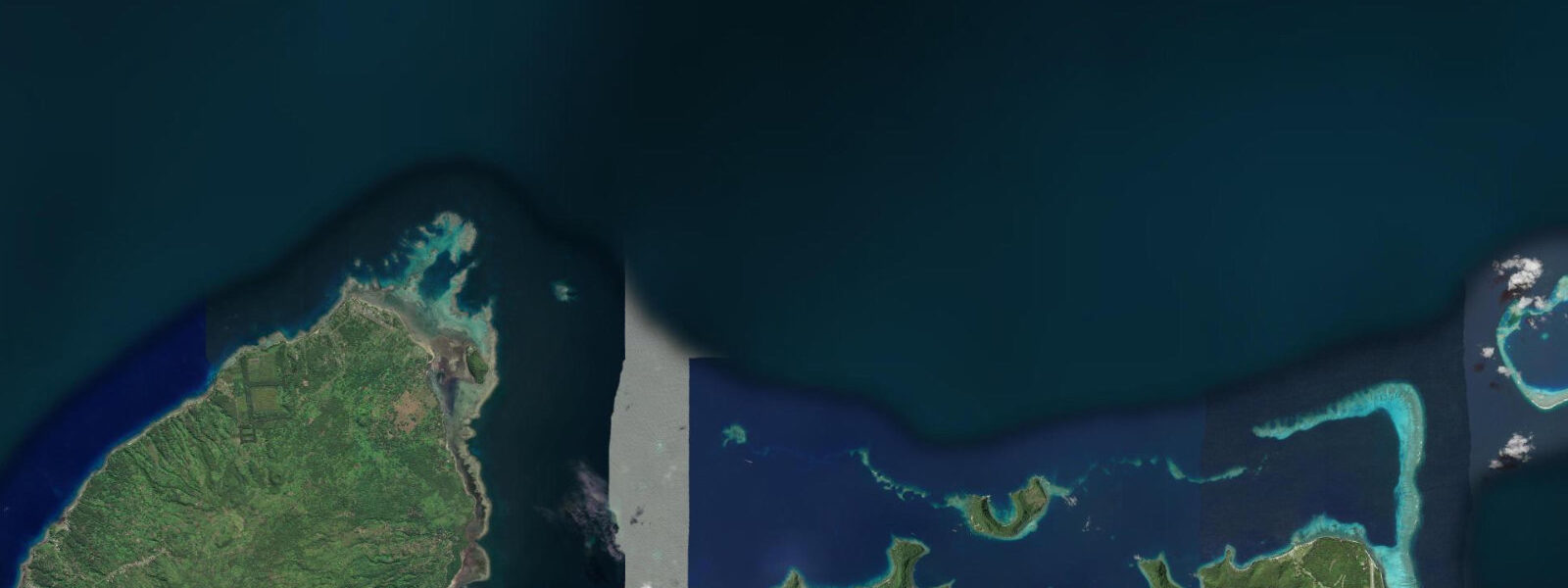
Matagi Island tide times
Matagi Island tide forecast — heights relative to MSL.
Tide chart for Matagi Island
24-hour cosine-interpolated curve around the present moment. Heights relative to MSL. Predictions: Predictions: Open-Meteo Marine (MeteoFrance SMOC, 0.08° grid).
Sun, moon and conditions on Thu 06 Aug
Snapshot at build time — refreshes daily. Sea state from Open-Meteo Marine.
Highs and lows next 7 days
Every predicted high and low for the next week, with the daily tidal coefficient (0–120; higher = bigger swing, > 95 means stronger currents).
Other spots nearby
The three closest curated TideTurtle locations to Matagi Island, measured by great-circle distance.
Today's solunar windows
Solunar tradition: major periods are the ≈3h windows around moon transit and opposition; minor are ≈2h around moonrise and moonset. Pair with the local tide stage and wind for the best read.
Cycle dates near Matagi Island
Next spring tide on Mon 10 Aug (range 1.6m). Last neap on Tue 04 Aug.
Spring tides cluster around new and full moons (biggest swings). Neap tides land on quarter moons (smallest swings). See the spring tide and neap tide glossary entries for the why.
About tides at Matagi Island
A short guide to the coastline at Matagi Island — geography, sea state, and what the tide is actually doing under your feet.
Matagi Island — sometimes spelled Matangi — is a small, privately held island approximately 12 kilometres northeast of Taveuni, in the waters between the Lau Group and the main Fiji island chain. The island is roughly horseshoe-shaped, the rim of an ancient volcanic caldera that has partially subsided, leaving the central lagoon open to the sea to the northwest. The entire island, including the lagoon and surrounding reef, is managed as a private resort with a maximum occupancy of around 20 guests. Access is by boat transfer from Taveuni.
The tidal regime at Matagi is mixed semidiurnal, with a spring range of approximately 1.0 metre — slightly smaller than at Taveuni or Savusavu because of the island's more exposed, open-ocean position. The diurnal inequality is pronounced. The most functionally important tidal event for reef access is the incoming tide through the lagoon opening, which draws cleaner Pacific water over the reef and into the lagoon interior. Manta rays enter the lagoon on incoming tides, particularly during the manta season (April to October in Fiji), using the lagoon's plankton-rich surface water for feeding. The incoming tide window — typically 2 to 3 hours around low water — is when manta encounters in the lagoon are most frequent.
The outer reef wall on the southwestern and southeastern faces of Matagi drops from the reef crest at 2 to 5 metres to a sand slope at 30 metres and continues beyond recreational limits. The wall has not been subjected to the level of diving activity of the Rainbow Reef; the coral architecture is undisturbed and the fish community is dense. Barracuda school in the mid-water on the southwest face on the incoming tide; white-tip reef sharks rest on the sand at the base of the wall at 25 to 28 metres. Grey reef sharks patrol the outer wall on the tidal current.
The lagoon interior, in 2 to 5 metres, has a coral garden of hard coral heads and table coral formations. The lagoon is calm in all but the strongest trade wind conditions — the horseshoe reef rim provides 270 degrees of protection. Snorkelling inside the lagoon is accessible to all ability levels. The manta encounters in the lagoon occur at the surface or just below it — the animals are in the upper 5 metres when feeding on plankton brought in by the incoming tide.
For fishing, the outer reef edge and the channel outside the lagoon opening target reef fish on the flood tide: grouper (several species), red bass (Lutjanus bohar), and yellowfin tuna passing in the blue water beyond the reef. Trolling around the island is productive in the early morning on the outgoing tide, when baitfish are pushed off the reef and pelagic species are active.
The island's tropical forest is essentially undisturbed — no introduced rats (a systematic eradication programme has been maintained since the resort's establishment), which means ground-nesting birds that are absent from many Pacific islands where rats have colonised are present at Matagi. Shearwaters nest in burrows in the forest floor; their nocturnal calling is audible from the beach on calm nights. Fruit doves and orange doves (the same Taveuni endemic) visit the island forest.
Predictions on this page come from Open-Meteo Marine, a gridded global ocean model. Accuracy is typically within plus or minus 45 minutes on timing and 0.2 to 0.3 metres on height — model-derived, not from a local gauge. The local tide authority is the Fiji Meteorological Service.
Tide questions about Matagi Island
Quick answers to the most common questions about tide times, range, and water access at Matagi Island.
Do manta rays visit the Matagi Island lagoon?
Yes, particularly during the Fiji manta season (April to October) and on incoming tides. Manta rays enter the lagoon through the northwest opening on the flood tide, feeding on plankton concentrated in the lagoon's sheltered surface water. Encounters occur at the surface to 5 metres depth inside the lagoon. The incoming tide window — 2 to 3 hours around and after low water — is the most reliable period. Encounters are not guaranteed on any given day but are regular enough that the resort's dive guides plan water activities around the tidal phase during manta season.
What is the diving like on the Matagi outer reef wall?
The outer reef wall drops from the reef crest at 2 to 5 metres to 30+ metres on the southwestern and southeastern faces. The wall is in excellent condition — undisturbed coral architecture with encrusting and plating hard coral, sea fans, and soft coral in current-swept sections. Fish aggregations include barracuda in mid-water on the incoming tide, grey reef sharks on the outer wall current, and white-tip reef sharks resting at 25 to 28 metres on the sand base. Dives are conducted with the resort's dive guides; the wall is accessible by boat from the island in 5 minutes.
How do I get to Matagi Island?
Matagi Island is a private resort accessible by boat transfer from Taveuni. Guests fly to Taveuni's Matei Airport (domestic flights from Nadi or Suva), where the resort's boat meets them. The sea crossing from Matei to Matagi takes approximately 45 minutes to 1 hour depending on conditions. As a private resort with limited capacity (approximately 20 guests maximum), all visits require advance booking through the resort. The island is not accessible for day visits; all stays are residential.
Why are there no rats on Matagi Island?
The resort has maintained an active rodent eradication and exclusion programme since its establishment. Rats are the primary threat to ground-nesting seabirds on Pacific islands — they predate eggs and chicks of species like shearwaters and petrels that nest in burrows or on the ground. On islands without rat control, these species are absent or severely reduced. Matagi's rat-free status allows wedge-tailed shearwaters and other burrowing seabirds to nest in the forest floor. Their nocturnal calling — a wailing, almost human-sounding cry — is audible from the beach on calm nights during the nesting season (October to March).
What is the tidal range at Matagi Island?
Spring tidal range at Matagi Island is approximately 1.0 metre — slightly smaller than Taveuni due to Matagi's more exposed open-ocean position. The regime is mixed semidiurnal with a pronounced diurnal inequality. The most important tidal event for visitors is the incoming tide through the lagoon opening, which brings cleaner water, better visibility, and manta ray feeding activity. Predictions here come from Open-Meteo Marine (±45 minutes on timing, ±0.3 m on height). Not for navigation; consult the Fiji Meteorological Service for reference station predictions.
7-day tide table — Matagi Island
Heights relative to MSL. Predictions: Open-Meteo Marine (MeteoFrance SMOC, 0.08° grid) — heights relative to MSL (not chart datum / LAT). Model-derived.
| Day | Type | Time | Height |
|---|---|---|---|
| Thu 06 Aug | Low | 03:57 | 0.3m |
| High | 10:06 | 1.1m | |
| Low | 16:08 | 0.3m | |
| High | 22:36 | 1.2m | |
| Fri 07 Aug | Low | 05:06 | 0.3m |
| High | 11:23 | 1.0m | |
| Low | 17:18 | 0.3m | |
| High | 23:45 | 1.2m | |
| Sat 08 Aug | Low | 06:13 | 0.2m |
| High | 12:35 | 1.0m | |
| Low | 18:19 | 0.3m | |
| Sun 09 Aug | High | 00:50 | 1.2m |
| Low | 07:20 | 0.1m | |
| High | 13:36 | 1.1m | |
| Low | 19:25 | 0.2m | |
| Mon 10 Aug | High | 01:48 | 1.3m |
| Low | 08:21 | 0.0m | |
| High | 14:38 | 1.1m | |
| Low | 20:25 | 0.2m | |
| Tue 11 Aug | High | 02:47 | 1.4m |
| Low | 09:15 | -0.0m | |
| High | 15:33 | 1.3m | |
| Low | 21:22 | 0.1m | |
| Wed 12 Aug | High | 03:40 | 1.5m |
| Low | 10:07 | -0.1m |