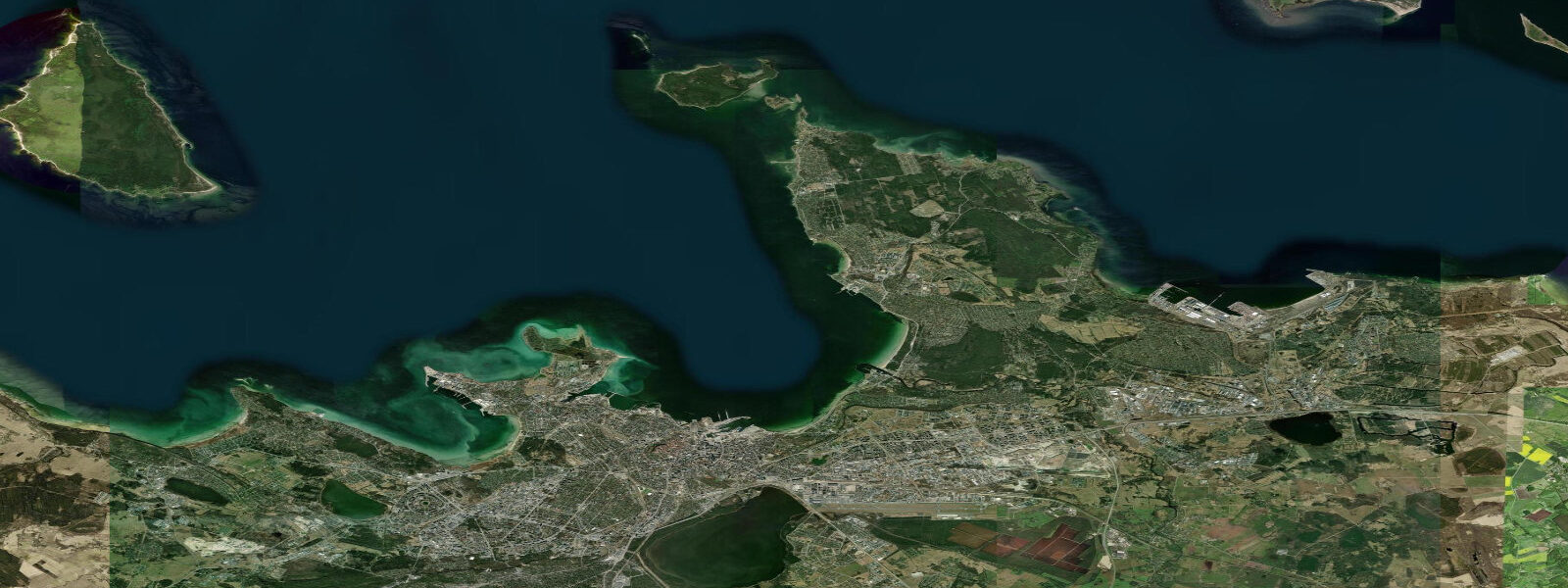
Tallinn tide times
Tallinn tide forecast — heights relative to MSL.
Today's tide times for Tallinn
Tide times at Tallinn on Friday, 31 July 2026: first low tide at 03:00am. Sunrise 05:00am, sunset 09:52pm.
Tide chart for Tallinn
24-hour cosine-interpolated curve around the present moment. Heights relative to MSL. Predictions: Predictions: Open-Meteo Marine (MeteoFrance SMOC, 0.08° grid).
Sun, moon and conditions on Fri 31 Jul
Snapshot at build time — refreshes daily. Sea state from Open-Meteo Marine.
Highs and lows next 7 days
Every predicted high and low for the next week, with the daily tidal coefficient (0–120; higher = bigger swing, > 95 means stronger currents).
Other spots nearby
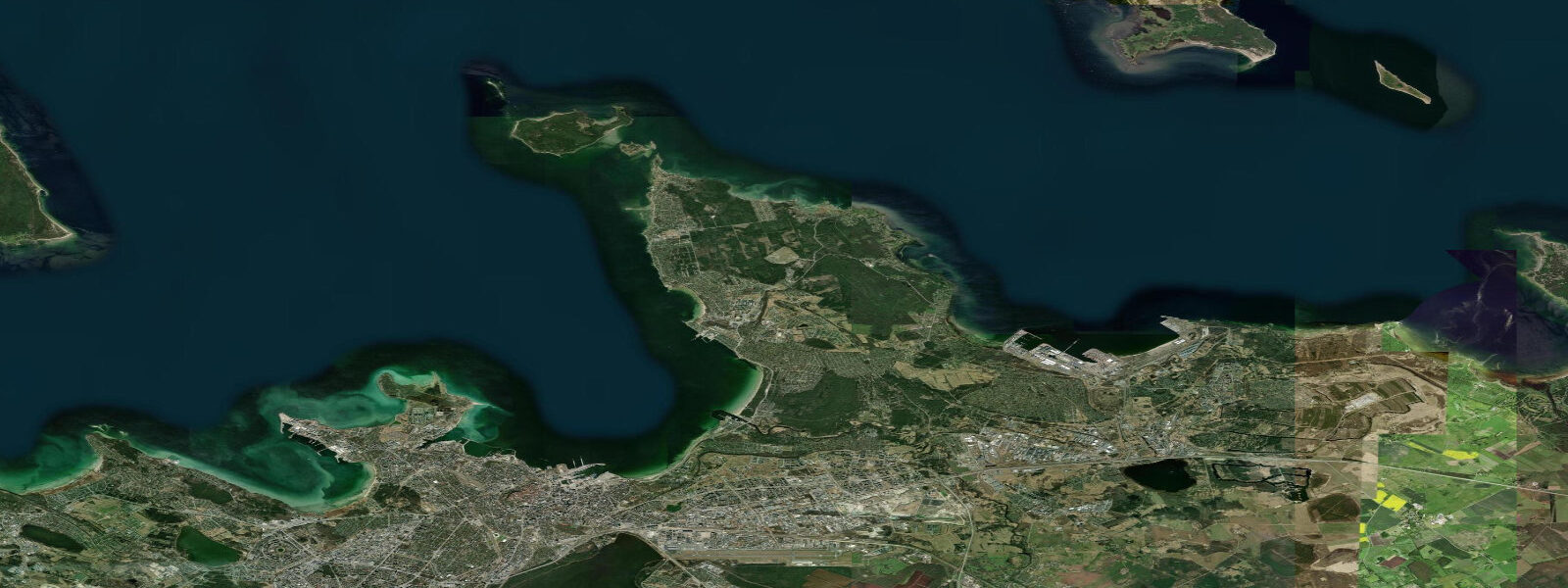
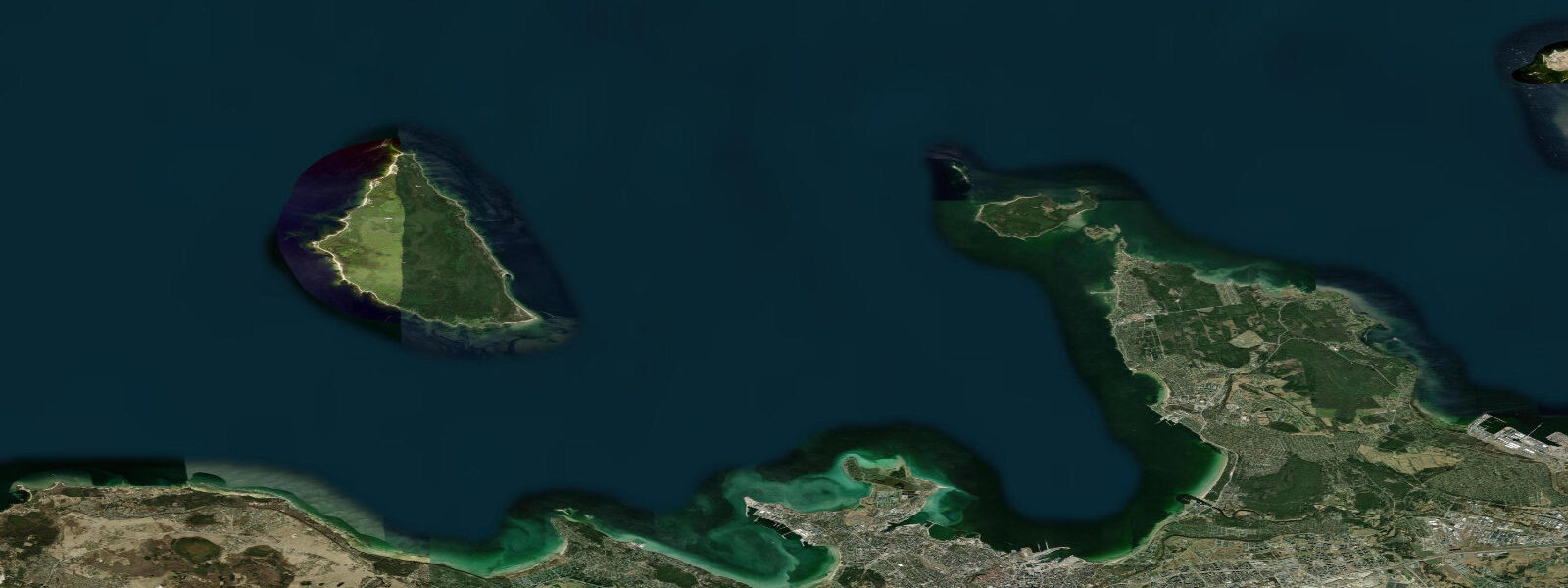
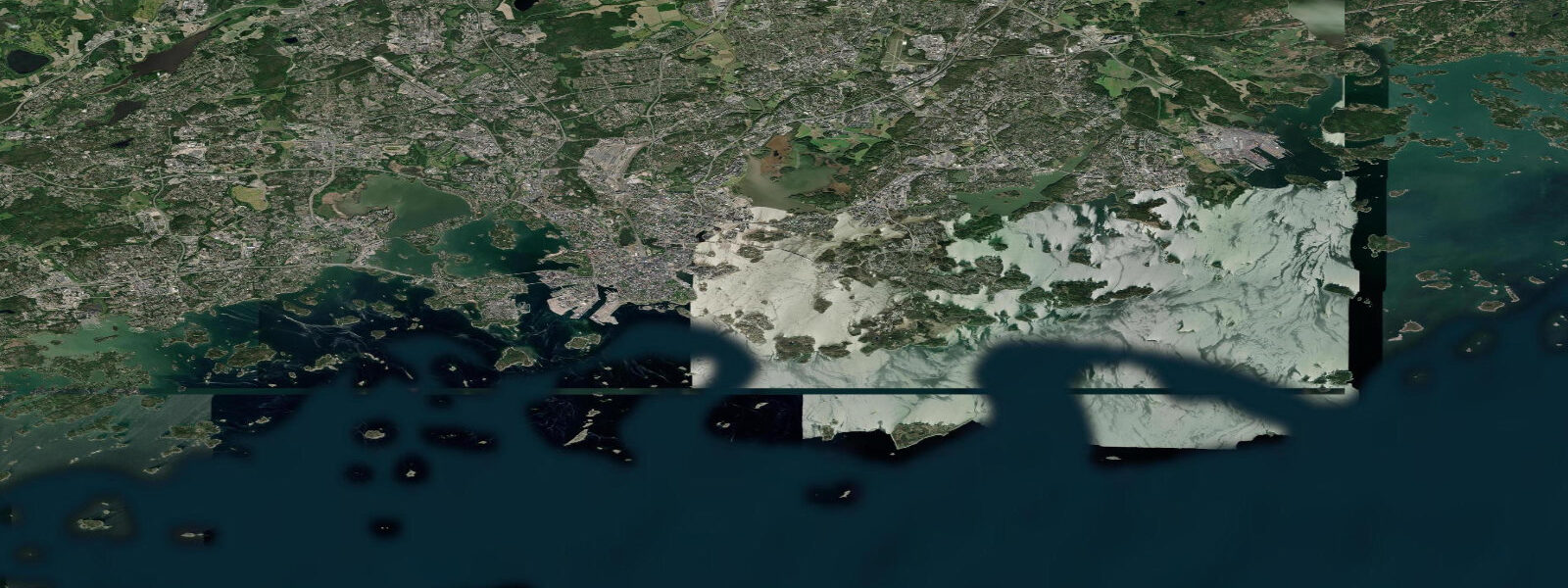
The three closest curated TideTurtle locations to Tallinn, measured by great-circle distance.
Today's solunar windows
Solunar tradition: major periods are the ≈3h windows around moon transit and opposition; minor are ≈2h around moonrise and moonset. Pair with the local tide stage and wind for the best read.
About tides at Tallinn
A short guide to the coastline at Tallinn — geography, sea state, and what the tide is actually doing under your feet.
Tallinn faces the Gulf of Finland from the southern shore, a medieval city backed by limestone escarpment and fronting a harbour that has been one of the Baltic's busiest for eight centuries. The coastal regime here is defined not by the moon but by the wind: the astronomical tide in the Gulf of Finland is 5 to 20 centimetres — so small it rarely registers against the water-level variation driven by weather. On most days, the high and low shown on a tide table for Tallinn describe a signal buried inside the noise of pressure systems, wind setup, and the multi-day oscillations that slosh water back and forth along the 400-kilometre length of the Gulf.
The physics are straightforward. The Baltic is an enclosed brackish sea with a narrow connection to the North Sea through the Danish straits; the gravitational tidal forcing that produces multi-metre ranges in the North Sea and along the Atlantic coasts dissipates almost completely by the time it reaches the inner Baltic. The Gulf of Finland is further enclosed still, and at Tallinn the mean astronomical range is effectively the lowest in Estonia's already microtidal coastline. What replaces the tide as the operative water-level driver is wind. A sustained westerly or southwesterly blowing across the Gulf for 36 to 48 hours — the prevailing direction in most weather patterns — pushes water progressively toward the east, raising levels along the Estonian and Finnish southern shores. Tallinn, on the south coast rather than the far end of the Gulf, sees a fraction of this effect; storm surges of 40 to 80 centimetres above mean are not unusual during strong westerly systems in autumn and early winter. An easterly reversal clears the water back westward and can drop the level below mean by a similar margin.
For swimmers, the city's main beaches are at Pirita, east of the passenger terminal, and at Stroomi on the western side. Both face north across the Gulf of Finland, with the prevailing westerly fetch and some exposure to wind waves when the wind is from the north or northwest. The seasonal swim window runs June through August, when water temperature reaches 17 to 22 degrees Celsius on warm years. Jellyfish concentrations — primarily Aurelia aurita, the common moon jellyfish — are a summer fixture rather than a tide-dependent variable; they appear in calm, warm conditions regardless of water level.
Kayakers launching from Pirita, the Kakumäe peninsula or the Rocca al Mare area navigate the open Gulf and the island chains toward Naissaar and Aegna. Wind direction and strength are the planning inputs that matter. The Gulf of Finland can develop a short, steep wind-wave with little warning when the fetch from the west or northwest is open, and sea kayakers here carry VHF radios and file float plans with local knowledge — the Baltic's brackish water temperature, even in summer, is a cold-water immersion risk if conditions deteriorate. Tide state is irrelevant to these plans.
Shore anglers working the limestone ledge coastline west of Tallinn toward Keila-Joa target sea trout, pike-perch and perch. The fishing calendar here runs on water temperature and seasonal migration timing rather than tide: sea trout run in spring and autumn when the water cools below 12 degrees Celsius and the fish move inshore to spawn in the rivers. Photographers in the old town, at the Toompea viewpoint, and on the walls above the Lower Town plan for golden-hour light rather than any tidal window — the water level below the cliff is whatever the wind has set it to that day.
Tide predictions on this page come from Open-Meteo Marine, with typical accuracy of plus or minus 45 minutes and 0.2 to 0.3 metres. At Tallinn, where the full astronomical range is 5 to 20 centimetres, the model uncertainty floor is larger than the signal being modelled. Treat the predicted highs and lows as indicative orientation rather than actionable data. The Estonian Weather Service (Ilmateenistus) publishes sea-level forecasts and storm-surge warnings for Tallinn Harbour at ilmateenistus.ee — this is the operative planning source for any water-based activity in the Gulf of Finland.
Tide questions about Tallinn
Quick answers to the most common questions about tide times, range, and water access at Tallinn.
When is the next high tide at Tallinn?
The prediction block at the top of this page shows the next predicted high in local Estonian time (EET/EEST, UTC+2/UTC+3 with daylight saving). The astronomical range at Tallinn is 5 to 20 centimetres — one of the smallest in Europe. These predicted highs and lows describe the theoretical gravitational signal, but the actual water level on any given day is set primarily by wind and atmospheric pressure. The Estonian Weather Service (Ilmateenistus) at ilmateenistus.ee publishes the operative sea-level forecast for Tallinn Harbour.
Why is the tide essentially absent at Tallinn?
Tallinn sits inside the Baltic Sea, an enclosed brackish basin connected to the North Sea only through the narrow Danish straits. The gravitational tidal signal that produces multi-metre ranges on Atlantic coasts loses almost all of its energy propagating through those straits and into the enclosed Baltic basin. The Gulf of Finland is further enclosed, and its natural resonant period does not match the lunar forcing frequency, so there is no resonant amplification — the opposite of what happens in, say, the Bristol Channel or the Mozambique Channel. The 5 to 20 cm range is not measurement error; it is the genuine result of the basin geometry.
Where do these tide predictions come from?
Predictions come from Open-Meteo Marine, a free gridded global ocean model. At Tallinn, the model's inherent accuracy limit of plus or minus 45 minutes and 0.2 to 0.3 metres is close to or larger than the 5 to 20 cm signal it is trying to predict. The predictions here provide indicative context — a sense of the background astronomical rhythm — not operational guidance. For actual water-level conditions at Tallinn, the Estonian Weather Service sea-level monitoring at ilmateenistus.ee is the authoritative and practically relevant source.
Is it safe to swim and kayak from Tallinn's beaches?
Swimming at Pirita and Stroomi is safe in calm summer conditions. The main considerations are water temperature — the Gulf of Finland stays cold until late June and drops again by September — and wind-driven wave conditions, which can make the north-facing beaches choppy when the wind is from the northwest. Jellyfish (mainly harmless moon jellyfish) are a summer fixture. For sea kayaking, the Gulf of Finland demands respect: it can develop steep, short wind-chop quickly on open fetches, and the water temperature even in summer is a cold-water immersion risk. Check the wind forecast and the Estonian Weather Service marine forecast before paddling offshore.
Can tide times at Tallinn be used for harbour navigation?
No. Tallinn Harbour is a commercial and ferry port with regulated vessel traffic. Navigation within the harbour and approaches follows the Port of Tallinn authority procedures, VTS (Vessel Traffic Service) requirements, and standard chart navigation. Since the astronomical tide is 5 to 20 cm, it has no practical significance for harbour depth planning. What matters is the wind-driven water level deviation from mean, which the Estonian Weather Service sea-level forecast addresses. Open-Meteo Marine predictions on this page are not suitable for vessel operations of any kind.
8-day tide table — Tallinn
Heights relative to MSL. Predictions: Open-Meteo Marine (MeteoFrance SMOC, 0.08° grid) — heights relative to MSL (not chart datum / LAT). Model-derived.
| Day | Type | Time | Height |
|---|---|---|---|
| Fri 31 Jul | Low | 03:00 | 0.0m |
| Sat 01 Aug | — | ||
| Sun 02 Aug | — | ||
| Mon 03 Aug | — | ||
| Tue 04 Aug | — | ||
| Wed 05 Aug | — | ||
| Thu 06 Aug | — | ||
| Fri 07 Aug | High | 02:00 | 0.6m |