Puerto Ayora tide times
Puerto Ayora tide forecast — heights relative to MSL.
Today's tide times for Puerto Ayora
Tide times at Puerto Ayora on Tuesday, 4 August 2026: first low tide at 12:19am, first high tide at 06:37am, second low tide at 12:54pm, second high tide at 07:00pm. Sunrise 07:04am, sunset 07:09pm.
Tide chart for Puerto Ayora
24-hour cosine-interpolated curve around the present moment. Heights relative to MSL. Predictions: Predictions: Open-Meteo Marine (MeteoFrance SMOC, 0.08° grid).
Sun, moon and conditions on Tue 04 Aug
Snapshot at build time — refreshes daily. Sea state from Open-Meteo Marine.
Highs and lows next 7 days
Every predicted high and low for the next week, with the daily tidal coefficient (0–120; higher = bigger swing, > 95 means stronger currents).
Other spots nearby
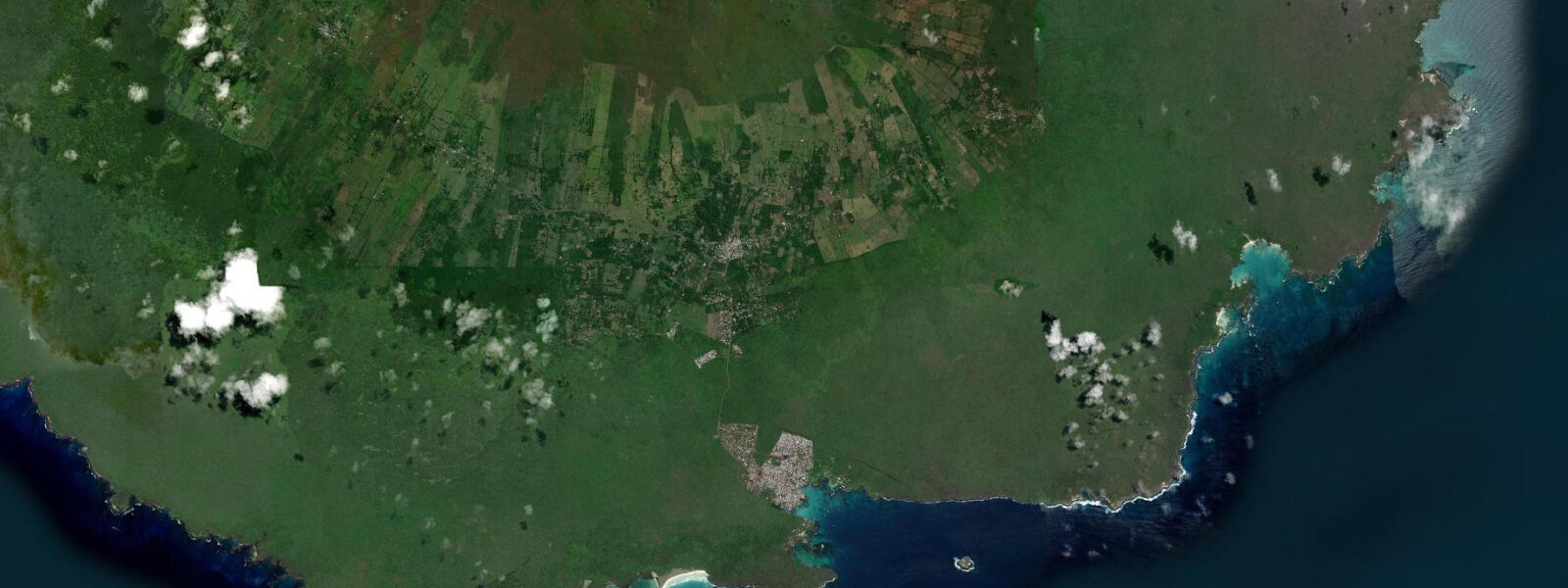
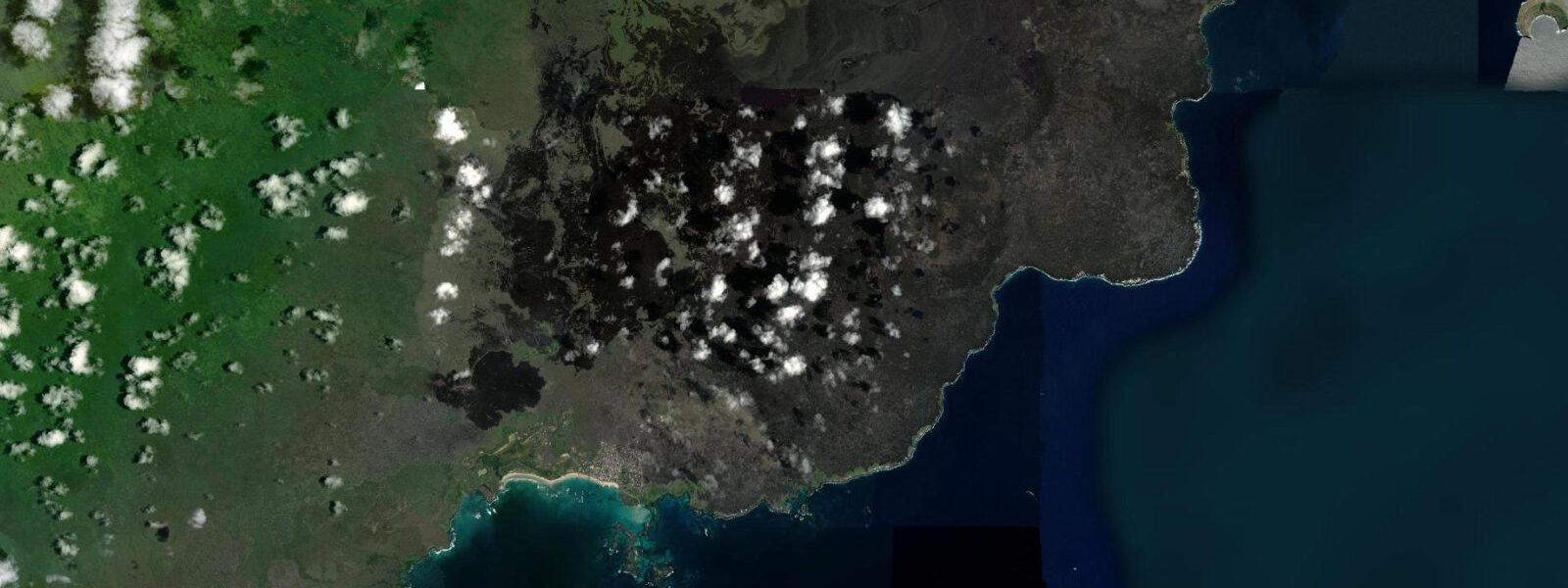
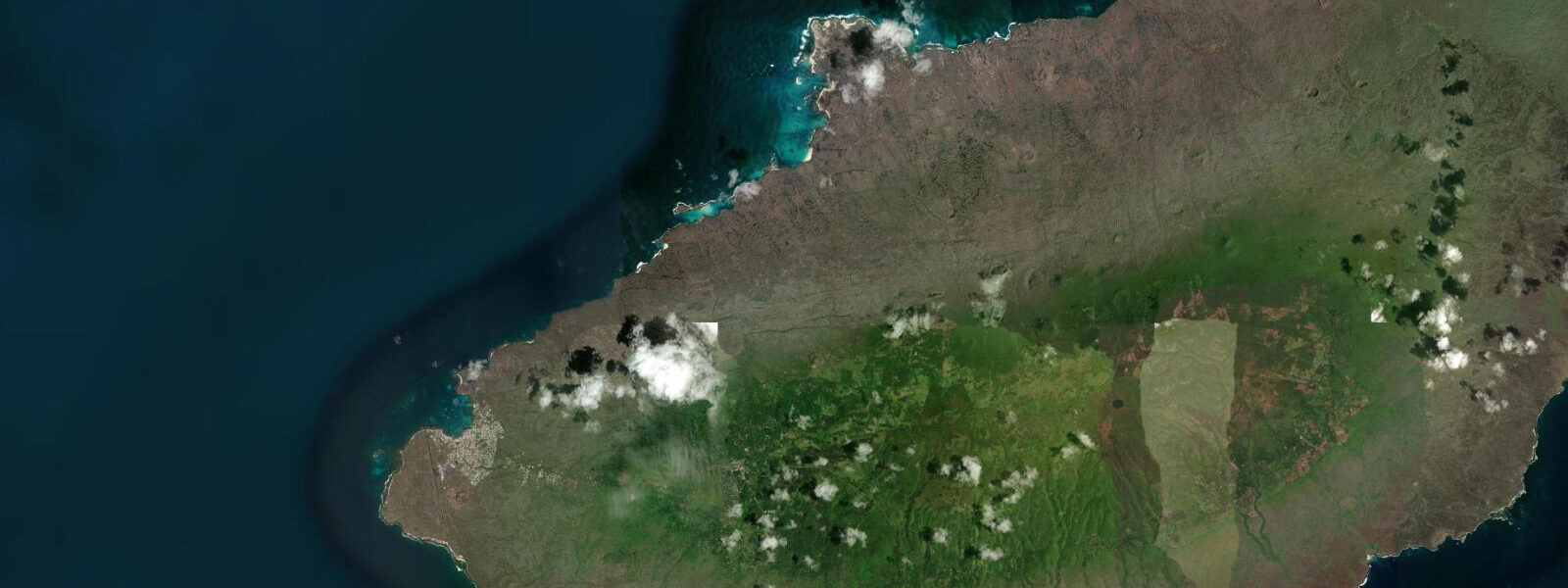
The three closest curated TideTurtle locations to Puerto Ayora, measured by great-circle distance.
Today's solunar windows
Solunar tradition: major periods are the ≈3h windows around moon transit and opposition; minor are ≈2h around moonrise and moonset. Pair with the local tide stage and wind for the best read.
Cycle dates near Puerto Ayora
Last spring tide on Mon 03 Aug (range 1.5m). Next spring tide on Sun 09 Aug (range 1.3m). Next neap on Fri 07 Aug.
Spring tides cluster around new and full moons (biggest swings). Neap tides land on quarter moons (smallest swings). See the spring tide and neap tide glossary entries for the why.
About tides at Puerto Ayora
A short guide to the coastline at Puerto Ayora — geography, sea state, and what the tide is actually doing under your feet.
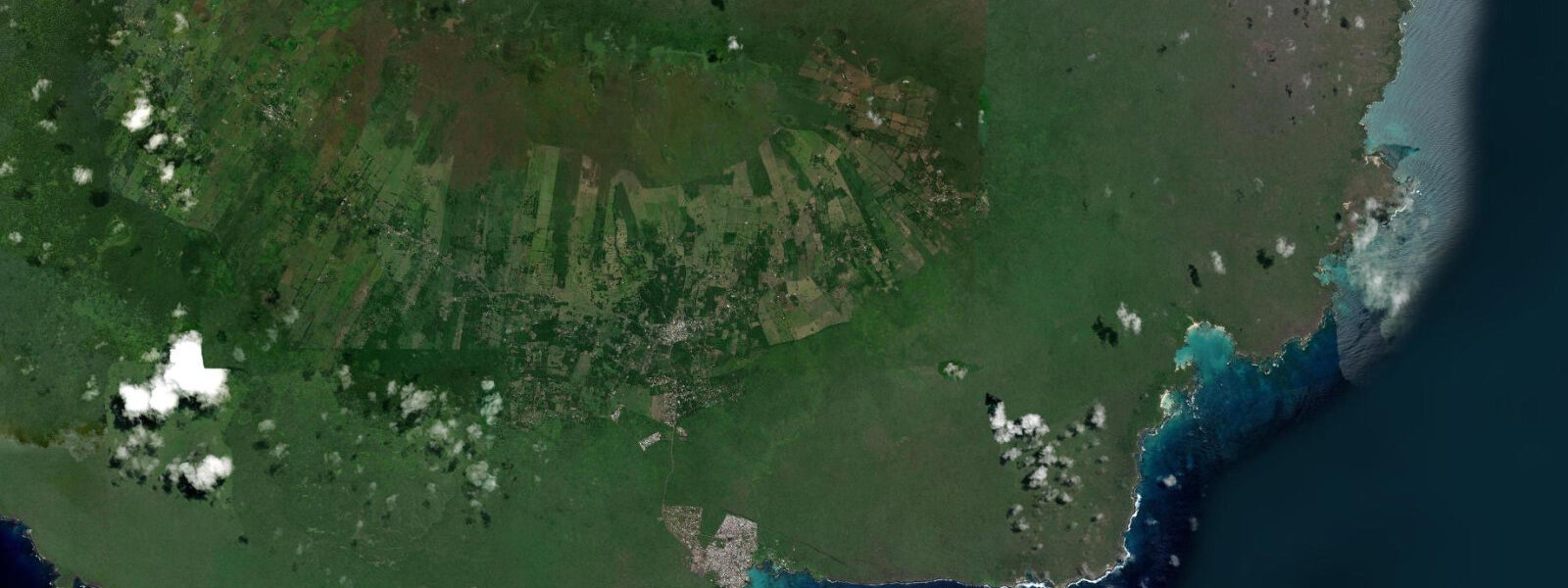
Puerto Ayora is the largest town in the Galápagos Islands, located on the southern coast of Santa Cruz Island at the inner edge of Academy Bay (Bahía Academia). The town is the practical hub of the archipelago — tour boats, dive operators, the Charles Darwin Research Station, and the Galápagos National Park Directorate are all here — and Academy Bay is the reference anchorage for the island group.
The tidal regime at Puerto Ayora is semidiurnal with moderate diurnal inequality. Spring range runs approximately 1.8–2.2 m above Chart Datum; neap range 0.9–1.2 m. INOCAR operates the Galápagos tide gauge network, and Puerto Ayora is the primary reference station for the central islands. The Charles Darwin Research Station also monitors sea level at Academy Bay as part of the global sea-level monitoring programme.
The most immediate tidal geography at Puerto Ayora is the tidal flat immediately west of the main dock area. This flat — a mix of bare rock platform, sand, and algae-coated basalt — hosts one of the most accessible marine iguana colonies in the Galápagos. Marine iguanas (Amblyrhynchus cristatus) are the only sea-going lizards in the world; they feed exclusively on marine algae, diving to depths of 1–5 m and grazing the reef surface. The colony feeds most actively during the low-tide windows when the algae-covered rock is submerged at a depth accessible by short dives — typically from 0.2–0.5 m above Chart Datum, which means the productive feeding window is when the flat is just beginning to flood or is holding at low slack. At high water the iguanas haul out to bask on the warm rocks above the high-tide line, raising their body temperature after the cold-water dives.
For visiting naturalists, the best photography of the iguanas feeding occurs in the two-to-three hour window around the predicted low, when the flat is at or near its lowest and the iguanas are concentrated on the exposed rock. In the early morning (06:00–08:00), the flat is also relatively uncrowded and the light is suitable for photography.
The anchorage at Academy Bay is well-sheltered; the bay opens to the south but is flanked by the Puerto Ayora headland to the west and Punta Núñez to the east. Tidal current in the bay runs 0.5–1.0 knot at springs, generally NE-SW along the bay axis. Dinghy landings at the main dock are straightforward at all tide states; the public dock steps are calibrated to the tidal range.
Tortuga Bay, a pristine white-sand beach accessible by a 2.5 km paved path from town, is reached on foot from the park entrance gate. The bay faces SW and receives a low, consistent swell. At high water the beach is narrower but swimmable at the protected inner cove (Playa Brava is exposed and not recommended for swimming due to current; Playa Mansa at the inner cove is calmer). At low water the beach widens significantly and the shallow cove at Playa Mansa is excellent for snorkelling over the seagrass and sandy bottom where white-tipped reef sharks and sea turtles rest.
Snorkelling at the Darwin Research Station pier is possible at high water when the water depth over the reef shelf is sufficient. The sea lion colony on the concrete dock structures of the main pier is present year-round. Tide predictions here come from Open-Meteo Marine: accuracy ±45 min / ±0.2–0.3 m. Official Galápagos tide tables are published by INOCAR.
The Charles Darwin Research Station, accessible on foot from the main dock in 15 minutes, runs a Galápagos giant tortoise breeding programme; the juvenile tortoise enclosures are open to visitors. The station's own pier, on the eastern edge of Academy Bay, gives a secondary view of the bay tidal flat and a different angle on the iguana colony at the adjacent rocky foreshore. The road that runs from the Research Station west toward Bahía Academia and the CDRS to the east provides the main walking corridor through the town at low tide, when the waterfront flat is exposed and accessible.
Tide questions about Puerto Ayora
Quick answers to the most common questions about tide times, range, and water access at Puerto Ayora.
When is the best time to see marine iguanas feeding at Puerto Ayora?
Marine iguanas feed on the algae-covered rock at the tidal flat west of the main dock. Their most active feeding window is when the flat is at or near low water — from roughly 90 minutes before to 90 minutes after the predicted low, when the rock is submerged at the shallow depths where iguanas prefer to graze (0.2–0.5 m). Check the predicted low time on this page and plan to be at the flat within that window. Early morning (before 08:00) also gives the best light for photography and avoids tour group congestion.
Where do the tide predictions on this page come from?
Open-Meteo Marine, a free gridded global ocean model. Accuracy is typically ±45 minutes on timing and ±0.2–0.3 m on height. The authoritative source for Galápagos tide predictions is INOCAR (Instituto Oceanográfico de la Armada del Ecuador), which operates tide gauges at Puerto Ayora and other island stations. The Charles Darwin Research Station also monitors sea level at Academy Bay. For navigation within the Galápagos Marine Reserve, use INOCAR data. This page is not for navigation. INOCAR also operates the sea-level monitoring station at the Darwin Research Station in collaboration with the global IOC/UNESCO sea-level network.
Is the snorkelling at Tortuga Bay better at high or low tide?
At Playa Mansa (the inner, calmer cove), high water gives the most comfortable snorkelling over the seagrass bed — the depth over the seagrass is around 0.5–1.5 m at high water and can drop to knee-depth at low. At low water the cove shallows significantly, but the exposed reef edge at the western end of Playa Mansa is more accessible for observers who prefer to wade. White-tipped reef sharks and green turtles are present at both tide states; snorkelling entry is easier and the reef shelf is safer to cross at high water.
What are tidal currents like in Academy Bay?
Academy Bay is a sheltered anchorage; tidal current runs 0.5–1.0 knot at springs along the bay axis (broadly NE-SW). The current is not a hazard for casual snorkelling near the dock area or for dinghy manoeuvring, but kayakers and open-water swimmers should be aware of the current direction at any tide turn. The stronger tidal currents in the Galápagos are found in the inter-island channels — Bolívar Channel between Fernandina and Isabela runs 2.5–3.5 knots at springs and is not appropriate for inexperienced paddlers.
What is the sea temperature at Puerto Ayora, and does it vary by season?
Sea temperatures at Puerto Ayora vary substantially with the season and with the three ocean currents converging at the Galápagos. During the cool, dry season (July–November), the Humboldt Current and Cromwell Undercurrent dominate and surface temperatures drop to 19–22°C. During the warm, wet season (January–April), the Panama Current brings warmer water and temperatures rise to 25–28°C. During strong El Niño years, warm surface water can push temperatures above 29°C and suppress the cold-water upwelling that normally sustains the islands' extraordinary marine productivity.
7-day tide table — Puerto Ayora
Heights relative to MSL. Predictions: Open-Meteo Marine (MeteoFrance SMOC, 0.08° grid) — heights relative to MSL (not chart datum / LAT). Model-derived.
| Day | Type | Time | Height |
|---|---|---|---|
| Tue 04 Aug | Low | 00:19 | -0.3m |
| High | 06:37 | 1.2m | |
| Low | 12:54 | -0.3m | |
| High | 19:00 | 0.9m | |
| Wed 05 Aug | Low | 00:58 | -0.2m |
| High | 07:18 | 1.1m | |
| Low | 13:42 | -0.3m | |
| High | 19:51 | 0.9m | |
| Thu 06 Aug | Low | 01:47 | -0.1m |
| High | 08:08 | 1.0m | |
| Low | 14:39 | -0.2m | |
| High | 20:55 | 0.8m | |
| Fri 07 Aug | Low | 02:51 | -0.1m |
| High | 09:10 | 0.9m | |
| Low | 15:48 | -0.2m | |
| High | 22:10 | 0.8m | |
| Sat 08 Aug | Low | 17:08 | -0.2m |
| Sun 09 Aug | High | 11:47 | 1.0m |
| Low | 18:18 | -0.3m | |
| Mon 10 Aug | High | 00:43 | 1.0m |
| Low | 06:51 | -0.1m | |
| High | 12:56 | 1.0m | |
| Low | 18:00 | -0.2m |