Isabela Island tide times
Isabela Island tide forecast — heights relative to MSL.
Today's tide times for Isabela Island
Tide times at Isabela Island on Tuesday, 4 August 2026: first low tide at 12:15am, first high tide at 06:34am, second low tide at 12:51pm, second high tide at 06:55pm. Sunrise 07:07am, sunset 07:12pm.
Tide chart for Isabela Island
24-hour cosine-interpolated curve around the present moment. Heights relative to MSL. Predictions: Predictions: Open-Meteo Marine (MeteoFrance SMOC, 0.08° grid).
Sun, moon and conditions on Tue 04 Aug
Snapshot at build time — refreshes daily. Sea state from Open-Meteo Marine.
Highs and lows next 7 days
Every predicted high and low for the next week, with the daily tidal coefficient (0–120; higher = bigger swing, > 95 means stronger currents).
Other spots nearby
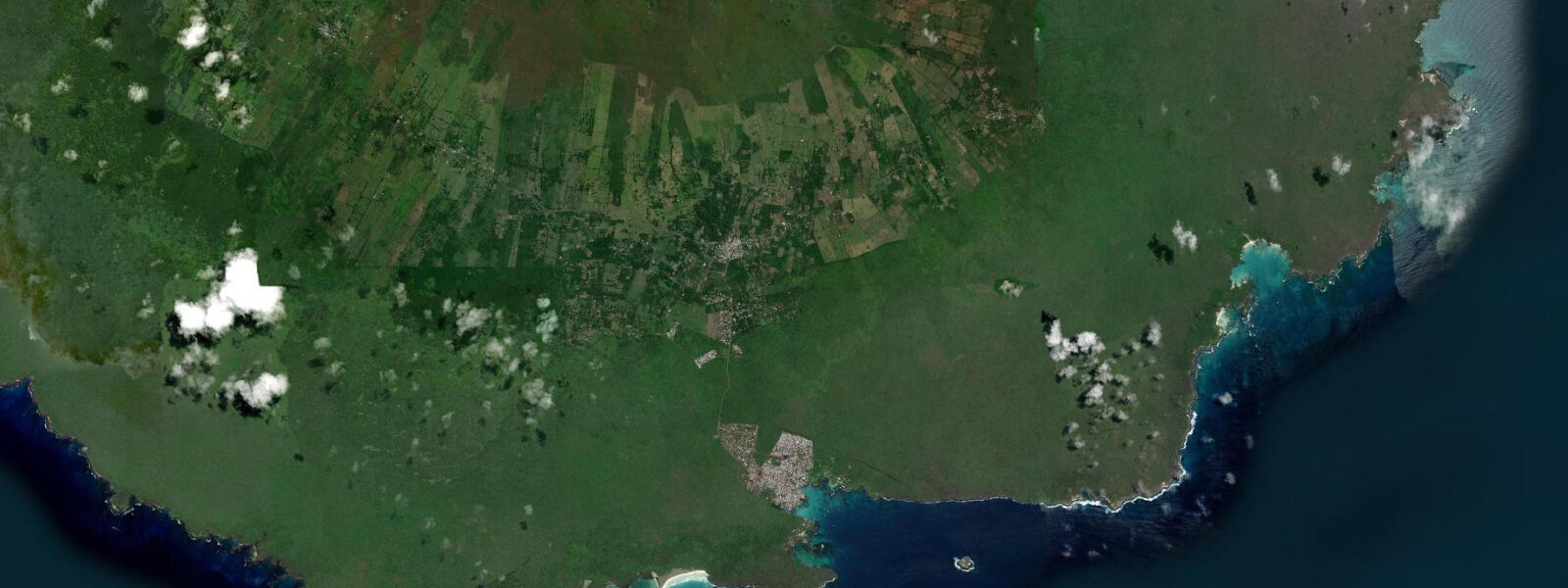
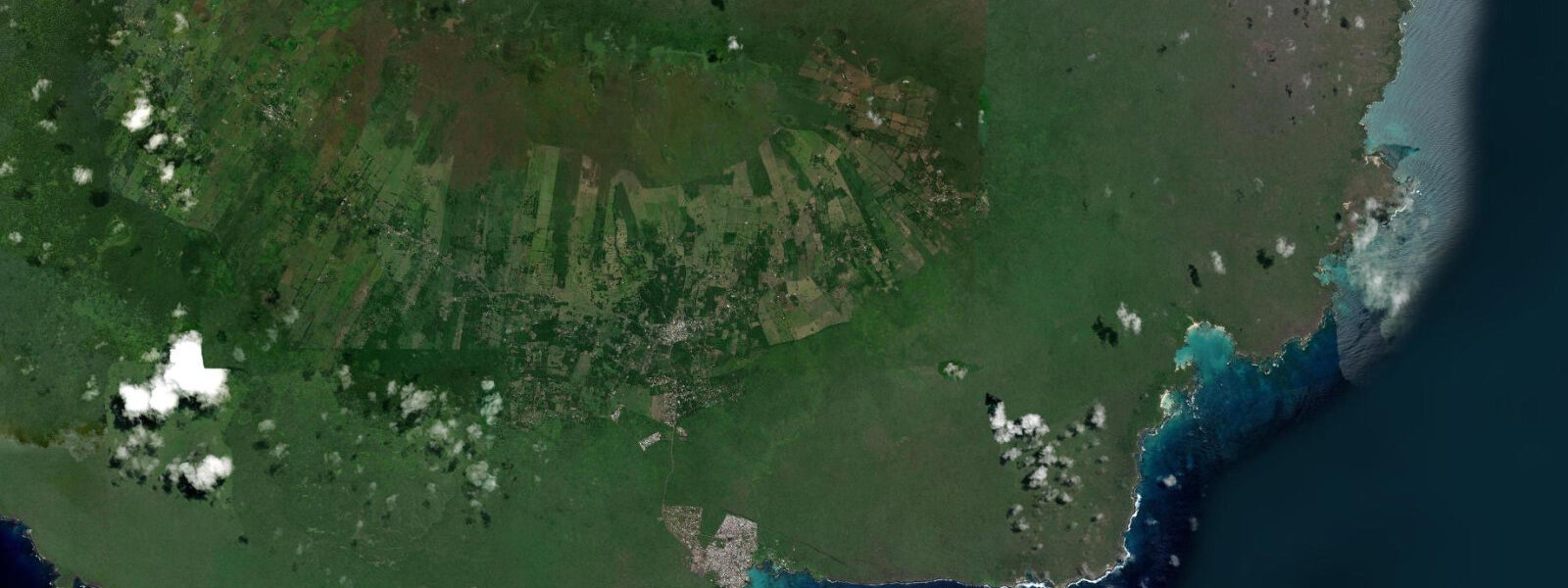
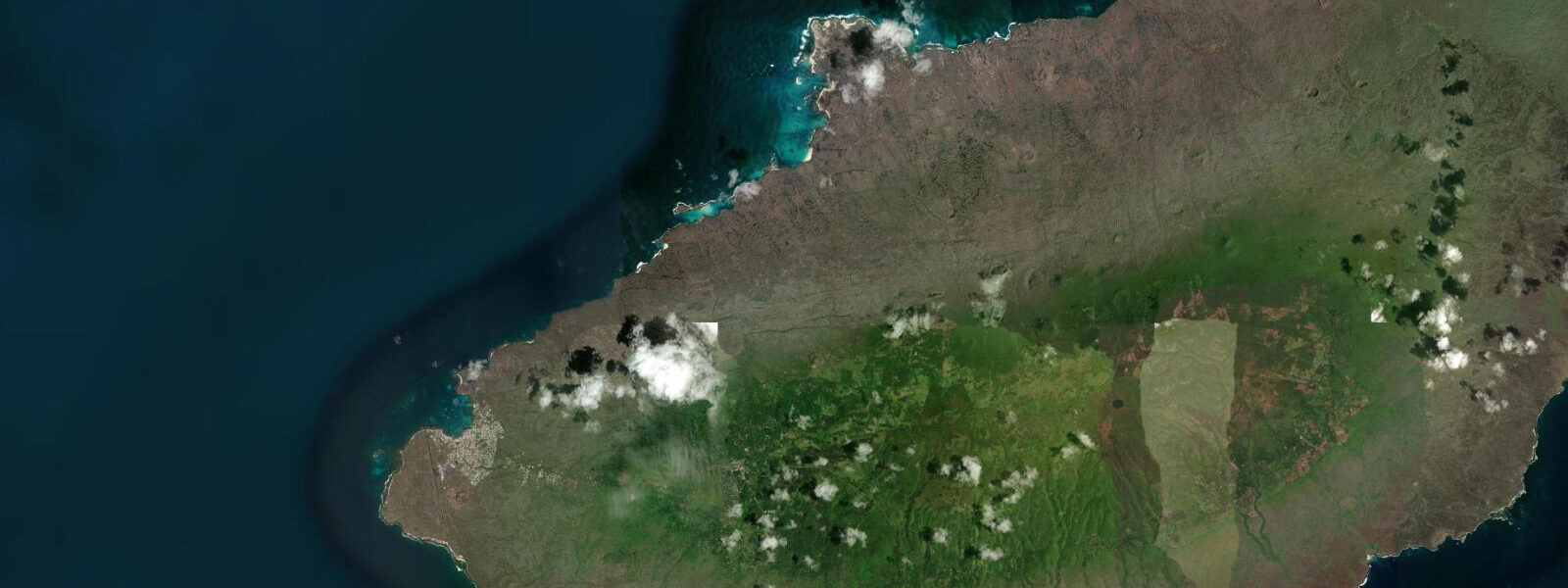
The three closest curated TideTurtle locations to Isabela Island, measured by great-circle distance.
Today's solunar windows
Solunar tradition: major periods are the ≈3h windows around moon transit and opposition; minor are ≈2h around moonrise and moonset. Pair with the local tide stage and wind for the best read.
Cycle dates near Isabela Island
Last spring tide on Mon 03 Aug (range 1.3m). Next spring tide on Sun 09 Aug (range 1.1m). Next neap on Fri 07 Aug.
Spring tides cluster around new and full moons (biggest swings). Neap tides land on quarter moons (smallest swings). See the spring tide and neap tide glossary entries for the why.
About tides at Isabela Island
A short guide to the coastline at Isabela Island — geography, sea state, and what the tide is actually doing under your feet.
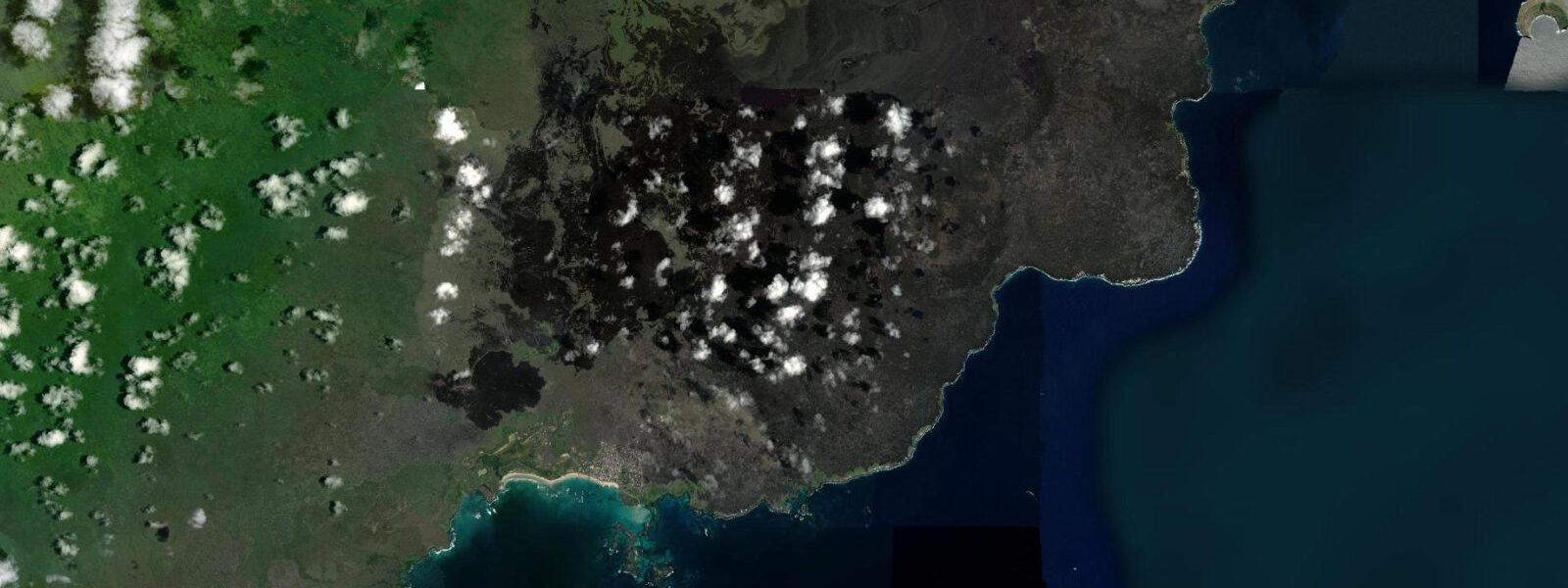
Isabela is the largest island in the Galápagos by area — roughly the size of Luxembourg — and the most volcanically active. Six shield volcanoes make up the island's backbone; the youngest, Fernandina across the Bolívar Channel to the west, erupted as recently as 2024. The main settlement, Puerto Villamil, sits on the flat southern tip of the island at the edge of a shallow lagoon system backed by mangroves and flamingo lagoons.
The tidal regime at Isabela's southern shore is semidiurnal with moderate diurnal inequality, spring range approximately 1.8–2.2 m above Chart Datum — broadly consistent with the other central Galápagos islands. The western coast of Isabela and the Bolívar Channel between Isabela and Fernandina are a different matter: the Cromwell Equatorial Undercurrent upwells against Isabela's western coast with particular intensity, keeping water temperatures at the surface at 15–18°C year-round and supporting the world's only equatorial penguin population (Galápagos penguin, Spheniscus mendiculus) along with flightless cormorants (Nannopterum harrisi) — both species that have no business being at 1°S latitude by any thermal logic, yet thrive here on the cold upwelling productivity.
Puerto Villamil's beach is one of the finest in the Galápagos: 3 km of white sand facing south, with the volcanic interior as backdrop and sea turtles nesting in the dunes above the high-water line between January and May. At high water the beach is swimmable immediately off the sand; at low water the sand flat extends far enough that the outer water is quite shallow for 50–80 m. The sea lion colony along the beach uses the sand for hauling out, particularly during the warm season.
The flamingo lagoons behind Puerto Villamil are tidal-connected through mangrove channels; water level in the lagoons responds to the tide with a 1–2 hour lag from the open bay. At high water the lagoons are at their fullest and the flamingos feed most actively in the shallows. At low water the lagoon margins drop and the birds tend to concentrate in the deeper central sections. The tortoise breeding centre on the Camino a las Tortugas trail east of town is non-tidal but worth combining with a high-water lagoon visit.
The Bolívar Channel between Isabela and Fernandina is one of the most significant tidal-current zones in the Galápagos, running 2.5–3.5 knots at springs, and is famous among divers for the cold-water species found nowhere else at this latitude. Liveaboard dive itineraries using the channel time their entry at current-optimal moments; the cold upwelling produces visibility that varies from 5 m to 25 m depending on upwelling intensity, not simply tide state. Tide predictions here come from Open-Meteo Marine: accuracy ±45 min / ±0.2–0.3 m. INOCAR publishes official Galápagos tide tables.
The tortoise breeding centre at Puerto Villamil — the Arnaldo Tupiza Breeding Centre — houses different subspecies of Galápagos giant tortoise undergoing captive breeding for reintroduction to their home islands. The centre is on the eastern edge of town, a 15-minute walk from the main plaza; the tortoise pens are alongside the road and the animals are visible at close range. The 3 km beach of Puerto Villamil is the longest accessible beach in the Galápagos and one of the most consistently productive green turtle (Chelonia mydas) nesting beaches in the archipelago during January–May. Nesting females come ashore at night above the high-tide line; hatchling emergence follows 50–60 days later and is also nocturnal. Park rangers monitor the nesting season.
The boat ride from Puerto Villamil across Bolívar Channel to the far western sites (Punta Moreno, Tagus Cove, Punta Vicente Roca) passes through the cold-current upwelling zone; passengers often feel the temperature drop as the boat leaves the warm southern lagoon and enters the Humboldt-influenced western water. Marine life concentrations on the western Isabela shore — Galápagos penguins on the rocks, fur seals in the cold-water zones — reflect this thermal boundary directly.
Tide questions about Isabela Island
Quick answers to the most common questions about tide times, range, and water access at Isabela Island.
Can I swim at Puerto Villamil beach at all tide states?
Yes, but the experience differs. At high water the swim is immediate from the sand's edge; at low water the flat shallows to ankle-to-knee depth for 50–80 m before reaching swimmable depth. The beach faces south and is sheltered from the dominant SW swell by the island's geometry; wave conditions are generally calm year-round. Sea turtles are present in the nearshore zone, particularly from January through May during nesting season — maintain a 2 m separation. Sea lions share the beach and water; park regulations require the same 2 m distance. The small marine iguana colony at the west end of the Puerto Villamil beach is an additional tide-sensitive feature: the iguanas feed on the low-water reef flat visible from the beach end.
Why are there penguins on Isabela Island if it is on the equator?
The Cromwell Equatorial Undercurrent upwells against Isabela's western coast, bringing cold water from depth (15–18°C surface temperature year-round on the western coast). Galápagos penguins and flightless cormorants are two species that evolved to exploit this cold-water food supply — abundant small fish — rather than the warm conditions the latitude would normally produce. The cold upwelling on Isabela's west side is driven by current dynamics, not by seasonality or tidal state; it is persistent and intense enough to support a breeding penguin population at 0–1°S latitude.
When are the flamingo lagoons at Puerto Villamil at their best for viewing?
The lagoons behind Puerto Villamil are tidally connected to Academy Bay via mangrove channels, with a lag of one to two hours from the open coast tide. At high water (accounting for the lag) the lagoons are fullest and flamingo feeding activity is highest — the birds wade the shallow margins catching brine shrimp and algae. The best light is in the morning before 09:00. At low water the lagoon levels drop and flamingos tend to concentrate in the deeper central areas rather than spreading across the margins. Check the high-water time on this page and plan your visit one to two hours later.
Where do the tide predictions on this page come from?
Open-Meteo Marine, a free gridded global ocean model. Accuracy is typically ±45 minutes on timing and ±0.2–0.3 m on height. The predictions are referenced to the southern coast of Isabela (Puerto Villamil area); conditions on the western coast differ significantly due to the Cromwell Current upwelling. INOCAR (Instituto Oceanográfico de la Armada del Ecuador) is the authoritative source for Galápagos tide data and operates the archipelago gauge network. This page is not for navigation. For navigation in the Bolívar Channel, INOCAR publishes specific current tables in addition to tide height predictions.
What are tidal currents like in the Bolívar Channel?
The Bolívar Channel between Isabela and Fernandina runs 2.5–3.5 knots at spring tide — strong enough to make independent kayaking or small-boat transit without local knowledge inadvisable. Liveaboard dive operators time their channel dives to catch specific current phases; the conditions are suitable for experienced drift divers only. The cold water and variable visibility (5–25 m depending on upwelling intensity) make this a technical environment. For surface crossings between the islands, use a licensed water taxi and confirm departure timing with the operator.
7-day tide table — Isabela Island
Heights relative to MSL. Predictions: Open-Meteo Marine (MeteoFrance SMOC, 0.08° grid) — heights relative to MSL (not chart datum / LAT). Model-derived.
| Day | Type | Time | Height |
|---|---|---|---|
| Tue 04 Aug | Low | 00:15 | -0.2m |
| High | 06:34 | 1.1m | |
| Low | 12:51 | -0.2m | |
| High | 18:55 | 0.8m | |
| Wed 05 Aug | Low | 00:53 | -0.2m |
| High | 07:16 | 1.0m | |
| Low | 13:43 | -0.2m | |
| High | 19:51 | 0.8m | |
| Thu 06 Aug | Low | 01:40 | -0.0m |
| High | 08:02 | 0.9m | |
| Low | 14:40 | -0.1m | |
| High | 20:54 | 0.7m | |
| Fri 07 Aug | Low | 02:50 | 0.0m |
| High | 09:08 | 0.8m | |
| Low | 15:50 | -0.1m | |
| High | 22:18 | 0.7m | |
| Sat 08 Aug | Low | 17:08 | -0.1m |
| High | 23:36 | 0.8m | |
| Sun 09 Aug | Low | 05:42 | 0.1m |
| High | 11:46 | 0.9m | |
| Low | 18:24 | -0.2m | |
| Mon 10 Aug | High | 00:48 | 0.9m |
| Low | 06:55 | -0.1m | |
| High | 12:58 | 1.0m | |
| Low | 18:00 | -0.1m |