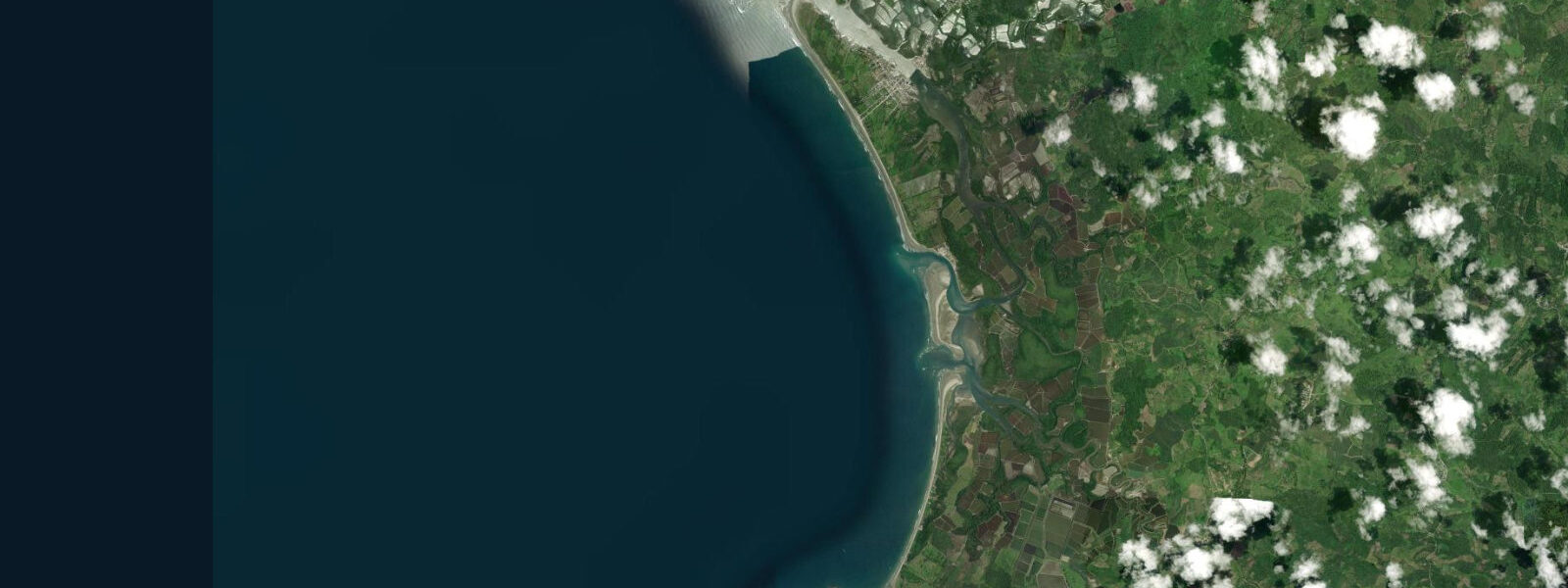
Súa, Ecuador tide times
Súa, Ecuador tide forecast — heights relative to MSL.
Today's tide times for Súa, Ecuador
Tide times at Súa, Ecuador on Tuesday, 4 August 2026: first high tide at 06:43am, first low tide at 01:00pm, second high tide at 07:03pm. Sunrise 06:22am, sunset 06:30pm.
Tide chart for Súa, Ecuador
24-hour cosine-interpolated curve around the present moment. Heights relative to MSL. Predictions: Predictions: Open-Meteo Marine (MeteoFrance SMOC, 0.08° grid).
Sun, moon and conditions on Tue 04 Aug
Snapshot at build time — refreshes daily. Sea state from Open-Meteo Marine.
Highs and lows next 7 days
Every predicted high and low for the next week, with the daily tidal coefficient (0–120; higher = bigger swing, > 95 means stronger currents).
Other spots nearby
The three closest curated TideTurtle locations to Súa, Ecuador, measured by great-circle distance.
Today's solunar windows
Solunar tradition: major periods are the ≈3h windows around moon transit and opposition; minor are ≈2h around moonrise and moonset. Pair with the local tide stage and wind for the best read.
Cycle dates near Súa, Ecuador
Last spring tide on Mon 03 Aug (range 2.4m). Next spring tide on Sun 09 Aug (range 2.0m). Next neap on Fri 07 Aug.
Spring tides cluster around new and full moons (biggest swings). Neap tides land on quarter moons (smallest swings). See the spring tide and neap tide glossary entries for the why.
About tides at Súa, Ecuador
A short guide to the coastline at Súa, Ecuador — geography, sea state, and what the tide is actually doing under your feet.
Súa is a small fishing community on the Esmeraldas coast of Ecuador, just north of the busier resort town of Atacames and south of the Galera-San Francisco Marine Reserve that protects the coast toward the Colombian border. The beach here is quieter than Atacames's commercial strip — fewer bars, fewer vendors, more of the fishing-village character that the Esmeraldas coast had before resort development in the 1990s and 2000s compressed its infrastructure into narrow headland-to-headland sections.
The tidal regime is Pacific semidiurnal with a spring range of approximately 2.0 to 2.5 metres — significantly larger than the Caribbean coast places in this dataset and large enough to produce a meaningful difference in beach width and water access conditions between high and low water. Two distinct highs and lows per day; the lower-low water of the day (the deeper of the two daily lows) exposes a wide sand flat that is not accessible at high tide. The Esmeraldas coast is exposed to Pacific swell year-round, with the largest energy arriving during the southern hemisphere winter swell season (June–September, from SSW/SW).
The Afro-Ecuadorian cultural identity of the Esmeraldas coast is one of its most distinctive characteristics. The descendant community of West Africans who survived a 1553 shipwreck near the Río Esmeraldas established their coastal villages independent of the Spanish colonial system for generations; the marimba music tradition, the esmeraleño culinary heritage (encocado — coconut-fish stew), and the fishing methods (handline and cast net from the beach) remain markers of that distinct history. In Súa, the fishing activity is visible daily: pangas launching through the shore break in the early morning, returning at midday with the catch spread on the dock.
The Galera-San Francisco Marine Reserve, 40 km north along the coast road, protects rocky headlands, underwater rock formations, and a diverse fish community that benefits from the reserve's no-take zone. Day trips from Súa or Atacames by hired panga reach the reserve in 45 minutes to an hour. The rocky reef structure in the reserve holds large grouper, manta ray sightings in the blue water off the reserve's seaward points, and one of the more intact rocky-reef fish communities on Ecuador's Pacific coast.
For surfers, the consistent southwest Pacific swell produces beach break at Súa and the adjacent beaches. The wave is most shapeable on the incoming tide — the 2.0 to 2.5 m range means the sand bank configuration changes significantly through the tidal cycle, and the mid-flood window (1 to 3 hours after the predicted low) is the standard local preference for the best shape. The swell is more consistent than at Atacames, whose beach orientation absorbs less of the direct southwest fetch.
Anglers along the Esmeraldas coast use the incoming tide for most inshore work. The rocky headlands between Súa and the reserve to the north produce roosterfish and jack on the flood current; snapper and grouper are reliable year-round on the reef structure in deeper water. Shore casting from the Súa headland at either side of the bay produces corvina in the early morning and evening on the incoming tide.
Families using the beach at Súa find a calmer, less commercialised version of the Atacames resort strip. The beach is wide enough at low tide to walk without crowding; the fishing-boat launch zone is clearly marked and separated from the main swim area. Sandflies at dusk are the primary nuisance — repellent and long sleeves after 17:00 are standard equipment on the Esmeraldas coast.
Predictions on this page come from Open-Meteo Marine, a global gridded ocean model. Accuracy is ±45 minutes on timing and ±0.2 to 0.3 metres on height. The INOCAR (Instituto Oceanográfico de la Armada del Ecuador) publishes authoritative tidal tables for the Ecuadorian Pacific coast.
Tide questions about Súa, Ecuador
Quick answers to the most common questions about tide times, range, and water access at Súa, Ecuador.
When is the next high tide at Súa?
The predicted next high tide at Súa is shown at the top of this page in Ecuador Standard Time (ECT, UTC-5). Spring range is approximately 2.0 to 2.5 metres — Pacific semidiurnal, significantly larger than Caribbean coast locations. The difference between high and low is visible in beach width and wave character. Predictions come from Open-Meteo Marine (gridded, ±45 min / ±0.2–0.3 m); INOCAR (Ecuadorian Naval Oceanographic Institute) publishes the authoritative harmonic tables.
What is the tide range at Súa and how does it affect the beach?
Spring range at Súa is approximately 2.0 to 2.5 metres. At the predicted low water, a wide sand flat is exposed below the normal waterline; at high water, the beach narrows to a fraction of its low-tide width. Beach activities are most comfortable on the lower half of the tidal cycle. For surf, the mid-incoming tide (1–3 hours after the predicted low) is the locally preferred window for best wave shape over the sand bank.
How do you visit the Galera-San Francisco Marine Reserve?
The reserve is accessible by panga (small boat) hired from Súa or Atacames docks — approximately 45–60 minutes north along the coast. There is no scheduled boat service; arrange hire at the dock the evening before for an early-morning departure. The reserve's dive and snorkel sites are rocky reef structures in 5–20 m depth. A local guide familiar with the specific sites and current conditions is strongly recommended for first visits.
What is the Afro-Ecuadorian culture of the Esmeraldas coast?
The Afro-Ecuadorian community on the Esmeraldas coast descends from survivors of a 1553 African slave ship that wrecked near the Río Esmeraldas — one of the earliest free African communities in the Americas. Marimba music (UNESCO Intangible Cultural Heritage), the encocado cooking tradition, and the fishing culture remain distinctive markers. Local festivals and the town's daily fishing rhythm are the most accessible points of contact for visitors. The community is hospitable but not a tourism exhibit — respectful engagement is the expectation.
Is this safe to use for navigation?
No. TideTurtle is a planning tool, not a nautical almanac. Navigation along the Esmeraldas coast of Ecuador, including the approach to the Galera-San Francisco Marine Reserve and the river mouths, requires current INOCAR charts. Pacific swell and the 2.0–2.5 m tidal range create significant current and depth variation at the rocky headlands. Open-Meteo Marine predictions are not a substitute for authoritative harmonic data for any vessel operation.
7-day tide table — Súa, Ecuador
Heights relative to MSL. Predictions: Open-Meteo Marine (MeteoFrance SMOC, 0.08° grid) — heights relative to MSL (not chart datum / LAT). Model-derived.
| Day | Type | Time | Height |
|---|---|---|---|
| Tue 04 Aug | High | 06:43 | 1.7m |
| Low | 13:00 | -0.7m | |
| High | 19:03 | 1.5m | |
| Wed 05 Aug | Low | 01:10 | -0.6m |
| High | 07:23 | 1.6m | |
| Low | 13:44 | -0.6m | |
| High | 19:53 | 1.4m | |
| Thu 06 Aug | Low | 01:56 | -0.5m |
| High | 08:14 | 1.5m | |
| Low | 14:37 | -0.5m | |
| High | 20:50 | 1.3m | |
| Fri 07 Aug | Low | 02:54 | -0.4m |
| High | 09:11 | 1.4m | |
| Low | 15:42 | -0.5m | |
| High | 22:01 | 1.2m | |
| Sat 08 Aug | Low | 04:03 | -0.3m |
| High | 10:24 | 1.4m | |
| Low | 16:55 | -0.5m | |
| High | 23:15 | 1.2m | |
| Sun 09 Aug | Low | 05:23 | -0.3m |
| High | 11:38 | 1.4m | |
| Low | 18:09 | -0.6m | |
| Mon 10 Aug | High | 12:50 | 1.5m |
| Low | 18:00 | -0.5m |