Las Terrenas tide times
Las Terrenas tide forecast — heights relative to MSL.
Today's tide times for Las Terrenas
Tide times at Las Terrenas on Tuesday, 4 August 2026: first low tide at 06:00am. Sunrise 06:15am, sunset 07:12pm.
Tide chart for Las Terrenas
24-hour cosine-interpolated curve around the present moment. Heights relative to MSL. Predictions: Predictions: Open-Meteo Marine (MeteoFrance SMOC, 0.08° grid).
Sun, moon and conditions on Tue 04 Aug
Snapshot at build time — refreshes daily. Sea state from Open-Meteo Marine.
Highs and lows next 7 days
Every predicted high and low for the next week, with the daily tidal coefficient (0–120; higher = bigger swing, > 95 means stronger currents).
Other spots nearby
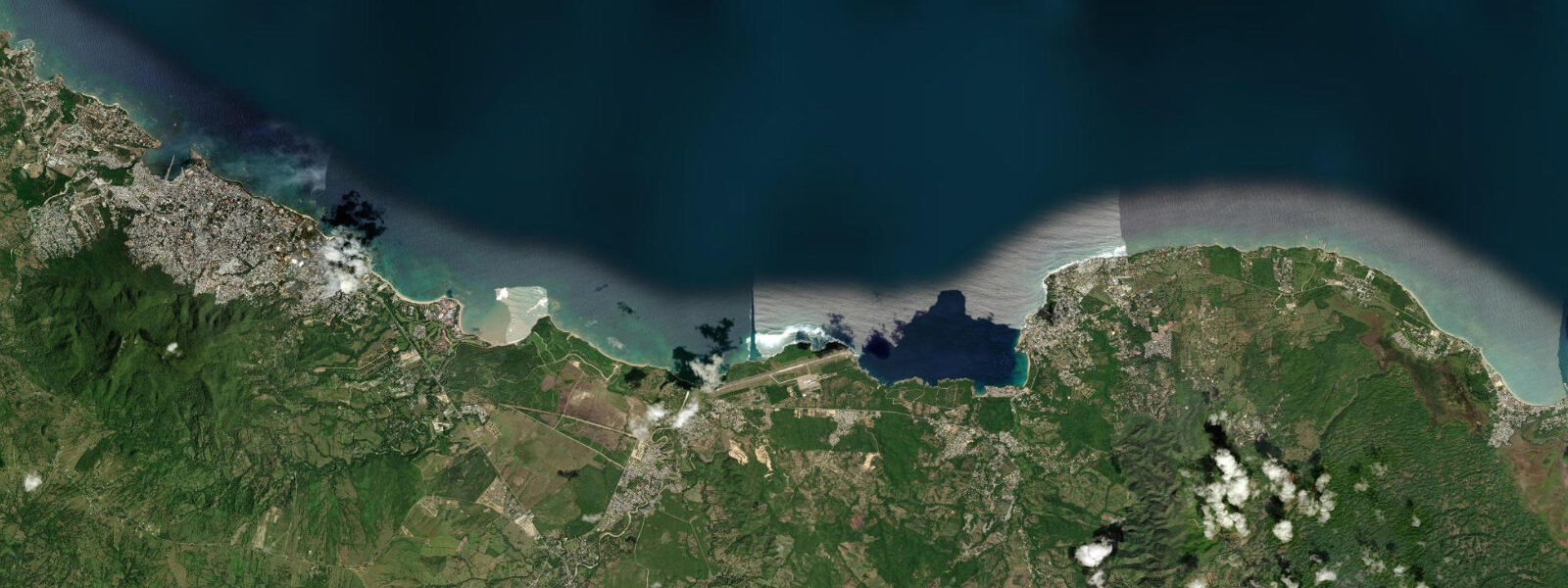
The three closest curated TideTurtle locations to Las Terrenas, measured by great-circle distance.
Today's solunar windows
Solunar tradition: major periods are the ≈3h windows around moon transit and opposition; minor are ≈2h around moonrise and moonset. Pair with the local tide stage and wind for the best read.
About tides at Las Terrenas
A short guide to the coastline at Las Terrenas — geography, sea state, and what the tide is actually doing under your feet.
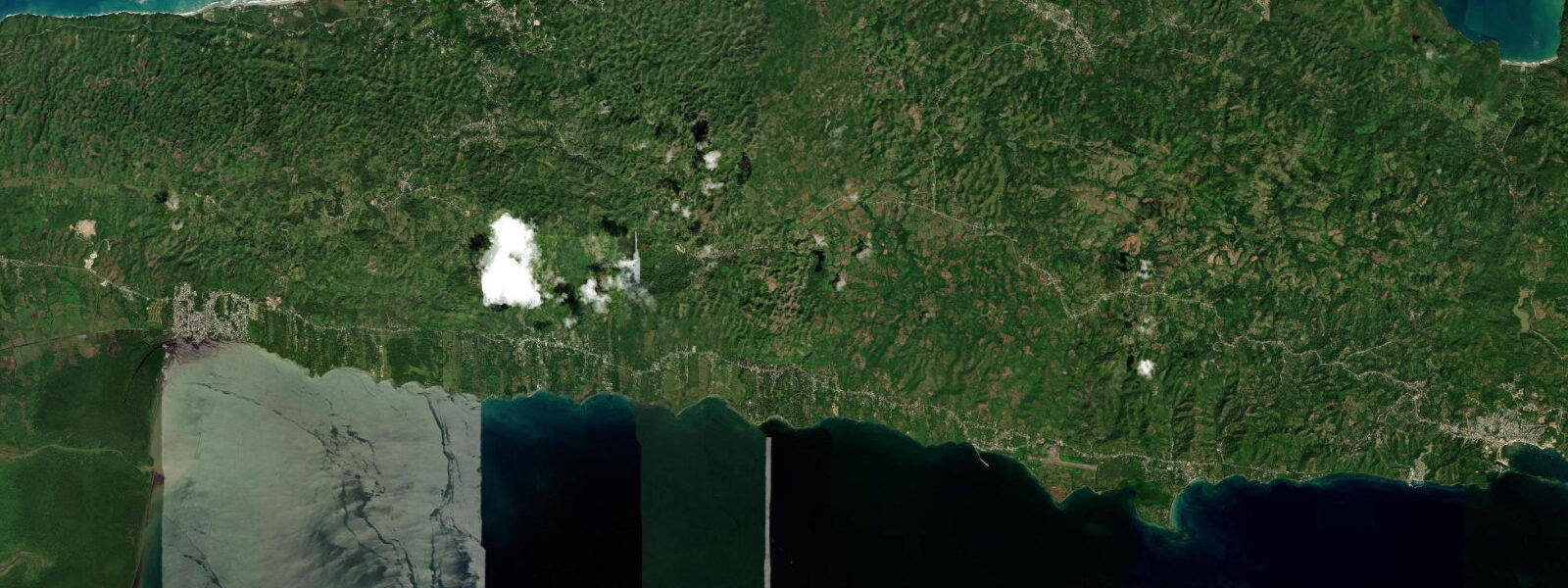
Las Terrenas occupies a stretch of the north coast of the Samaná Peninsula, facing directly into the Atlantic trade-wind swell from the northeast. The town grew from a fishing village to a resort community during the 1980s and 1990s, attracting a large French and Italian expat community that remains prominent in the town's restaurant and accommodation sector. The result is a coastal town with a distinctly mixed character: Dominican fishing culture and fresh-catch restaurants alongside French bakeries and European-owned boutique hotels.
The tidal regime on the north coast of Samaná Peninsula is mixed semidiurnal, with a mean range of roughly 0.4 to 0.7 m — the full Atlantic exposure on this north-facing coast picks up a slightly larger tidal signal than the more sheltered bay side. Two unequal highs and two unequal lows each day, with the diurnal inequality producing one consistently stronger high. The trade-wind swell from the northeast, running at 1.0 to 1.8 m significant height through most of the dry-season months (December through April), produces wave conditions that dwarf the tidal water-level signal. The beach face and safe-entry conditions vary far more with swell height and period than with tide state. ONAMET (Oficina Nacional de Meteorología) is the Dominican tidal and weather reference; predictions on this page come from Open-Meteo Marine, a gridded global ocean model, accurate to approximately ±45 min and ±0.2–0.3 m.
The beach geography at Las Terrenas is defined by two main beach sections separated by a small rocky point. Playa Las Terrenas runs west from the town centre for roughly 2 km, backed by the main beach road and its restaurants, hotels, and beach bars. Playa Bonita continues east of the point for another kilometre, quieter and with more coconut-palm backing. Both beaches face north-northeast with direct Atlantic exposure; a third beach section, Playa El Portillo, sits about 8 km east of the town centre and is the main kitesurfing and windsurfing location, with consistent easterly trade-wind swell and an offshore reef that breaks incoming swells before they reach the beach.
At Playa El Portillo the incoming trade-wind swell refracts around the headland east of the beach, producing a flatter-water inside zone that is the launch zone for kiters and windsurfers. The 0.4 to 0.7 m tidal range changes the beach-width and wet-sand surface noticeably; the firm wet sand exposed at low tide extends an additional 15 to 25 m from the dry beach, giving a larger flat launch area. Kite instructors at El Portillo time lessons to the early morning lower-swell window and the tide state — a falling tide that exposes firm wet sand is preferred for new students setting up and launching kites.
For shore anglers, the beach at Las Terrenas and the rocky headlands between the beach sections are accessible casting platforms. The incoming tide in the early morning, when bait fish are working the surface and jack crevalle are actively feeding, is the productive window. The harbour at Las Terrenas has local fishing boats that take sport anglers offshore for mahi-mahi and marlin during the seasonal pelagic run (May through September, when the warm-water current moves north of the island).
For snorkellers, the reefs at Playa Bonita and the rock structure at the headland between the two main beaches hold parrotfish, snapper, and reef communities at 1 to 4 m depth. The best visibility occurs on incoming tide in calm conditions, when the cleaner Atlantic water pushes inshore and the wave-stirred turbidity from the beach face settles. The reef at Playa El Portillo is deeper and better accessed by boat from the dive operators in town.
Beach-walkers and families using the main Las Terrenas beach will find that the beach width changes meaningfully across the tidal cycle. On a spring low tide the full width of firm, flat sand is exposed — roughly 50 to 70 m from the coconut palm line to the waterline, giving a wide, clean walking surface. At high water the beach narrows to 20 to 30 m of active swell-zone sand. For morning beach walks, the low-tide window gives the cleanest, widest surface.
Photographers at Las Terrenas have the classic Caribbean palm-over-beach composition in multiple versions, with the Atlantic light arriving clean and direct from the northeast. The fishing boats pulled up on the beach at the town's western end in the early morning, before the beach restaurants open, are the most genuine subject on this coast.
Predictions on this page come from Open-Meteo Marine, a gridded global ocean model. Accuracy is typically ±45 min and ±0.2–0.3 m. ONAMET is the authoritative Dominican Republic tidal and meteorological source.
Tide questions about Las Terrenas
Quick answers to the most common questions about tide times, range, and water access at Las Terrenas.
When is the next high tide at Las Terrenas?
The hero block at the top of this page shows the next predicted high at Las Terrenas in local Atlantic Standard Time (AST, UTC-4; the Dominican Republic does not observe daylight saving time). The astronomical range on the north coast of the Samaná Peninsula is roughly 0.4 to 0.7 m — small but perceptible, with the beach width changing meaningfully between high and low on a spring tide. The dominant variable for beach and water conditions at Las Terrenas is the northeast trade-wind swell, not the tide. ONAMET (Oficina Nacional de Meteorología) is the Dominican Republic's authoritative tidal and weather reference.
When is the best time for kitesurfing at Playa El Portillo?
The kitesurfing season at Playa El Portillo runs primarily from December through April, when the NE trade winds blow consistently at 15 to 25 knots and the conditions are most predictable. July through September is a secondary season when easterly trades are also reliable. The best daily sessions are in the morning (07:00 to 12:00) before the sea breeze stiffens and adds cross chop; the early morning typically offers the cleaner, steadier trade-wind flow. A falling or low tide, which exposes firm wet sand on the beach, gives a wider and firmer launch zone — kite instructors strongly prefer low-tide conditions for student setups and launches. The offshore reef at El Portillo provides some protection from the incoming swell, but the site is not suitable for beginners in swell above 0.8 m or wind above 25 knots.
What is the beach like at Playa Bonita compared to Playa Las Terrenas?
Playa Bonita sits east of the rocky headland that divides the Las Terrenas coast, and it is quieter and more lightly developed than the main Las Terrenas beach west of town. Playa Bonita has more coconut palms overhanging the sand, a steeper beach slope than the main beach, and fewer beach restaurants on the sand itself — most facilities are set back from the beach behind the palm line. The reef structure close to the headland gives Playa Bonita slightly more reef-fish snorkelling than the main beach. Both beaches have NE Atlantic exposure and the same tidal range; wave conditions are slightly calmer at Playa Bonita on moderate NE swell days because the headland diffracts some of the direct NE energy.
Where do these tide predictions come from?
Open-Meteo Marine, a free gridded global ocean model. The model estimates tidal height across a geographic grid rather than computing from harmonic analysis of a local Las Terrenas gauge. Accuracy is typically within ±45 minutes on timing and ±0.2 to 0.3 metres on height. At Las Terrenas's spring range of 0.4 to 0.7 m, the timing uncertainty is a significant fraction of the half-cycle duration. ONAMET (Oficina Nacional de Meteorología) is the authoritative Dominican Republic tidal and meteorological reference; for timing-critical activities, weight ONAMET data and the local swell forecast.
Is this safe to use for navigation?
No. The north coast of the Samaná Peninsula has reef structures offshore and significant trade-wind swell exposure. For vessel operations along this coast — including the approaches to Las Terrenas harbour and the reef navigation at Playa El Portillo — use current Dominican Republic nautical charts and ONAMET marine forecasts. Open-Meteo Marine gridded predictions are not gauge-calibrated harmonic data and do not replace authoritative sources for navigation. The offshore reef at El Portillo breaks in swell that makes approach hazardous for vessels without local chart knowledge.
7-day tide table — Las Terrenas
Heights relative to MSL. Predictions: Open-Meteo Marine (MeteoFrance SMOC, 0.08° grid) — heights relative to MSL (not chart datum / LAT). Model-derived.
| Day | Type | Time | Height |
|---|---|---|---|
| Tue 04 Aug | Low | 06:00 | 0.1m |
| Wed 05 Aug | High | 00:18 | 0.5m |
| Low | 06:42 | 0.1m | |
| High | 13:40 | 0.7m | |
| Low | 19:50 | 0.3m | |
| Thu 06 Aug | High | 01:10 | 0.5m |
| Low | 21:10 | 0.3m | |
| Fri 07 Aug | High | 02:00 | 0.5m |
| Low | 08:20 | 0.1m | |
| Sat 08 Aug | High | 03:00 | 0.5m |
| Low | 09:12 | 0.1m | |
| Sun 09 Aug | High | 04:06 | 0.4m |
| Low | 10:12 | 0.0m | |
| Mon 10 Aug | High | 05:06 | 0.5m |