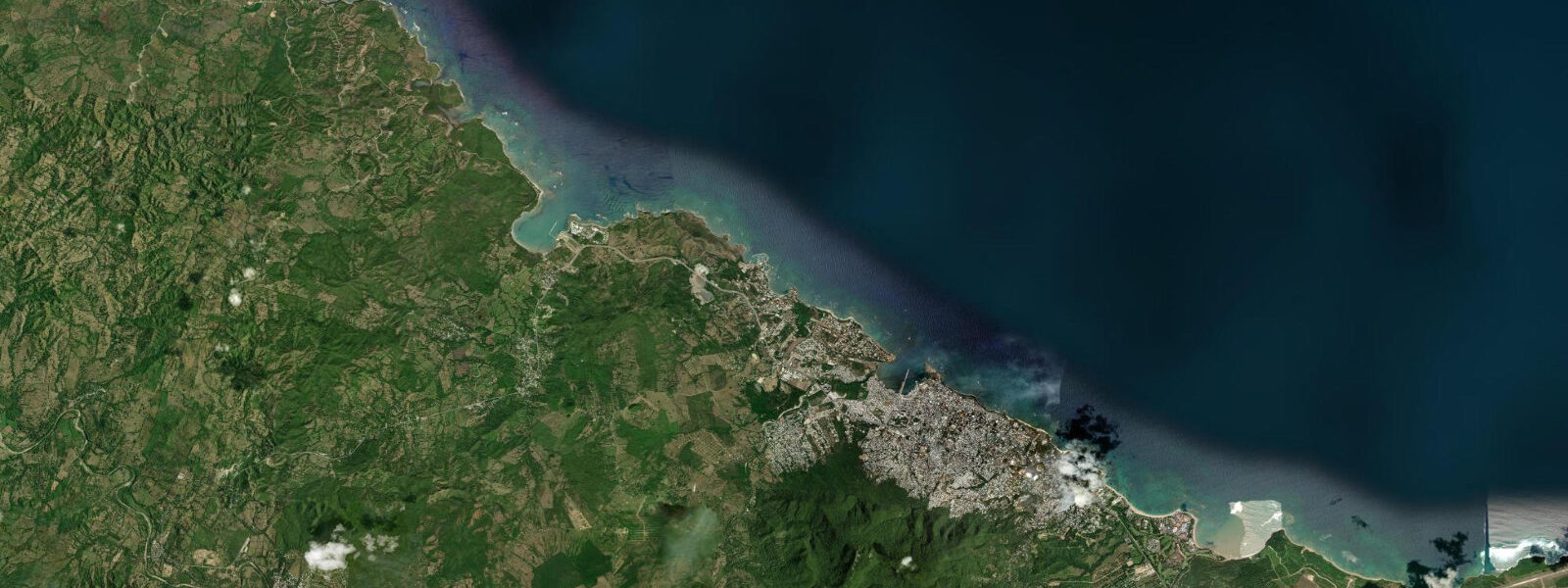
Puerto Plata tide times
Puerto Plata tide forecast — heights relative to MSL.
Today's tide times for Puerto Plata
Tide times at Puerto Plata on Wednesday, 29 July 2026: first low tide at 01:38pm, first high tide at 08:22pm. Sunrise 06:17am, sunset 07:20pm.
Tide chart for Puerto Plata
24-hour cosine-interpolated curve around the present moment. Heights relative to MSL. Predictions: Predictions: Open-Meteo Marine (MeteoFrance SMOC, 0.08° grid).
Sun, moon and conditions on Wed 29 Jul
Snapshot at build time — refreshes daily. Sea state from Open-Meteo Marine.
Highs and lows next 7 days
Every predicted high and low for the next week, with the daily tidal coefficient (0–120; higher = bigger swing, > 95 means stronger currents).
Other spots nearby
The three closest curated TideTurtle locations to Puerto Plata, measured by great-circle distance.
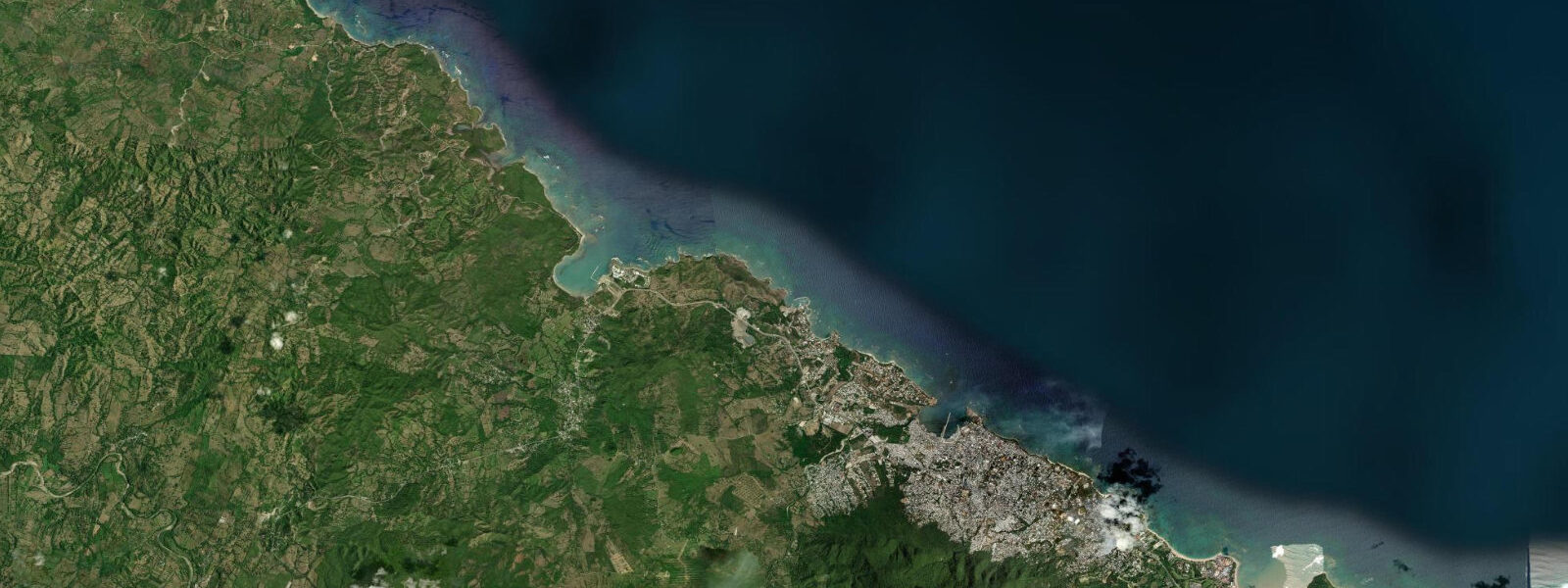
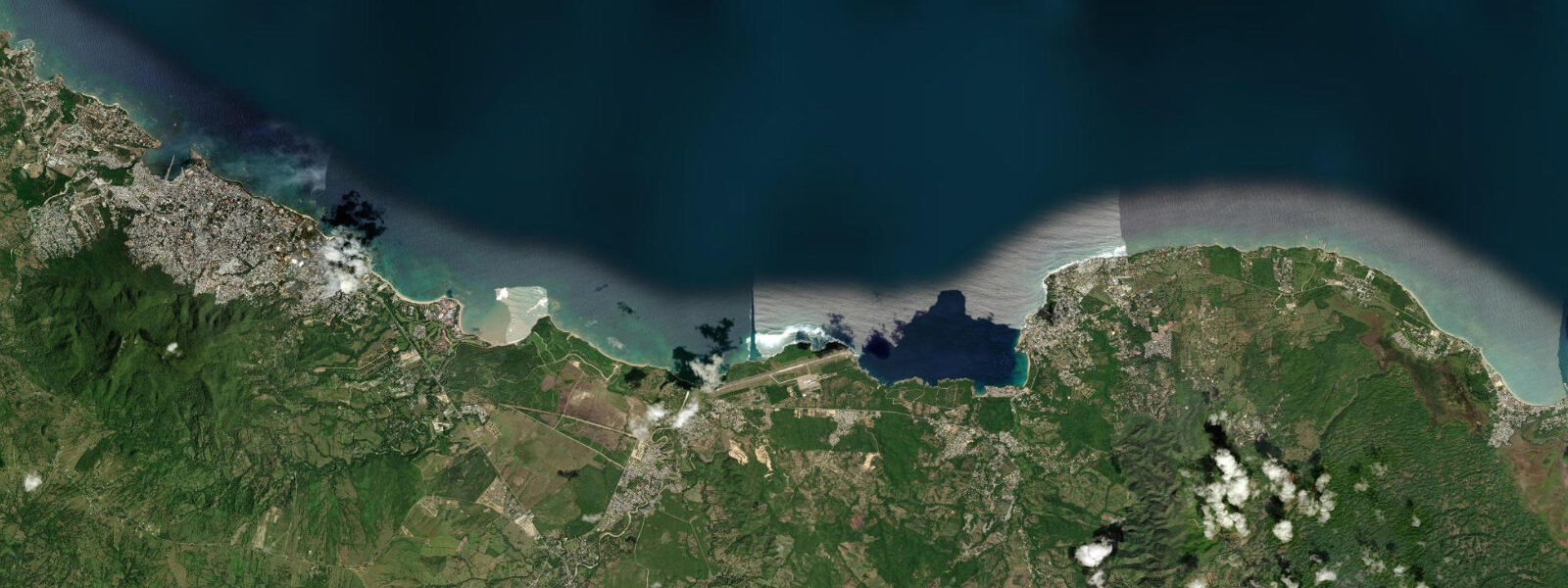
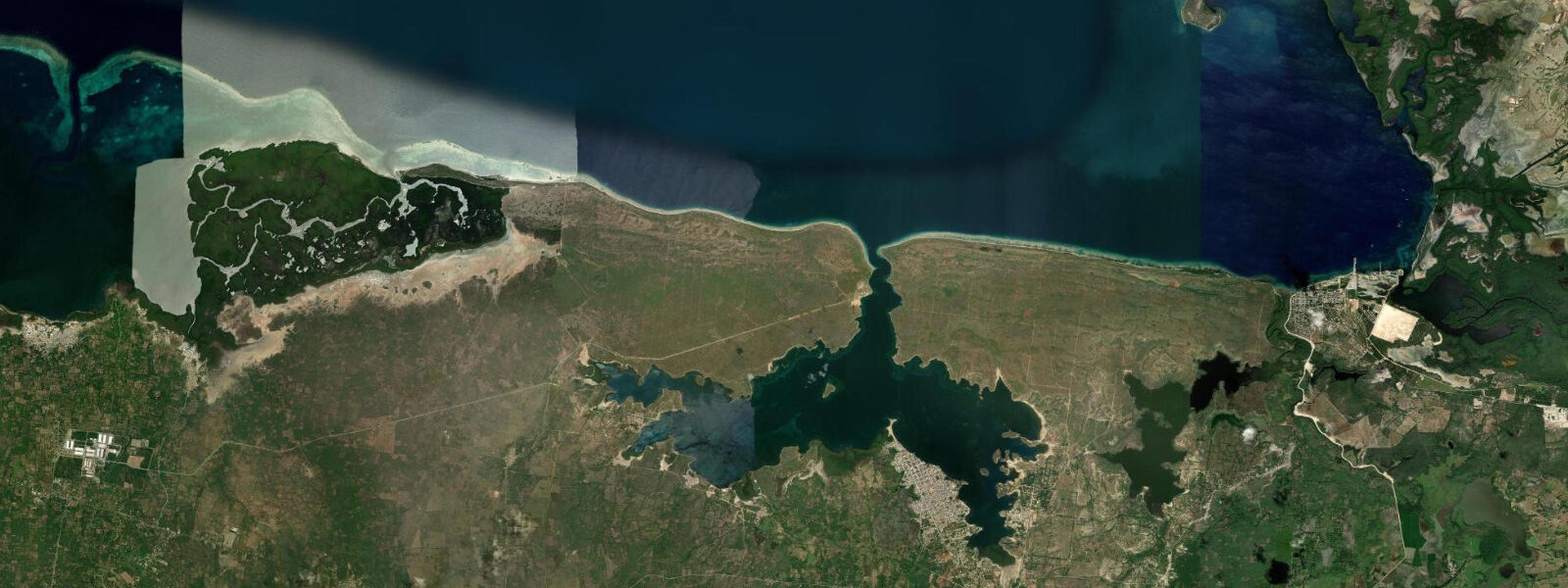
Today's solunar windows
Solunar tradition: major periods are the ≈3h windows around moon transit and opposition; minor are ≈2h around moonrise and moonset. Pair with the local tide stage and wind for the best read.
Cycle dates near Puerto Plata
Next spring tide on Wed 29 Jul (range 0.6m). Next neap on Fri 31 Jul.
Spring tides cluster around new and full moons (biggest swings). Neap tides land on quarter moons (smallest swings). See the spring tide and neap tide glossary entries for the why.
About tides at Puerto Plata
A short guide to the coastline at Puerto Plata — geography, sea state, and what the tide is actually doing under your feet.
Puerto Plata sits on the Dominican Republic's north coast at the foot of Pico Isabel de Torres, the 800-metre limestone headland that rises directly behind the colonial port and carries the cable car visible from anywhere along the bay. The harbour entrance is guarded by the Fortaleza San Felipe (El Castillo San Felipe), the 16th-century Spanish coastal fort built in the 1570s to defend the silver-trade route, and the colonial Malecón runs east along the seafront from the old town toward Long Beach and the Playa Dorada resort strip. Cofresí, a few kilometres west of the city, holds the smaller boutique-hotel beach.
East of Puerto Plata the coast runs through Sosúa and on to Cabarete — one of the established Caribbean wind and kite venues — and the trade wind that funnels Cabarete is the same trade wind that hits Playa Dorada. The tide here is mixed semidiurnal and modestly larger than the protected east coast at Punta Cana, because the north coast faces directly into the open Atlantic with no significant reef shielding the shoreline. Mean range at the Puerto Plata gauge is around 50 to 70 cm, with the two daily highs noticeably unequal — typical morning-evening height differences of fifteen to twenty-five centimetres — and the two lows similarly asymmetric.
Spring tides around new and full moons push the swing toward 80 cm; neap tides compress it toward 35 to 45 cm. That is still small in absolute terms, but it is enough to expose useful sand at low water on the Playa Dorada and Long Beach strands and to drive a perceptible flow at the harbour mouth around the times of high and low slack. The Atlantic swell exposure is the real coastal character at Puerto Plata.
Open-ocean swell from the North Atlantic reaches this coast unfiltered by reef, particularly during the late-autumn and winter swell season when frontal systems run down the eastern seaboard of North America. The bay itself is partially sheltered by the geometry of the headland and the Fortaleza San Felipe peninsula, but Cofresí and Long Beach see swell directly. Anglers along the rocky points east of the fortaleza target snapper and grouper on the incoming tide; the headland at Pico Isabel de Torres descends to the sea in a series of limestone benches that hold pocket beaches where a low-tide drop opens up beach-fishing windows for surfcasters.
Beach-walking families on Playa Dorada find the firmest sand on the ebb, with the wide intertidal exposed an hour either side of the predicted low. Photographers shooting the Fortaleza San Felipe at sunset get the cleanest harbour reflections at high water when the bay sits at its highest level against the fortress walls. SUP and kayak paddlers working along the Cofresí-Costa Dorada coast read wind first — the same trade wind that drives Cabarete pushes water along this coast — and time crossings of the harbour mouth for the slack windows around predicted high and low.
The cable car up Pico Isabel de Torres lifts visitors from sea level to the 800-metre summit in about ten minutes; the view from the top runs along the entire north coast from Monte Cristi in the west to past Sosúa in the east, with the curvature of the bay and the wide swell lines clearly visible on a clear day. Seasonally, the late-autumn and winter swell pattern (November through March) is when the open-coast beaches outside the bay take their largest waves; the summer pattern (June through October) overlaps with hurricane season, when distant tropical systems running through the western Atlantic drive long-period swell into the north coast even when the local weather is fine. The predictions on this page come from Open-Meteo Marine, a gridded global ocean model.
3 metres on height. For a 50 to 70 cm range, the height uncertainty is meaningful relative to the signal, so the rhythm and timing are useful but the precise predicted heights should be treated as approximate. The authoritative regional source is the Servicio Hidrográfico de la Armada Dominicana (the Dominican Navy's hydrographic service), which operates the Puerto Plata gauge and publishes the official Dominican tide tables.
Tide questions about Puerto Plata
Quick answers to the most common questions about tide times, range, and water access at Puerto Plata.
When is the next high tide at Puerto Plata?
The hero block at the top of this page shows the next predicted high at Puerto Plata in local Atlantic Standard Time (AST, UTC-4, no DST). The pattern is mixed semidiurnal — two highs and two lows daily, usually with noticeable inequality between the morning and evening highs. Mean range at the Puerto Plata gauge is around 50 to 70 cm. The Servicio Hidrográfico de la Armada Dominicana publishes the authoritative tide tables for the Dominican coast, and NOAA's regional Atlantic tidal references carry the broader context.
What's the typical tide range at Puerto Plata?
Mean astronomical range at the Puerto Plata gauge is around 50 to 70 cm — slightly larger than Punta Cana on the protected east coast (30 to 50 cm) because the north coast faces directly into the open Atlantic with no reef shielding the shore. The pattern is mixed semidiurnal: two highs and two lows daily, with morning-evening inequality of fifteen to twenty-five centimetres typical. Spring tides push the swing toward 80 cm; neaps compress it toward 35 to 45 cm. Atlantic swell and trade wind setup matter as much as the astronomical signal for actual water level on Playa Dorada and Cofresí.
Where do these tide predictions come from?
Open-Meteo Marine, a free gridded global ocean model. Gridded models estimate tidal height across a geographic grid rather than computing from decades of measured harmonic data at a single gauge — accuracy is typically within plus or minus 45 minutes on timing and within roughly 0.3 metres on height. For a 50 to 70 cm range, the height uncertainty is meaningful relative to the signal. For authoritative Puerto Plata sea-level data, use the Servicio Hidrográfico de la Armada Dominicana, who operate the Puerto Plata gauge.
How exposed is Puerto Plata to Atlantic swell?
Directly exposed. Unlike the Punta Cana-Bávaro coast on the east side of the island, the north coast at Puerto Plata has no fringing reef to break open-ocean swell before it reaches the shore. North Atlantic frontal swell during the late-autumn and winter season runs unfiltered onto Cofresí, Long Beach, and the open beaches east of the harbour. The bay at Puerto Plata itself is partially sheltered by the Fortaleza San Felipe peninsula, but the surrounding open coast is fully Atlantic-exposed. The same trade wind setup that drives the kiteboarding scene at Cabarete (25 km east) hits this coast as well.
Is this safe to use for navigation?
No. For vessel operations in Puerto Plata harbour, the approaches to Cofresí, and the open coast east toward Sosúa and Cabarete, use official charts from the Servicio Hidrográfico de la Armada Dominicana and the international charts published by NOAA, the UK Hydrographic Office, or the SHOM. The Pico Isabel de Torres headland generates wind shadows and acceleration zones along the bay that local operators know well. For commercial cruise traffic at the Amber Cove terminal west of the city, the harbour authority and pilot service handle approach navigation.
7-day tide table — Puerto Plata
Heights relative to MSL. Predictions: Open-Meteo Marine (MeteoFrance SMOC, 0.08° grid) — heights relative to MSL (not chart datum / LAT). Model-derived.
| Day | Type | Time | Height |
|---|---|---|---|
| Wed 29 Jul | Low | 13:38 | 0.1m |
| High | 20:22 | 0.7m | |
| Thu 30 Jul | Low | 03:00 | 0.2m |
| High | 08:18 | 0.4m | |
| Low | 14:12 | 0.1m | |
| High | 21:04 | 0.7m | |
| Fri 31 Jul | Low | 03:40 | 0.1m |
| High | 09:10 | 0.5m | |
| Low | 15:00 | 0.1m | |
| Sat 01 Aug | High | 09:55 | 0.5m |
| Low | 15:50 | 0.1m | |
| High | 22:12 | 0.6m | |
| Sun 02 Aug | Low | 04:40 | 0.1m |
| High | 10:47 | 0.6m | |
| Low | 16:42 | 0.2m | |
| High | 22:50 | 0.6m | |
| Mon 03 Aug | Low | 05:12 | 0.1m |
| Tue 04 Aug | High | 12:21 | 0.6m |
| Low | 19:00 | 0.2m |