Helsingør tide times
Helsingør tide forecast — heights relative to MSL.
Today's tide times for Helsingør
Tide times at Helsingør on Monday, 3 August 2026: first high tide at 02:00am, first low tide at 07:00am, second high tide at 02:00pm. Sunrise 05:15am, sunset 09:15pm.
Tide chart for Helsingør
24-hour cosine-interpolated curve around the present moment. Heights relative to MSL. Predictions: Predictions: Open-Meteo Marine (MeteoFrance SMOC, 0.08° grid).
Sun, moon and conditions on Mon 03 Aug
Snapshot at build time — refreshes daily. Sea state from Open-Meteo Marine.
Highs and lows next 7 days
Every predicted high and low for the next week, with the daily tidal coefficient (0–120; higher = bigger swing, > 95 means stronger currents).
Other spots nearby
The three closest curated TideTurtle locations to Helsingør, measured by great-circle distance.
Today's solunar windows
Solunar tradition: major periods are the ≈3h windows around moon transit and opposition; minor are ≈2h around moonrise and moonset. Pair with the local tide stage and wind for the best read.
About tides at Helsingør
A short guide to the coastline at Helsingør — geography, sea state, and what the tide is actually doing under your feet.
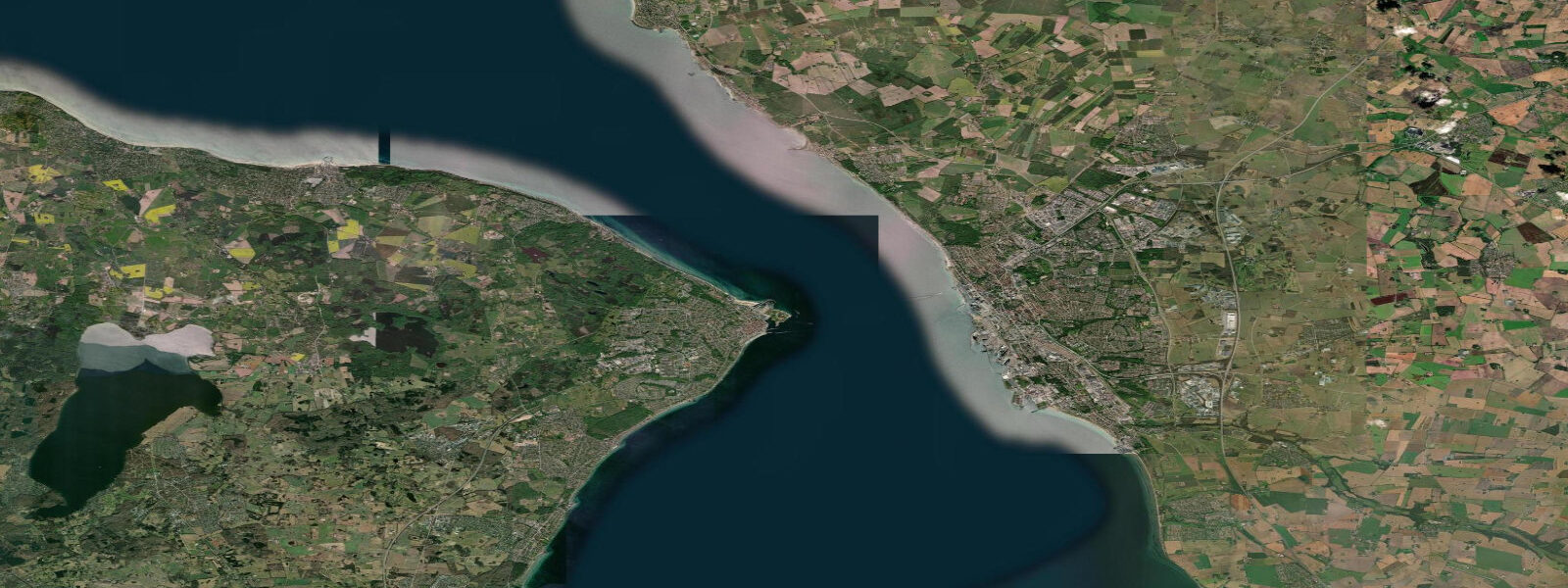
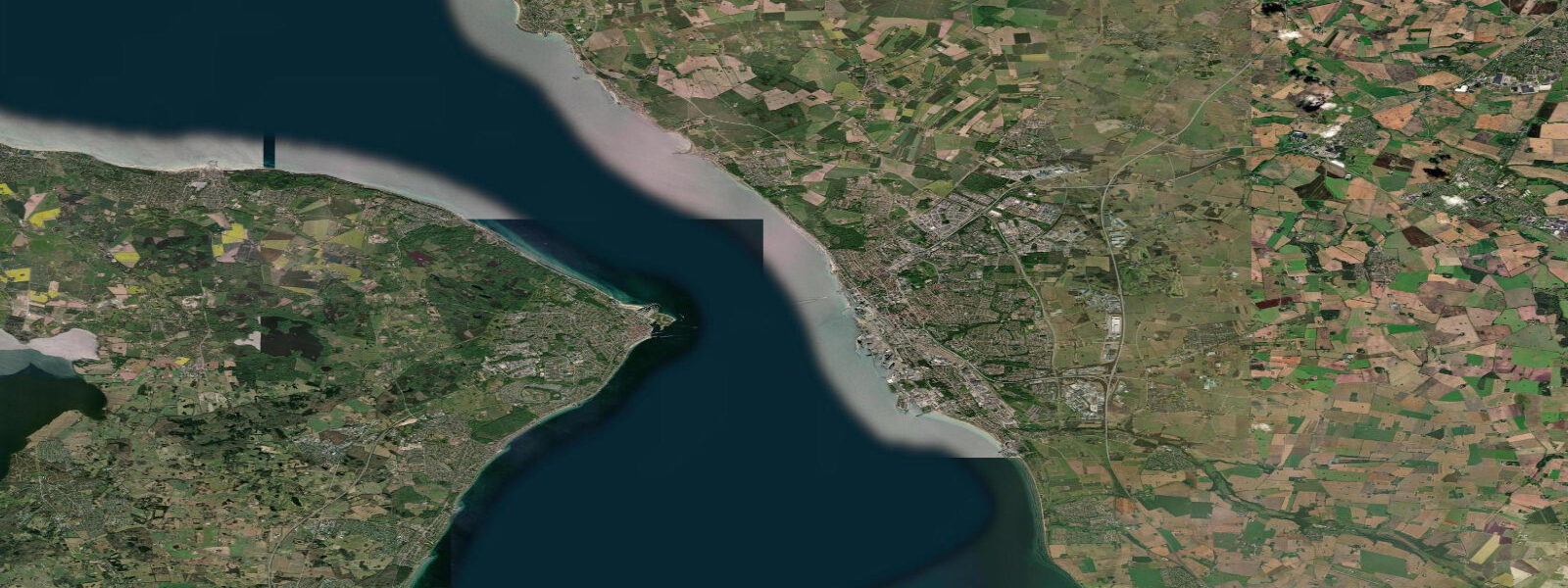
Helsingør sits at the narrowest point of the Øresund strait — only 4 kilometres separate the town from Helsingborg in Sweden — and the consequences of that geography are historic. From the 15th to the 17th centuries, Denmark controlled the Øresund toll: every vessel transiting the strait between the North Sea and the Baltic was required to stop at Helsingør's custom house and pay duty on their cargo. At the toll's peak, the Øresund dues produced 25% of the Danish Crown's revenue, made Helsingborg and Helsingør two of the wealthiest towns in northern Europe, and financed the construction of Kronborg Castle.
Kronborg (UNESCO World Heritage Site) overlooks the strait from a headland north of the harbour. Built in its current form between 1574 and 1585, the castle served simultaneously as a toll station, a military fortress, and a royal residence. It is also — through Shakespeare — Hamlet's Elsinore, though the historical basis for the Hamlet legend predates the current building by centuries. The castle's sea-facing bastions stand at water level; at high water in a NW storm surge, the moat fills and the lower approach road floods.
The tidal regime in the Øresund is determined by the interaction between North Sea tidal energy entering from the Kattegat in the north and the Baltic's near-zero tide in the south. Mean spring range at Helsingør is around 0.3 metres — small but noticeable. More significantly, the current through the Øresund is driven by the sea-level difference between the Kattegat and the Baltic, which changes on timescales of days driven by wind patterns across the entire Baltic basin. This current runs to 1.5 to 2 knots at peak, reversing direction as the wind balance shifts.
The HH Ferry (Helsingør-Helsingborg) has operated one of the shortest international ferry crossings in the world for decades — the 4-kilometre crossing takes 20 minutes. Operators time the crossings continuously rather than to a tidal schedule; the Øresund current is a navigational consideration for the ferry pilots but the crossing is well within practical range at any tidal state.
Sailing dinghies and sea kayakers use the current passage timing for crossings to Sweden. The 4-kilometre crossing against a 2-knot opposing current is significantly harder than with the current — planning the crossing to use a fair current is standard practice for self-powered craft.
The Kronborg Marine Museum (M/S Museet for Søfart) in the old dockyard below the castle documents Danish maritime history from the Øresund toll era through the age of steam. Several historical vessels are moored alongside.
Predictions on this page come from Open-Meteo Marine, a gridded global ocean model. Accuracy is typically within plus or minus 45 minutes on timing and 0.2 to 0.3 metres on height — model-derived, not from a local gauge. For authoritative Danish sea-level data, consult DMI (Danmarks Meteorologiske Institut) at dmi.dk/hav.
Tide questions about Helsingør
Quick answers to the most common questions about tide times, range, and water access at Helsingør.
What is the tidal range and current at Helsingør?
Mean spring range is approximately 0.3 metres — the Øresund carries a weakened tidal signal from the Kattegat meeting the near-zero Baltic tide. More notable than the tide is the residual current driven by sea-level differences between Kattegat and Baltic. This current reverses direction with multi-day weather patterns across the Baltic basin and runs to 1.5 to 2 knots at peak — noticeable to paddlers, sailboards, and small craft attempting the Helsingborg crossing. DMI publishes current forecasts for the Øresund that are more relevant than tidal predictions for trip planning.
How do I take the ferry to Helsingborg, Sweden?
HH Ferries (Sundsbussarna and ForSea) operate the Helsingør-Helsingborg crossing continuously — approximately every 15 to 20 minutes in daytime. The 20-minute crossing carries cars, trucks, bikes, and foot passengers. Car booking is recommended but often not essential outside peak periods. The ferry terminal is immediately adjacent to the Helsingør train station. A second service (ForSea) uses the same terminal. The crossing is one of the most frequent international ferry services in the world — thousands of commuters use it daily.
Is Kronborg Castle actually Elsinore from Hamlet?
Kronborg became associated with Hamlet through William Shakespeare's play (c.1600), which may have been inspired by the historical Danish legend of Amleth recorded in the Gesta Danorum (c.1200). Shakespeare almost certainly never visited Helsingør, but the real Danish court was well known to English players in the late 16th century. Kronborg's name in English-language tradition was Elsinore, a corruption of Helsingør. The association is now integral — Kronborg hosts annual performances of Hamlet in the castle courtyard. UNESCO listed Kronborg in 2000 as both an outstanding Renaissance castle and for its cultural significance.
Can I kayak across the Øresund to Sweden?
Experienced sea kayakers do cross from Helsingør to Helsingborg — the 4-kilometre crossing is manageable in calm weather for competent paddlers. Key considerations: the Øresund is one of the busiest shipping lanes in the world; vessel traffic including supertankers, container ships, ferries, and naval vessels transits the strait at all hours. Crossing the traffic separation scheme legally requires crossing at right angles and as quickly as possible. A VHF radio, VHF monitoring of shipping traffic, and understanding of the day's current direction are essential. The crossing with a fair current (southward when Baltic exceeds Kattegat level) is significantly easier.
What else is worth seeing in Helsingør besides Kronborg?
The M/S Museet for Søfart (Maritime Museum of Denmark) in the historic dry dock beneath the Kronborg headland is architecturally notable — the museum is built into and around the original 19th-century dry dock structure, designed by BIG (Bjarke Ingels Group, 2013). Helsingør town centre has well-preserved medieval streets around the Carmelite monastery and St Olaf's Church. Kronborg gardens are free to enter. The Øresundsakvariet on the harbour edge has live displays of Øresund marine life. The Hornbæk beach resort (18 km north) is popular for summer beach days.
7-day tide table — Helsingør
Heights relative to MSL. Predictions: Open-Meteo Marine (MeteoFrance SMOC, 0.08° grid) — heights relative to MSL (not chart datum / LAT). Model-derived.
| Day | Type | Time | Height |
|---|---|---|---|
| Mon 03 Aug | High | 02:00 | -0.1m |
| Low | 07:00 | -0.2m | |
| High | 14:00 | -0.1m | |
| Tue 04 Aug | — | ||
| Wed 05 Aug | Low | 08:00 | -0.2m |
| High | 16:00 | -0.1m | |
| Thu 06 Aug | — | ||
| Fri 07 Aug | — | ||
| Sat 08 Aug | Low | 11:50 | -0.2m |
| Sun 09 Aug | High | 19:00 | -0.1m |