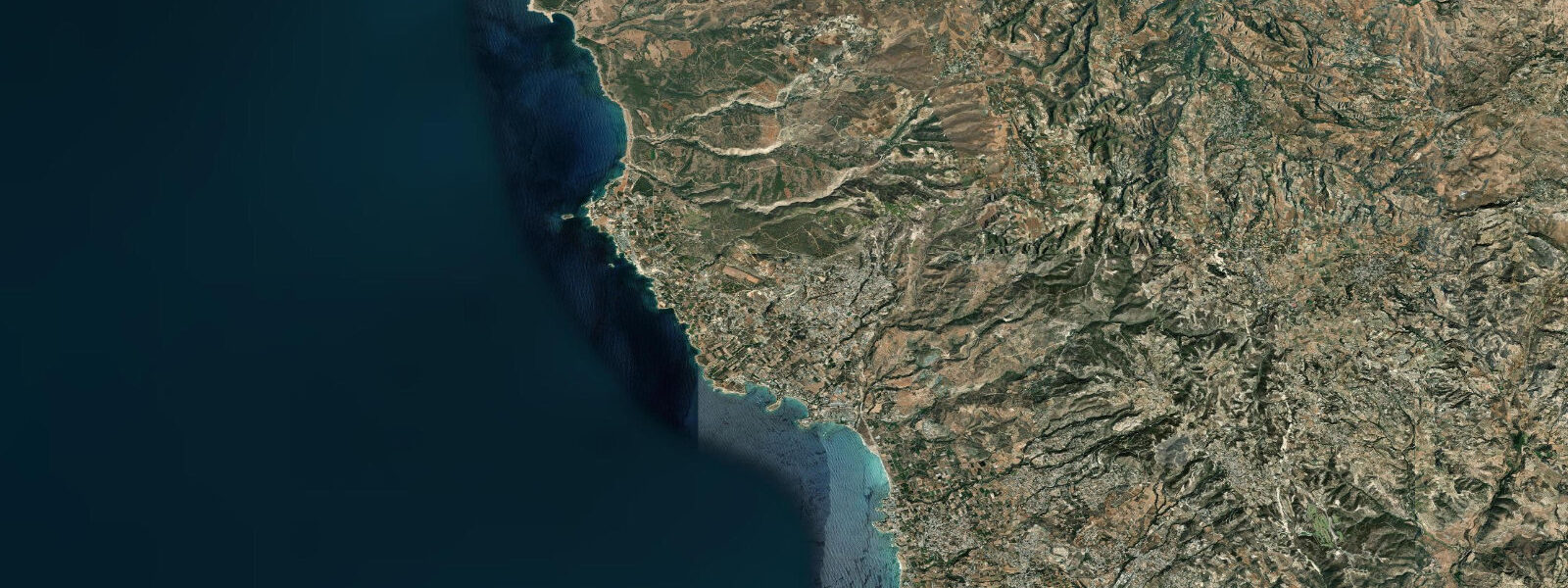
Coral Bay, Paphos District tide times
Coral Bay, Paphos District tide forecast — heights relative to MSL.
Today's tide times for Coral Bay, Paphos District
Tide times at Coral Bay, Paphos District on Monday, 3 August 2026: first high tide at 03:00am, first low tide at 07:10am, second high tide at 01:15pm, second low tide at 07:45pm. Sunrise 06:00am, sunset 07:52pm.
Tide chart for Coral Bay, Paphos District
24-hour cosine-interpolated curve around the present moment. Heights relative to MSL. Predictions: Predictions: Open-Meteo Marine (MeteoFrance SMOC, 0.08° grid).
Sun, moon and conditions on Mon 03 Aug
Snapshot at build time — refreshes daily. Sea state from Open-Meteo Marine.
Highs and lows next 7 days
Every predicted high and low for the next week, with the daily tidal coefficient (0–120; higher = bigger swing, > 95 means stronger currents).
Other spots nearby
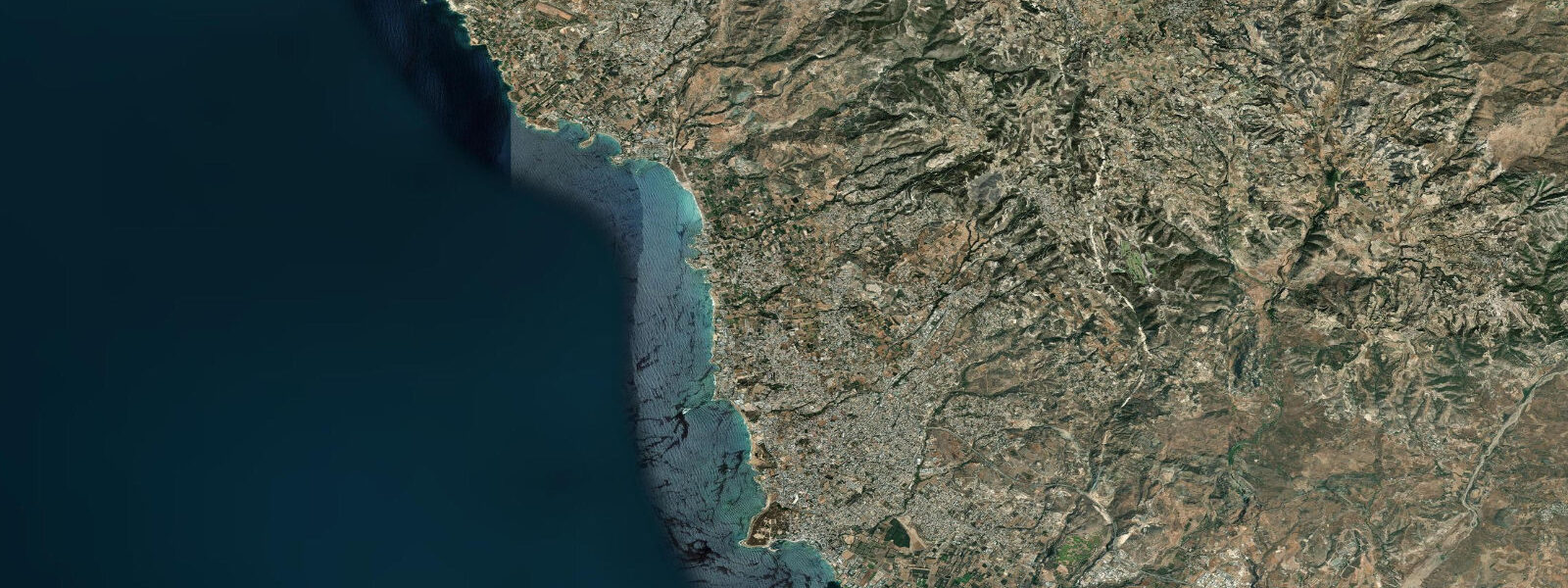
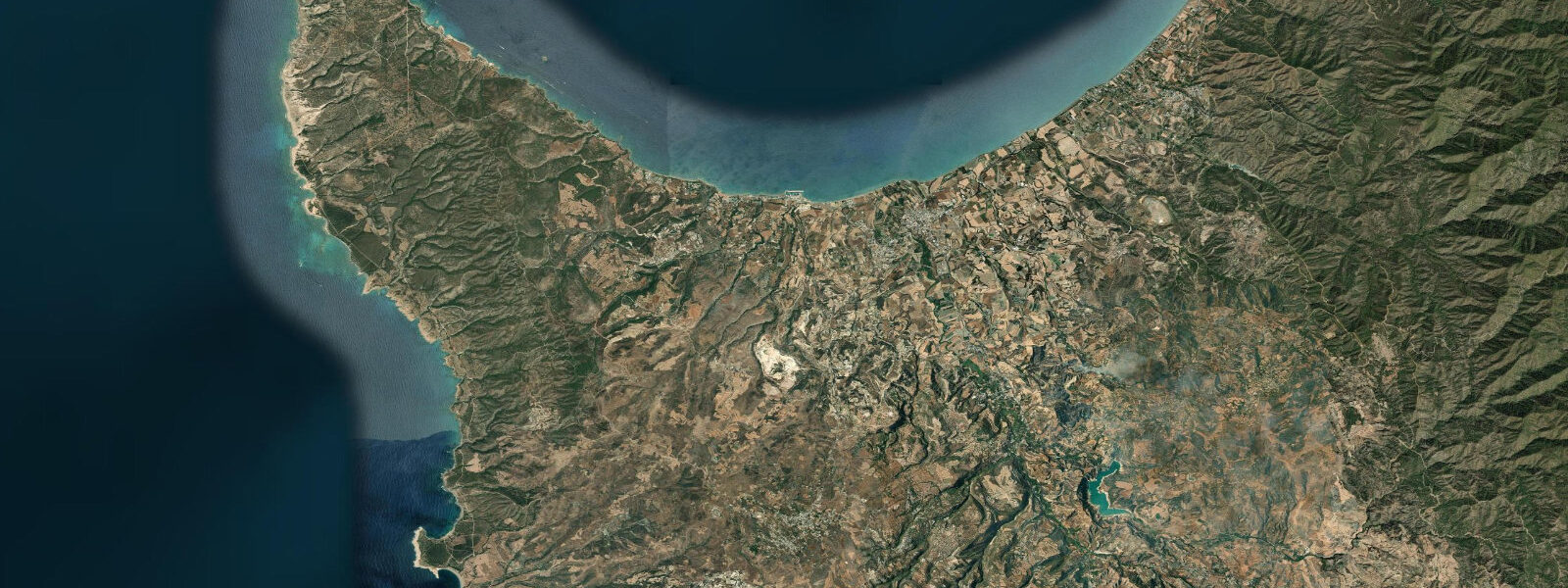
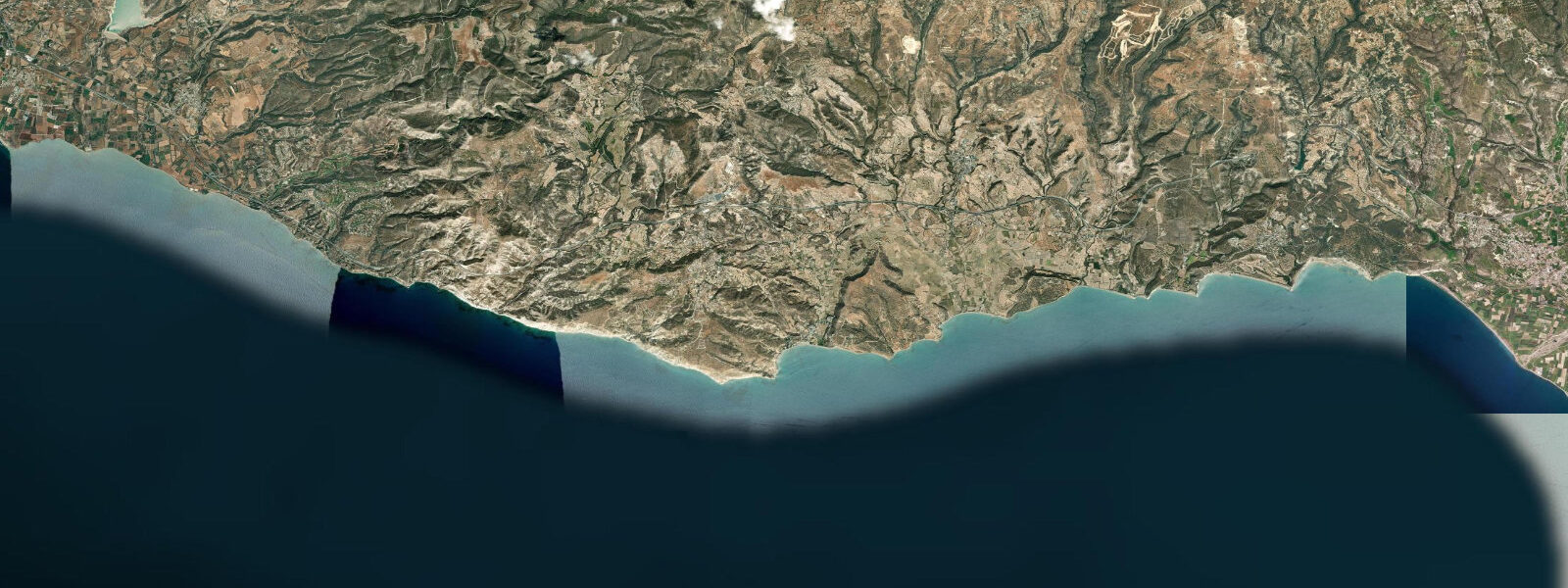
The three closest curated TideTurtle locations to Coral Bay, Paphos District, measured by great-circle distance.
Today's solunar windows
Solunar tradition: major periods are the ≈3h windows around moon transit and opposition; minor are ≈2h around moonrise and moonset. Pair with the local tide stage and wind for the best read.
About tides at Coral Bay, Paphos District
A short guide to the coastline at Coral Bay, Paphos District — geography, sea state, and what the tide is actually doing under your feet.
Coral Bay is a sheltered arc of sand 8 km north of Paphos town, framed by two low limestone headlands that compress the bay into a shape that holds calm water on most summer days. The beach itself is coarse sand, a pale buff colour that reflects the Cretaceous limestone of the headland cliffs behind it. The name is not metaphorical: the limestone in the headland outcrops contains fossilised coral from the ancient Tethys Sea, visible in cross-section in the roadside cuts along the approach road — discrete coral heads, branching forms, and tabular growths replaced in silica and calcite over tens of millions of years. What remains is the mould, not the original material, but the structures are clear enough that you can identify colony types without any formal training.
The tidal regime at Coral Bay is Eastern Mediterranean — mean range 0.1 to 0.3 m, driven primarily by the M2 tidal constituent modulated by meteorological forcing. In practice, the astronomical tide is often the smaller signal: a sustained westerly fetch across the Mediterranean or a drop in pressure of 10 hPa can displace the water surface by more than the full spring tidal range. That said, the systematic tide is present and it matters for what is happening at the bay edges. The submerged rock reefs at the northern and southern headland flanks — extensions of the coral limestone into the sea — show tide-correlated exposure at their shallow inner sections. At average low water, the reef surface in 0.3 to 0.5 m depth becomes visibly clearer to walk over and the seagrass stems at the reef edge stand in less water, making their extent more readable from above.
Those reefs are the most ecologically significant feature of Coral Bay from a snorkeller's or diver's perspective. Between the reef edges and the sandy beach, Posidonia oceanica seagrass meadows cover the sandy substrate in a band that runs roughly parallel to the shoreline. Posidonia is a true flowering plant — not an alga — that produces rhizomes building up over centuries into mats called matte, which accumulate to depths of several metres and act as natural breakwaters, slowing current and trapping sediment. The leaves are long, ribbon-like, and produce the rolled balls of dead fibre called aegagropilae that wash up on beaches across the Mediterranean. At Coral Bay the meadows are in good condition in the areas away from anchoring activity; anchor damage is visible in the sandy blow-out patches within the meadow, where rhizomes have been broken and recovery is slow — Posidonia grows at approximately 1 to 6 cm per year.
Snorkelling over the meadow from the reef edge toward the beach gives a reliable fish census: two-banded sea bream forage along the meadow-sand boundary, salema move in loose aggregations through the leaf canopy, small grouper use the meadow-reef interface. The water clarity over the sandy bottom in the bay interior is 10 to 15 m on calm days. Entry is easy from the main beach; the reef flanks are best accessed from the water rather than climbing over the headland rocks.
The bay is exposed to westerly and southwesterly swell. Cape Drepanum, the limestone promontory at the northern end of the bay, provides some shelter from northwest quadrant swell, but south-to-southwest fetch remains open. Winter storm events — typically December through February — generate swell periods of 6 to 10 seconds and face heights of 1 to 2 m at the beach, which suspends the sediment and drops water clarity to under 5 m for 24 to 48 hours after an event. Summer conditions are stable; afternoon sea breezes from the west build by 14:00 and generate short-period chop across the bay, which subsides by early evening.
Small boat hire and pedalo rental operate from the beach during the main season, late April through October. The pedalo zone is marked with buoys and is separate from the snorkelling area at the reef flanks. Boat traffic through the bay increases significantly in July and August; anchor selection outside the marked zones carries a real risk of Posidonia damage, which is prohibited under EU Habitats Directive transposition into Cypriot law.
For kayakers, the northern headland route to Cape Drepanum is 2 km from the Coral Bay beach. The headland base has sea caves and arched sections in the limestone at low water accessible by sea kayak — the cave ceilings are low, requiring entry at low tide when 0.3 to 0.5 m of additional clearance is available. The paddle is best timed for the morning before the westerly sea breeze builds.
For anglers, the reef edge at the northern headland is the productive ground. From the rocks at the headland base at low water, a cast of 15 to 20 m clears the reef and drops bait onto the sandy edge of the Posidonia meadow, where bream feed. A running ledger with sandworm or prawn is effective; light spinning over the reef top takes wrasse and small grouper.
Tide data for Coral Bay, Paphos District comes from the Open-Meteo Marine API, a gridded model product. Timing accuracy is ±45 minutes, height accuracy ±0.3 m — usable for trip planning, not for navigation.
Tide questions about Coral Bay, Paphos District
Quick answers to the most common questions about tide times, range, and water access at Coral Bay, Paphos District.
What does the tide do at Coral Bay and does it change the beach conditions?
The tidal range at Coral Bay is 0.1 to 0.3 m — small enough that most beach visitors will not notice it. The main effect is on the reef shelves at the headland flanks: at low water, water depth over the shallow inner reef drops by 0.1 to 0.2 m, making the Posidonia seagrass beds more visible from the surface and giving snorkellers slightly better access over the shallowest reef sections without touching the bottom. The sandy beach itself changes little with tide. Meteorological water-level changes — from wind setup and pressure — are often larger than the astronomical tide at this location.
What is the Posidonia seagrass at Coral Bay and why does it matter?
Posidonia oceanica is a flowering plant native to the Mediterranean — not a seaweed. It grows in dense meadows on sandy substrate between the reef edges and the beach at Coral Bay, producing long ribbon-like leaves that shelter fish and stabilise the seabed. The rhizome mats (matte) build up over centuries at 1 to 6 cm per year and act as natural breakwaters, reducing wave energy at the beach. Posidonia is protected under EU habitats law — anchoring on it is prohibited. The rolled fibre balls (aegagropilae) that wash up on the beach are a natural byproduct of leaf decomposition, not a sign of pollution.
Is the coral visible in the cliffs at Coral Bay, and where do you look for it?
The fossilised coral that gives Coral Bay its name is in the Cretaceous limestone of the headland outcrops and the roadside cliff cuts along the approach road north from Paphos. Look for rounded and branching structures in the rock face — coral heads, tabular colonies, and branching forms replaced in silica and calcite. They are not colourful: the material is beige to grey limestone, but the colony forms are distinct in cross-section. The roadside cuts on the approach to the beach are the most accessible exposure; the headland cliff bases at low water also show the fossil-bearing limestone in the intertidal zone.
When does winter swell reach Coral Bay and how bad does it get?
Coral Bay faces west to southwest, and its exposure to the open Mediterranean means westerly and southwesterly swell reaches the beach during winter storm sequences, typically December through February. Swell periods of 6 to 10 seconds and face heights of 1 to 2 m at the beach are possible during active depressions. After an event, suspended sediment drops visibility in the water to under 5 m for 24 to 48 hours. Summer conditions are stable — afternoon westerly sea breezes generate chop but no swell. Cape Drepanum to the north provides partial shelter from northwest quadrant swell but not from the south or southwest.
What fish can I expect to see snorkelling at Coral Bay?
The Posidonia meadow and reef edge at the headland flanks hold a consistent population of two-banded sea bream (Diplodus vulgaris) foraging along the meadow-sand boundary, salema (Sarpa salpa) moving in loose groups through the leaf canopy, and small grouper (Epinephelus marginatus) on the reef-meadow interface. Wrasse species — ornate wrasse, Mediterranean rainbow wrasse — are present across the reef top. On calm days with 10 to 15 m horizontal visibility over the sandy bottom, the meadow edge is clearly defined and fish are easy to spot. Entry from the main beach and snorkel to the northern headland flank for the best reef structure.
8-day tide table — Coral Bay, Paphos District
Heights relative to MSL. Predictions: Open-Meteo Marine (MeteoFrance SMOC, 0.08° grid) — heights relative to MSL (not chart datum / LAT). Model-derived.
| Day | Type | Time | Height |
|---|---|---|---|
| Mon 03 Aug | High | 03:00 | -0.4m |
| Low | 07:10 | -0.6m | |
| High | 13:15 | -0.3m | |
| Low | 19:45 | -0.5m | |
| Tue 04 Aug | High | 01:50 | -0.3m |
| Low | 07:50 | -0.5m | |
| High | 14:00 | -0.3m | |
| Wed 05 Aug | — | ||
| Thu 06 Aug | Low | 10:00 | -0.4m |
| Fri 07 Aug | — | ||
| Sat 08 Aug | — | ||
| Sun 09 Aug | High | 21:10 | -0.3m |
| Mon 10 Aug | Low | 02:00 | -0.5m |