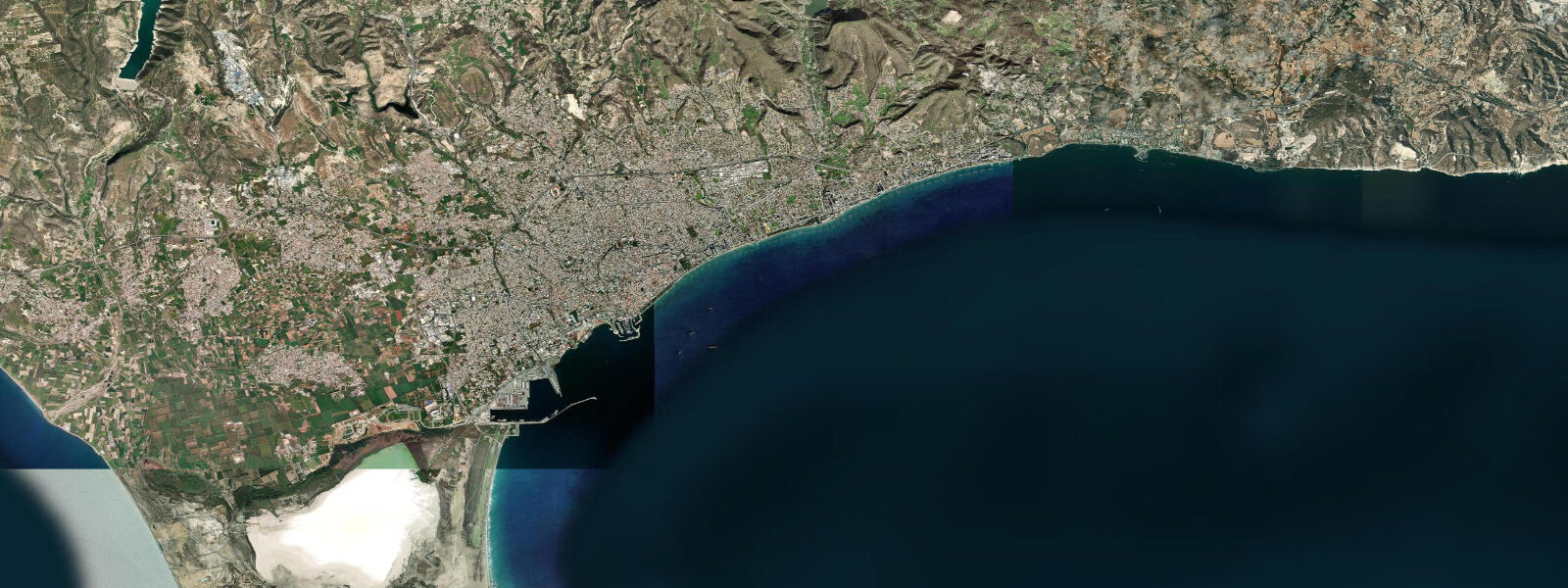
Governor's Beach, Limassol District tide times
Governor's Beach, Limassol District tide forecast — heights relative to MSL.
Today's tide times for Governor's Beach, Limassol District
Tide times at Governor's Beach, Limassol District on Tuesday, 4 August 2026: first high tide at 03:00am, first low tide at 08:00am. Sunrise 05:59am, sunset 07:48pm.
Tide chart for Governor's Beach, Limassol District
24-hour cosine-interpolated curve around the present moment. Heights relative to MSL. Predictions: Predictions: Open-Meteo Marine (MeteoFrance SMOC, 0.08° grid).
Sun, moon and conditions on Tue 04 Aug
Snapshot at build time — refreshes daily. Sea state from Open-Meteo Marine.
Highs and lows next 7 days
Every predicted high and low for the next week, with the daily tidal coefficient (0–120; higher = bigger swing, > 95 means stronger currents).
Other spots nearby
The three closest curated TideTurtle locations to Governor's Beach, Limassol District, measured by great-circle distance.
Today's solunar windows
Solunar tradition: major periods are the ≈3h windows around moon transit and opposition; minor are ≈2h around moonrise and moonset. Pair with the local tide stage and wind for the best read.
About tides at Governor's Beach, Limassol District
A short guide to the coastline at Governor's Beach, Limassol District — geography, sea state, and what the tide is actually doing under your feet.
Governor's Beach is not a single beach — it is a sequence of small coves, each separated by low volcanic headlands that jut into the sea like the knuckles of a fist. The geology here is a collision between two distinct rock formations, and you can read the boundary in the cliff face without any specialist knowledge: dark, almost black pillow lavas from the Troodos ophiolite on one side, white Lefkara chalk on the other, the contact running at an angle through the headlands. The Troodos ophiolite is a slice of ancient oceanic crust that was thrust onto the island approximately 90 million years ago; the pillow structures — rounded lobes of basalt that formed when lava erupted underwater and quenched rapidly in seawater — are visible in cross-section in the cliff exposures at the headland bases. The Lefkara chalk came later, deposited on top of and against the ophiolite as the basin deepened. The result at Governor's Beach is a coastal section that geology students visit specifically because it shows two completely different formation environments within a few hundred metres.
The Eastern Mediterranean tide here runs 0.1 to 0.2 m mean range — one of the smallest tidal regimes in the region. The practical effect is that the tidal signal is often buried in the meteorological noise: a northerly wind event or a drop in barometric pressure can shift water level by as much as the full spring tidal range. That said, the systematic change between high and low water is real and, at Governor's Beach, it determines something that casual visitors miss: whether the headlands connecting the coves can be rounded on foot.
At high water, the low volcanic headlands are lapped by the sea right to the cliff face, and the only way to move between coves is to either swim or go back up to the road. At low water — particularly at spring lows — the drop of 0.15 to 0.2 m clears a ledge of dark volcanic rock at the base of each headland, wide enough to walk single-file with dry feet. This low-water connection is the practical reason to track the tide at Governor's Beach: it lets you walk a full coastal traverse between the coves that is genuinely inaccessible a few hours earlier or later.
The dark volcanic rock does something else that the chalk cannot: it absorbs heat. By mid-morning on a summer day, the exposed black basalt is noticeably warmer to the touch than the adjacent chalk or the sandy patches. This creates warm micro-pools in the crevices and bowl-shaped depressions in the rock — shallow, sun-warmed, and sheltered from any chop. These pools are the consistent habitat for Paracentrotus lividus, the purple sea urchin, which is distributed across the volcanic reef in densities you do not see on the chalk-dominated sections. Sea urchin harvest in Cyprus waters is regulated under national fisheries law; collecting them requires a licence and is limited in season. Observe them in the pools, note the grazing arcs they create in the coralline algae, and leave them where they are.
For snorkellers, the distinction between the rock types continues underwater. The basalt reef on the volcanic headland flanks is irregular and undercut, with crevices and ledges that shelter grouper, moray eels, and the larger wrasse. The sandy patches between headlands carry sparse Posidonia seagrass and are where bream forage. Water clarity is generally good — 10 to 15 m on calm days — though slightly less than the chalk-bottom bays to the west because the dark substrate absorbs rather than reflects light.
The visual backdrop at Governor's Beach is striking for a reason that has nothing to do with the geology: three kilometres to the west, the Vasiliko industrial zone is visible on the headland — a power station, cement works, and oil terminal. On clear days you can see the stacks. The contrast between the wild volcanic coves and the active industrial zone on the next promontory is sharp and unresolved. Some visitors find it distracting; others find it honest. It is part of the landscape here and it is not going away.
For photographers, the black-and-white cliff contact zone — where the dark ophiolite pillow lavas abut the white Lefkara chalk — is the primary subject. Early morning light from the east catches the pale chalk and throws the darker volcanic rock into contrast. The window is roughly 07:00 to 09:00 in summer before the sun climbs overhead and flattens the relief.
Anglers find the volcanic reef edge productive for grouper and wrasse on light gear. The creviced basalt at the headland bases, accessible at low water on the connecting ledge, gives good position for a short cast into 2 to 4 m of water over the reef base. Two-banded sea bream work the sandy patches between headlands on a running ledger.
Families with young children should note that the coves vary in character: some have narrow sand and pebble strips, others are predominantly rock shelf. Water shoes are necessary on the volcanic sections. The water shelves more abruptly over the dark rock than over sand or chalk pebble — check depth before letting children step off the rock edge.
Tide data for Governor's Beach, Limassol District comes from the Open-Meteo Marine API, a gridded model product. Timing accuracy is ±45 minutes, height accuracy ±0.3 m — usable for trip planning, not for navigation.
Tide questions about Governor's Beach, Limassol District
Quick answers to the most common questions about tide times, range, and water access at Governor's Beach, Limassol District.
Can you walk between the Governor's Beach coves at low tide?
Yes — this is the most practical reason to track the tide at Governor's Beach. At high water, the low volcanic headlands separating each cove are lapped by the sea to the cliff face, making the sections impassable on foot without swimming. At low water, particularly at spring lows when the drop reaches 0.15 to 0.2 m, a ledge of dark basalt clears at the base of each headland that is wide enough to walk single-file. The window is typically 90 minutes either side of low water. Wear water shoes — the volcanic rock is rough and wet surfaces are slippery.
What is the ophiolite geology at Governor's Beach and why does it matter?
The Troodos ophiolite is a section of ancient oceanic crust thrust onto Cyprus approximately 90 million years ago. At Governor's Beach the pillow lavas — rounded lobes of basalt that quenched in seawater when they erupted — are visible in cross-section in the headland cliff faces. This dark volcanic rock sits in contact with the white Lefkara Formation chalk, which was deposited later against and on top of the ophiolite. The geological boundary runs visibly through the headlands, creating the black-and-white coastal landscape that distinguishes Governor's Beach from every other cove in the Limassol District.
Are the sea urchins at Governor's Beach safe to handle or harvest?
Paracentrotus lividus, the purple sea urchin, is abundant in the volcanic rock pools and on the reef at Governor's Beach. Their spines are sharp and will penetrate skin — do not handle them without protection. Harvesting sea urchins from Cyprus coastal waters requires a licence under national fisheries regulations, and seasonal restrictions apply. Observe them in the rock pools and underwater, note the circular grazing arcs they cut into coralline algae, but leave them in place. They are a key grazer in the reef ecosystem and populations are monitored.
How does the dark volcanic rock affect the swimming and snorkelling experience?
The black basalt absorbs heat rapidly, warming the rock surface and the shallow micro-pools in crevices noticeably by mid-morning on a summer day — these pools can be several degrees warmer than the open sea. Underwater, the dark reef is irregular and undercut, creating ledges and crevices that shelter grouper, moray eels, and large wrasse. The basalt substrate absorbs rather than reflects light, so water clarity over the volcanic sections reads slightly lower — 10 to 15 m — than over the chalk-bottom bays to the west, which can see 15 to 20 m. Snorkelling the headland flanks at low water, when the crevice structure is shallowest, gives the most accessible fish habitat.
Is the industrial zone at Vasiliko visible from the beach, and does it affect the water quality?
The Vasiliko industrial zone — power station, cement factory, and petroleum terminal — is visible 3 km west of Governor's Beach on the adjacent headland. On clear days the stacks are clearly in sight. Regarding water quality: the industrial zone operates under EU environmental regulations and routine monitoring. Bathing water quality at Governor's Beach is assessed under the EU Bathing Water Directive; results are published by the Cyprus Department of Environment. The coves have consistently rated at the Excellent category in recent assessment cycles. Check the current season's data on the official EU Bathing Water Quality portal before any visit.
8-day tide table — Governor's Beach, Limassol District
Heights relative to MSL. Predictions: Open-Meteo Marine (MeteoFrance SMOC, 0.08° grid) — heights relative to MSL (not chart datum / LAT). Model-derived.
| Day | Type | Time | Height |
|---|---|---|---|
| Tue 04 Aug | High | 03:00 | -0.3m |
| Low | 08:00 | -0.5m | |
| Wed 05 Aug | — | ||
| Thu 06 Aug | High | 03:10 | -0.3m |
| Low | 10:00 | -0.5m | |
| Fri 07 Aug | — | ||
| Sat 08 Aug | — | ||
| Sun 09 Aug | High | 08:00 | -0.3m |
| Low | 15:00 | -0.5m | |
| Mon 10 Aug | High | 09:10 | -0.2m |
| Low | 15:45 | -0.5m | |
| High | 21:50 | -0.3m | |
| Tue 11 Aug | Low | 02:00 | -0.5m |