Cape Greco tide times
Cape Greco tide forecast — heights relative to MSL.
Today's tide times for Cape Greco
Tide times at Cape Greco on Tuesday, 4 August 2026: first high tide at 03:00am, first low tide at 07:50am, second high tide at 02:00pm, second low tide at 08:10pm. Sunrise 05:54am, sunset 07:44pm.
Tide chart for Cape Greco
24-hour cosine-interpolated curve around the present moment. Heights relative to MSL. Predictions: Predictions: Open-Meteo Marine (MeteoFrance SMOC, 0.08° grid).
Sun, moon and conditions on Tue 04 Aug
Snapshot at build time — refreshes daily. Sea state from Open-Meteo Marine.
Highs and lows next 7 days
Every predicted high and low for the next week, with the daily tidal coefficient (0–120; higher = bigger swing, > 95 means stronger currents).
Other spots nearby
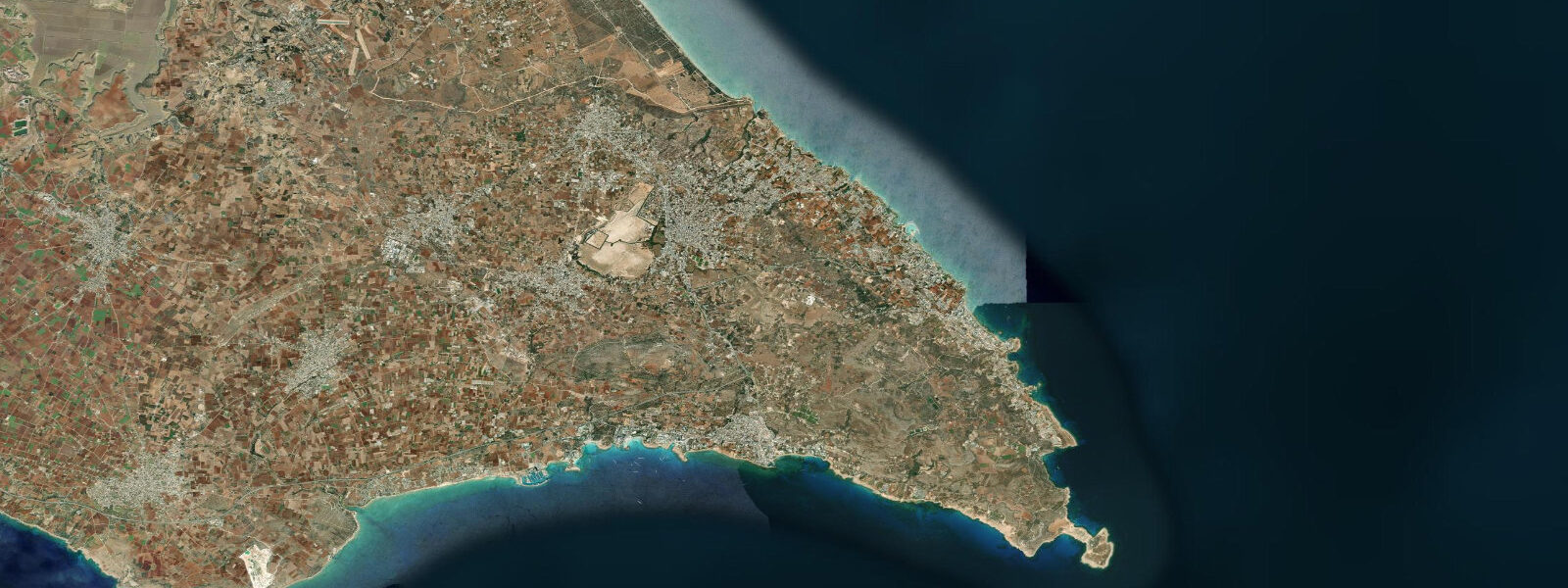
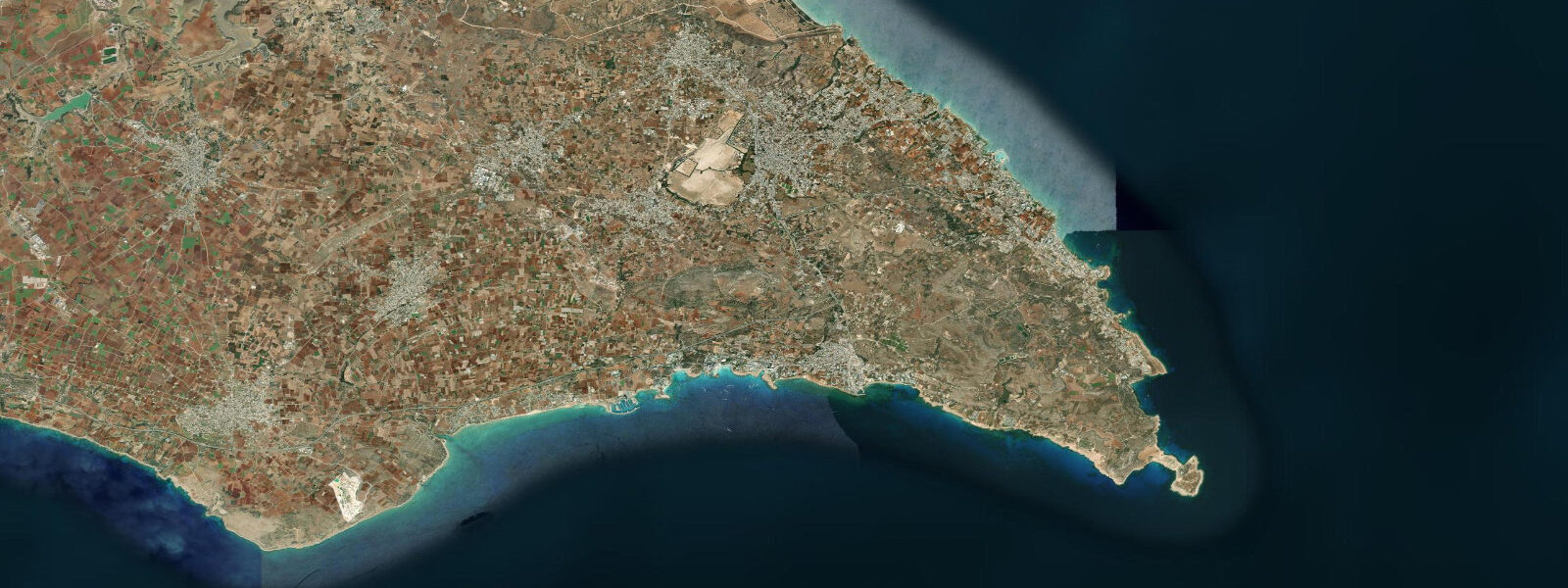
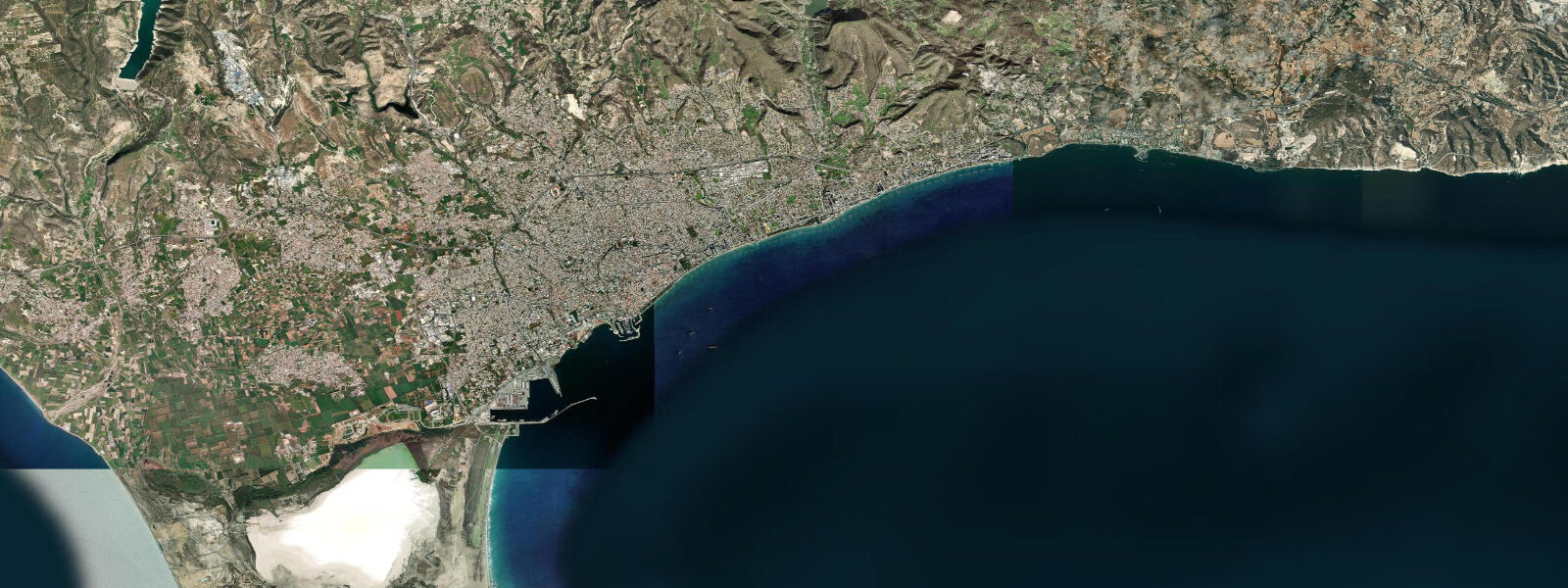
The three closest curated TideTurtle locations to Cape Greco, measured by great-circle distance.
Today's solunar windows
Solunar tradition: major periods are the ≈3h windows around moon transit and opposition; minor are ≈2h around moonrise and moonset. Pair with the local tide stage and wind for the best read.
Cycle dates near Cape Greco
Next spring tide on Mon 10 Aug (range 0.3m). Next neap on Thu 06 Aug.
Spring tides cluster around new and full moons (biggest swings). Neap tides land on quarter moons (smallest swings). See the spring tide and neap tide glossary entries for the why.
About tides at Cape Greco
A short guide to the coastline at Cape Greco — geography, sea state, and what the tide is actually doing under your feet.
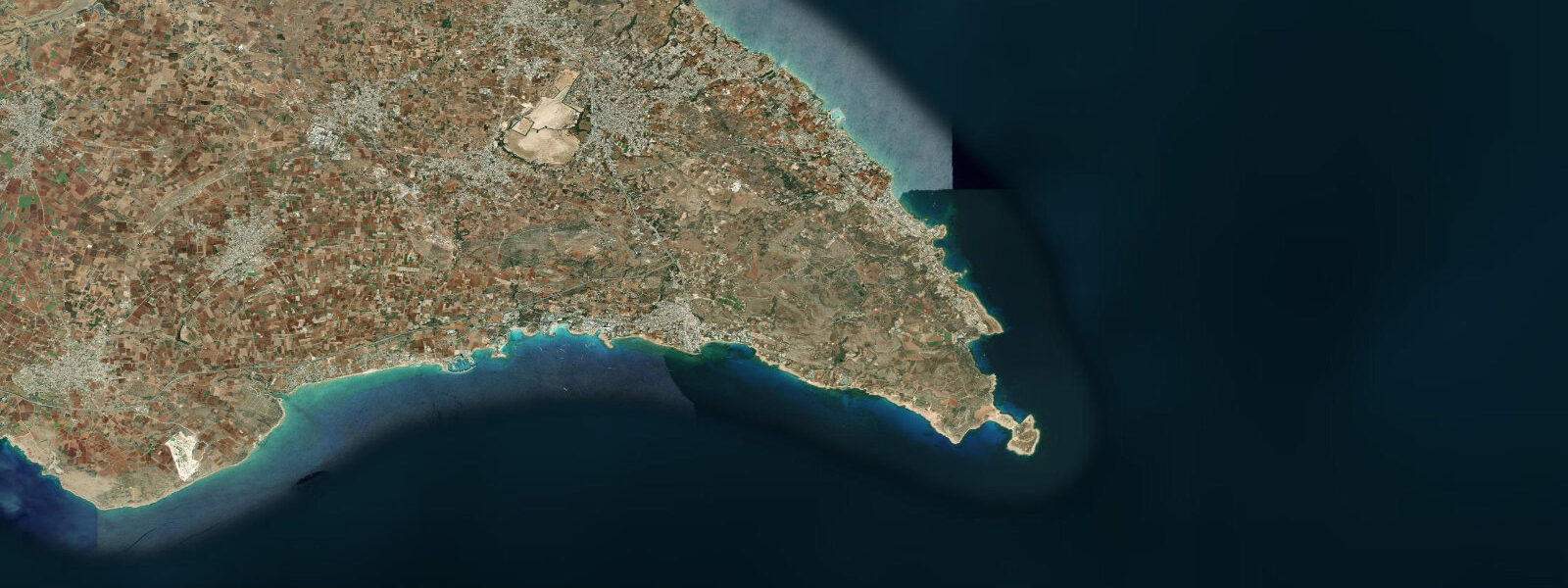
Cape Greco is the easternmost point of Cyprus, a limestone karst headland that forms the boundary between Ayia Napa to the southwest and Protaras to the north. The Cape Greco National Forest Park covers 385 ha of protected coastline and scrubland — the headland itself and the cliff margins extending 2 km in each direction. The protected status has kept the shoreline free of the hotel development that defines the resort towns on either side, and the difference is immediate and visible from the water: uninterrupted limestone cliff above, clear water below, no beach umbrellas or jet skis. The geology here is the same eocene limestone that underlies most of southern Cyprus, but at the cape the action of waves over millennia has carved it into a landscape of arches, blowholes, collapsed caves, and sea-level platforms that makes the Cape Greco coast distinct from the sandy embayment beaches a few kilometres away. The main documented features are accessible by kayak from Ayia Napa (45–60 minutes) or on foot via the park trail from either side. Cyclops Cave is a partially collapsed sea cave whose roof has fallen in, creating a natural pool at sea level connected to the open sea through a submarine passage. The depth inside ranges from 2 to 4 m; in calm conditions, the cave is accessible by swimming from outside at the low-water entry point. The sea arch of Kamara tou Koraka is the most photographed structure — a free-standing arch roughly 8 m wide and 4 m high at its base, with open sea framing through the opening. The arch and the adjacent cave sections are the focus of most guided kayak tours from Ayia Napa. The tidal regime at Cape Greco is eastern Mediterranean microtidal: spring range 0.2 to 0.3 m. At the sea cave and arch sites, the relevant variable for access timing is swell, not tide. In settled summer conditions (swell below 0.3 m), the cave entrances are calm enough to enter and swim. In any swell above 0.5 m, the surge inside the caves becomes dangerous. The underwater topography around the cape is the most biodiverse accessible diving and snorkelling site in Famagusta District. The limestone cliff faces below sea level drop to 25 to 35 m in a series of vertical walls and overhangs. Gorgonian sea fans (Eunicella species) are established on the deeper wall faces from 18 m down; at 25 to 30 m, the density and size of the colonies are among the best documented on the Cypriot coast. Loggerhead turtles (Caretta caretta) are regularly sighted around the cape; the undisturbed character of the cape's underwater habitat compared to the resort sections is the likely reason for higher sighting rates. Dive boats from Ayia Napa and Protaras run guided dives to the cape's west-facing wall (the most accessible deep site) and to the arch base for shallower dives at 8 to 15 m. The park trail from the Ayia Napa side to the cape viewpoint is 4 km; from the Protaras side, the access is 3 km via the parallel path through the forest. Both are well-marked and well-maintained. Water and sun protection are essential — the path is fully exposed on the headland sections. Tide predictions at Cape Greco come from Open-Meteo Marine, a gridded global ocean model; accuracy is typically ±45 min on timing and ±0.2–0.3 m on height. The Cyprus Department of Meteorology provides the authoritative marine and weather forecast for this section of coast.
The park's ecology on land is equally worth noting. The Cape Greco headland supports one of the most intact areas of Cypriot maquis scrubland, dominated by Pistacia lentiscus, Ceratonia siliqua (carob), Cistus species, and dwarf juniper. The carob trees growing from the limestone pavement sections of the cliff edge are among the oldest in the park; some specimens show trunk diameters indicating several centuries of growth. The headland is a spring and autumn migration bottleneck: raptors and passerines make the sea crossing here, and the olive trees and shrubby vegetation along the trail edge hold warblers, flycatchers, and shrikes during peak migration (late March through May and September through October). Birdwatching from the cape viewpoint in April can produce Eleonora's falcons (Falco eleonorae) hunting the migrant passerines — the falcon breeds on the offshore rocky islets to the east.
Tide questions about Cape Greco
Quick answers to the most common questions about tide times, range, and water access at Cape Greco.
What are the best sea caves to visit at Cape Greco and how do I access them?
The two primary sea cave features at Cape Greco are Cyclops Cave (a collapsed sea cave with a sea-level pool accessible by swimming) and the sea arch of Kamara tou Koraka (a free-standing limestone arch about 8 m wide). Both are on the southwestern face of the headland, accessible by kayak from Ayia Napa in 45 to 60 minutes. On foot, the cliff-top trail from the park entrance brings you to viewpoints above; descent to sea level at the cave sites is not possible from the cliff trail — kayak is the primary access. The cave entrances are best approached at low water when surge is minimal, but given the 0.2 to 0.3 m spring range, the tidal effect is small. Swell is the primary control: below 0.3 m the caves are accessible; above 0.5 m they should not be entered. Several Ayia Napa operators run guided sea-cave kayak tours departing in the morning.
What marine life can I see diving or snorkelling at Cape Greco?
Cape Greco is the richest accessible dive site in Famagusta District. The limestone wall on the west-facing side of the cape drops to 25 to 35 m with gorgonian sea fans (Eunicella cavolini, Eunicella singularis) on the vertical faces from 18 m down. At 25 to 30 m, the colony density and individual fan sizes are among the best on the Cypriot coast — typical fan diameters of 40 to 60 cm. Shallower snorkel sites in 3 to 12 m on the southern arc of the cape hold sea bream, barracuda, wrasse, parrotfish, and octopus. Loggerhead turtles (Caretta caretta) are regularly sighted at the cape, more frequently than at the adjacent resort beaches. Dive boats from Ayia Napa and Protaras run guided dives; typical dive duration 45 to 55 minutes. Visibility in summer reaches 20 to 25 m on the wall sites.
How do I hike the Cape Greco trail?
The Cape Greco National Forest Park has two main trail approaches. From the Ayia Napa side, the trail starts near the Konnos Bay car park and runs 4 km to the cape viewpoint through open maquis scrubland. From the Protaras side, the trail entrance is signposted off the coast road and covers 3 km to reach the same viewpoint. Both trails are well-maintained and marked. The terrain is flat to gently rolling limestone karst with sections of loose stone on the seaward edges. Wear closed shoes; the limestone surface is irregular. In July and August, the exposed sections on the headland are extremely hot between 10:00 and 17:00; start before 08:00 or after 16:30 and carry at least 1.5 litres of water per person. The viewpoint above the sea arch gives a direct look down to the water through the arch opening on calm days.
What is the tidal range at Cape Greco and does it affect the sea caves?
The spring tidal range at Cape Greco is 0.2 to 0.3 m — eastern Mediterranean microtidal. The tidal effect on the sea cave access is real but minor: at predicted low water, the clearance at cave entrances is 20 to 30 cm higher than at high water, and the surge inside the caves is marginally calmer. In practice, the swell height is the dominant control. Below 0.3 m swell, the caves are accessible at any state of the tide. Above 0.5 m swell, the surge inside the caves is uncomfortable and potentially hazardous regardless of tide state. Tide predictions here come from Open-Meteo Marine, a gridded global ocean model; accuracy is ±45 min on timing and ±0.2–0.3 m on height — uncertainty comparable to the full tidal range. Check the Cyprus Department of Meteorology swell forecast before any cave kayak trip.
Are there loggerhead turtle nesting sites near Cape Greco?
Loggerhead turtles (Caretta caretta) are present in the Cape Greco area in higher than average numbers for the Cypriot coast. The undisturbed character of the cape's underwater habitat — no anchoring, reduced human activity compared to the resort zones — makes the area preferred feeding and resting habitat. In-water sightings from kayak and during dives are reported regularly through the summer months. Nesting by Caretta caretta does occur on Famagusta District beaches; the key nesting beaches in the region are monitored by the Cyprus Marine and Maritime Institute and the Department of Fisheries and Marine Research, which deploys nest protectors on active nests. The beaches immediately adjacent to the Cape Greco park (Konnos Bay to the north, small coves on the southern face) receive less human foot traffic than Nissi or Fig Tree Bay and occasionally host nesting activity.
8-day tide table — Cape Greco
Heights relative to MSL. Predictions: Open-Meteo Marine (MeteoFrance SMOC, 0.08° grid) — heights relative to MSL (not chart datum / LAT). Model-derived.
| Day | Type | Time | Height |
|---|---|---|---|
| Tue 04 Aug | High | 03:00 | -0.3m |
| Low | 07:50 | -0.5m | |
| High | 14:00 | -0.3m | |
| Low | 20:10 | -0.5m | |
| Wed 05 Aug | — | ||
| Thu 06 Aug | High | 03:10 | -0.3m |
| Low | 10:00 | -0.5m | |
| High | 16:00 | -0.3m | |
| Low | 21:50 | -0.4m | |
| Fri 07 Aug | — | ||
| Sat 08 Aug | High | 06:10 | -0.3m |
| Low | 13:50 | -0.5m | |
| Sun 09 Aug | High | 08:00 | -0.2m |
| Low | 14:50 | -0.5m | |
| Mon 10 Aug | High | 09:00 | -0.2m |
| Low | 15:45 | -0.5m | |
| High | 22:00 | -0.3m | |
| Tue 11 Aug | Low | 02:00 | -0.5m |