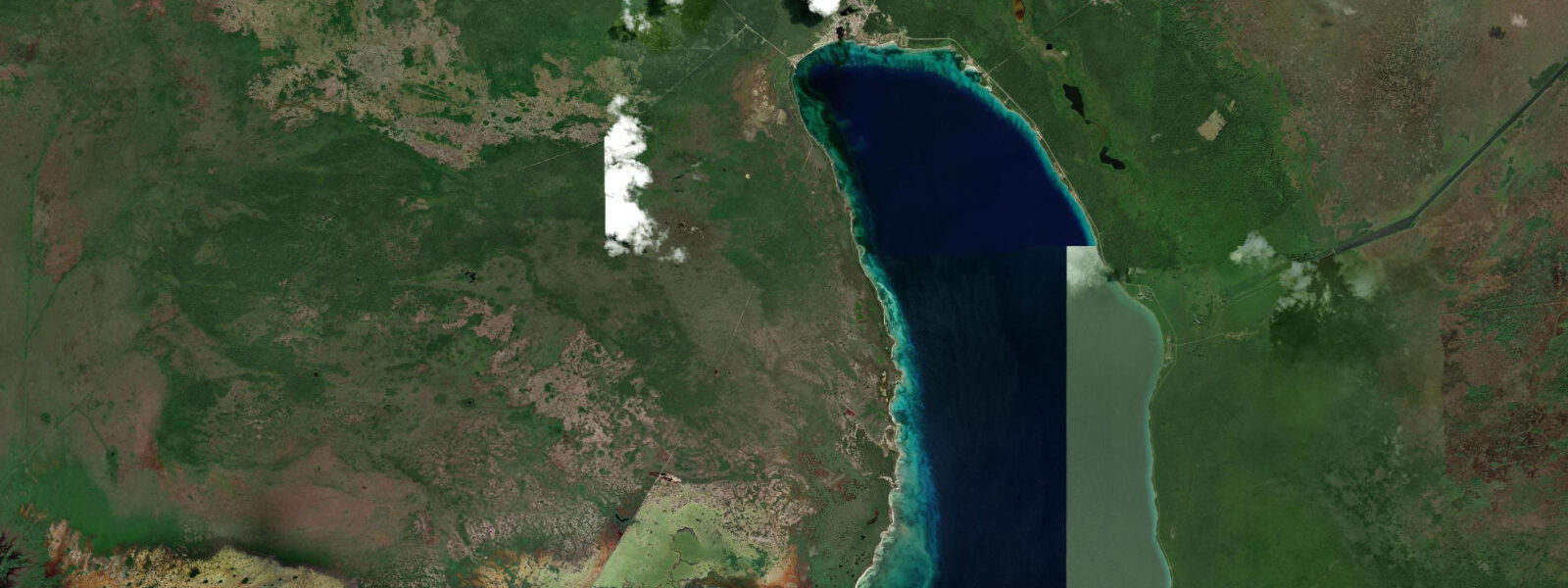
Zapata Peninsula, Matanzas tide times
Zapata Peninsula, Matanzas tide forecast — heights relative to MSL.
Today's tide times for Zapata Peninsula, Matanzas
Tide times at Zapata Peninsula, Matanzas on Monday, 3 August 2026: first high tide at 12:50am, first low tide at 06:50am, second high tide at 02:00pm, second low tide at 07:00pm. Sunrise 06:57am, sunset 08:04pm.
Tide chart for Zapata Peninsula, Matanzas
24-hour cosine-interpolated curve around the present moment. Heights relative to MSL. Predictions: Predictions: Open-Meteo Marine (MeteoFrance SMOC, 0.08° grid).
Sun, moon and conditions on Mon 03 Aug
Snapshot at build time — refreshes daily. Sea state from Open-Meteo Marine.
Highs and lows next 7 days
Every predicted high and low for the next week, with the daily tidal coefficient (0–120; higher = bigger swing, > 95 means stronger currents).
Other spots nearby
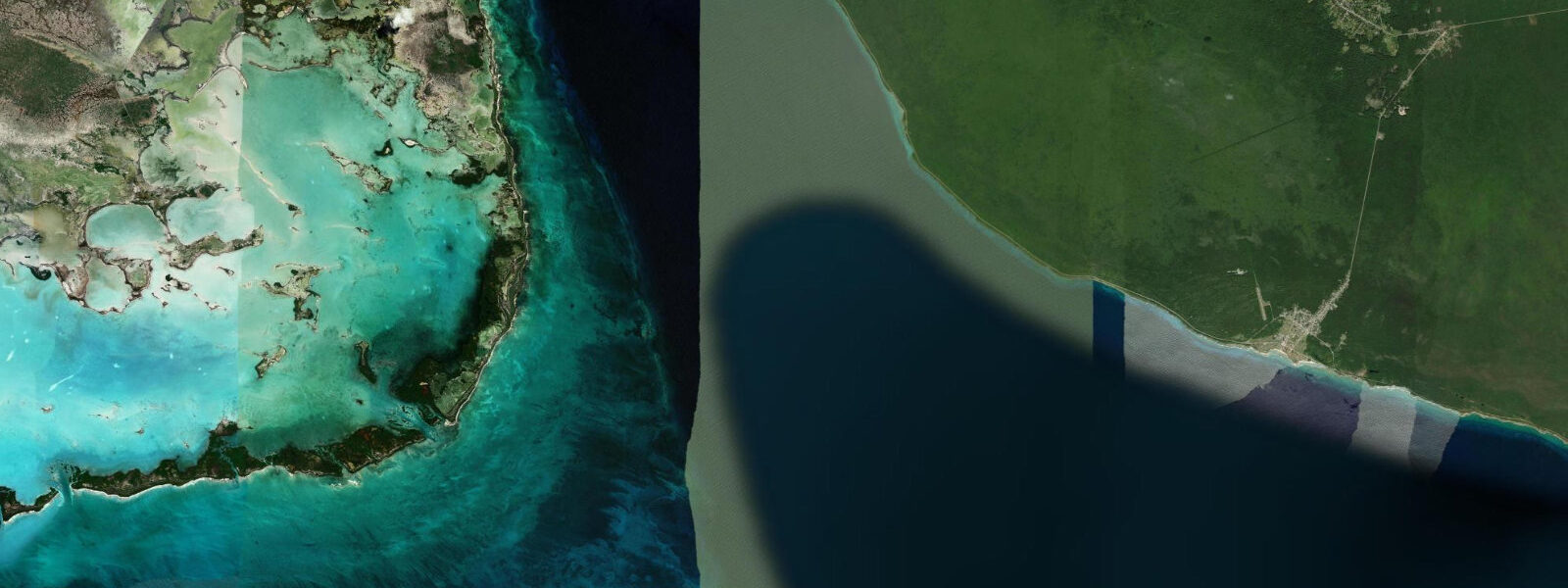
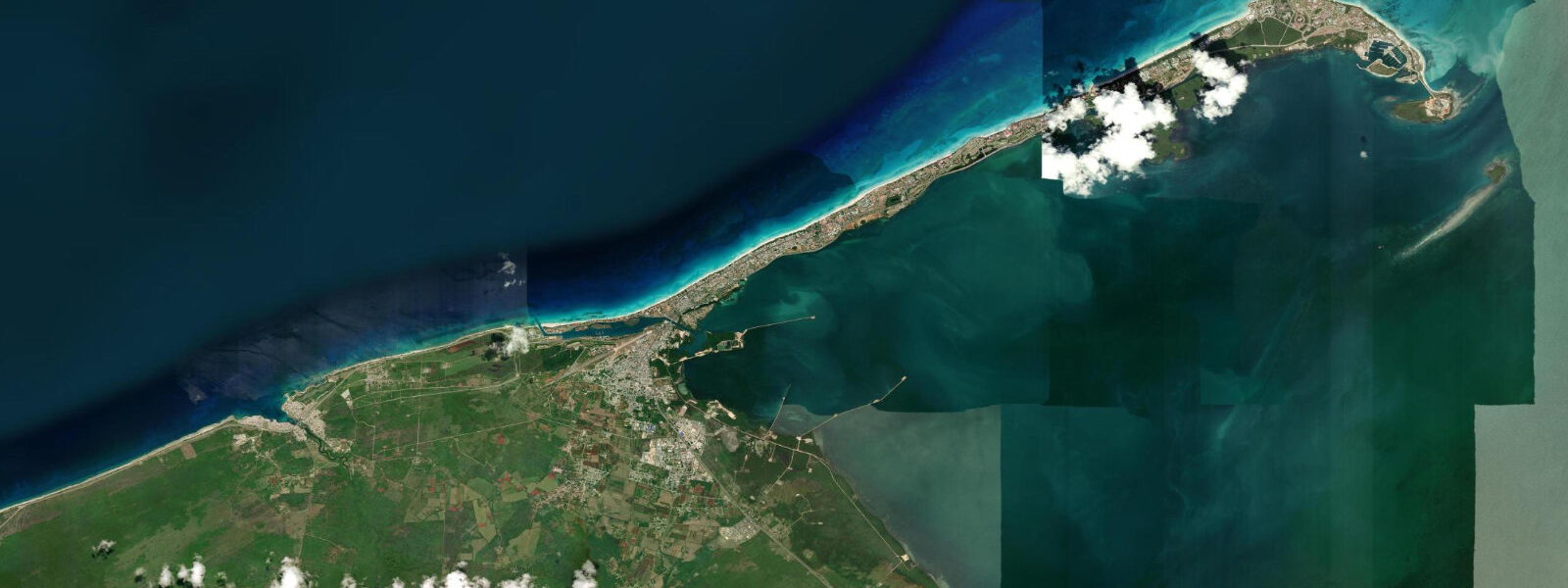
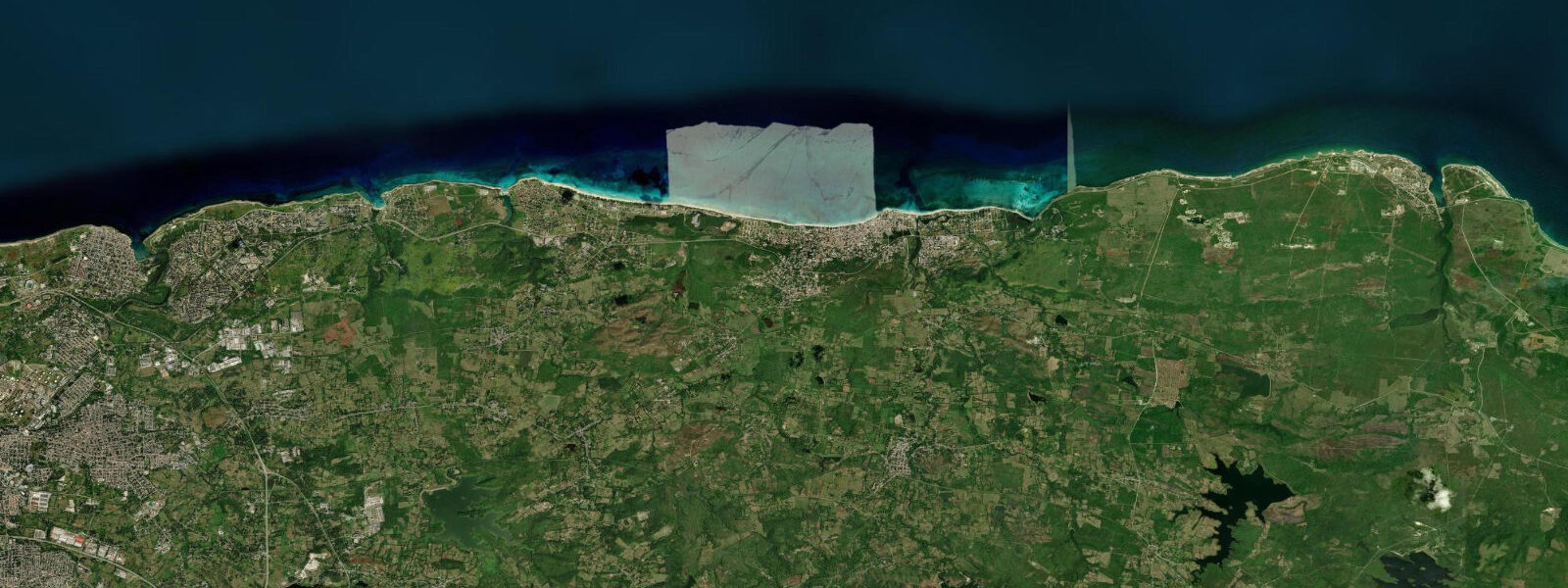
The three closest curated TideTurtle locations to Zapata Peninsula, Matanzas, measured by great-circle distance.
Today's solunar windows
Solunar tradition: major periods are the ≈3h windows around moon transit and opposition; minor are ≈2h around moonrise and moonset. Pair with the local tide stage and wind for the best read.
About tides at Zapata Peninsula, Matanzas
A short guide to the coastline at Zapata Peninsula, Matanzas — geography, sea state, and what the tide is actually doing under your feet.
The Zapata Peninsula is Cuba's largest wetland — 4,520 km² of mangrove coast, freshwater marsh, and saltwater lagoon occupying the southern bulge of Matanzas province. It is a place where the tidal signal matters not just at the shoreline but 15–20 km into the interior, where coastal lagoons connect to the sea through a web of mangrove channels that the tide fills and empties twice daily.
The tidal range along the peninsula's coast is Caribbean microtidal: mean spring range 0.2–0.4 m. On the open mangrove coast that faces the Golfo de Cazones to the southwest, this translates to a modest change in water level at the shoreline. But the geometry of the lagoon system behind the coast amplifies the effect. The flood tide pushes saline water up to 5 km into the mangrove channel labyrinths, raising salinity gradients, oxygenating the deeper channels, and triggering movement in the animals that depend on that tidal pulse. Manatees (Trichechus manatus) use the flooded mangrove edges during high water to feed on submerged vegetation; they retreat to the deeper lagoon channels on the ebb. Spotting them requires patience and a quiet approach by flat-bottomed boat — engine noise carries far in shallow water, and manatees here are wary.
Las Salinas Wildlife Refuge occupies the eastern shore of the Bahía de Cochinos (Bay of Pigs) — it is one of the most significant bird concentration points in the Caribbean. The site is best known for its greater flamingo population: flocks of up to 2,000 birds use the saline flats and shallow lagoon margins, and their movements track the tide. On the flood, they wade into the newly inundated shallows to filter-feed on invertebrates stirred up by the incoming water. From approximately 07:00 to 09:00 on a rising tide, the flocks are most active and most accessible from the observation tracks. The Cuban crane (Grus canadensis nesiotes) is present year-round; roseate spoonbill, wood stork, and tricoloured heron are among the other species recorded. For serious birdwatchers, Las Salinas is the most productive single site in Cuba.
The Ciénaga de Zapata National Park, which covers the bulk of the peninsula, holds Cuba's most intact freshwater wetland ecosystem. The park's interior lagoons — Laguna del Tesoro being the largest — are accessible by boat from the village of Guamá, where a tourist facility on an artificial island serves as a base. The Central Australia crocodile hatchery station, on the road into the park from Jagüey Grande, runs a Cuban crocodile (Crocodylus rhombifer) breeding programme — captive animals from hatchling to multi-metre adults are held in open pens, and the facility gives the clearest close-up view of the species outside a zoo. The endemic bee hummingbird is present in flowering areas throughout the park; the best chances are around the flowering trees near the park road in the early morning.
Fishing is the other reason people travel here. The tidal channels of Laguna de las Salinas and the estuary system east of the Bay of Pigs hold tarpon (Megalops atlanticus) — large, fast, and strong. Fly-fishing for tarpon in these mangrove channels is an organised activity with licensed guides operating out of the Las Salinas area. The best fishing occurs on a rising tide, when tarpon push into the shallower channel sections to hunt. A 20–30 kg fish is realistic; specimens over 50 kg have been reported from the lagoon system. Bonefish are present on the flats at the bay edges. Access requires a local guide and permission to enter the refuge; independent access to the best water is not permitted.
For paddlers, the mangrove channels of the Ciénaga offer a different kind of experience: narrow, shaded, biologically dense. The tidal current in the channels reverses over a 6-hour cycle; paddling with the flood in the morning and with the ebb in the afternoon allows a return trip without paddling against the current. Bring water, insect repellent, and a GPS track — the channels branch frequently and orientation is difficult without reference points.
The road access to the peninsula runs south from Jagüey Grande through the sugar-cane country of Matanzas's interior. Fuel and provisions are limited inside the park; stock up before turning south.
Tide data for Zapata Peninsula, Matanzas comes from the Open-Meteo Marine API, a gridded model product. Timing accuracy is ±45 minutes, height accuracy ±0.3 m — usable for trip planning, not for navigation.
Tide questions about Zapata Peninsula, Matanzas
Quick answers to the most common questions about tide times, range, and water access at Zapata Peninsula, Matanzas.
How does the tide affect flamingo activity at Las Salinas?
Greater flamingos at Las Salinas filter-feed in the shallows, and their feeding activity peaks when the rising tide inundates the saline flats and stirs invertebrates into the water column. On a spring tide, the flood raises water levels 0.2–0.4 m, which is enough to bring the flocks from the deeper lagoon channels into the newly accessible shallows. Plan to arrive at Las Salinas 90 minutes before the predicted high water — the 07:00 to 09:00 window on a morning flood is consistently the most productive for observation. Flocks can number up to 2,000 birds. Bring a spotting scope; the observation area keeps visitors at sufficient distance that binoculars alone give limited detail.
What is the tidal penetration depth in the Ciénaga de Zapata mangrove channels?
The tidal signal penetrates 15–20 km into the coastal lagoon system of the Ciénaga de Zapata from the open coast. The penetration distance depends on channel geometry and seasonal freshwater input — during the dry season (November to April), when freshwater flow is lowest, the saline front advances furthest. In the wet season, increased freshwater pushes the tidal saline front back toward the coast. The practical effect for paddlers and anglers is that tidal current reversal is detectable well into the interior channels, and salinity shifts over a tidal cycle influence where fish and manatees concentrate. Local guides know the seasonal and tidal patterns — hire one for the first visit.
Where is the best access point for tarpon fly-fishing in the Zapata Peninsula channels?
The Las Salinas area on the eastern shore of the Bay of Pigs is the main hub for organised tarpon fly-fishing on the Zapata Peninsula. Licensed guides operate out of the Las Salinas zone and have access to Laguna de las Salinas and the associated estuary channels. Tarpon push into the channels on the rising tide — guide boats typically launch two to three hours before the predicted high water and work back toward the lagoon mouth on the ebb. Access to the productive water inside the wildlife refuge requires a guide and a permit; independent access is restricted. Book guides through the Las Salinas facility or through a Havana-based fly-fishing operator who holds the access agreements.
Can I see manatees from the Ciénaga de Zapata?
West Indian manatees (Trichechus manatus) are present in the Ciénaga de Zapata lagoon system and use the flooded mangrove margins on high-tide periods. Sightings are not guaranteed — the population is small and the animals are cautious. The best approach is a guided flat-bottomed boat trip into the interior channels at first light on a high-water morning, when manatees move into the shallower edge habitat to feed on submerged vegetation. Guides based at Guamá (access point for Laguna del Tesoro) sometimes encounter manatees on the interior channels. Engine noise is the primary deterrent; request a guide who approaches by paddle for the final approach to any animal sighting.
What is the Central Australia crocodile hatchery station and how do I visit it?
The Central Australia crocodile hatchery is a breeding facility for the Cuban crocodile (Crocodylus rhombifer) located on the main road into Ciénaga de Zapata National Park from Jagüey Grande. It is named for the sugar central (mill) nearby — Central Australia was one of the significant sugar operations in this part of Matanzas province. The facility holds Cuban crocodiles from hatchlings through to large adults in open pens accessible to visitors, making it the most straightforward place to see the species at close range. Entry is included with or alongside a park access fee. Plan the visit as a stop en route to Las Salinas or Guamá — it adds roughly an hour to a day trip. Opening times are typically 09:00 to 17:00; verify locally as hours vary by season.
6-day tide table — Zapata Peninsula, Matanzas
Heights relative to MSL. Predictions: Open-Meteo Marine (MeteoFrance SMOC, 0.08° grid) — heights relative to MSL (not chart datum / LAT). Model-derived.
| Day | Type | Time | Height |
|---|---|---|---|
| Mon 03 Aug | High | 00:50 | 0.5m |
| Low | 06:50 | 0.3m | |
| High | 14:00 | 0.5m | |
| Low | 19:00 | 0.4m | |
| Tue 04 Aug | High | 15:10 | 0.5m |
| Low | 20:15 | 0.3m | |
| Wed 05 Aug | High | 17:00 | 0.5m |
| Low | 22:50 | 0.3m | |
| Thu 06 Aug | High | 18:00 | 0.4m |
| Fri 07 Aug | Low | 11:50 | 0.2m |
| High | 19:00 | 0.5m | |
| Sat 08 Aug | Low | 12:45 | 0.2m |
| High | 20:00 | 0.5m |