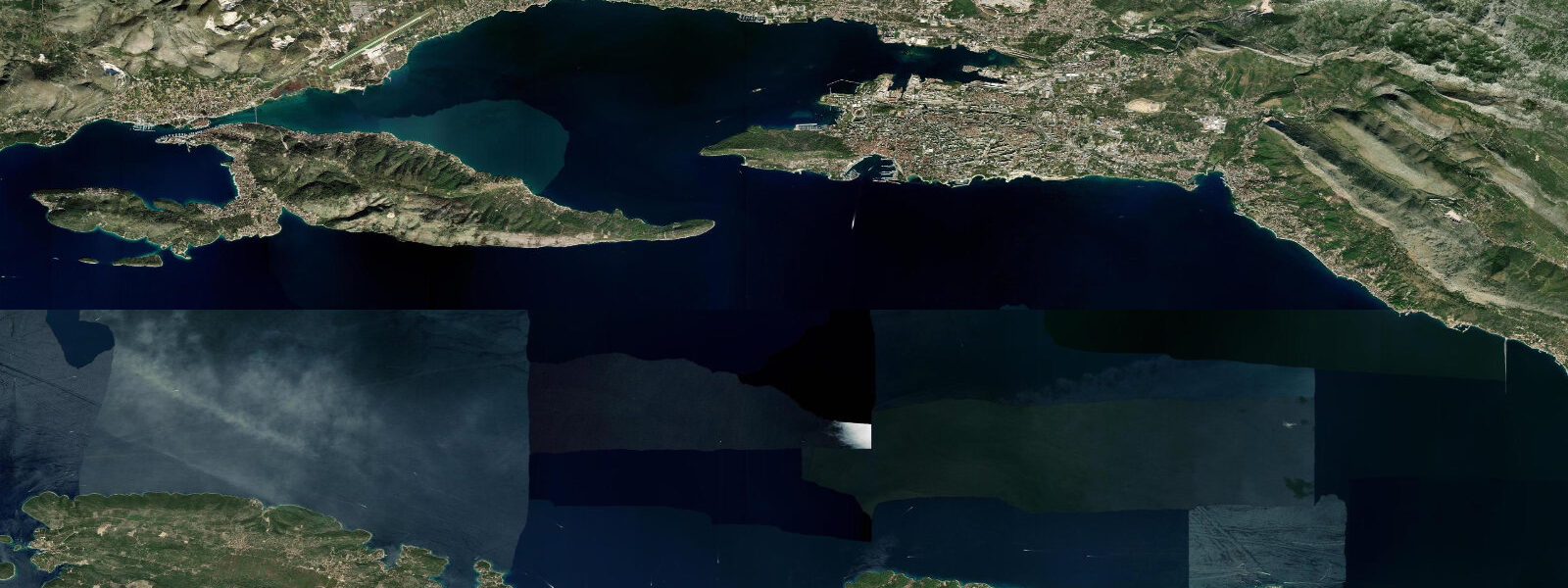
Split, Dalmatia tide times
Split, Dalmatia tide forecast — heights relative to MSL.
Today's tide times for Split, Dalmatia
Tide times at Split, Dalmatia on Sunday, 26 July 2026: first low tide at 08:10, first high tide at 15:45, second low tide at 22:50. Sunrise 05:36, sunset 20:24.
Tide chart for Split, Dalmatia
24-hour cosine-interpolated curve around the present moment. Heights relative to MSL. Predictions: Predictions: Open-Meteo Marine (MeteoFrance SMOC, 0.08° grid).
Sun, moon and conditions on Sun 26 Jul
Snapshot at build time — refreshes daily. Sea state from Open-Meteo Marine.
Highs and lows next 7 days
Every predicted high and low for the next week, with the daily tidal coefficient (0–120; higher = bigger swing, > 95 means stronger currents).
Other spots nearby
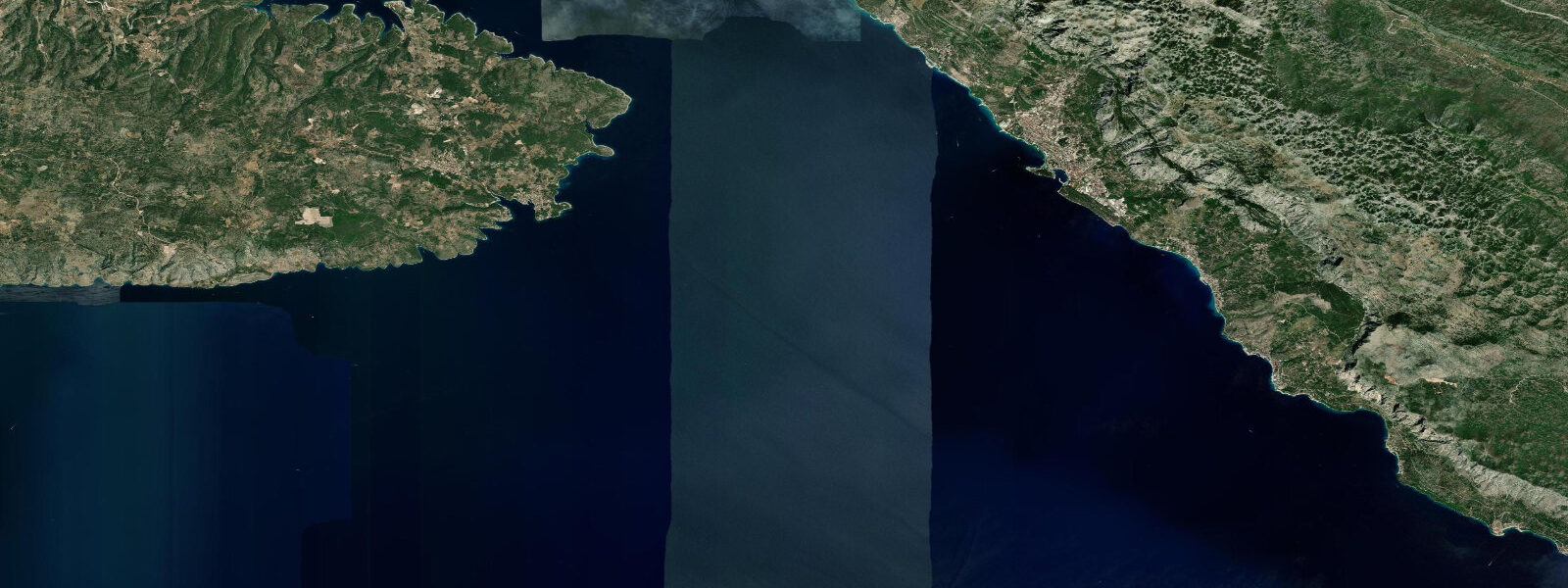
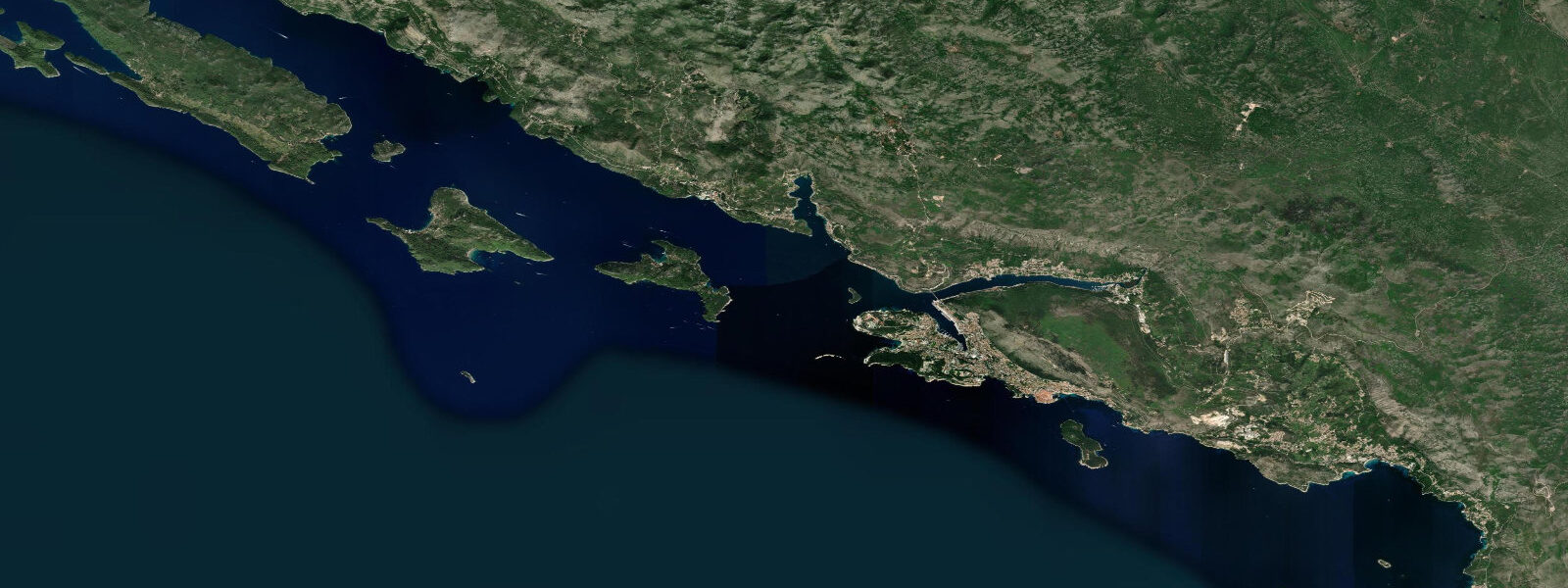
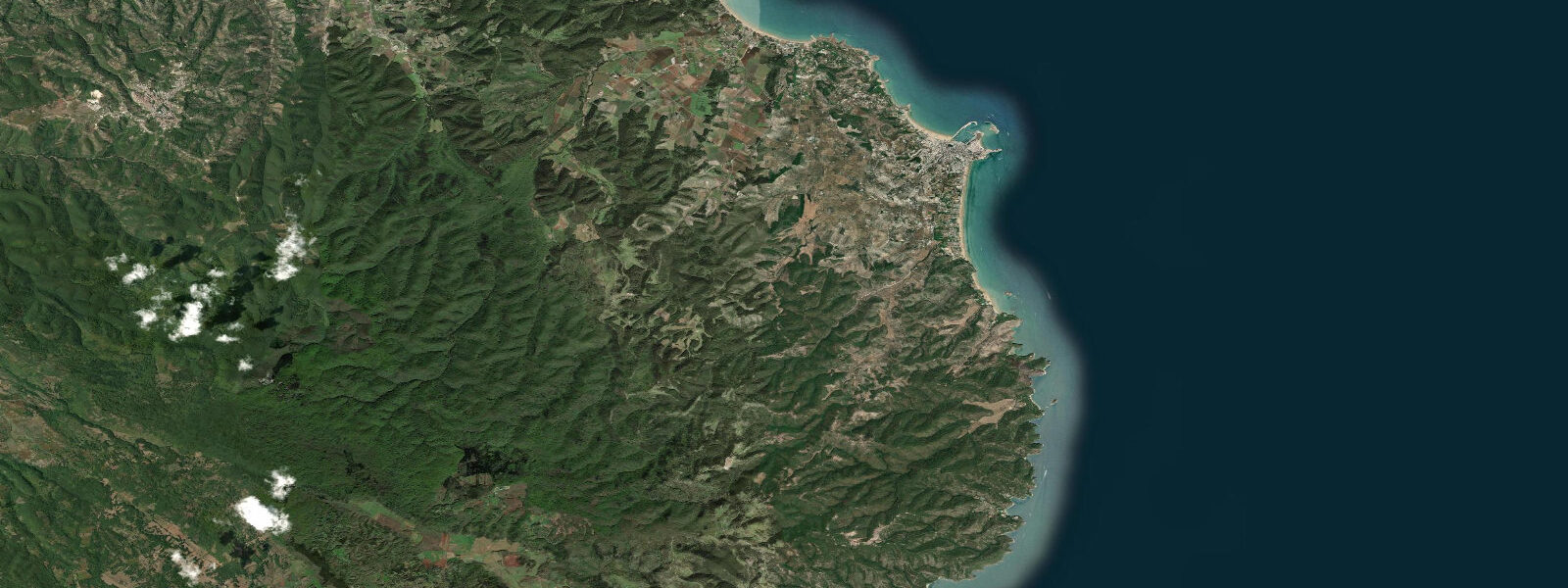
The three closest curated TideTurtle locations to Split, Dalmatia, measured by great-circle distance.
Today's solunar windows
Solunar tradition: major periods are the ≈3h windows around moon transit and opposition; minor are ≈2h around moonrise and moonset. Pair with the local tide stage and wind for the best read.
Cycle dates near Split, Dalmatia
Next spring tide on Mon 27 Jul (range 0.5m). Next neap on Tue 28 Jul.
Spring tides cluster around new and full moons (biggest swings). Neap tides land on quarter moons (smallest swings). See the spring tide and neap tide glossary entries for the why.
About tides at Split, Dalmatia
A short guide to the coastline at Split, Dalmatia — geography, sea state, and what the tide is actually doing under your feet.
Split sits on the Adriatic coast of central Dalmatia where the long Marjan peninsula shelters the working harbour from the open sea, with Diocletian's Palace built directly into the seafront in 305 CE forming the entire historical city core. 1 on neaps. The pattern shifts between mixed semidiurnal in the southern Adriatic and predominantly diurnal in the far north at Venice and Trieste; Split sits in the transition zone where two daily highs and two daily lows of unequal size are typical but the asymmetry can be large enough that some days read effectively diurnal.
The astronomical signal is genuinely small because the Adriatic connects to the Mediterranean only through the Strait of Otranto at the southern end, and the Mediterranean itself connects to the Atlantic only through the narrow Strait of Gibraltar — neither geometry transmits the global tide cleanly. What matters more on a day-to-day basis is meteorological tide. The bura wind funnels down from the Velebit and Dinaric Alps and across the Adriatic in cold-front events, dropping water level on the Croatian coast by 30 to 50 centimetres while raising it on the Italian side.
The jugo southerly that builds ahead of approaching depressions does the opposite. Both winds matter more than the lunar phase for sailors timing harbour exits to the islands. The defining cultural feature is Diocletian's Palace at sea level — the south wall of the palace fronts directly onto the harbour, and the cellars (the substructures used for the live-action filming of King's Landing in Game of Thrones) sit roughly at the predicted high-water line, with the modern Riva promenade between the palace face and the water.
Brač and Hvar ferry departures from the central harbour, the working sailing fleet at the ACI Marina, the cliff-jumping and diving from the Marjan peninsula coves, the local sea-urchin (jež) season, and the calmer water at Bačvice and Žnjan beaches on the east side of the city all read the wider weather pattern more than the tide. The Croatian Hydrographic Institute (Hrvatski hidrografski institut) publishes the authoritative tide tables; Open-Meteo Marine drives the gridded predictions on this page.
Tide questions about Split, Dalmatia
Quick answers to the most common questions about tide times, range, and water access at Split, Dalmatia.
When is the next high tide at Split?
The hero block shows the next high tide at the Split harbour gauge in local Croatian time (CET/CEST with DST). The 7-day table covers all daily highs and lows. Adriatic tides at Split are small enough that the daily extrema timing can drift several hours when meteorological forcing dominates the astronomical signal.
What's the typical tide range at Split?
Mean range at the Split harbour gauge is about 0.4 metres — a small Mediterranean signal in the Adriatic transition zone. Spring tides push close to 0.6 metres and neaps drop near 0.1. The pattern shifts between mixed semidiurnal in the southern Adriatic and predominantly diurnal in the far north; Split sits between the two regimes. The astronomical forcing is small because the Adriatic connects to the Mediterranean only through the Strait of Otranto.
Where do these tide predictions come from?
Open-Meteo Marine, a gridded global ocean model. Useful for planning the Brač and Hvar ferry departure timing, the Marjan peninsula coastal-walk windows, the Bačvice picigin-beach sessions, and the day-trip catamaran scheduling. For authoritative Croatian tide data, the Croatian Hydrographic Institute (Hrvatski hidrografski institut) publishes the official tide tables and operates the Split reference gauge.
How does the bura wind change the working harbour conditions?
The bura is a cold-air drainage wind that funnels down from the Velebit and Dinaric Alps and across the Adriatic in cold-front events, particularly through the autumn-to-spring season. Sustained bura events can drop water level on the Croatian coast by 30 to 50 centimetres while raising it on the Italian side. The jugo southerly does the opposite. Sailors timing exits from the ACI Marina, ferries to Brač and Hvar, and the working fishing fleet all read the bura forecast more than the tide table on event days. The Croatian Meteorological Service issues bura forecasts for each Adriatic region.
Is this safe to use for navigation?
No. For piloting in or out of the Split harbour, transiting the Brač and Hvar channels, or any Adriatic island ferry routes use the Croatian Hydrographic Institute authoritative tide tables, the Split harbour-master pilotage guidance, and the Croatian Meteorological Service bura and jugo forecasts. The astronomical tide is small enough that wind events dominate water-level variation in this part of the Adriatic.
8-day tide table — Split, Dalmatia
Heights relative to MSL. Predictions: Open-Meteo Marine (MeteoFrance SMOC, 0.08° grid) — heights relative to MSL (not chart datum / LAT). Model-derived.
| Day | Type | Time | Height |
|---|---|---|---|
| Sun 26 Jul | Low | 08:10 | -0.5m |
| High | 15:45 | -0.2m | |
| Low | 22:50 | -0.6m | |
| Mon 27 Jul | High | 04:50 | -0.5m |
| Low | 09:10 | -0.6m | |
| High | 16:00 | -0.2m | |
| Low | 23:10 | -0.7m | |
| Tue 28 Jul | High | 05:00 | -0.5m |
| Low | 09:42 | -0.6m | |
| High | 16:15 | -0.3m | |
| Wed 29 Jul | Low | 23:45 | -0.8m |
| Thu 30 Jul | High | 17:10 | -0.3m |
| Fri 31 Jul | Low | 00:06 | -0.8m |
| Sat 01 Aug | High | 17:45 | -0.3m |
| Sun 02 Aug | Low | 01:00 | -0.7m |