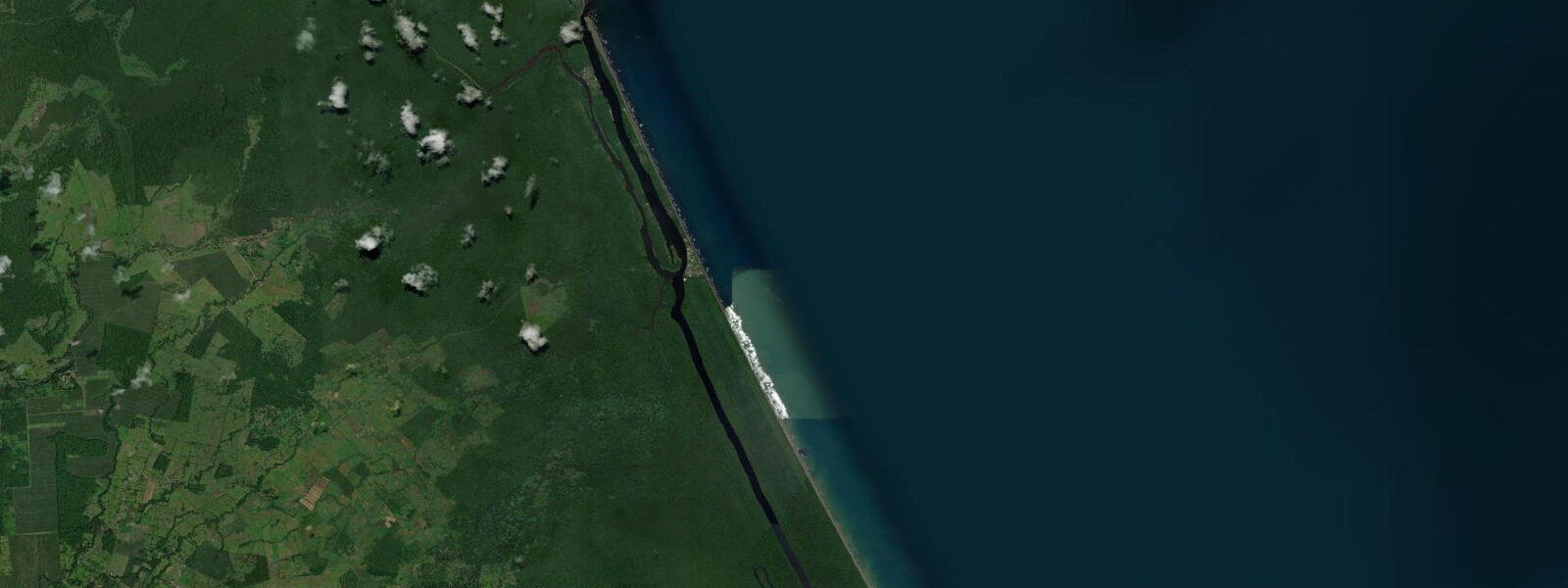
Tortuguero tide times
Tortuguero tide forecast — heights relative to MSL.
Tide chart for Tortuguero
24-hour cosine-interpolated curve around the present moment. Heights relative to MSL. Predictions: Predictions: Open-Meteo Marine (MeteoFrance SMOC, 0.08° grid).
Sun, moon and conditions on Mon 03 Aug
Snapshot at build time — refreshes daily. Sea state from Open-Meteo Marine.
Highs and lows next 7 days
Every predicted high and low for the next week, with the daily tidal coefficient (0–120; higher = bigger swing, > 95 means stronger currents).
Other spots nearby
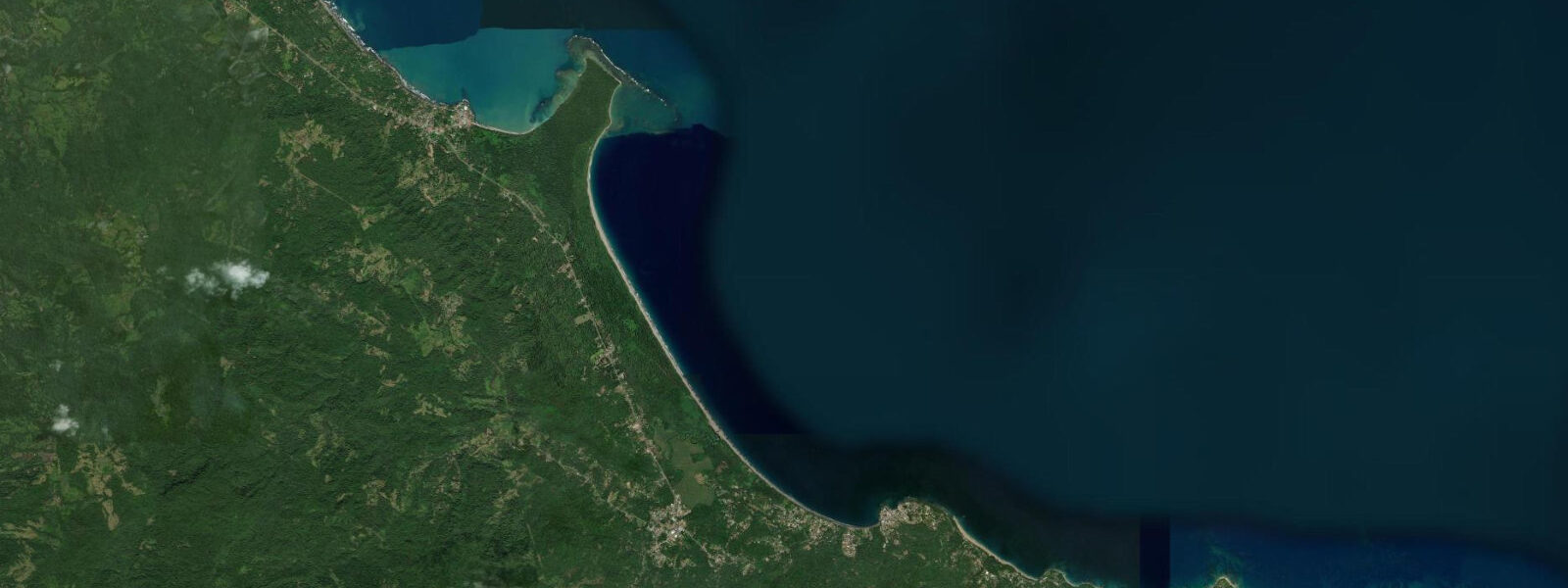
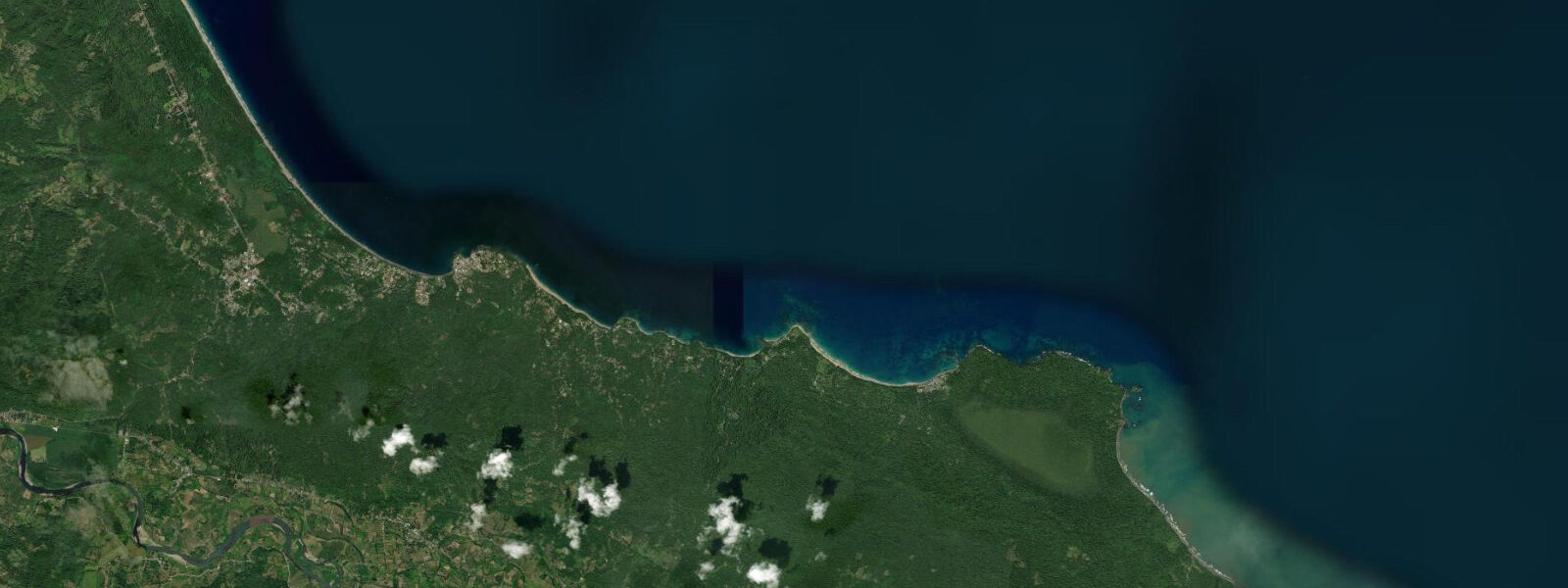
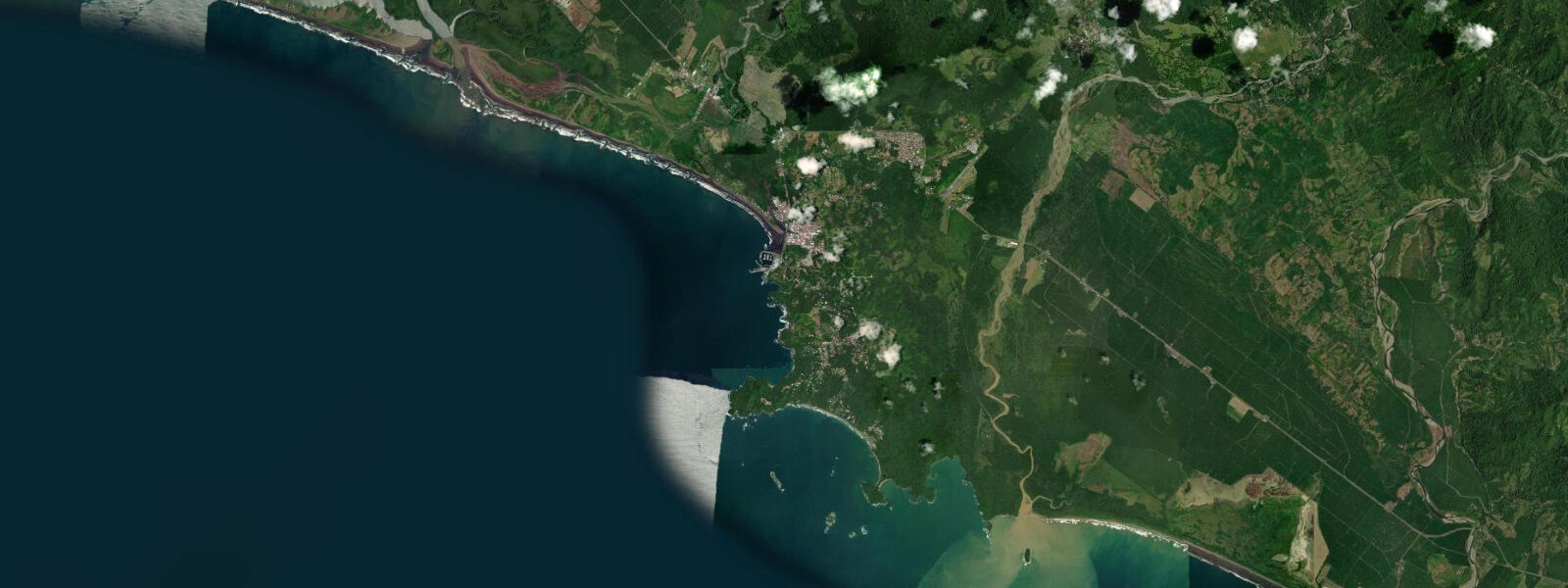
The three closest curated TideTurtle locations to Tortuguero, measured by great-circle distance.
Today's solunar windows
Solunar tradition: major periods are the ≈3h windows around moon transit and opposition; minor are ≈2h around moonrise and moonset. Pair with the local tide stage and wind for the best read.
About tides at Tortuguero
A short guide to the coastline at Tortuguero — geography, sea state, and what the tide is actually doing under your feet.
Tortuguero sits on a narrow strip of land between a Caribbean beach and a canal, 80 kilometres north of Limón, with no road access. The canal — part of a 100-kilometre network connecting Limón to the Nicaraguan border through lowland rainforest — is the only way in by surface: a motorboat journey of 2.5 to 3 hours from Limón, or 45 minutes by small plane from San José. The isolation is not incidental. Tortuguero's character — a small village, a tight grid of footpaths, no cars — follows directly from the fact that no road connects it to the rest of Costa Rica.
The national park occupies the beach to the north and south of the village and the canal and lagoon system behind it. The beach is the nesting ground: 35 kilometres of black volcanic sand where green turtles (Chelonia mydas) arrive between July and October to lay. The numbers are extraordinary — 30,000 to 50,000 females nest here annually, making this the most important green turtle rookery in the western Atlantic. Leatherback turtles (Dermochelys coriacea) nest earlier in the year, from March through May, in smaller numbers. Hawksbill turtles are present but uncommon.
Nesting is nocturnal. The females come ashore after dark, dig a nest chamber using their rear flippers — a process that takes 30 to 60 minutes — lay 80 to 120 eggs, cover the nest, and return to the sea. The entire visit lasts 1.5 to 2 hours. Guided night walks from the village are the primary way to observe the nesting: groups of 6 to 8 people with a certified guide operate between 20:00 and midnight, with specific sections of beach allocated to each group. The guides use red-filtered flashlights, which minimise disturbance to the turtles. Hatchlings emerge 45 to 70 days after laying; peak hatching is in September and October.
The canal system is the other half of the experience. The waterway varies from wide, slow channels through open lagoon to narrow passages under a canopy of palms and heliconia. Motorboat tours leave from the village; kayak rental is available for independent exploration of the smaller channels. The wildlife in and around the canals — caiman (spectacled, not American, despite the common name), river otter, West Indian manatee, four species of monkey (howler, spider, white-faced capuchin, and Central American squirrel), and more than 300 bird species — is visible because the approach is quiet and because the animals are accustomed to boat traffic.
Jaguars use the beach at Tortuguero. Sightings are rare — jaguars operate at night and are cautious around the village — but their tracks in the sand are found regularly during the nesting season, where they dig up turtle nests to eat the eggs. This is not depredation that can be controlled in a wild system; it is the jaguar doing what jaguars do in an intact ecosystem.
The Caribbean tidal range at Tortuguero is 0.3 to 0.5 metres — microtidal. The beach profile does not change dramatically between high and low water, and the difference is not a significant variable for turtle nesting activity. The tides here matter more for the canals: the tidal pulse from the Caribbean pushes a weak current through the lower sections of the canal network, affecting water clarity and fish movement. Canal tours timed to the flood tide tend to concentrate fish activity at the channel edges.
The village has two streets, a football pitch, a few small restaurants, and an assortment of lodges ranging from basic to mid-range. Higher-end lodge accommodation operates on the canal-facing side, accessible only by boat from the village dock. Electricity is reliable; internet is available but slow. Cash is the main currency — the village has no ATM, so arrive with sufficient colones or US dollars. The village serves the park; there is no significant economy here that isn't tied to tourism and the fishing that predated it.
Rainfall at Tortuguero is among the highest in Costa Rica — annual precipitation exceeds 5,000 millimetres in some years, with no true dry season. It rains at Tortuguero. Pack accordingly, and don't plan outdoor activities around dry-weather windows.
Predictions on this page come from Open-Meteo Marine, a gridded global ocean model. Accuracy is typically within plus or minus 45 minutes on timing and 0.2 to 0.3 metres on height — model-derived, not from a local gauge. The Instituto Meteorológico Nacional (IMN) and NOAA's Caribbean tidal network provide regional observational data for Costa Rica's Caribbean coast.
Tide questions about Tortuguero
Quick answers to the most common questions about tide times, range, and water access at Tortuguero.
When is green turtle nesting season at Tortuguero?
Green turtle (Chelonia mydas) nesting at Tortuguero runs from July through October, with peak activity in August and September. This is when 30,000 to 50,000 females arrive to nest — numbers that are difficult to visualise until you are on the beach at night and the sand in every direction shows the drag marks of females returning to the sea. Leatherback turtles (Dermochelys coriacea) nest earlier, from March through May, in smaller but still significant numbers. Outside these windows, the beach is quiet. The nesting tours operate nightly from July through October, weather permitting, with certified guides and group sizes limited to 6 to 8 people per section of beach.
How do you get to Tortuguero?
There is no road to Tortuguero. The two options are boat or small plane. By boat: take a bus or shuttle from San José to Cariari or La Pavona (3 to 4 hours), then a boat from the embarkation point at La Pavona or Caño Blanco through the canal system (2 to 2.5 hours). Most lodges arrange transfers that include road and boat segments as a package. Alternatively, boats run from the Limón docks (2.5 to 3 hours north through the canals). By air: 30-minute flights from San José's Tobías Bolaños Airport to the Tortuguero airstrip, operated by small charter companies. The boat approach is the standard tourist route and is worth doing for the canal wildlife alone; the flight saves time if transfers are tight.
What wildlife can you see in the Tortuguero canals?
The canal system supports a density of wildlife that is accessible and observable from a slow-moving boat. Spectacled caiman are reliably visible on the canal banks, particularly in the early morning. West Indian manatee (Trichechus manatus) is present but more elusive — your best chance is in the smaller side channels at low speed. River otter is occasionally seen. Four monkey species use the forest canopy alongside the canals: howler (audible from a considerable distance), spider, white-faced capuchin, and the smaller Central American squirrel monkey. More than 300 bird species are recorded in the park, including great green macaw, kingfisher (five species), and various heron and egret. Crocodile is not established in the Tortuguero canals; the animals are caiman.
What is the tidal range at Tortuguero and does it affect the turtle nesting?
The tidal range at Tortuguero is 0.3 to 0.5 metres — typical of the Caribbean Sea's microtidal character. The beach profile barely changes between high and low water, and the tidal state is not a significant variable for turtle nesting activity; the females come ashore based on their internal biological timing, not on tidal phase. The tide does affect the canal system in the lower sections: the weak Caribbean tidal pulse pushes a measurable current through the channels closest to the coast, which concentrates fish at the canal edges on the flood tide. For canal tours, the flood tide tends to be more productive for fish observation, though the difference is modest.
Is Tortuguero suitable for independent travellers or do you need to book a lodge package?
Both approaches work, though they give different experiences. Lodge packages (which typically include transfers from San José, accommodation, meals, guided canal tours, and turtle-watching tours) are convenient and efficient, but they concentrate visitors at the lodge level and limit flexibility. Independent travel — arriving by public boat from Cariari, staying in a guesthouse in the village, booking guides and tours locally — is cheaper and more flexible. The village has guesthouses and small restaurants that operate independently of the main lodge market. Turtle-watching tour slots must be booked in advance in the peak season (July through October), as numbers are controlled by the park. Kayak rental is available from several village operators for independent canal exploration.
8-day tide table — Tortuguero
Heights relative to MSL. Predictions: Open-Meteo Marine (MeteoFrance SMOC, 0.08° grid) — heights relative to MSL (not chart datum / LAT). Model-derived.
| Day | Type | Time | Height |
|---|---|---|---|
| Mon 03 Aug | — | ||
| Tue 04 Aug | — | ||
| Wed 05 Aug | High | 16:45 | 0.4m |
| Thu 06 Aug | Low | 00:15 | 0.0m |
| High | 05:10 | 0.2m | |
| Fri 07 Aug | Low | 01:06 | 0.0m |
| High | 18:00 | 0.5m | |
| Sat 08 Aug | Low | 02:00 | -0.0m |
| High | 18:50 | 0.5m | |
| Sun 09 Aug | Low | 03:00 | -0.0m |
| High | 19:50 | 0.5m | |
| Mon 10 Aug | Low | 04:00 | -0.0m |
| High | 17:00 | 0.3m | |