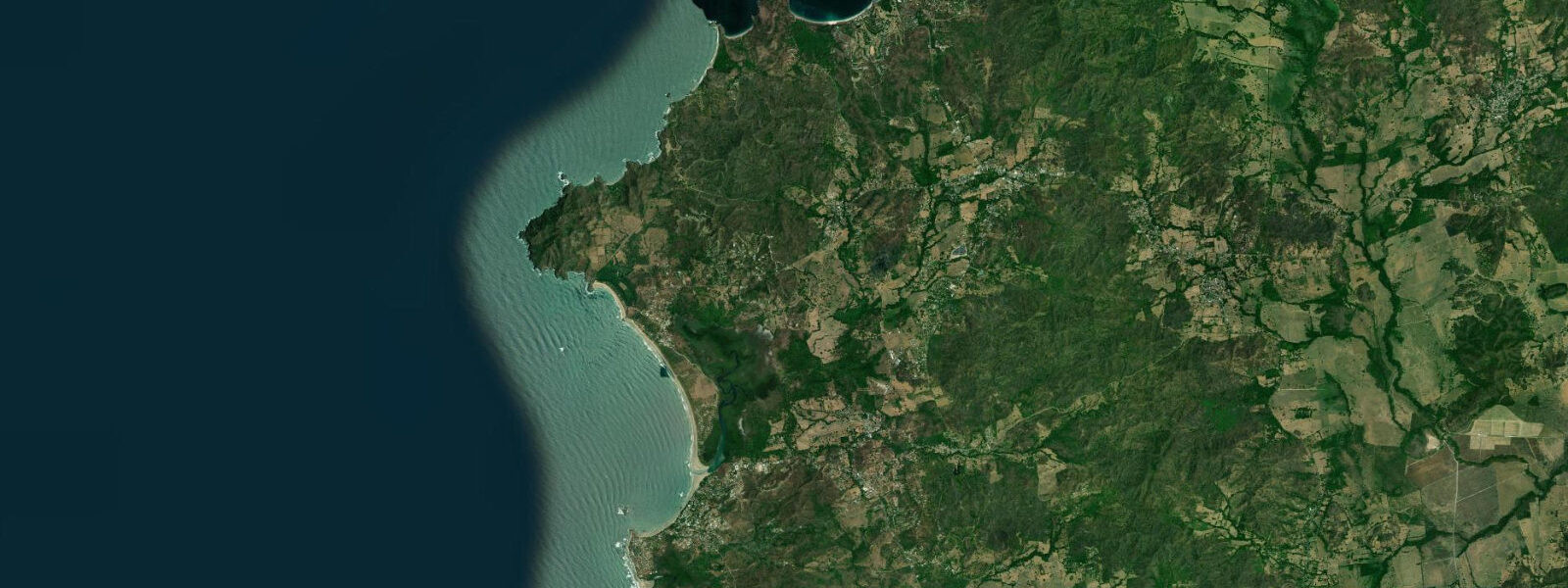
Tamarindo tide times
Tamarindo tide forecast — heights relative to MSL.
Today's tide times for Tamarindo
Tide times at Tamarindo on Tuesday, 28 July 2026: first high tide at 06:00pm, first low tide at 07:58pm. Sunrise 05:32am, sunset 06:07pm.
Tide chart for Tamarindo
24-hour cosine-interpolated curve around the present moment. Heights relative to MSL. Predictions: Predictions: Open-Meteo Marine (MeteoFrance SMOC, 0.08° grid).
Sun, moon and conditions on Tue 28 Jul
Snapshot at build time — refreshes daily. Sea state from Open-Meteo Marine.
Highs and lows next 7 days
Every predicted high and low for the next week, with the daily tidal coefficient (0–120; higher = bigger swing, > 95 means stronger currents).
Other spots nearby
The three closest curated TideTurtle locations to Tamarindo, measured by great-circle distance.
Today's solunar windows
Solunar tradition: major periods are the ≈3h windows around moon transit and opposition; minor are ≈2h around moonrise and moonset. Pair with the local tide stage and wind for the best read.
Cycle dates near Tamarindo
Next spring tide on Sun 02 Aug (range 2.1m). Last neap on Tue 28 Jul.
Spring tides cluster around new and full moons (biggest swings). Neap tides land on quarter moons (smallest swings). See the spring tide and neap tide glossary entries for the why.
About tides at Tamarindo
A short guide to the coastline at Tamarindo — geography, sea state, and what the tide is actually doing under your feet.
Tamarindo sits on the northern Pacific coast of Costa Rica in Guanacaste province, a working surf town that grew out of a small fishing village at the mouth of the Tamarindo estuary. The coast here faces the open Pacific without significant offshore islands or shelter, which means the swell rolls in clean from the southwest in the green season from May through November and from the northwest in the dry season from December through April. The tide here is mixed semidiurnal with a large range typical of the eastern tropical Pacific.
2. Two highs and two lows of unequal size each day, about twelve and a half hours apart, with the bigger swing typically falling on the lower-low water. The wide range reshapes the working day for everyone on this coast.
The Tamarindo estuary at the south end of the main beach drains a tidal lagoon system behind the town and the Las Baulas leatherback nesting beach across the river mouth at Playa Grande. At low water the estuary becomes a wide sand-and-mangrove flat that the local panga skippers cross on foot or by paddle — at high water the same channel is a working boat road for fishing and tour traffic. The estuary is also working saltwater crocodile habitat, and the local advice on the foot-crossing is consistent year after year: take the boat.
The Las Baulas leatherback nesting season runs from October through February, and the female turtles haul out on the high tide of the night cycle to lay their eggs above the spring high-water mark; the research crews from the Las Baulas national marine park time their patrols to the predicted high of the night and the volunteer monitoring teams read the same prediction for shift planning. The crossing to Playa Grande from Tamarindo is by boat at most stages of the tide and on foot only at the lowest spring lows. South of Tamarindo, Playa Langosta runs roughly two kilometres of broken rocky shelf and headland tide pools that reveal at low water — the same flat that surfers paddle out across in the morning becomes a tide-pool walking circuit in the evening on a low spring tide, and the Río San Francisco mouth at the southern end of Playa Langosta is a snook-and-corvina estuary that the local anglers work on the changing water.
The Tamarindo break itself runs at most stages of the tide but is cleanest on the rising tide from low to mid; the river-mouth peak at the southern end works on the dropping tide from mid to low. The reef break at Henry's Point on the northern headland reads the same swing. Sport-fishing pangas running out of the river mouth target dorado and roosterfish on the offshore current, and the inshore estuary anglers read the rising tide for snook and corvina.
Beach-walking families work the morning low for the wet-sand expanse on the main beach, and shorebird photographers target the falling tide when the willets, sanderlings, and wood storks work the receding waterline for crustaceans. The dawn and dusk colour windows during a low-water spring align with the longest reflective wet-sand expanse, and local landscape photographers know the cycle. The predictions on this page come from Open-Meteo Marine, a free gridded global ocean model.
3 metres on height — small relative to Tamarindo's two-and-a-half metre mean range but worth knowing when planning around the night nesting tide or the lowest spring lows. The Costa Rican Instituto Geográfico Nacional and Universidad de Costa Rica's Centro de Investigación en Ciencias del Mar y Limnología (CIMAR) are the regional authoritative references; Puerto Caldera port operations south at the entrance to the Gulf of Nicoya provide the authoritative regional gauge data.
Tide questions about Tamarindo
Quick answers to the most common questions about tide times, range, and water access at Tamarindo.
When is the next high tide at Tamarindo?
The hero block at the top of this page shows the next predicted high at Tamarindo in local Costa Rica Time (CST, UTC-6, no daylight-saving). For the full week, scroll to the 7-day table. Predictions come from Open-Meteo Marine, a gridded global ocean model. For authoritative regional tide data, the Costa Rican Instituto Geográfico Nacional and Universidad de Costa Rica's CIMAR (Centro de Investigación en Ciencias del Mar y Limnología) operate gauges along the Pacific coast; Puerto Caldera at the entrance to the Gulf of Nicoya is the regional reference port.
What's the typical tide range at Tamarindo?
Mean astronomical range at Tamarindo is roughly 2.0 to 2.5 metres above chart datum — a large mixed-semidiurnal eastern tropical Pacific signal. Spring tides around new and full moons push past 2.8 to 3.0 metres; neap tides during the quarter moons compress toward 1.2 metres. Two highs and two lows of unequal size each day, about twelve and a half hours apart, with the bigger swing typically on the lower-low water. The wide range exposes the Tamarindo estuary mudflats and opens the rocky tide-pool shelf at Playa Langosta to the south.
Where do these tide predictions come from?
Open-Meteo Marine, a free gridded global ocean model. The model estimates tidal height from oceanographic equations applied across a geographic grid rather than from harmonic analysis of a measured gauge record. Accuracy is typically within plus or minus 45 minutes on timing and within roughly 0.3 metres on height. For Tamarindo's two-and-a-half metre mean range that uncertainty is small relative to the signal, but for night-tide leatherback nesting work, navigation, and any activity where precise water level matters, the Costa Rican Instituto Geográfico Nacional and CIMAR at Universidad de Costa Rica are the regional authorities.
When can I cross the Tamarindo estuary to Playa Grande?
The Tamarindo estuary at the south end of the main beach separates Tamarindo from the Las Baulas leatherback nesting beach at Playa Grande on the north side of the river mouth. The crossing is by boat at most stages of the tide — local pangas run a regular shuttle for a few dollars. On foot, the estuary is wadeable only at the lowest spring lows around new and full moons, and even then the crossing involves soft mud, current at the river mouth, and saltwater crocodile habitat. The local advice is consistent: take the boat. Check the 7-day table on this page for the predicted lows and confirm crossing conditions with the panga operators at the river mouth.
Is this safe to use for navigation?
No. For piloting into the Tamarindo river mouth, the Las Baulas marine park approaches, or any commercial transit along the Guanacaste coast, use the authoritative Costa Rican tide tables published via the Instituto Geográfico Nacional and Puerto Caldera port operations. CIMAR at Universidad de Costa Rica operates the regional gauges. The Open-Meteo Marine gridded predictions on this page are useful for daily activity planning but do not replace gauge-calibrated harmonic data for navigation.
8-day tide table — Tamarindo
Heights relative to MSL. Predictions: Open-Meteo Marine (MeteoFrance SMOC, 0.08° grid) — heights relative to MSL (not chart datum / LAT). Model-derived.
| Day | Type | Time | Height |
|---|---|---|---|
| Tue 28 Jul | High | 18:00 | 0.0m |
| Low | 19:58 | -0.3m | |
| Wed 29 Jul | High | 02:07 | 1.2m |
| Low | 08:06 | -0.2m | |
| High | 14:11 | 1.4m | |
| Low | 20:35 | -0.4m | |
| Thu 30 Jul | High | 02:44 | 1.3m |
| Low | 08:43 | -0.3m | |
| High | 14:47 | 1.5m | |
| Low | 21:10 | -0.5m | |
| Fri 31 Jul | High | 03:18 | 1.4m |
| Low | 09:22 | -0.4m | |
| High | 15:22 | 1.4m | |
| Low | 21:42 | -0.6m | |
| Sat 01 Aug | High | 03:55 | 1.5m |
| Low | 10:01 | -0.4m | |
| High | 16:03 | 1.4m | |
| Low | 22:15 | -0.6m | |
| Sun 02 Aug | High | 16:42 | 1.4m |
| Low | 22:51 | -0.6m | |
| Mon 03 Aug | High | 05:09 | 1.5m |
| Low | 11:22 | -0.4m | |
| Tue 04 Aug | High | 05:47 | 1.5m |
| Low | 12:03 | -0.4m | |
| High | 17:00 | 1.1m |