
Johnny Cay, Colombia tide times
Johnny Cay, Colombia tide forecast — heights relative to MSL.
Today's tide times for Johnny Cay, Colombia
Tide times at Johnny Cay, Colombia on Tuesday, 4 August 2026: first low tide at 09:50. Sunrise 06:13, sunset 18:52.
Tide chart for Johnny Cay, Colombia
24-hour cosine-interpolated curve around the present moment. Heights relative to MSL. Predictions: Predictions: Open-Meteo Marine (MeteoFrance SMOC, 0.08° grid).
Sun, moon and conditions on Tue 04 Aug
Snapshot at build time — refreshes daily. Sea state from Open-Meteo Marine.
Highs and lows next 7 days
Every predicted high and low for the next week, with the daily tidal coefficient (0–120; higher = bigger swing, > 95 means stronger currents).
Other spots nearby
The three closest curated TideTurtle locations to Johnny Cay, Colombia, measured by great-circle distance.

Today's solunar windows
Solunar tradition: major periods are the ≈3h windows around moon transit and opposition; minor are ≈2h around moonrise and moonset. Pair with the local tide stage and wind for the best read.
Cycle dates near Johnny Cay, Colombia
Next spring tide on Sat 08 Aug (range 0.4m). Next neap on Thu 06 Aug.
Spring tides cluster around new and full moons (biggest swings). Neap tides land on quarter moons (smallest swings). See the spring tide and neap tide glossary entries for the why.
About tides at Johnny Cay, Colombia
A short guide to the coastline at Johnny Cay, Colombia — geography, sea state, and what the tide is actually doing under your feet.
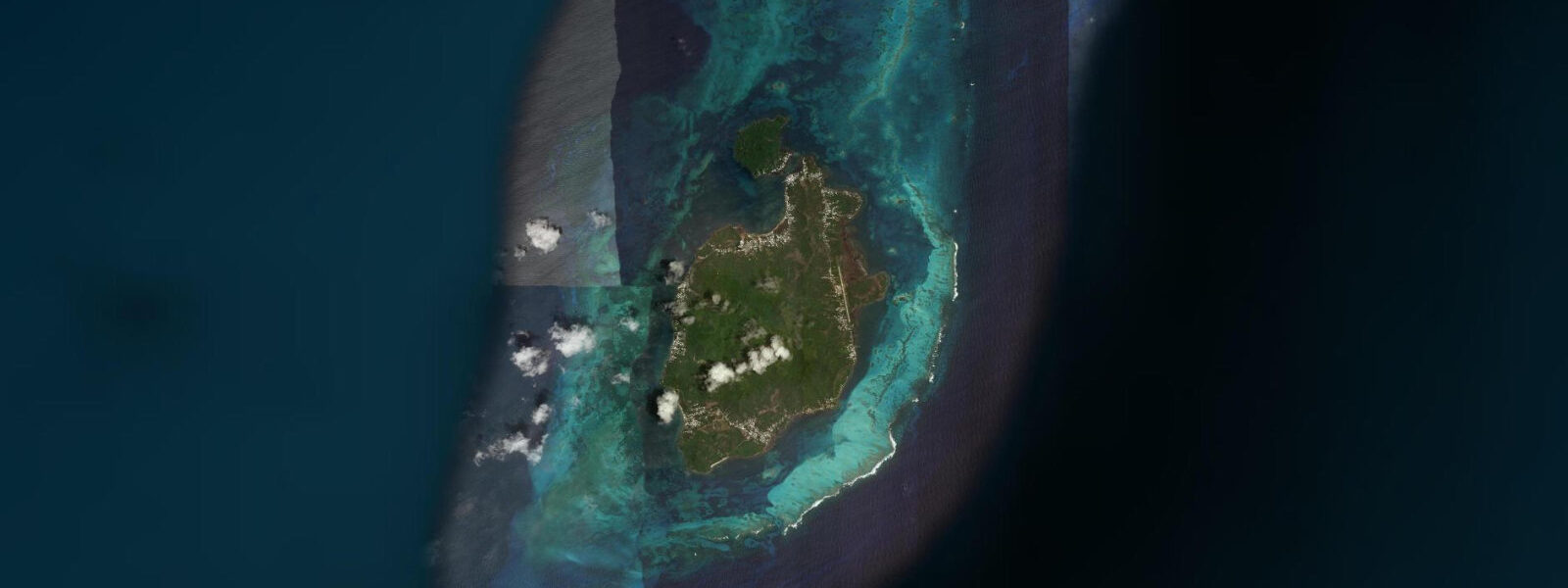
Johnny Cay is a coral key 1.5 km offshore from San Andrés town, a 300 m-wide sand island encircled by white beach and coconut palms. Water taxis from the San Andrés town pier reach it in 10 minutes. The cay is the primary day-trip destination from San Andrés for beach visitors, drawing boats throughout the morning and clearing in the afternoon. The reef fringe around the cay is the most accessible snorkelling from San Andrés — calm, clear, and shallow enough for non-swimmers with a flotation vest.
The tidal pattern is microtidal Caribbean: spring range 25–40 cm, mixed semidiurnal. Open-Meteo Marine provides forecast data — timing accuracy ±45 minutes, height accuracy ±0.2–0.3 m. The reef around the cay keeps conditions inside the fringe calm regardless of tidal state, though the tidal flow through the gaps in the reef perimeter increases around peak tide phases and creates current over the snorkelling areas.
The reef fringe around Johnny Cay is under formal protection as part of the Old Providence McBean Lagoon system and the Seaflower Marine Protected Area. The reef directly north and east of the cay is the healthier section — less impacted by the high day-trip boat traffic that concentrates on the western beach. Parrotfish, blue tang, sergeant major, queen angelfish, and French grunt are standard sightings. Nurse sharks rest under the coral heads on the eastern fringe at 3–5 m depth; they're habituated to snorkellers and are not a concern with normal behaviour.
For anglers, the channel between Johnny Cay and San Andrés island (the Haynes Cay channel) concentrates tidal flow and produces barracuda, jack crevalle, and occasional tarpon along the channel edges. Fishing from shore on the cay itself is limited — the reef fringe is protected and the beach crowds concentrate on the western arc. Small pangas anchored in the deeper channel to the north produce better fishing results.
Beach families find Johnny Cay the most straightforward beach day from San Andrés: 10 minutes by boat, white sand, turquoise water, shade from the palm trees, and food vendors on the beach. The crowd level rises sharply between 10 am and 1 pm when the tour boats arrive from San Andrés town, then drops again after 2 pm as boats return. Arriving on the first departure (around 8 am) gives a quieter morning on the beach before the main flow.
Photographers get the classic Caribbean cay composition from the eastern approach by water taxi: white sand against turquoise water, palms, and the blue sky. The clarity of the water between Johnny Cay and San Andrés — the 'Sea of Seven Colours' described in tourism material — is most vivid on calm mornings with low sun angle.
Tide questions about Johnny Cay, Colombia
Quick answers to the most common questions about tide times, range, and water access at Johnny Cay, Colombia.
How do I get to Johnny Cay from San Andrés town?
Water taxis depart from the main pier near the town centre and from the beaches at Spratt Bight. The crossing takes 10 minutes. Boats run from around 8 am to 4 pm, with the highest frequency between 9 am and noon. Return trips run from the cay throughout the day on demand. The fare is a fixed return ticket — buy from the boatmen at the pier before boarding. No advance booking is required. The cay has limited capacity and the park authority periodically restricts visitor numbers on busy days; early arrival avoids both the crowds and any capacity controls. The water between San Andrés and Johnny Cay is shallow and calm under most conditions.
What snorkelling gear do I need for Johnny Cay?
Basic mask, fins, and snorkel are sufficient for the reef fringe around Johnny Cay — the coral is at 1–5 m depth, easily reached without a wetsuit in the 27–29°C water. Rental equipment is available from vendors on the cay's beach. Bring your own if you want quality optics — the rental masks are functional but variable. A flotation vest or snorkel jacket is available for non-confident swimmers and allows reef viewing from the surface without active swimming. Avoid sunscreen chemicals that harm coral — use mineral-based (zinc oxide) SPF or reef-safe formulations, and wetsuits or rash guards offer sun protection without lotion.
How does the tidal state affect snorkelling at Johnny Cay?
Spring tidal range is 25–40 cm — the reef fringe stays submerged throughout the tidal cycle with no dramatic drainage. The tidal flow through the reef gaps creates current that increases during peak tidal phases (around high and low water transitions). The north and east sides of the reef fringe see stronger tidal flow than the sheltered west beach. Snorkellers exploring the current-exposed east side should be aware of the drift and stay within easy swimming distance of an exit point. The best visibility conditions are the incoming tide phase and the hour after high water, when recent current has cleared any sediment stirred by boat traffic. Open-Meteo Marine provides timing data with ±45-minute accuracy.
Are nurse sharks dangerous at Johnny Cay?
The nurse sharks (Ginglymostoma cirratum) that rest under coral heads on the eastern fringe of Johnny Cay are not a threat under normal circumstances. Nurse sharks are bottom-dwelling, slow-moving, and primarily nocturnal feeders on shellfish and small fish. They are habituated to snorkeller presence. The risk arises from harassment: grabbing a nurse shark or approaching within 1–2 metres triggers a defensive bite. Maintain at least 2 m distance, don't attempt to touch or ride the sharks, and don't corner them under a coral head. The sharks at Johnny Cay are well-documented by dive operators and are not aggressive toward observant snorkellers.
What facilities are available on Johnny Cay?
The cay has basic beach facilities: food and drink vendors sell fried fish, coconut rice, and cold drinks on the beach. There are no permanent restaurants. Toilets are basic. Hammock rental and palm-shade lounger areas operate from vendors on the beach. There are no freshwater showers. The cay has no overnight accommodation — it is strictly a day-visit destination. The water taxi return to San Andrés town is demand-based through the afternoon; the last boats typically leave the cay around 4–4:30 pm. Don't miss the last boat — there are no options for staying on the cay after boats stop running.
7-day tide table — Johnny Cay, Colombia
Heights relative to MSL. Predictions: Open-Meteo Marine (MeteoFrance SMOC, 0.08° grid) — heights relative to MSL (not chart datum / LAT). Model-derived.
| Day | Type | Time | Height |
|---|---|---|---|
| Tue 04 Aug | Low | 09:50 | -0.1m |
| Wed 05 Aug | High | 04:00 | 0.0m |
| Low | 10:00 | -0.1m | |
| High | 17:18 | 0.2m | |
| Thu 06 Aug | Low | 00:50 | -0.1m |
| High | 05:00 | -0.0m | |
| Low | 10:10 | -0.1m | |
| High | 17:50 | 0.2m | |
| Fri 07 Aug | Low | 01:45 | -0.2m |
| High | 06:00 | -0.1m | |
| Low | 11:00 | -0.2m | |
| Sat 08 Aug | High | 19:18 | 0.3m |
| Sun 09 Aug | Low | 12:50 | -0.2m |
| High | 20:15 | 0.2m | |
| Mon 10 Aug | Low | 04:10 | -0.2m |
| High | 18:00 | 0.1m |