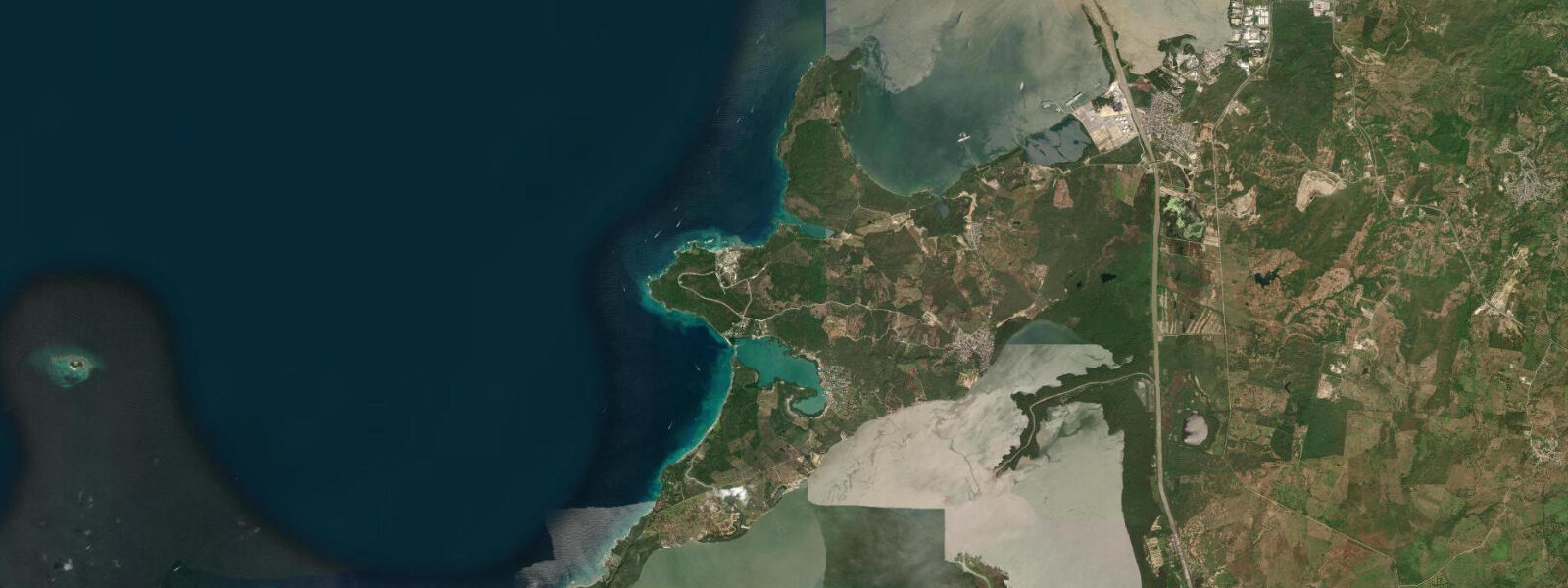
Playa Blanca, Bolívar tide times
Playa Blanca, Bolívar tide forecast — heights relative to MSL.
Today's tide times for Playa Blanca, Bolívar
Tide times at Playa Blanca, Bolívar on Monday, 3 August 2026: first high tide at 15:50, first low tide at 21:50. Sunrise 05:52, sunset 18:24.
Tide chart for Playa Blanca, Bolívar
24-hour cosine-interpolated curve around the present moment. Heights relative to MSL. Predictions: Predictions: Open-Meteo Marine (MeteoFrance SMOC, 0.08° grid).
Sun, moon and conditions on Mon 03 Aug
Snapshot at build time — refreshes daily. Sea state from Open-Meteo Marine.
Highs and lows next 7 days
Every predicted high and low for the next week, with the daily tidal coefficient (0–120; higher = bigger swing, > 95 means stronger currents).
Other spots nearby
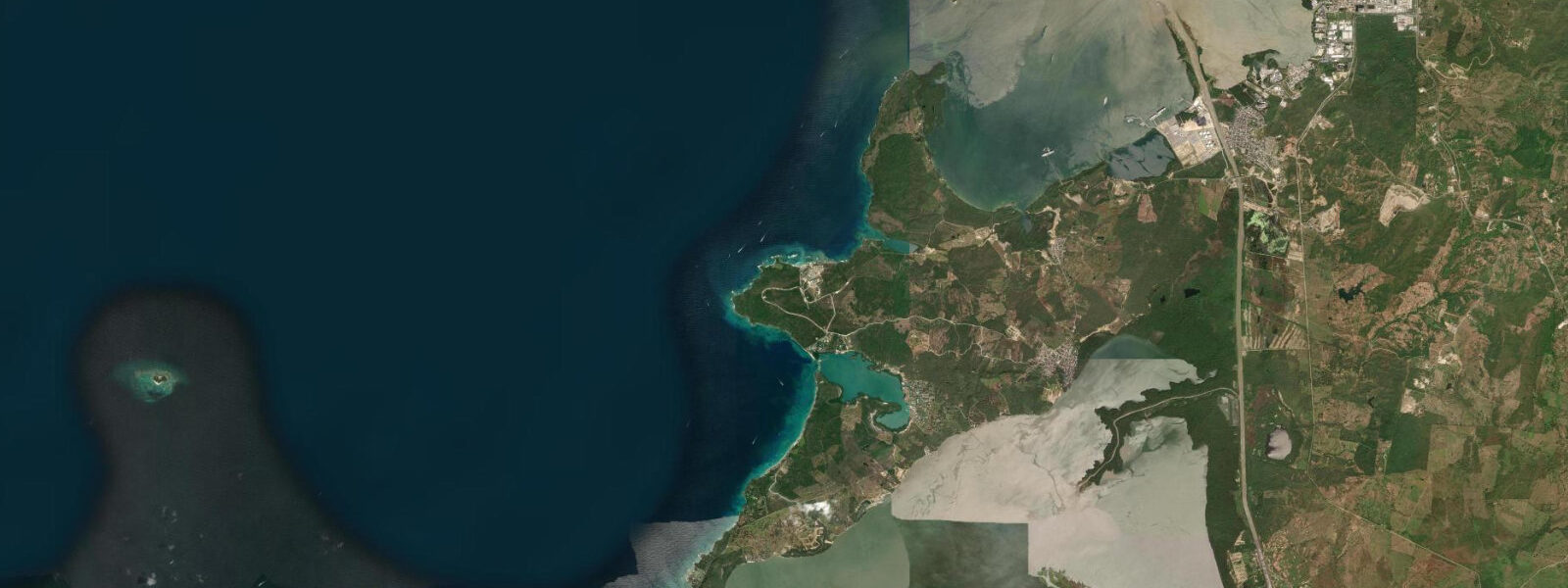
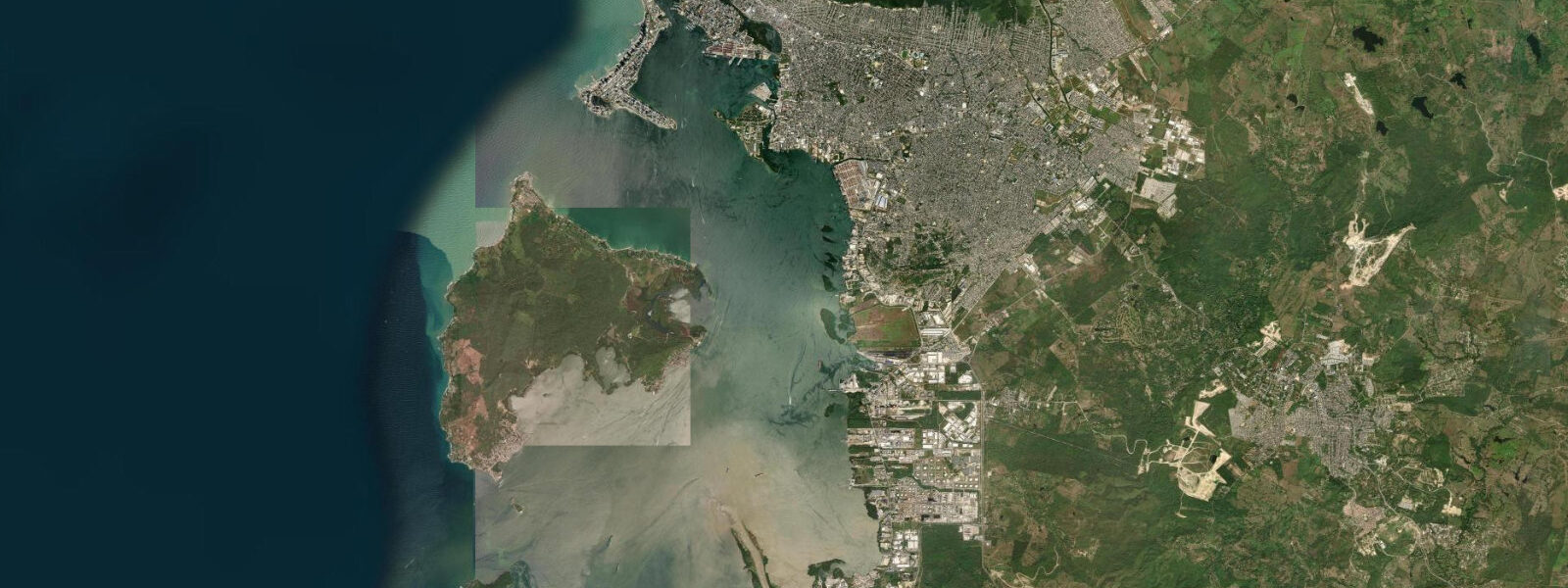
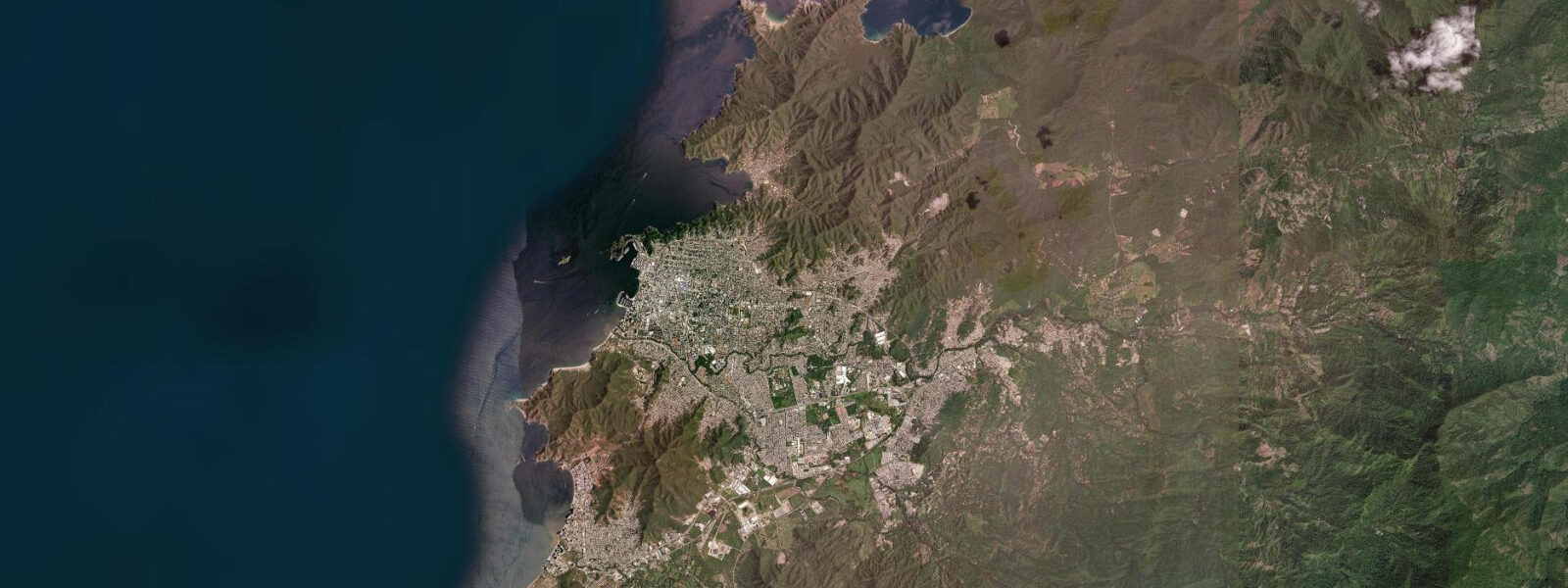
The three closest curated TideTurtle locations to Playa Blanca, Bolívar, measured by great-circle distance.
Today's solunar windows
Solunar tradition: major periods are the ≈3h windows around moon transit and opposition; minor are ≈2h around moonrise and moonset. Pair with the local tide stage and wind for the best read.
About tides at Playa Blanca, Bolívar
A short guide to the coastline at Playa Blanca, Bolívar — geography, sea state, and what the tide is actually doing under your feet.
Playa Blanca sits on the western shore of the Barú peninsula, 45 km southwest of Cartagena de Indias — one kilometre of white quartz sand that holds its colour under the Caribbean sun from first light until the afternoon haze rolls in from the northwest. The beach faces southwest into the sheltered interior of the Barú coast, which means the prevailing northerly swell that hits the open Caribbean face of the peninsula barely registers here. On a typical morning the water is flat, turquoise, and clear to 2 m depth with nothing but sand between you and the reef line 50 m out.
The Colombian Caribbean is essentially microtidal. Mean spring range at Playa Blanca runs 0.2–0.4 m — roughly the height of your boot. High water sits around 0.20–0.25 m above chart datum; low water drops to 0.05–0.10 m. In practical terms, the waterline moves less than 15 m across the beach face over a full tidal cycle. The tide here is diurnal — one high and one low per day, driven by the K1 and O1 lunar constituents that dominate the Caribbean basin rather than the semidiurnal pattern common on Atlantic-facing coasts.
For snorkellers that microtidal shift matters at the reef edge. At low water (typically 07:00–09:00 in the dry season, November to April), the coral heads that sit at 0.3–0.5 m depth are close enough to the surface that you need to angle your fins carefully to avoid contact. At high water those same heads drop to 0.5–0.7 m and you float over them without the same awareness of depth. Neither window is bad — the visibility at Playa Blanca regularly exceeds 8 m in calm conditions — but anglers casting toward the reef base at first light tend to wade out at low water when the flat is fully exposed.
Day-trip boats from Cartagena use two departure points: the Muelle de la Bodeguita in the Getsemaní waterfront district, and the lancha dock near Castillo San Felipe de Barajas. Boats run a shared-service pattern, leaving between 08:30 and 09:30, arriving at Playa Blanca around 09:30–10:30 depending on sea state and the number of stops at the Islas del Rosario archipelago visible to the northwest. The beach vendors and the chicherías — the informal seafood shacks that sell fried fish, patacones, and cold Aguila — are set up from 08:00, which means the early arrivals who came the night before eat first and eat better before the midday crowd.
From 10:30 onward Playa Blanca becomes one of the busier Caribbean beaches in Colombia. Vendors work the sand selling coconut, beaded jewellery, and hammock rentals. By 14:00 the boats that arrived in the morning begin their return run to Cartagena, and the beach empties back to the overnight guests and the fishing families from the Barú fishing village 4 km north by the path through the scrub palm interior.
There is no road to this shore of Barú. Access is by boat only or by walking 4 km south from the village across the peninsula interior — a sandy track that takes about 50 minutes on foot. That absence of road access is the structural reason Playa Blanca stays relatively undeveloped: no concrete hotel block has been built here because building materials have to come in by boat. The accommodation that exists is simple — palm-thatch huts with hammocks, cold showers, and generators that run until 22:00. The Islas del Rosario, a national park archipelago of 27 coral islands and cays, is visible to the northwest on clear days.
Families with children find the beach safe in the morning before wind picks up and chop develops near the reef edge. The water depth from the shore to 30 m out stays under 1.5 m on both the high and low tide given the micro-range — a reassuring geometry for parents. Photographers get the best light before 08:30 when the boats are still 60 km away and the sand is untracked. The Cartagena skyline is visible on clear days as a faint haze of towers 45 km to the northeast.
Tide data for Playa Blanca comes from the Open-Meteo Marine API, a gridded model product. Timing accuracy is ±45 minutes, height accuracy ±0.3 m — usable for trip planning, not for navigation.
Tide questions about Playa Blanca, Bolívar
Quick answers to the most common questions about tide times, range, and water access at Playa Blanca, Bolívar.
When do the day-trip boats from Cartagena arrive at Playa Blanca?
Boats from Cartagena's Muelle de la Bodeguita and Castillo San Felipe dock depart between 08:30 and 09:30 and reach Playa Blanca by around 09:30–10:30 depending on sea conditions and whether they stop at the Islas del Rosario on the way. If you want the beach to yourself, stay overnight in the palm-thatch accommodation on the beach or arrive via the 4 km walking track from Barú village before the boats land. Beach vendors and seafood shacks open from 08:00 — early arrivals eat first.
What is the tidal range at Playa Blanca and does it affect snorkelling?
The Colombian Caribbean is microtidal. At Playa Blanca the mean spring range is 0.2–0.4 m — the waterline shifts less than 15 m across the beach over a full tidal cycle. For snorkelling the difference is real but minor: at low water (often 07:00–09:00 in the dry season) the coral heads at 0.3–0.5 m depth sit closer to the surface, which requires careful fin work to avoid contact. At high water those same heads drop to 0.5–0.7 m and you float over them with more clearance. The reef begins 50 m from shore in either state.
Is there road access to Playa Blanca?
No. The western shore of Barú has no road connection. Access is by boat from Cartagena (roughly 1 hour) or on foot via a 4 km sand track from Barú fishing village on the northern shore of the peninsula — plan about 50 minutes walking through scrub palm. The absence of road access is why the beach stays undeveloped: building materials have to come in by boat, which limits what can be built. Accommodation is basic palm-thatch huts with cold showers and generators.
Can you stay overnight at Playa Blanca?
Yes. Basic beach accommodation — hammocks in palm-thatch huts, cold showers, generator power to around 22:00 — is available from a handful of small operators on the beach. Rates are low by Caribbean standards. The payoff is the beach before the day-trip boats arrive: Playa Blanca at 07:00 with untracked sand and flat water is a different place from the same beach at 11:00 with a hundred visitors and active vendors. Photographers and snorkellers in particular find the early morning window worth the overnight cost.
What landmarks are visible from Playa Blanca?
On clear days you can see the Cartagena skyline 45 km to the northeast — a faint cluster of towers above the water. To the northwest the Islas del Rosario archipelago, 27 coral islands and cays inside the Parque Nacional Natural Corales del Rosario y de San Bernardo, sits on the horizon. Barú fishing village is 4 km north by the interior track. The peninsula geometry shields the beach from the open Caribbean swell, which is why the water here stays calm when the outer coast is rough.
7-day tide table — Playa Blanca, Bolívar
Heights relative to MSL. Predictions: Open-Meteo Marine (MeteoFrance SMOC, 0.08° grid) — heights relative to MSL (not chart datum / LAT). Model-derived.
| Day | Type | Time | Height |
|---|---|---|---|
| Mon 03 Aug | High | 15:50 | 0.4m |
| Low | 21:50 | 0.2m | |
| Tue 04 Aug | High | 16:10 | 0.5m |
| Low | 23:10 | 0.2m | |
| Wed 05 Aug | High | 16:50 | 0.5m |
| Thu 06 Aug | Low | 01:00 | 0.1m |
| High | 04:00 | 0.2m | |
| Low | 09:50 | 0.1m | |
| Fri 07 Aug | — | ||
| Sat 08 Aug | High | 19:15 | 0.5m |
| Sun 09 Aug | Low | 03:15 | 0.1m |
| High | 18:00 | 0.4m | |